






Hung Trinh, Senior VP of Operations at Seneca Therapeutics, shared a post on LinkedIn:
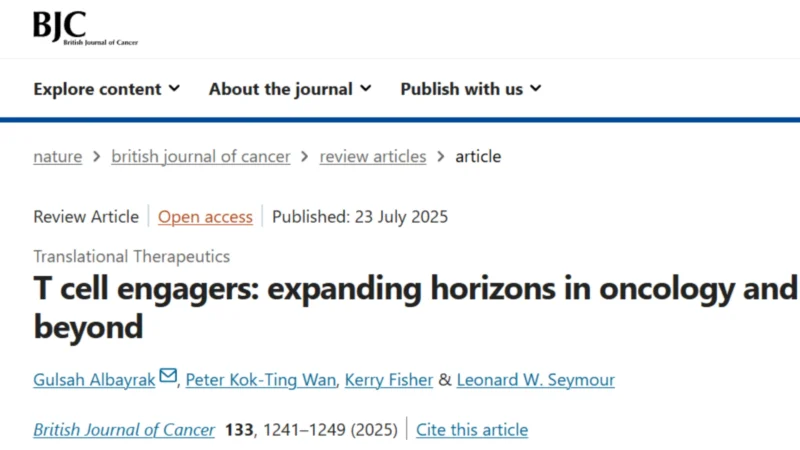
“T cell engagers: expanding horizons in oncology and beyond
T cell engagers (TCEs) are engineered immunotherapeutic molecules designed to direct the body’s immune system against tumour or infected cells by bridging T cells and their targets, triggering potent cytotoxic responses. Over the past decade, TCE-based therapies have gained momentum in oncology, resulting in several FDA approvals for haematologic malignancies and showing growing promise in solid tumours.
Vertex Biopharm Consulting
Mechanism of action and different T cell engager formats
The 1+1 format refers to a TCE with one binding arm for a TAA and one for a T cell antigen (typically CD3). By simultaneously binding a cancer cell and a T cell, a 1+1 TCE creates a pseudo-immunological synapse that brings the T cell into close proximity with the tumour cell, triggering T cell activation and directed cytotoxicity.
2+1 format: harnessing avidity for selectivity
The 2+1 TCE format comprises two binding domains for the tumour antigen and one binding domain for CD3. By engaging two antigen molecules on the same cell, a 2+1 TCE achieves stronger binding to cells with high antigen density, while cells with low antigen density are bound weakly, reducing off-tumour effect.
1+1+1 trispecific formats: addressing complexity and resistance
Trispecific TCEs (1+1+1 format) contain three distinct binding domains, enabling recognition of three different antigens simultaneously. In the context of TCEs, one of these is typically CD3, and the other two are either two different tumour antigens or one tumour antigen plus an additional T cell co-stimulatory receptor.”
Title: T cell engagers: expanding horizons in oncology and beyond
Authors: Gulsah Albayrak, Peter Kok-Ting Wan, Kerry Fisher, Leonard W. Seymour
Read the Full Article.
Other articles featuring Hung Trinh on OncoDaily.