






Global Health Otherwise shared a post on LinkedIn:
“A Health System That Fails Adolescents Fails the Future
Every year, 21 million adolescent girls become pregnant, and half of those pregnancies are unintended. Simon and colleagues (2026) offer a critical examination of why this keeps happening and, more importantly, what actually fixes it.
The authors argue that most countries have tried building separate “teen-friendly” clinic corners, but these efforts rarely stick or grow. The real solution, they find, is weaving adolescent care into the entire health system, not just one corner of it.
Studying Chile, Ethiopia, and Moldova over nearly 30 years, the authors show that change began when a major global event, like a United Nations conference, pushed governments to act boldly.
Countries that responded by updating laws, training all health workers, collecting age-specific health data, and making services free saw real results.
Chile’s adolescent fertility rate dropped from 24.9 to 5.3 per 1,000 girls. Ethiopia cut unmet contraceptive need nearly in half. The paper concludes that any country, regardless of income level, can replicate this whole-system approach.
Adolescents need health systems built around them, not separate clinics. Three countries prove that political will plus system-wide reform dramatically improves adolescent reproductive health outcomes.”
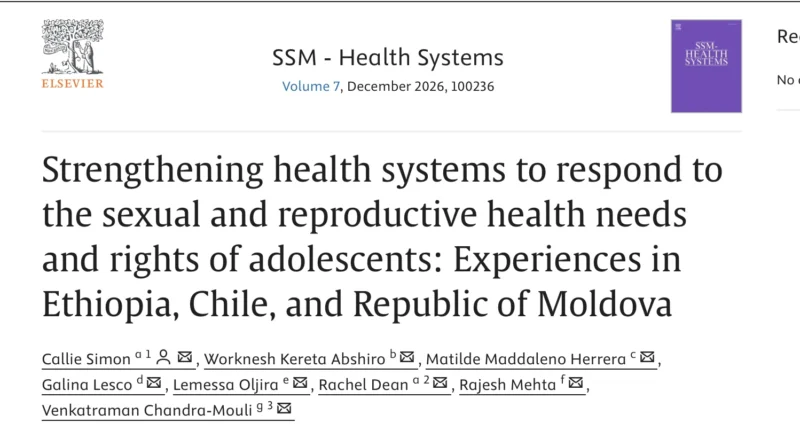
Title: Strengthening health systems to respond to the sexual and reproductive health needs and rights of adolescents: Experiences in Ethiopia, Chile, and Republic of Moldova
Authors: Callie Simon, Worknesh Kereta Abshiro, Matilde Maddaleno Herrera, Galina Lesco, Lemessa Oljira, Rachel Dean, Rajesh Mehta, Venkatraman Chandra-Mouli
Read the Full Article.
Other articles from Global Health Otherwise.