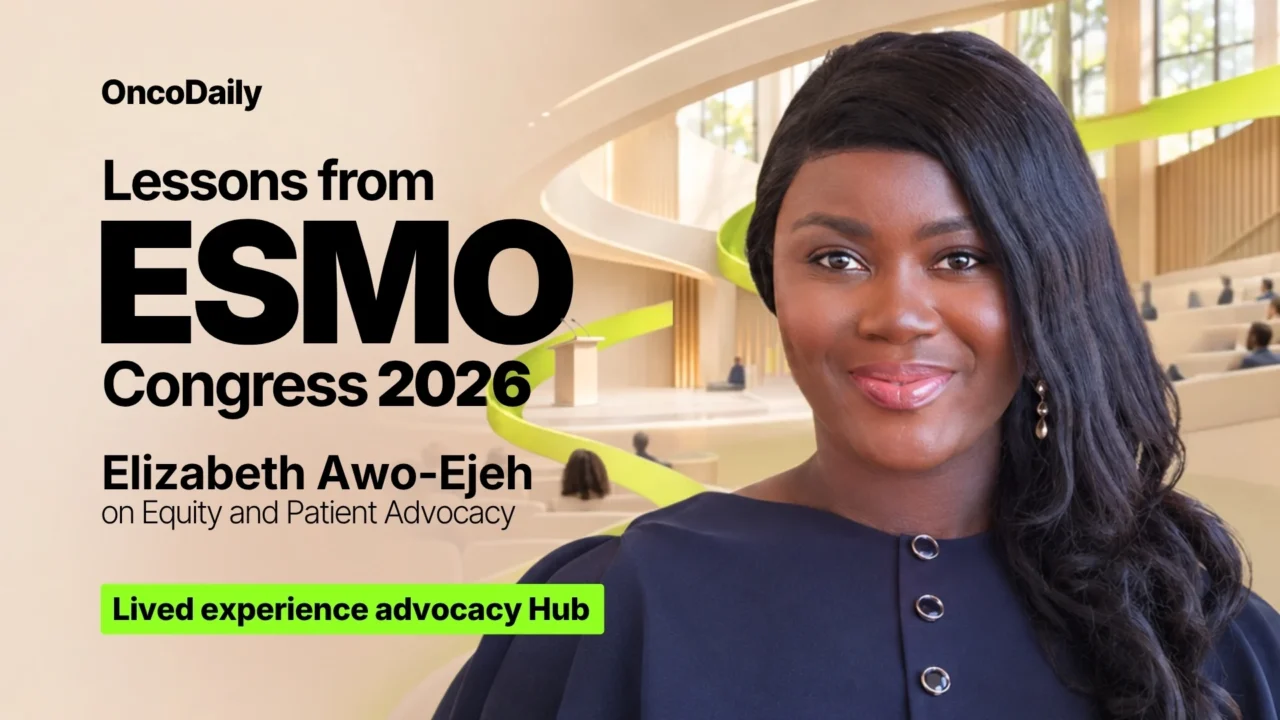
Elizabeth Awo-Ejeh | Nigeria | Founder, Shades of Bloom Health Awareness Foundation
Patient Advocate Events Insights is a series highlighting the experiences of patient advocates and people with lived cancer experience attending scientific conferences, training programmes, and international events. Through their perspectives, we explore the value of patient involvement, the barriers advocates face, and opportunities to make scientific spaces more inclusive.
In this edition, Elizabeth Awo-Ejeh, a breast cancer patient advocate and founder of Shades of Bloom Health Awareness Foundation in Nigeria, reflects on her experience at ESMO Congress 2026 in Madrid, Spain.
From discussions on health equity and innovation to the challenges of meaningful patient participation, Elizabeth shares why scientific progress must be accompanied by equitable access and why patient advocates should be recognised as partners in shaping cancer care.
What motivated you to attend ESMO Congress 2026?
As a breast cancer patient advocate and founder of Shades of Bloom Health Awareness Foundation in Nigeria, I was motivated to attend ESMO Congress 2026 to learn about advances in cancer care, health equity, digital health, and innovative approaches to improving patient outcomes.
As someone living with cancer and actively involved in advocacy, I believe it is important to bridge the gap between scientific knowledge and the realities patients face, especially in underserved communities where access to timely diagnosis and treatment remains a challenge.
I wanted to learn from global experts, connect with fellow patient advocates and healthcare professionals, and gain knowledge that I could share with my community and apply to strengthen our cancer awareness, patient support, and advocacy initiatives in Nigeria.
How did you fund your attendance?
I received a grant to attend ESMO Congress 2026.
What session had the biggest impact on you, and why?
The session on “Access, Equity, and Reducing Inequalities” had the biggest impact on me because it addressed one of the major challenges facing cancer patients, particularly those in underserved communities: unequal access to timely diagnosis, treatment, and quality care.
As a breast cancer patient and advocate in Nigeria, I understand how challenging access to cancer care can be.
The session reinforced my belief that improving cancer outcomes requires more than medical advances. We must also address the barriers that prevent patients from benefiting from them.
It inspired me to continue advocating for equitable cancer care, strengthening community-based awareness initiatives, and ensuring that patients’ voices are included in healthcare policies and decisions.
What surprised you the most?
What surprised me the most was seeing how much progress is being made in cancer research, digital health, and innovative treatments, while many patients still struggle to access basic cancer care.
Did you feel that the patient perspective was well represented?
I felt that the patient perspective was represented in some discussions, particularly those addressing access, equity, and reducing inequalities. However, I believe there is still room for greater patient involvement in scientific conferences and decision-making.
One experience that stood out to me was seeing a patient advocate who was not given the opportunity to enter an exhibition booth. This raised concerns for me about how meaningfully patient advocates are included in these spaces.
Patient advocates should not only be present at conferences. They should also be welcomed, respected, and given opportunities to contribute.
As a cancer patient and advocate from Nigeria, I believe patients must be actively involved in shaping cancer research, policies, and treatment decisions.
Their voices are essential to ensuring that advances in cancer care address the real needs of patients, especially those in underserved communities.
If you could change one thing about the conference for patient advocates, what would it be?
I would ensure that patient advocates are meaningfully included in every aspect of the conference, not just as attendees but as equal partners.
This would include more opportunities to participate in discussions, engage with researchers and healthcare professionals, and access relevant spaces such as exhibition booths.
My experience of seeing a patient advocate unable to enter a booth made me realise that we still have work to do to ensure genuine inclusion.
Patient advocates bring lived experience that can help bridge the gap between scientific innovation and the realities of living with cancer.
Our voices deserve to be heard, respected, and included in decisions that shape cancer care.
Did you make any new collaborations or connections?
I made a few new connections during ESMO Congress 2026, although not as many as I had hoped.
I exchanged contact details with several individuals and look forward to building these relationships and exploring future collaborations in cancer advocacy.
As the founder of Shades of Bloom Health Awareness Foundation in Nigeria, I hope these connections will create opportunities for knowledge sharing, partnerships, and initiatives that improve cancer awareness, patient support, and access to care, particularly in underserved communities.
If another advocate is considering attending next year, what advice would you give them?
My advice would be to go with an open mind, be ready to learn, ask questions, and connect with other patient advocates, researchers, and healthcare professionals.
Take advantage of the opportunity to learn about new developments in cancer care while also sharing your own experiences and perspectives.
I would encourage advocates to prepare ahead of time, identify sessions relevant to their work, and actively seek networking and collaboration opportunities.
Most importantly, remember that your voice and lived experience matter.
We bring a unique perspective that can help make cancer care more patient-centred and inclusive.
I would also encourage future attendees to advocate for meaningful patient involvement, ensuring that patient advocates are not just present at conferences but are welcomed, respected, and given opportunities to contribute.
What would you like organisers to know about people with lived cancer experience and advocates who attend the conference?
I would like organisers to understand that people with lived cancer experience and patient advocates bring more than personal stories. We bring valuable insights into the realities, challenges, and unmet needs of patients.
We understand what it means to navigate a cancer diagnosis, access treatment, experience side effects, and face the emotional and financial burden of the disease.
Our involvement should go beyond simply being invited to attend. We deserve meaningful opportunities to participate in discussions, contribute to decision-making, network with experts, and access relevant conference spaces.
My experience at this conference made me realise that there is still room to improve how patient advocates are included.
I encourage organisers to make patient involvement a priority by ensuring that advocates are welcomed, respected, and given a genuine platform to contribute.
Nothing about patients should be decided without patients.
When lived experience is combined with scientific knowledge, we can build a more compassionate, inclusive, and equitable cancer care system for everyone.
What value do patient advocates and people with lived experience bring to researchers, healthcare professionals, and industry during scientific conferences?
Patient advocates and people with lived cancer experience bring a unique and valuable perspective that cannot be found in research data alone.
We help researchers, healthcare professionals, and industry understand the real-life experiences of patients, including the challenges of accessing treatment, the financial and emotional burden of cancer, side effects, stigma, and inequalities in care.
We help ensure that research and innovations are not only scientifically advanced but also relevant, accessible, and responsive to patients’ actual needs.
For researchers, we can help identify research priorities that matter to patients.
For healthcare professionals, we offer insights into the patient experience and the importance of compassionate, patient-centred care.
For industry, we can provide perspectives on treatment accessibility, affordability, and the impact of new therapies on quality of life.
As a cancer patient advocate from Nigeria and founder of Shades of Bloom Health Awareness Foundation, I believe our voices are particularly important in highlighting the realities of patients in low- and middle-income countries, where access to diagnosis and treatment remains a major challenge.
Our role should go beyond sharing our stories. We should be included as partners in discussions, research, policy development, and decision-making.
When science meets lived experience, we have a better chance of developing cancer care that truly works for everyone.
You can also read:
Training Opportunity: Making Room for Mixed Emotions (A Fresh Chapter)
25 Posts Not to Miss from ESMO Congress 2026: Day 5