





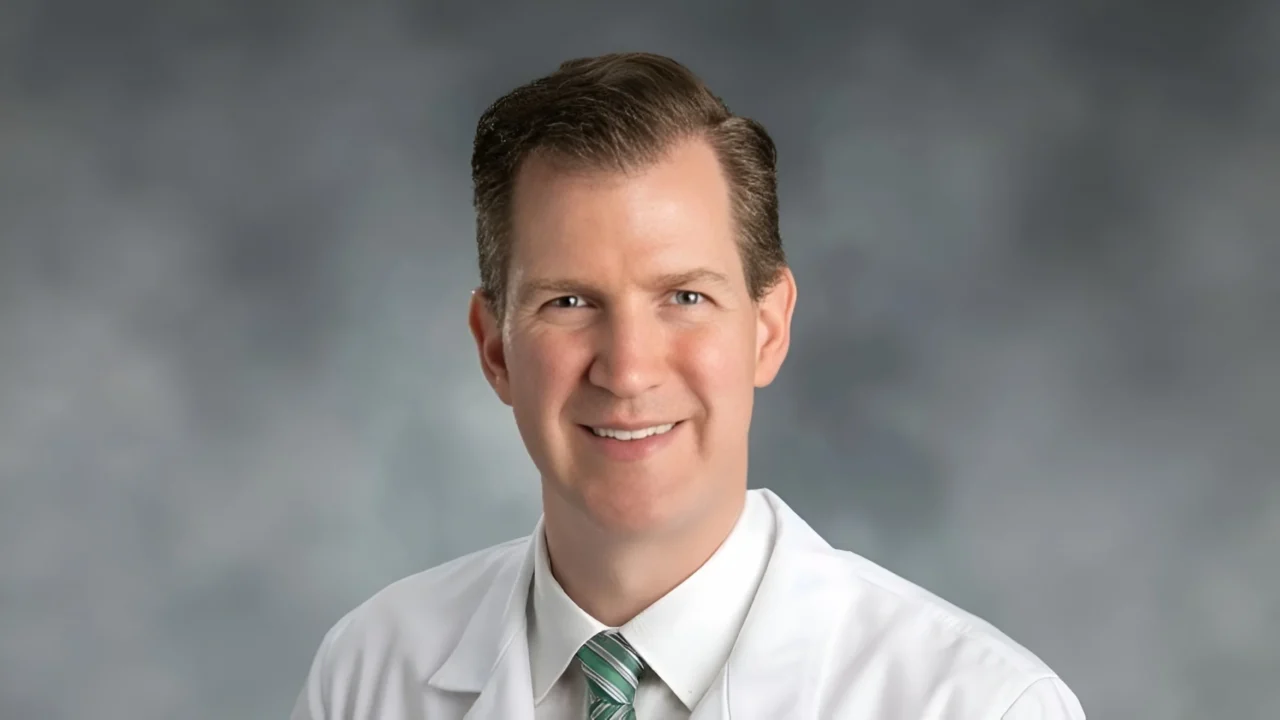
Christian Hyde, Clinical Assistant Professor at Wayne State University School of Medicine and Chief Executive Officer of Afton Oncology, shared a post on LinkedIn about a paper by Steven J Frank et al. published in The Lancet:
“Head and Neck cancers, especially tonsil and tongue base, are some of the hardest for patients and their physicians to treat.
These usually show up as a growing lump or lymph node in the neck that won’t go away. These are often caused by chronic HPV viral infections in the throat among both men and women; smoking and alcohol also increase risk. Continuing my series, the ABCs of PRT (PRoton Therapy), we’re on ‘H’ for H&N.
For 20 years, 7 weeks of daily X-ray radiation (IMRT) plus weekly cisplatin chemo given concurrently have been the main standard of care in the US for these cancers. We’ve tried adding immunotherapy, cutting the dose of X-rays to 6 weeks, getting rid of chemo by using Cetuximab, or reducing radiation by adding robotic surgery.
All of these efforts were no better than cisplatin with IMRT. New innovation was clearly needed, and we’ve known for about 10 years that IMPT (Intensity Modulated Proton Therapy) can help spare large areas of the head and neck (color image from Frank SJ, et al. Comparing IMPT With IMRT for Oropharyngeal CA… Semin Radiat Oncol 2018).
Proton therapy uses charged particles that stop in and around the tumor. Compared to X-rays (photons) that go in one side of the body and out the other, protons can reduce the total amount of radiation to the head and neck by 50% or more. This is particularly important for the throat lining, bone marrow and saliva glands.
The Lancet recently published a randomized trial of protons vs photons for Oropharynx cancer, led by Dr. Steven Frank at MD Anderson, who has labored on this for over a decade.
The results are quite impactful, showing that proton patients live longer and have better quality of life on average. Key results include less painful swallowing and reduced need for feeding tubes, going from 40% (X-rays) to 27% (protons) of patients needing a tube.
Reduced dose to spine marrow with protons meant higher white blood counts so the immune system can better monitor cancer and infections.
Reduced saliva gland dose resulted in less dry mouth with protons, which is really important for patient quality of life.
Slowly but surely, progress is being made!”
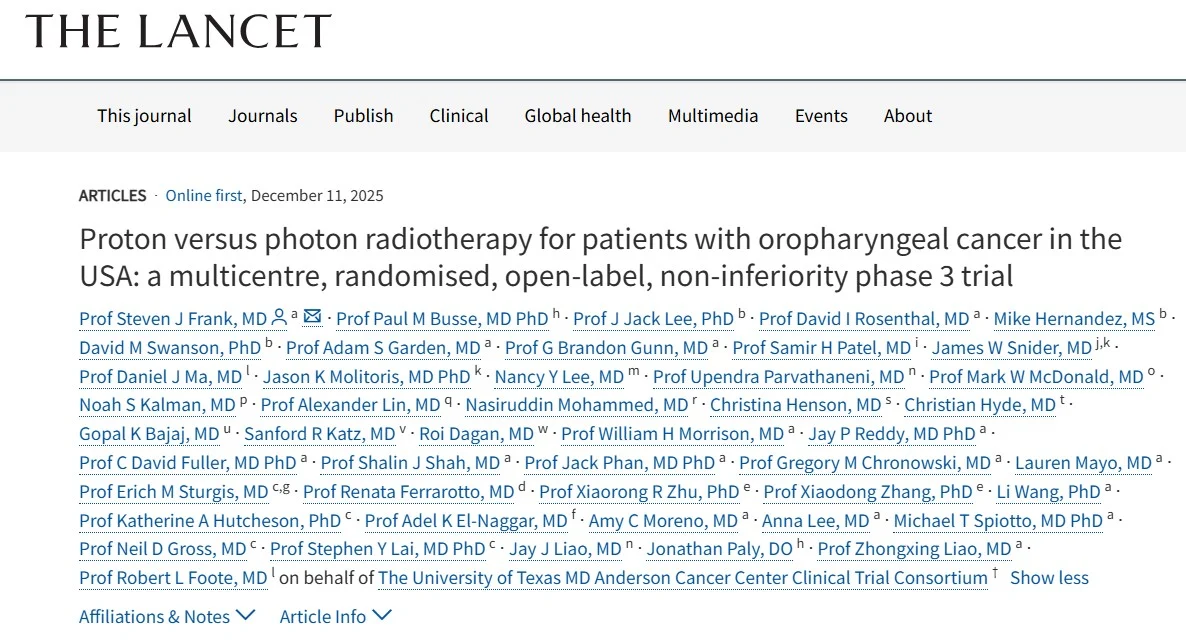
Title: Proton versus photon radiotherapy for patients with oropharyngeal cancer in the USA: a multicentre, randomised, open-label, non-inferiority phase 3 trial
Authors: Steven J Frank, Paul M Busse, J Jack Lee, David I Rosenthal, Mike Hernandez, David M Swanson, Adam S Garden, G Brandon Gunn, Samir H Patel, James W Snider, Daniel J Ma, Jason K Molitoris, Nancy Y Lee, Upendra Parvathaneni, Mark W McDonald, Noah S Kalman, Alexander Lin, Nasiruddin Mohammed, Christina Henson, Christian Hyde, Gopal K Bajaj, Sanford R Katz, Roi Dagan, William H Morrison, Jay P Reddy, C David Fuller, Shalin J Shah, Jack Phan, Gregory M Chronowski, Lauren Mayo, Erich M Sturgis, Renata Ferrarotto, Xiaorong R Zhu, Xiaodong Zhang, Li Wang, Katherine A Hutcheson, Adel K El-Naggar, Amy C Moreno, Anna Lee, Michael T Spiotto, Neil D Gross, Stephen Y Lai, Jay J Liao, Jonathan Paly, Zhongxing Liao, Robert L Foote
You can read the full article in The Lancet.
More posts featuring Christian Hyde.