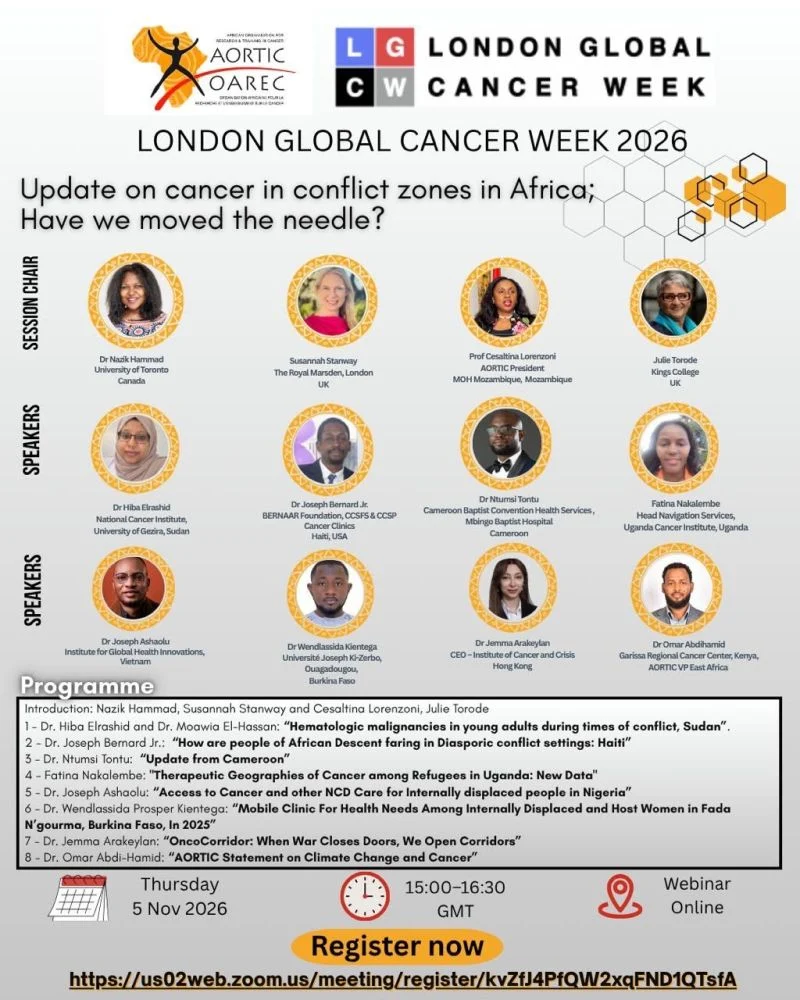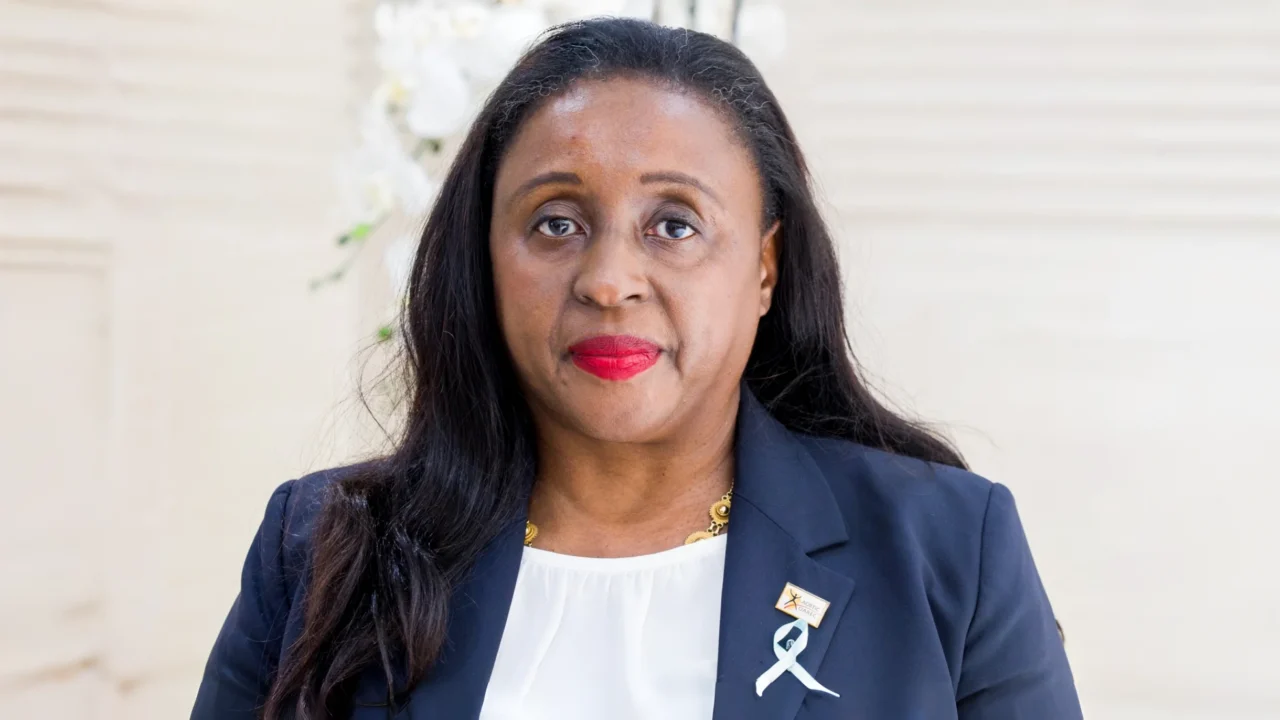
Cesaltina Lorenzoni, President of the African Organisation for Research and Training in Cancer (AORTIC), shared on LinkedIn:
“Virtual Participation | London Global Cancer Week 2026
I participate virtually in the London Global Cancer Week 2026, in a joint session with AORTIC, entitled:
‘Update on Cancer in Conflict Zones in Africa: Have We Moved the Needle?’
This timely and important session brought together experts from different regions of Africa and beyond to examine the devastating impact of conflict, displacement and humanitarian crises on cancer prevention, diagnosis, treatment and care.
The discussions highlighted experiences and evidence from several countries and settings, including:
- Sudan, addressing hematologic malignancies in young adults during times of conflict;
- Haiti, exploring how conflict and instability affect people of African descent living in diaspora and conflict-affected settings;
- Cameroon, providing an important update on the cancer situation in a country affected by prolonged conflict and humanitarian challenges;
- Uganda, presenting new data on the therapeutic geographies of cancer among refugees, and the challenges of accessing cancer care across displacement settings;
- Nigeria, focusing on access to cancer care for internally displaced people;
- Burkina Faso, sharing the experience of a mobile clinic responding to the health needs of internally displaced and host women in Fada N’gourma;
- Kenya and East Africa, contributing perspectives on regional cancer care challenges and AORTIC’s role in strengthening responses across the region.
The session also highlighted innovative humanitarian approaches, including the ‘Oncology Corridor: When War Closes Doors, We Open Corridors’, demonstrating the importance of finding practical and collaborative solutions to ensure continuity of cancer care when conventional health systems are disrupted.
As President of AORTIC – I was honoured to contribute to this critical dialogue and to join colleagues in asking an essential question: Have we truly moved the needle?
The evidence presented reminds us that, despite progress, millions of people living in conflict-affected and displaced communities continue to face unacceptable barriers to cancer care. Conflict can interrupt prevention programmes, delay diagnosis, destroy health infrastructure, disrupt access to medicines and force patients and healthcare professionals to flee.
Cancer does not stop during conflict. Neither should our commitment to cancer patients.
We must strengthen collaboration, generate better evidence, invest in resilient health systems and develop innovative models of care capable of reaching patients affected by war, displacement and humanitarian crises.
I sincerely thank London Global Cancer Week, AORTIC, Specialy Nazik Hammad, all the speakers for creating such an important platform and for ensuring that the voices and needs of people living with cancer in conflict zones remain firmly on the global health agenda.”
Find out more:
More about OncoCorridor.