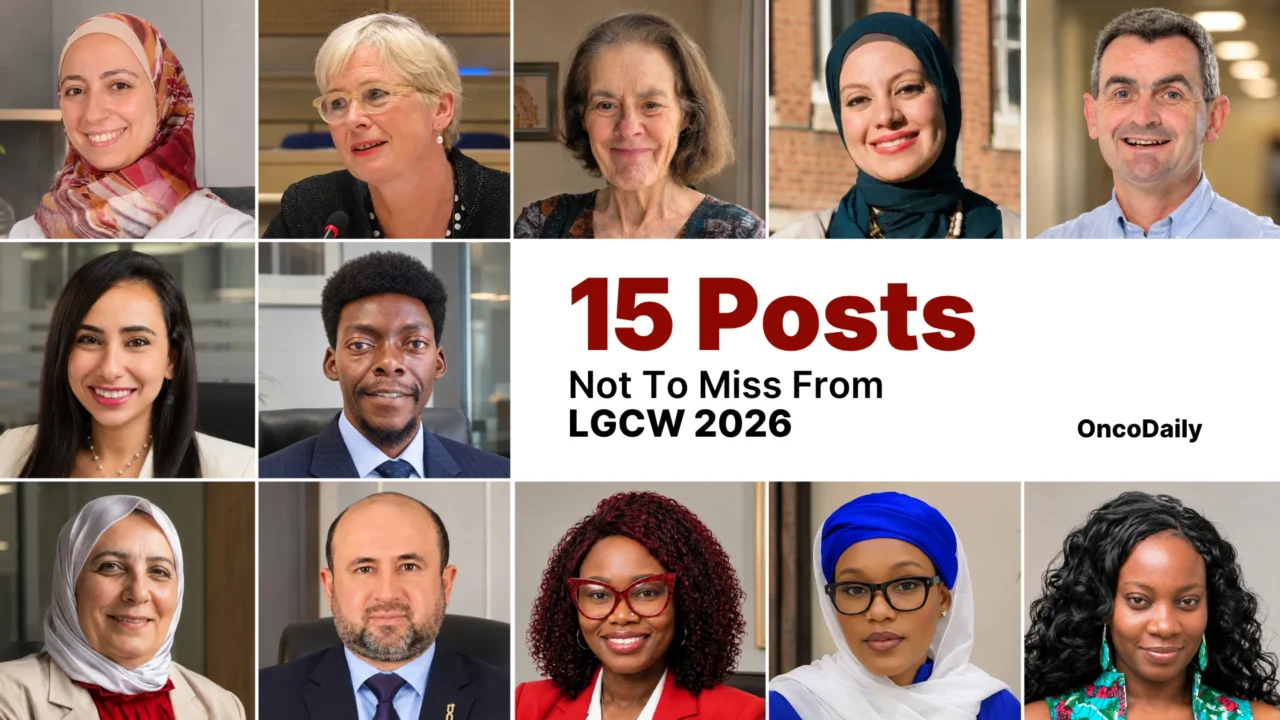
London Global Cancer Week (LGCW) 2026, taking place from November 2–6, has brought together oncology professionals, researchers, policymakers, international organisations, patient advocates, and healthcare leaders to address some of the most pressing challenges in global cancer care.
Across the first three days, discussions have examined inequalities in cancer prevention, early diagnosis, treatment access, clinical research, healthcare financing, and workforce development. Sessions have also highlighted the importance of international partnerships, community engagement, and sustainable health systems in improving cancer outcomes worldwide.
From the role of oncology nurses and cancer registries to childhood cancer diagnosis, radiotherapy access, and clinical trial participation, the programme has placed particular emphasis on translating scientific knowledge into practical improvements in patient care.
Here are the highlights from November 2–4, including key discussions and perspectives shared by participants.
L’OncoDaily Session at London Cancer Week 2026: Advancing the Global Conversation on Cancer Care
November 2: Opening Discussions Put Cancer Equity at the Centre
The opening day of London Global Cancer Week featured discussions on cancer survivorship, prevention, surgical oncology, nursing, palliative care, and equitable access to innovative treatments.
Organisations from across the world contributed to a programme examining the clinical, social, economic, and structural barriers that continue to influence cancer outcomes.
Beyond Survival: Addressing the Needs of Cancer Survivors
The China Anti-Cancer Association (CACA) contributed to the opening day’s programme, with cancer survivorship emerging as an important subject of discussion.
As cancer survival improves, healthcare systems face growing responsibilities in addressing the long-term physical, psychological, social, and financial consequences of cancer and its treatment.
In her LinkedIn reflections, Dr. Olubukola Ayodele, Co-Convenor and Co-Chair of London Global Cancer Week, highlighted the importance of ensuring that survivorship services are accessible to patients across different healthcare settings.
The discussion raised questions about whether health systems are adequately prepared to support the increasing population of cancer survivors and whether improvements in survival are being accompanied by corresponding improvements in quality of life.
Cancer Prevention Through Public Policy
The World Cancer Research Fund (WCRF) International organised Putting Cancer on the Label: Lessons for Advancing Alcohol Policy Across the Globe.
The session examined cancer warning labels on alcoholic beverages as a public health intervention, drawing on international experiences and the challenges associated with translating scientific evidence into effective legislation.
Discussions emphasised that cancer prevention extends beyond individual behavioural choices and requires supportive public policies, regulatory measures, and coordinated public health strategies.
Bringing Breast Cancer Care Closer to Communities
The session on Integrative Oncology in Breast Cancer: A Step Towards Decentralisation explored opportunities to involve community practitioners, patients, survivors, and families more closely in breast cancer care.
The discussion considered how decentralised approaches could improve access to supportive services and strengthen continuity of care beyond specialist cancer centres.
Dr. Ayodele also highlighted the importance of recognising communities as essential participants in cancer care rather than viewing oncology services exclusively through hospital-based treatment.
OncoDaily Asks: Who Gets the Trial, the Drug, the Chance?
One of the opening day’s discussions was organised by OncoDaily, under the title Democratizing Oncology: Who Gets the Trial, the Drug, the Chance?
The session addressed inequalities in access to clinical trials, innovative cancer medicines, specialist services, and emerging treatment opportunities.
While advances in oncology continue to expand therapeutic options, their benefits remain unevenly distributed across countries and healthcare systems.
The programme examined the financial, institutional, and structural challenges that influence access to treatment, particularly in resource-limited settings.
In her reflections on the session, Dr. Ayodele drew attention to the importance of ensuring that scientific innovation translates into meaningful improvements for patients who currently face barriers to accessing modern cancer care.
Strengthening Regional Cancer Services and Palliative Care
Additional sessions examined lung cancer management in Central Asia and the Caucasus, challenges in global surgical oncology, and opportunities to strengthen palliative care within healthcare systems.
The Kazakhstan Cancer Society organised a discussion on building a regional network for equitable lung cancer care, while Two Worlds Cancer Collaboration addressed barriers and solutions to integrating palliative care into health systems.
Other sessions explored cancer diagnosis, gender parity in the surgical workforce, and the management of frail older patients with cancer.
Together, the opening day’s programme demonstrated the breadth of challenges that must be addressed to improve cancer outcomes across diverse populations.
November 3: Oncology Nursing, Cancer Survival Data, and Healthcare Financing
The second day shifted attention towards three essential components of effective cancer systems: the healthcare workforce, reliable population-based data, and sustainable financing.
Sessions also examined childhood cancer services, tobacco industry disinformation, cervical cancer prevention, patient navigation, and international research partnerships.
Oncology Nurses as Leaders in Cancer Care
The Global Power of Oncology Nursing (GPON) organised Empowered Oncology Nurses Transform Cancer Care, highlighting the contribution of specialist nursing education, professional leadership, and international collaboration.
In her Day 2 reflections on LinkedIn, Dr. Ayodele described the session organised by Professor Annie Young and fellow oncology nurses.
She highlighted the contribution of Naomi Oyoe Ohene Oti, who discussed the impact of training programmes and partnerships in Ghana and other African countries.
The session demonstrated the importance of investing in oncology nursing education, supporting leadership development, and ensuring that nurses participate in decisions concerning cancer service delivery and health-system development.
CONCORD-4: Understanding Global Differences in Cancer Survival
Another major discussion was the presentation of CONCORD-4, the international programme examining trends in population-based cancer survival.
The session, organised by the London School of Hygiene & Tropical Medicine, brought attention to the importance of reliable cancer survival data in evaluating healthcare performance and identifying inequalities between populations.
According to Dr. Ayodele’s account, the session was chaired by Vania Wisdom and Richard Horton, Editor-in-Chief of The Lancet, with contributions from the CONCORD-4 team led by Claudia Allemani, Michel Coleman, and Veronica Di Carlo.
The programme’s international scope provides opportunities to compare survival outcomes across countries and over time.
However, limited representation from some regions, particularly Africa, remains an important concern.
The discussion reinforced the importance of strengthening population-based cancer registries and improving the availability and quality of survival data.
Without comprehensive information, countries face significant difficulties in evaluating cancer-control programmes, identifying underserved populations, and measuring progress.
Financing Equitable Cancer Care: Beyond Increasing Investment
The Global Surgery Policy Unit, involving the Royal College of Surgeons of England and the London School of Economics and Political Science, organised Equity in Financing Global Cancer Care?
The session examined public financing, universal health coverage, governance, and the financial barriers affecting access to cancer services.
According to Dr. Ayodele’s recap, Zainab Shinkafi-Bagudu, President of the Union for International Cancer Control (UICC), delivered a keynote address.
Robert Yates discussed the importance of public financing, while Dina Balabanova addressed the consequences of corruption and weak governance for healthcare access.
Richard Rainsbury shared experiences from a long-term breast cancer partnership in Zimbabwe, illustrating the importance of sustained international cooperation and local capacity development.
The discussion highlighted that increasing healthcare expenditure alone is insufficient without transparent governance, effective resource allocation, and investment in sustainable services.
Patient Navigation and Community Engagement Across Africa
The session Strengthening Cancer Care Pathways in Africa: Community Engagement, Patient Navigation and Global Partnerships examined approaches to improving continuity of care and reducing barriers encountered by patients.
Co-organised by RENAC-Sénégal and the American Cancer Society, the session focused on community engagement, patient navigation, and international partnerships.
Ahead of the discussion, David Gitonga shared on LinkedIn his expectations for the session, referring to experiences from ACS BEACON and SPARK.
He emphasised the importance of understanding where patients encounter difficulties in their care pathways and developing practical navigation systems that respond to those challenges.
The session, involving Andriy Chybisov, provided an opportunity to examine how locally informed approaches and partnerships can support more accessible and coordinated cancer services.
Childhood Cancer, Prevention, and Global Research Partnerships
The November 3 programme also included discussions on improving chemotherapy services for children in low- and middle-income countries, strengthening childhood cancer research collaboration, and expanding patient navigation services across Africa.
The International Society of Paediatric Oncology (SIOP) presented its Global Mapping initiative, while other sessions addressed community-led cervical cancer action in Nigeria, tobacco industry disinformation, and international clinical research partnerships.
These discussions highlighted the importance of adapting cancer-control strategies to local healthcare needs while strengthening cooperation between institutions and countries.
November 4: Childhood Cancer, Radiotherapy, and the Next Generation of Oncology
The third day of London Global Cancer Week brought renewed attention to early diagnosis, childhood cancer, radiotherapy access, cancer prevention, workforce diversity, and international research collaboration.
Sessions examined both established barriers to cancer care and emerging approaches intended to improve prevention, diagnosis, and treatment.
The Missing Children: Why Childhood Cancers Remain Undiagnosed
One of the day’s major sessions, The Missing Children: Why Half of the World’s Childhood Cancers Are Never Diagnosed, was organised with the involvement of the International Society of Paediatric Oncology (SIOP) and the International Pediatric Association (IPA).
The discussion addressed the substantial number of children worldwide whose cancers are never diagnosed or who do not reach appropriate treatment services.
Barriers include limited diagnostic infrastructure, delayed referrals, poverty, shortages of trained healthcare professionals, and restricted access to specialist paediatric oncology services.
Ahead of the webinar, Nita Radhakrishnan, Additional Professor and Head of the Department of Pediatric Hematology-Oncology at the Post Graduate Institute of Child Health, Noida, highlighted the discussion on LinkedIn.
The session drew attention to the need for stronger diagnostic pathways, improved referral systems, and international cooperation to identify children who remain outside established cancer care services.
Seeing Yourself in Oncology: Representation and Opportunity
Seeing Yourself in Oncology: Inspiring the Next Generation of Diverse Cancer Care Professionals addressed the importance of representation and inclusion across the oncology workforce.
The session aimed to encourage individuals from Global Majority communities to explore careers in cancer care by introducing the diverse professional roles involved in oncology.
Sarah Adomah, a clinical research and nursing professional in breast care, shared the initiative on LinkedIn, emphasising the importance of visibility and professional representation.
Through the experiences of oncology professionals, the programme sought to demonstrate the range of opportunities available in clinical care, research, nursing, and other areas of cancer services.
The discussion also highlighted the importance of creating accessible career pathways and supporting a more representative oncology workforce.
Rays of Hope: Expanding Access to Radiotherapy for Children
The International Atomic Energy Agency (IAEA) and St. Jude Global organised Power of Partnership: Rays of Hope for Childhood Cancer.
The session focused on the role of international partnerships in strengthening childhood cancer services, particularly access to radiotherapy.
Radiotherapy remains an essential component of treatment for many childhood malignancies, yet access to appropriate equipment, trained professionals, and specialised services differs substantially between healthcare systems.
The programme examined how cooperation between international organisations, clinical institutions, and national health systems can support training, infrastructure development, and improved treatment access.
World Radiotherapy Awareness Day: From International Initiative to African Action
Another session, From Global Vision to African Action: The WRAD Journey from LGCW 2024 to a Pan-African Movement, explored the development of World Radiotherapy Awareness Day (WRAD).
The programme examined efforts to increase recognition of radiotherapy as an essential cancer treatment and strengthen advocacy for improved access across Africa.
The discussion connected international awareness initiatives with regional collaboration and the need for sustained investment in radiotherapy services.
Improving Breast and Cervical Cancer Prevention
The Latin American and Caribbean Society of Medical Oncology (SLACOM) and CEDES organised Why Breast and Cervical Cancer Prevention Is Failing—and How to Fix It.
The session addressed persistent barriers to prevention, screening, and early detection, including inequalities in access to services and limitations in the implementation of effective cancer-control programmes.
A separate SLACOM session examined emerging prevention strategies, including ultrascreening and risk reduction.
The discussions reflected the importance of combining established public health interventions with carefully evaluated innovations to improve cancer prevention and early detection.
Strengthening Global Cancer Research and Patient-Centred Evidence
Additional sessions addressed research capacity building, international collaboration, health economics, and patient participation in oncology research.
The IHCRI Rwanda Cancer Webinar Series brought together organisations involved in cancer research and healthcare development to examine opportunities for strengthening research infrastructure and international cooperation.
The University of Hertfordshire, in collaboration with the Global Academic Foundation and St. Jude Children’s Research Hospital, contributed a session on generating health economic and patient-centred evidence.
The University of Bristol also organised a discussion on improving patient and public involvement in colorectal cancer research through global partnerships.
These sessions emphasised the importance of developing research that reflects the priorities, experiences, and healthcare needs of the populations it is intended to serve.
Looking Ahead: November 5–6
London Global Cancer Week continues with further discussions on cancer equity, survivorship, healthcare innovation, and international collaboration.
On November 5, the African Organisation for Research and Training in Cancer (AORTIC) will host Update on Cancer in Conflict Zones in Africa: Have We Moved the Needle?, examining the challenges of delivering cancer care in conflict-affected settings.
The Canadian Global Oncology Network and European Cancer Organisation will present Breaking Barriers, Globally: 2SLGBTQI+ Cancer Equity Across Continents, addressing inequalities affecting sexual and gender minority populations throughout the cancer continuum.
Another important discussion, organised by the NCD Alliance – Eastern Mediterranean Region and partners, will examine Transforming Cancer Care in the Eastern Mediterranean: From Fragmented Services to People-Centred Care.
Layth Mula-Hussain, Radiation Oncologist at BC Cancer and the University of British Columbia, announced his participation, highlighting his presentation on early diagnosis, radiotherapy, and technological innovation in challenging healthcare settings.
Other sessions will address adolescent and young adult cancer care, childhood cancer survivorship, health tax reform, and the Common Sense Oncology movement.
The week will conclude on November 6 with the flagship event, Global Partnerships for Equitable Cancer Care: Moving From Local Insight to Worldwide Impact, bringing together stakeholders to consider how international collaboration can support practical improvements in cancer services.
Three Days, One Continuing Challenge: Making Cancer Care Accessible
The first three days of London Global Cancer Week 2026 have demonstrated that progress in global oncology depends on more than the development of new treatments and technologies.
Discussions have repeatedly returned to the importance of strengthening healthcare workforces, improving cancer surveillance, investing in prevention and early diagnosis, expanding access to essential treatments, and establishing sustainable financing mechanisms.
From childhood cancer diagnosis and radiotherapy access to patient navigation, survivorship, and equitable participation in clinical research, the programme has illustrated how inequalities can arise at every stage of the cancer care pathway.
As London Global Cancer Week moves into its final two days, attention remains focused on how international partnerships, national health policies, and locally informed initiatives can contribute to more accessible, effective, and equitable cancer care.
Further information about the programme is available through the official London Global Cancer Week website.