City Cancer Challenge (C/Can) shared a post on LinkedIn:
“C/Can joined IARC – International Agency for Research on Cancer 60th anniversary international conference in Lyon, three days dedicated to turning cancer research into action.
The conference brought together researchers, policymakers, and public health professionals to address one of the most persistent challenges in global oncology: closing the gap between evidence and practice. It was the right room for a conversation we’ve been building toward.
At the heart of our participation was the session “Women, Power and Cancer: From Commission to Collective Action,” which built on the findings of The Lancet Group Commission on Women, Power and Cancer. Meritxell Mallafré-Larrosa spoke to what gender-responsive cancer systems actually look like when you move from principle to implementation.
The honest answer is: there’s no universal gender-responsive system in practice.
Through structured consultations in Tbilisi, Nairobi, and León, with clinicians, policymakers, civil society organisations, and women with lived experience, we found that while certain inequities recur across settings, how they manifest is highly context-specific.
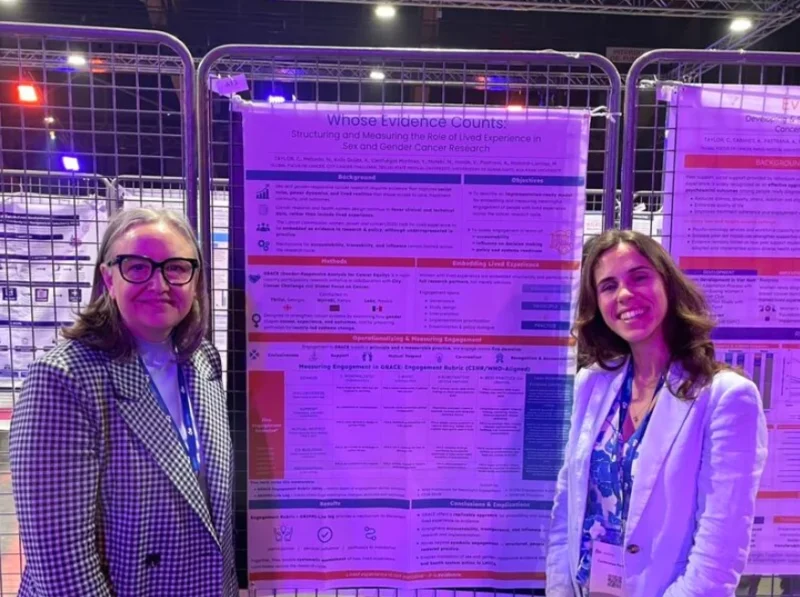
That context-specificity is exactly why we established Gender-Responsive Analysis for Cancer Equity (GRACE), a locally-led implementation research consortium generating evidence at patient, provider, system, and policy levels across all three cities, building models grounded in local realities, not global assumptions.
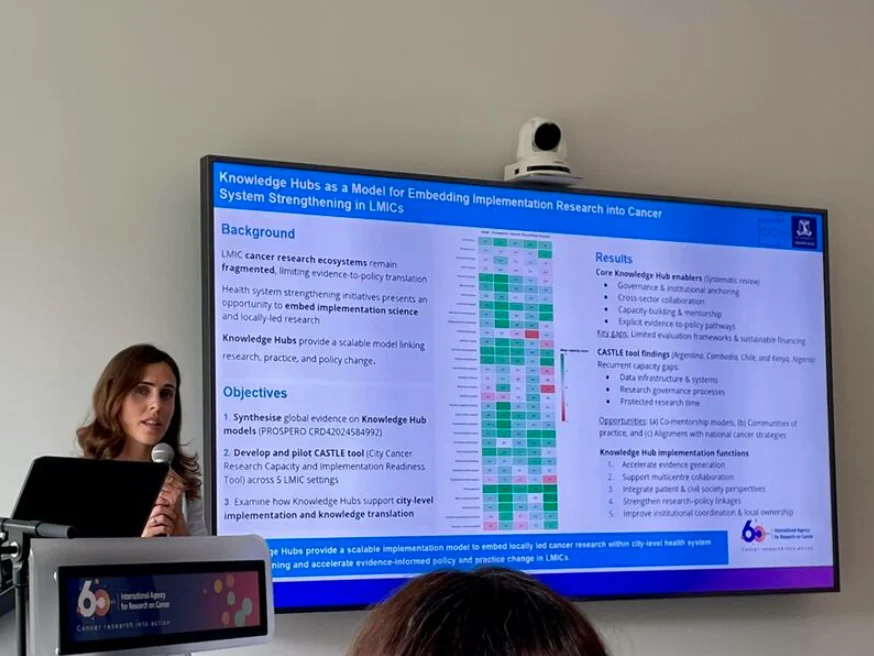
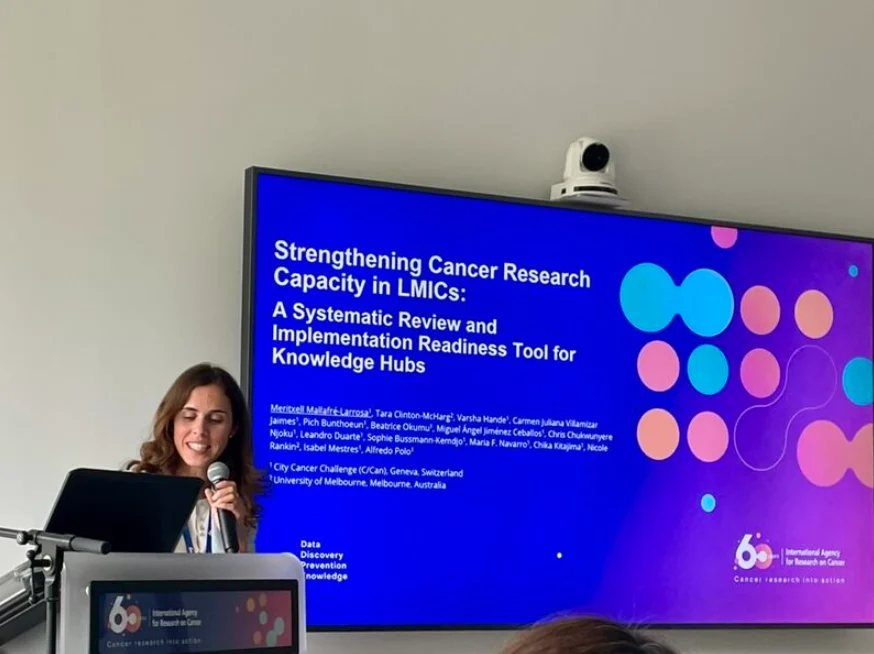
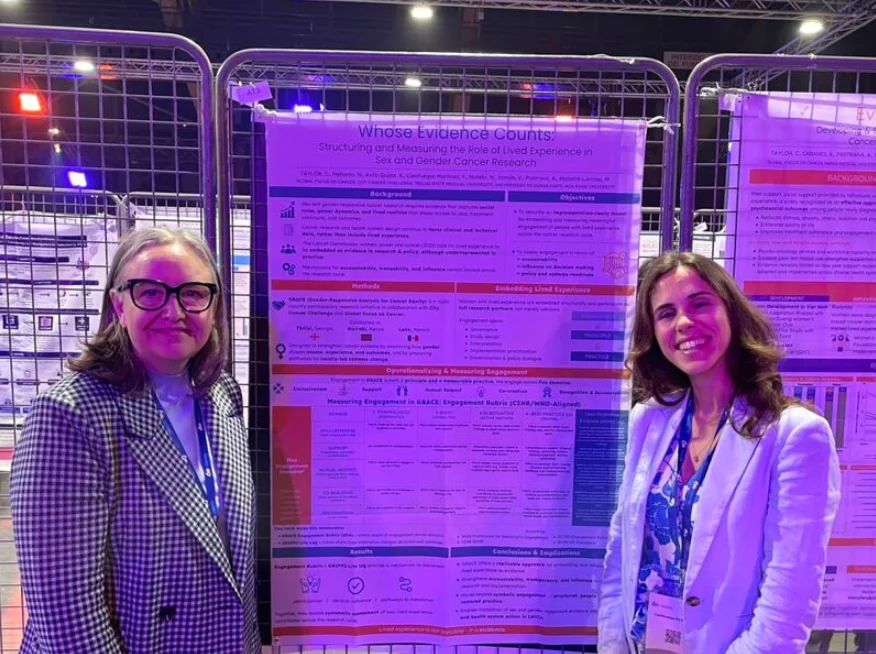
Meritxell also delivered a rapid-fire presentation on strengthening cancer research capacity in LMICs as part of ongoing collaboration with University of Melbourne, and presented a poster sharing early findings from the GRACE city consultations and the implementation priorities emerging from them.”