






Bristol Myers Squibb shared a post on LinkedIn:
“From today, Augtyro (repotrectinib) is listed on the Pharmaceutical Benefits Scheme (PBS) as a reimbursed treatment option for eligible adult patients with ROS1-positive locally advanced or metastatic non-small cell lung cancer (NSCLC). Repotrectinib is a second-generation tyrosine kinase inhibitor (TKI) that targets ROS1 gene fusion proteins driving NSCLC.
ROS1‑positive NSCLC is a rare cancer, occurring in approximately 1-2% of NSCLC cases, and is typically associated with younger patients and a history of never or light smoking.
Like all medicines, repotrectinib can cause side effects. Some side effects can be serious and may require medical attention. The most common side effects include change of taste, sensations like numbness, tingling or burning, constipation, shortness of breath, feeling tired, major change in thinking patterns, nausea, problems with balance and coordination and muscle weakness.
“The PBS listing of Augtyro is another important milestone for BMS Australia and it underscores our commitment to patients with rare forms of lung cancer.” – Meredith Edwards
For more information on side effects and the TGA registered indication, please refer to the Consumer Medicine Information (CMI) for repotrectinib.
Read the media release.”
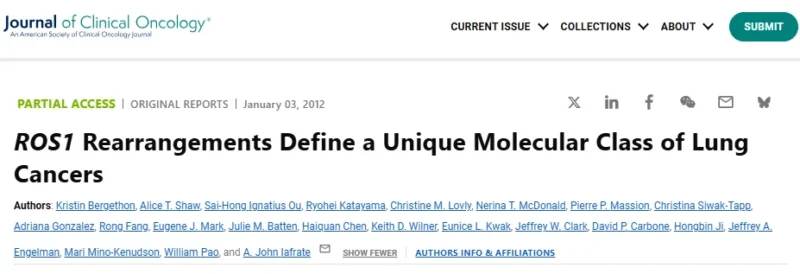
Title: ROS1 Rearrangements Define a Unique Molecular Class of Lung Cancers
Authors: Kristin Bergethon, Alice T. Shaw, Sai-Hong Ignatius Ou, Ryohei Katayama, Christine M. Lovly, Nerina T. McDonald, Pierre P. Massion, Christina Siwak-Tapp, Adriana Gonzalez, Rong Fang, Eugene J. Mark, Julie M. Batten, Haiquan Chen, Keith D. Wilner, Eunice L. Kwak, Jeffrey W. Clark, David P. Carbone, Hongbin Ji, Jeffrey A. Engelman, Mari Mino-Kenudson, William Pao, A. John Iafrate
Read the Full Article.
Other articles from Bristol Myers Squibb on OncoDaily.