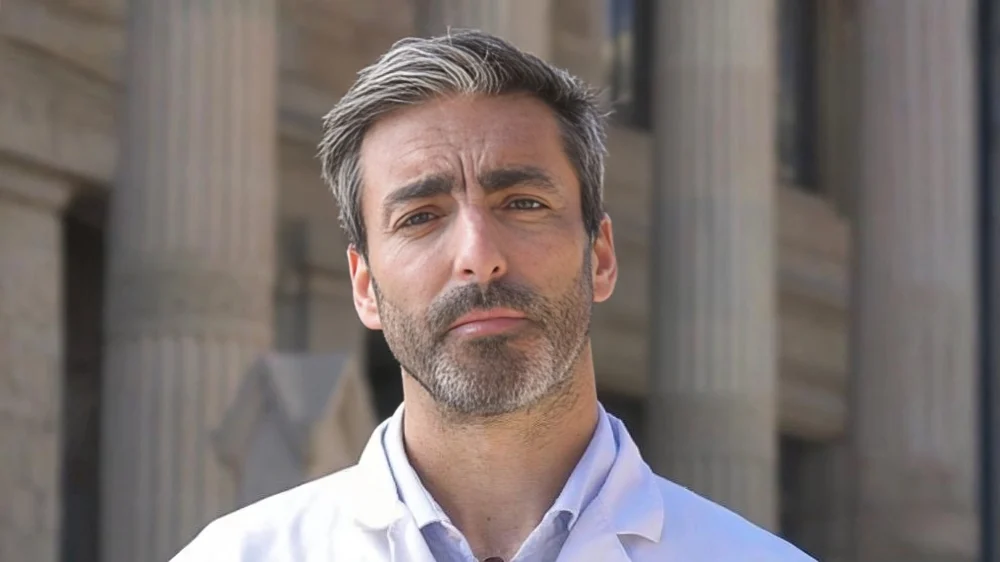
Benjamin Walbaum, Medical Oncologist at Pontifical Catholic University of Chile, shared a post on LinkedIn:
“My take from last week’s breast cancer papers: 4-10 MAY.
1. A chemotherapy-free, pathological response-adapted strategy using trastuzumab–pertuzumab and T-DM1 in HER2-positive early breast cancer: the PHERGain-2 study
Journal: Annals of Oncology
Chemotherapy-free HP followed by response-adapted HP or T-DM1 achieved high pCR rates in selected HER2-positive early breast cancer.
2. Extended Endocrine Therapy and Survival for Breast Cancer Subtypes in Premenopausal Patients
Journal: JAMA Network Open
Extended endocrine therapy was associated with lower recurrence risk across surrogate subtypes, with the strongest signal in luminal A–like disease.
3. The ARTEMIS trial identifies immune activation as a key predictor of neoadjuvant chemotherapy response in triple-negative breast cancer
Journal: Breast Cancer Research
Immune activation, more than molecular classification alone, emerged as a key predictor of neoadjuvant chemotherapy response in TNBC.
4. AI-predicted spatial transcriptomics unlocks breast cancer biomarkers from pathology
Journal: Cell
Path2Space suggests that routine H&E slides may help infer spatial biology and predict treatment response.
5. Risk factors and metastatic sites in HER2-positive breast cancer with pathological complete response
Journal: npj Breast Cancer
pCR is strongly prognostic in HER2-positive disease, but it does not eliminate the risk of brain metastases.
6. Pathologic complete response and survival in early-stage HER2-positive breast cancer patients treated with or without anthracyclines
Journal: ecancer
Our Chilean real-world data support anthracycline-free strategies, even in settings with limited access to dual HER2 blockade.
7. Predictive Value of Routine Imaging for the Diagnosis of Pathologic Complete Response After Neoadjuvant Chemotherapy in Breast Cancer
Journal: Annals of Surgical Oncology
Routine imaging alone remains insufficient to safely confirm pCR after neoadjuvant chemotherapy.
8. Concordance between clinician-reported toxicities and patient-reported symptom severity in early-stage breast cancer
Journal: ESMO Open
Clinicians frequently underestimate patient-reported symptoms, especially fatigue and pain.
9. Expert consensus on optimal management of liver-related adverse events during CDK4/6 inhibitor therapy
Journal: Clinical and Translational Oncology
As CDK4/6 inhibitors move earlier into curative-intent therapy, proactive liver monitoring becomes increasingly important.
10. Two decades of PARP inhibitor synthetic lethality in cancer
Journal: Nature
A reminder of how basic biology can become precision oncology—and why BRCA/HRD biology remains central.”