





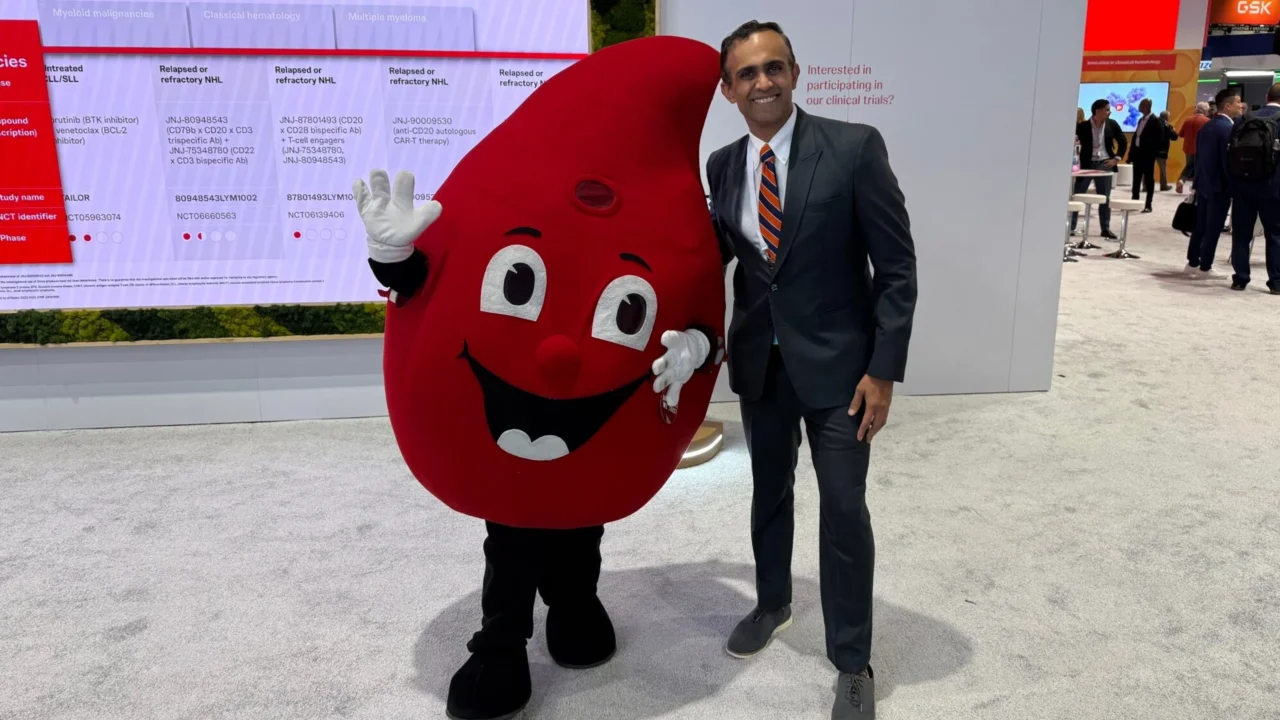
Ankit Kansagra, Adjunct Professor at UT Southwestern Medical Center, shared a post on LinkedIn:
“ASH 2025: A Watershed Moment for Hematology – And the Work That Lies Ahead
As we close out an extraordinary ASH 2025, I’m reflecting on how far we’ve come—and the exciting work ahead. This year showcased breakthroughs that would have seemed like science fiction just years ago:
In Vivo CAR-T Therapy: First-in-human data for KLN-1010 showed 100% MRD-negative responses in relapsed/refractory myeloma—without lymphodepletion or ex vivo manufacturing. This could fundamentally reshape access to cellular therapy.
Bispecifics Moving Earlier: MajesTEC-3 delivered stunning results—an 83% reduction in progression risk with teclistamab-daratumumab versus standard triplets in earlier lines. We’re now seeing bispecifics in first-line therapy and as immunoconsolidation. The paradigm is shifting.
Novel CAR-T Constructs: From BAFF CAR-T for NHL to point-of-care manufactured constructs, we’re seeing the next generation—greater persistence, reduced toxicity, broader applicability.
It was energizing to see my team and colleagues present data that will change how we care for patients with blood cancers.
As we approach the midpoint of this decade, I’m reminded of Atul Gawande’s prescient 2012 essay on the Cheesecake Factory (in comment) He wrote about how medicine has historically struggled with what other industries solved long ago: the rapid, equitable dissemination of innovation at scale. While the Cheesecake Factory can roll out 13 new menu items across 160 restaurants in seven weeks, it takes medical innovations an average of 15 years to reach even half of American patients—let alone patients globally.
His question: Could medicine learn to disseminate innovation this way?
I believe the answer is yes—and we’re seeing it happen.
Discovery and delivery are converging.
In vivo -T eliminates specialized manufacturing. Bispecifics work in community settings. These are delivery breakthroughs, not just scientific ones. We’re building accessibility into innovation from day one.
The exciting work ahead means:
- Designing therapies that are simpler to manufacture and administer
- Building training programs that work globally, not just at academic centers
- Creating integrated systems for safe delivery anywhere
- Ensuring sustainable economic models across diverse health systems
The science we celebrated at ASH is remarkable. The real opportunity is ensuring every patient, everywhere, can benefit.
Here’s to the next half of this decade—where innovation and access work hand in hand.”
More updates from ASH25 on OncoDaily.