
Bristol Myers Squibb (NYSE: BMY) and Jiangsu Hengrui Pharma (600276.SH; 01276.HK) on Tuesday unveiled one of the largest cross-border biopharma collaborations of the year: a global strategic alliance encompassing 13 early-stage programs across oncology, hematology, and immunology, with a potential total value of up to approximately $15.2 billion. The deal layers a $600 million upfront payment with structured anniversary payments and substantial milestone economics, and signals a definitive shift in how Western pharma is sourcing the next wave of innovative biologics from China’s accelerating discovery engines.
Key Deal Terms:
Under the agreements announced May 12, BMS will pay Hengrui up to $950 million, including a $600 million upfront payment, a $175 million first anniversary payment, and a second contingent anniversary payment of $175 million in 2028. Beyond those near-term commitments, the structure includes development, regulatory, and commercial milestones plus tiered royalties on net sales outside Greater China.
Headline Economic Terms:
- Upfront: $600 million
- First-anniversary payment: $175 million
- Contingent 2028 anniversary payment: $175 million
- Potential total deal value (milestones + option exercises + royalties): up to $15.2 billion
- Royalties: tiered, on ex-Hengrui-Territory net sales
- Expected close: Q3 2026, pending Hart-Scott-Rodino antitrust review
Pipeline and Geographic Scope:
The 13-asset portfolio is structured in three tranches. The agreements include four oncology/hematology assets from Hengrui, four immunology assets from BMS, and five innovative assets to be jointly discovered and developed by both companies, leveraging Hengrui’s discovery engine and platform technologies across several innovative modalities.
Geographically, the split is clean: BMS will have exclusive worldwide rights over the four assets originally from Hengrui, except for mainland China, Hong Kong and Macau. Hengrui, meanwhile, will obtain exclusive rights to the BMS-originated assets within these three markets—collectively called the Hengrui territory—with the pharma retaining ownership globally. Critically, the Chinese collaborator will also have the option to co-develop and co-commercialize certain assets internationally, alongside BMS—an unusually generous concession that distinguishes this transaction from comparable China-out licensing deals.
While the specific molecular targets remain undisclosed, the deal is widely expected to draw on Hengrui’s depth in antibody-drug conjugates (ADCs), bispecific antibodies, and small-molecule oncology platforms—the very modalities now driving the most competitive licensing markets globally.
Strategic Rationale: Why BMS, Why Now:
BMS: Patent Cliff and Clinical Velocity:
For BMS, the alliance addresses two converging pressures. First, the company faces a well-documented late-decade patent cliff on Eliquis and Revlimid and has been actively replenishing its pipeline through M&A and licensing. Second, and more strategically, it is buying access to China’s structural speed advantage in early development. The timeline from early discovery to clinical trial filing is 50% to 70% faster in China than the rest of the world, McKinsey found.
BMS CFO David Elkins acknowledged as much at a Citi investor event last December, calling China a “great way to get products into humans as quickly as possible to get to proof of concept.”
Hengrui will lead early clinical development of all 13 programs, including the four immunology assets in-licensed from BMS—an arrangement designed to compress proof-of-concept timelines by two to three years versus a US-led path.
Hengrui: Global Commercialization Muscle:
For Hengrui, the rationale is equally clear. The Shanghai- and Hong Kong-listed company posted RMB 27.985 billion (USD 3.86 billion) in revenues, a 22.63% year-on-year increase in 2024, with sales of innovative drugs reaching RMB 13.892 billion (USD 1.9 billion), reflecting a 30.6% expansion. But sustained growth requires ex-China commercialization muscle that Hengrui simply does not possess at scale.
Its lead PD-1 inhibitor camrelizumab (AiRuiKa) has nine approved indications in China but was set back in the US in May 2024 by an FDA complete response letter tied to manufacturing inspection deficiencies. BMS’s regulatory and commercial infrastructure offers a path that previous out-licensing partners—Elevar, Merck KGaA, Kailera—could not match.
Market Impact and Competitive Positioning:
The transaction reshapes the competitive map in several ways. It comes on the heels of GSK paying $500 million upfront to license one Hengrui candidate and secure options on 11 other programs last year, in a deal also worth up to $12 billion. BMS’s terms eclipse that benchmark on both upfront and headline value, and the inclusion of BMS-originated immunology assets going into Hengrui’s hands sets this deal structurally apart from any prior China-out arrangement.
Against direct competitors, BMS now possesses an arguably deeper Chinese-sourced pipeline than Merck & Co. or Roche, both of which have been more selective in their China dealmaking. For BeiGene—whose tislelizumab (Tevimbra) is currently the most successful Chinese-originated PD-1 globally—the read-through is mixed: validation of the China-out thesis, but heightened competition for the next generation of bispecifics and ADCs that will increasingly define oncology standards of care.
Expert Commentary:
This strategic collaboration with Hengrui Pharma reflects how we are rethinking early development to drive more efficient clinical learning and make better, data‑driven decisions earlier in the lifecycle.
— Cristian Massacesi, M.D., Executive Vice President, Chief Medical Officer and Head at Development of Bristol Myers Squibb.
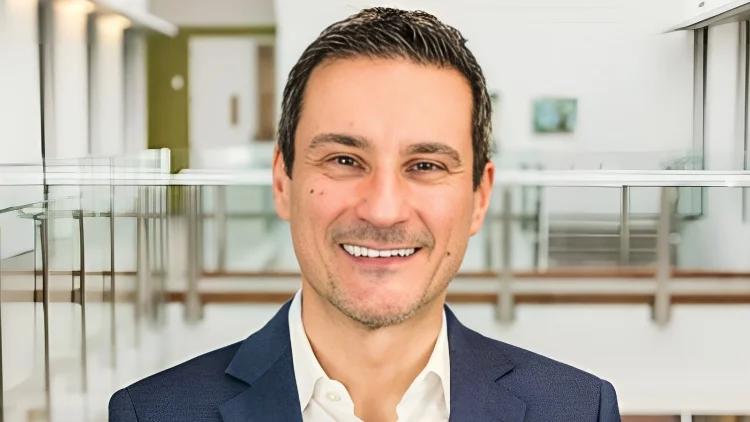
It also reflects Hengrui’s continued commitment to strengthen our global presence. Together, we aim to deliver meaningful benefits to patients worldwide.
— Frank Jiang, MD, PhD, Executive Vice President and Chief Strategy Officer of Hengrui Pharma.

Conclusion and Outlook:
For patients, the most immediate implication is timeline. If Hengrui’s early-development cadence holds, several of these 13 programs could enter global Phase 2 development by 2028, accelerating access to next-generation cancer and immune-mediated disease therapies that might otherwise have languished in single-region trials.
For the broader biotech landscape, the deal further entrenches what has become a defining theme of 2025–2026: the bidirectional integration of Chinese discovery science into Western development and commercialization pipelines, with deal economics that increasingly reflect China’s contribution as a peer—not a vendor.
The transaction is expected to close in Q3 2026, subject to HSR review.
Read more biotech insights on OncoDaily Biotech.
Written by: Semiramida Nina Markosyan, Editor, OncoDaily Canada