How do you plan a future when you no longer know how much of it you have?
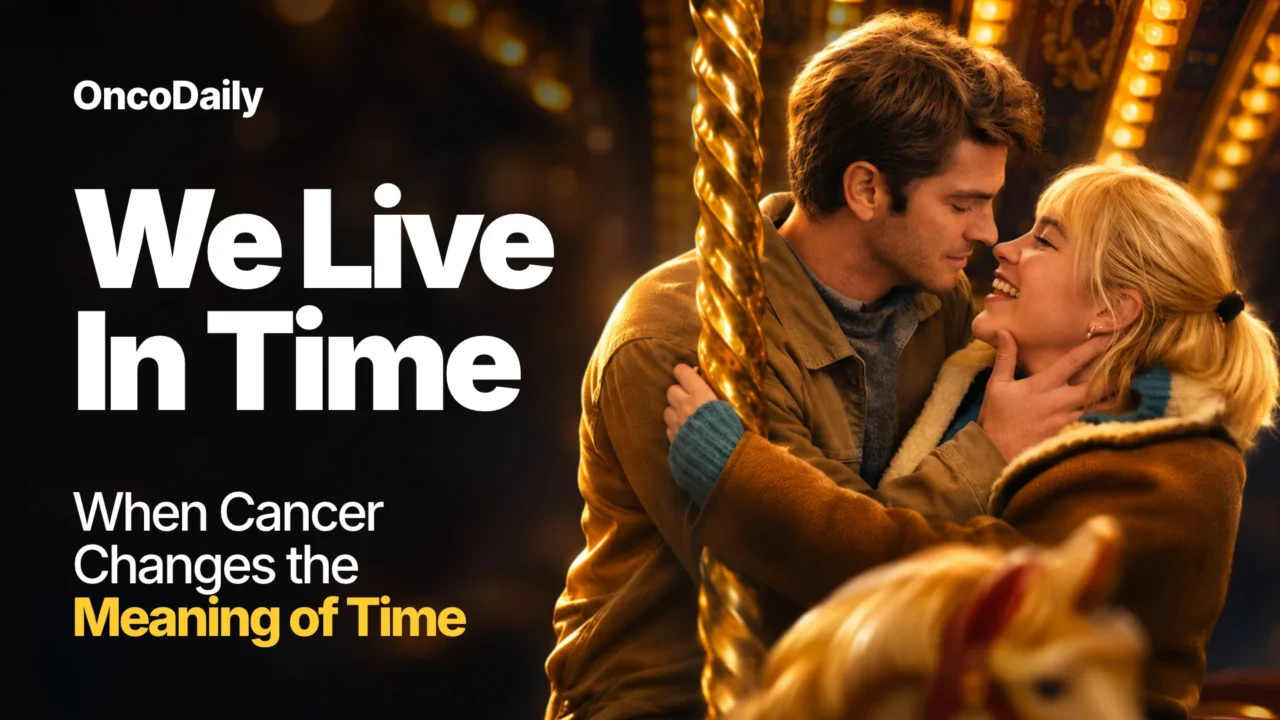
In We Live in Time (2024), director John Crowley explores this question through the relationship between Almut, played by Florence Pugh, and Tobias, portrayed by Andrew Garfield. What begins as an unconventional love story gradually becomes an intimate examination of illness, family, ambition, and the difficult choices that accompany a cancer diagnosis.
The film does not follow a conventional timeline. Instead, it moves between different moments in the couple’s relationship, allowing happiness and heartbreak to exist side by side. A seemingly ordinary memory can suddenly acquire a different meaning when viewed through the knowledge of what comes later.
At the center of the story is Almut’s experience with ovarian cancer. Yet the film’s significance extends beyond the disease itself, raising questions about patient autonomy, the responsibilities of caregivers, and what it means to live with uncertainty.
A Diagnosis That Changes Everything
Almut is a talented chef with a demanding career and a strong sense of independence. Her relationship with Tobias develops alongside her professional ambitions, eventually leading to marriage-like domestic commitments and parenthood.
Cancer enters their lives at a moment when they are building a future together.
After her initial diagnosis and treatment, Almut experiences a period of remission. The couple welcomes a daughter, and life begins to take on a familiar rhythm. When her cancer returns, however, they are forced to reconsider plans that once seemed certain.
One of the film’s strengths is its refusal to make illness the only defining event in Almut’s life. Her diagnosis is significant, but so are her career, her relationship with Tobias, and her experience of motherhood.
This distinction matters in oncology, where patients can sometimes feel that their identity has been replaced by a diagnosis.
Medical appointments, treatment schedules, and discussions about prognosis can gradually occupy much of everyday life. Maintaining a sense of independence and continuity can become an important part of coping with illness.
The Difficult Choice Between Treatment and Quality of Life
Following her recurrence, Almut faces a decision about further chemotherapy.
The possibility of extending her life must be weighed against treatment-related side effects and the time she hopes to spend with her family. Tobias wants her to pursue treatment, while Almut questions whether additional therapy is the right choice for her.
Their disagreement is one of the film’s most revealing moments.
For oncology professionals, such conversations are familiar. Patients may understand the potential benefits of treatment while remaining concerned about fatigue, nausea, loss of independence, or the effect of therapy on their daily lives.
The clinical question is not always limited to whether treatment is available. It also involves whether its expected benefits align with the patient’s priorities.
Shared decision-making is particularly important in these circumstances. Patients need clear information about treatment options, possible outcomes, adverse effects, and supportive care, without feeling pressured toward a particular decision.
The film does not provide a clinical framework for these discussions, nor should its fictional circumstances be treated as medical guidance. What it captures is the emotional complexity of making decisions when the consequences extend far beyond the hospital.
Why Almut Refuses to Give Up Her Ambitions
As her illness progresses, Almut remains determined to compete in a prestigious culinary competition.
To Tobias, her decision seems difficult to understand. He worries about her health and wants their remaining time together to be spent as a family.
For Almut, however, cooking represents a part of her life that cancer has not taken away.
Her determination introduces an uncomfortable but important question: should a person facing serious illness be expected to abandon personal ambitions in favor of what others consider more meaningful?
There is no universal answer.
Some patients may choose to reduce professional responsibilities and spend more time at home. Others may find purpose in continuing to work, travel, create, or pursue long-standing goals.
Neither response is inherently more courageous or appropriate.
Almut’s choices also reflect her concern about the memories she will leave for her daughter. She wants to be remembered for her passion, achievements, and personality, rather than solely for the circumstances of her illness.
The desire to preserve identity and leave a personal legacy can be especially significant for people confronting life-limiting disease.
The Experience of Those Who Stay Beside the Patient
While Almut faces cancer, Tobias experiences a different form of uncertainty.
He tries to protect his partner, care for their daughter, and imagine a future that he increasingly fears may not include her.
His concern sometimes becomes frustration, particularly when Almut makes decisions he does not agree with.
Through Tobias, the film portrays the emotional difficulties experienced by caregivers, whose responsibilities may include providing practical assistance, managing family routines, and supporting treatment decisions while coping with their own fears.
Cancer can also change the dynamics of relationships. A partner may become a caregiver, ordinary disagreements may acquire greater emotional weight, and conversations about the future can become difficult to initiate.
Recognizing these pressures is an important part of comprehensive oncology care.
Psychological support, honest communication, and access to appropriate supportive services can benefit both patients and those close to them.
Ovarian Cancer: What the Film Leaves Outside the Frame
Although We Live in Time focuses primarily on the emotional consequences of Almut’s illness, her diagnosis provides an opportunity to discuss ovarian cancer and the challenges associated with its detection and treatment.
Ovarian cancer can be difficult to recognize early because its symptoms are often nonspecific. Persistent bloating, abdominal or pelvic discomfort, feeling full quickly, and changes in urinary habits may be mistaken for more common conditions.
These symptoms do not necessarily indicate cancer, but persistent or unexplained changes deserve medical evaluation.
Treatment depends on the type and stage of the disease, molecular characteristics, previous therapies, and the patient’s clinical condition. Management may include surgery, chemotherapy, targeted treatments, and maintenance therapy.
The film also touches on fertility and motherhood, issues that can be particularly challenging for younger patients. Cancer treatment may affect reproductive potential, making early discussions about fertility preservation important when clinically appropriate.
Almut’s recurrence should not be interpreted as representative of every patient’s experience. Ovarian cancer encompasses different disease subtypes and clinical courses, and treatment options following recurrence vary considerably.
By concentrating on one woman’s personal experience, the film leaves much of this medical complexity unexplored. That is understandable for a romantic drama, but it makes accurate discussion of the disease particularly important when considering its wider influence.
You Can Also Read OncoMovie: The Fault in Our Stars – Emotional Cancer Story and Ending Explained by OncoDaily

Can Films Change the Way We Understand Cancer?
Cancer is frequently portrayed in cinema through dramatic diagnoses, physical suffering, and the possibility of death.
These stories can be emotionally powerful, but they also shape public perceptions of illness.
For someone unfamiliar with oncology, a fictional character’s experience may become a reference point for understanding what cancer looks like. This creates both opportunities and limitations.
Films can encourage empathy, make difficult conversations easier to begin, and draw attention to experiences that receive relatively little public discussion, including caregiver distress, fertility concerns, and decisions about treatment.
At the same time, dramatic storytelling can create misleading expectations about prognosis or suggest that all patients face similar choices.
We Live in Time is particularly valuable not because it explains ovarian cancer in medical detail, but because it portrays the personal consequences of illness without entirely separating them from ordinary life.
Almut and Tobias still argue, laugh, pursue ambitions, and experience moments of happiness. Their relationship remains complicated in ways that have little to do with cancer.
For patients and families, such portrayals may offer recognition. For healthcare professionals, they provide an opportunity to reflect on aspects of care that cannot always be measured through clinical outcomes.
More Than the Time We Have
The title We Live in Time takes on a different meaning as the story unfolds.
Time becomes something Almut and Tobias experience differently. Tobias fears losing the future they imagined together, while Almut is increasingly concerned with how she wants to spend the present.
Neither perspective is presented as entirely right or wrong.
The film’s lasting impression comes from this tension. It asks viewers to consider how illness changes priorities without suggesting that a cancer diagnosis produces one universal understanding of life.
For oncology, the relevance is clear. Treatment decisions take place within lives that already have meaning, obligations, relationships, and ambitions.
Understanding those lives is essential to providing care that respects the individual.
We Live in Time does not offer simple answers about illness, love, or mortality. Instead, it leaves audiences with a question that remains relevant long after the film ends: when the future is uncertain, what matters most in the present?