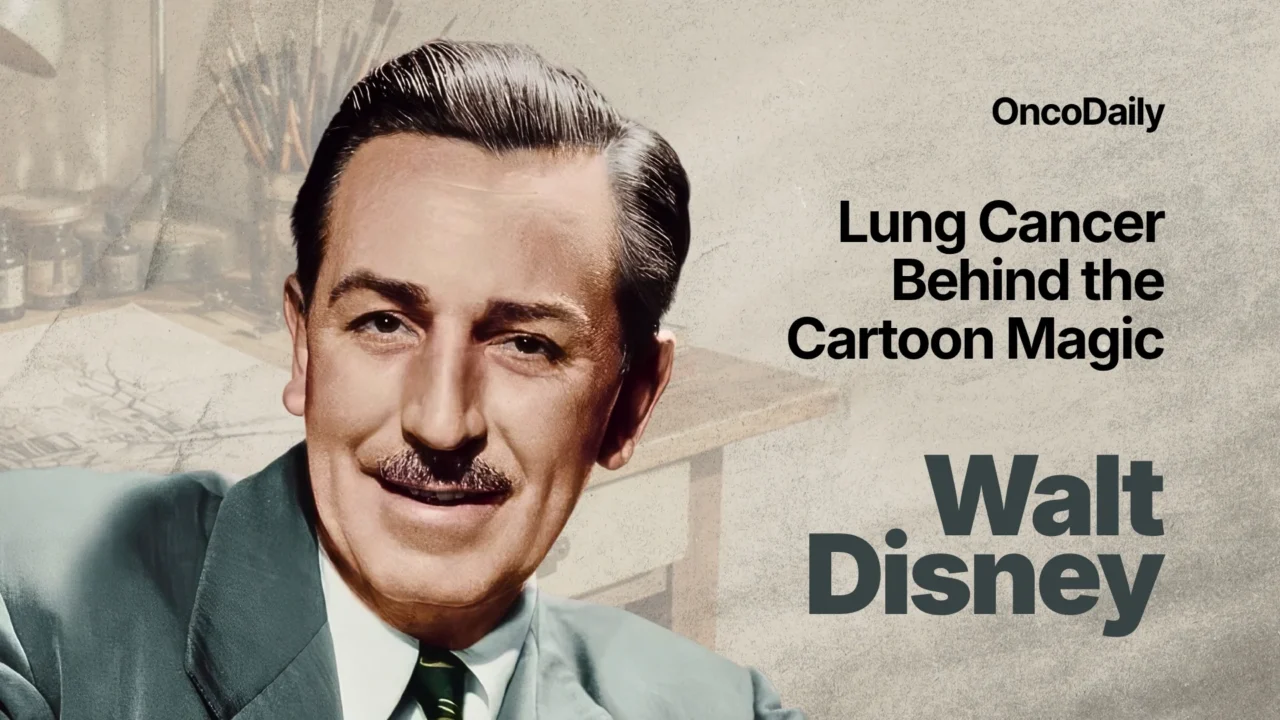
Walt Disney built a world of wonder that outlived him a studio where mice spoke, castles shimmered, and imagination became an industry. Yet behind the magic, his final months were marked by a rapidly progressing illness. On December 15, 1966, the man who had given generations a sense of childhood wonder died at the age of 65.
His death followed a diagnosis of lung cancer only weeks earlier. Disney’s story is remembered primarily through animation, cinema, and theme parks, but his final illness also carries an important public-health message about tobacco exposure, lung cancer awareness, smoking cessation, and the importance of detecting disease at an earlier stage.
“You can design and create, and build the most wonderful place in the world. But it takes people to make the dream a reality.”
The Man Who Turned Imagination Into an Industry
Walter Elias Disney was born in Chicago on December 5, 1901. He went on to become one of the most influential figures in the history of entertainment and the creator of some of the world’s most recognizable characters. The arrival of Mickey Mouse in Steamboat Willie in 1928 helped establish Disney as a pioneer of synchronized sound in animation. His studio continued to push technical and creative boundaries with color animation, feature-length animated films, nature documentaries, television programmes, and increasingly ambitious forms of family entertainment.
The release of Snow White and the Seven Dwarfs in 1937 was a defining moment. At a time when many doubted that audiences would sit through a feature-length animated film, its success helped transform animation into a major cinematic art form. Disneyland opened in California in 1955, bringing Disney’s storytelling into a physical environment where visitors could enter the worlds previously seen only on screen. During the 1960s, Disney was also developing plans for a larger project in Florida that would eventually become Walt Disney World. He would not live to see it open.
A Record-Breaking Career: Walt Disney’s Awards and Achievements
Disney’s cultural influence was matched by extraordinary recognition from the film industry. He remains one of the most celebrated individuals in Academy Awards history. Disney received 22 competitive Academy Awards from 59 nominations, as well as several honorary awards, making him the individual with the most Oscar wins and nominations in Academy history.
His achievements crossed multiple categories, including animation, documentary filmmaking, short subjects, and technical innovation. The Academy’s historical records document a remarkable sequence of wins during the 1930s, including five consecutive awards for producing the year’s leading cartoon. Among his most distinctive honors was the special Academy Award presented for Snow White and the Seven Dwarfs. The award consisted of one standard Oscar statuette accompanied by seven smaller statuettes, recognizing the film as a major cinematic innovation.
His productions also received Academy Awards for animated shorts such as Flowers and Trees, The Three Little Pigs, and The Tortoise and the Hare, as well as documentary and nature films including Seal Island and In Beaver Valley. The Academy continues to describe Disney as a record-breaking Oscar winner and animation pioneer. Beyond the Academy Awards, Disney received numerous Emmy Awards and honorary distinctions. He was also awarded the Presidential Medal of Freedom in 1964.
These honors reflected more than commercial success. They recognized Disney’s role in expanding the artistic and technical possibilities of animation, redefining family entertainment, and creating a model of storytelling that extended across film, television, publishing, merchandise, and themed environments. His awards tell the story of a public life defined by achievement. His final illness, however, revealed the vulnerability behind the celebrated image.
What Happened During Walt Disney’s Final Months?
Disney’s final illness progressed rapidly. In November 1966, doctors discovered a tumor in his left lung. He underwent surgery to remove the affected portion of the lung, but the disease was already advanced. His condition continued to deteriorate during the following weeks. Disney died at St. Joseph Hospital in Burbank, California, on December 15, 1966 just 10 days after his 65th birthday.
The short interval between diagnosis and death reflects a challenge that remains central to lung cancer care: the disease may develop without clear symptoms and can be discovered only after it has reached an advanced stage. The date of diagnosis does not necessarily indicate when the cancer began. A lung tumor may have been developing for months or years before producing symptoms or appearing during a medical investigation. To Disney’s family, colleagues, and the wider public, the illness appeared sudden. Biologically, however, it was likely the final stage of a much longer process.
A Lifelong Smoking Habit Behind the Public Image
Disney was widely described as a long-term, heavy cigarette smoker. Historical accounts indicate that he smoked for much of his adult life. The Walt Disney Archives has also acknowledged that he was a heavy smoker who generally avoided being photographed with a cigarette because he did not want to set a poor example for children. That contrast became part of the complexity surrounding his public image.
To audiences, Disney represented childhood, optimism, family entertainment, and wholesome storytelling. Privately, he lived with a behavior now recognized as the leading preventable risk factor for lung cancer. Some published photographs were reportedly selected or altered to minimize visible cigarettes, reinforcing the distance between the carefully managed public identity and the habits of the person behind it. Disney’s history should nevertheless be discussed without moral judgment. Nicotine dependence is a chronic addictive condition, and his smoking developed during an era when cigarettes were widely promoted and their dangers were not communicated with the urgency seen today.
Smoking in an Era When Cigarettes Were Everywhere
For much of the 20th century, smoking was deeply embedded in everyday life. Cigarettes were common in offices, restaurants, airplanes, hotels, film studios, and social gatherings. Tobacco advertising associated smoking with confidence, glamour, sophistication, productivity, and masculinity. Although scientific evidence linking smoking to lung cancer was accumulating during the first half of the century, broad public recognition took time. In the United States, the landmark 1964 Surgeon General’s report formally concluded that cigarette smoking was causally related to lung cancer in men and was the most important cause of chronic bronchitis. Disney died only two years after that report was released.
His life therefore reflects more than an individual smoking history. It reflects a period in which a highly addictive product was normalized, heavily marketed, and used widely before strong tobacco-control policies became established.
Did Smoking Cause Walt Disney’s Lung Cancer?
It is medically reasonable to discuss Disney’s smoking history in relation to his lung cancer, but causation in an individual patient should be phrased carefully. No retrospective account can prove with absolute certainty what caused one person’s cancer. However, cigarette smoking is the principal preventable risk factor for lung cancer and is responsible for the large majority of cases worldwide.
Tobacco smoke contains thousands of chemicals, including numerous established carcinogens. These substances can damage DNA, promote chronic inflammation, disrupt normal cellular repair, and contribute to the accumulation of genetic alterations that allow malignant cells to develop and grow. The most accurate conclusion is therefore that Disney was a long-term smoker who developed lung cancer, with smoking representing a major established risk factor for the disease.
This distinction is important because lung cancer can also occur in people who have never smoked. Other recognized risks include secondhand smoke, radon, air pollution, asbestos, diesel exhaust, occupational carcinogens, previous radiation exposure, chronic lung disease, and inherited susceptibility. Discussing smoking as the leading risk factor should never imply that every person who develops lung cancer is responsible for their disease.
Why Is Lung Cancer Often Diagnosed Late?
Lung cancer remains difficult to detect because early disease may produce no symptoms. When symptoms do appear, they may include:
- A persistent or worsening cough
- Coughing up blood
- Chest pain
- Shortness of breath
- Hoarseness
- Unexplained weight loss
- Persistent fatigue
- Recurrent respiratory infections
These symptoms can have many non-cancerous causes. However, persistent or unexplained changes require medical assessment, particularly in people with a substantial smoking history or other lung cancer risk factors. Disney’s illness appeared to progress with extraordinary speed because only a few weeks separated the discovery of the tumor from his death. His case illustrates how a cancer may remain clinically silent until curative treatment is no longer possible.
How Has Lung Cancer Screening Changed Since 1966?
The medical landscape of lung cancer detection has changed significantly since Disney’s lifetime. Today, low-dose computed tomography, commonly called low-dose CT or LDCT, is recommended for selected adults at high risk because of their age and cumulative smoking exposure. Unlike a conventional chest X-ray, low-dose CT can identify small pulmonary abnormalities before they cause symptoms. Screening is not appropriate for everyone, and eligibility varies across national recommendations. Decisions should be based on individual risk, potential benefits, possible harms, and a discussion with a qualified healthcare professional.
Screening became standard after clinical trials demonstrated a reduction in lung cancer mortality among high-risk populations. However, LDCT can also identify benign nodules, produce false-positive findings, generate anxiety, and lead to additional imaging or invasive procedures. Early detection does not guarantee cure. It can, however, increase the likelihood that disease will be found while surgery, stereotactic radiotherapy, or other potentially curative treatment remains possible.
Lung Cancer Survival: Walt Disney’s Era Compared With Today
When Walt Disney died from lung cancer in December 1966, the outlook for patients with the disease was extremely poor. Reliable nationwide survival data from the exact year 1966 are limited, but historical U.S. cancer statistics show that the five-year relative survival rate for lung and bronchus cancer was only about 6% for patients diagnosed in 1950–1954. Survival improved very little during the 1960s, and by 1975–1977 it was still only around 12%.
Disney’s own illness progressed particularly quickly. His lung cancer was identified in November 1966, and he died on December 15, 1966, at the age of 65—approximately six weeks after the diagnosis was reported. His individual course should not be treated as representative of every patient, but it reflects how limited the options were for advanced lung cancer at that time.
The situation today is substantially different. According to the American Cancer Society’s 2026 statistics, the overall five-year relative survival rate for lung cancer has risen to 28%, based on patients diagnosed between 2015 and 2021. For disease detected while still localized to the lung, five-year survival is approximately 65%.
Outcomes still vary sharply according to stage and tumor type. Contemporary U.S. data show the following five-year relative survival rates for non-small-cell lung cancer:
- Localized disease: 67%
- Regional disease: 40%
- Distant metastatic disease: 12%
- All stages combined: 32%
For small-cell lung cancer, survival remains lower:
- Localized disease: 34%
- Regional disease: 20%
- Distant disease: 4%
- All stages combined: 9%
The improvement reflects several developments that were unavailable in Disney’s era, including low-dose CT screening for eligible high-risk individuals, more accurate imaging and staging, safer surgery, modern radiotherapy, platinum-based chemotherapy, targeted treatments for actionable genomic alterations, and immunotherapy.
The comparison is striking:
Around Walt Disney’s era: approximately 6%–12% five-year survival overall.
Today: approximately 28% overall, rising to about 65%–67% when lung cancer is detected at a localized stage.
These numbers demonstrate how much lung cancer care has advanced, but they also underline the continuing importance of prevention and early diagnosis. In 2026, lung cancer is still expected to cause approximately 124,990 deaths in the United States, making it the country’s leading cause of cancer mortality.
Smoking Cessation: A Core Component of Lung Cancer Prevention and Care
Avoiding tobacco initiation remains the most effective strategy for preventing smoking-related lung cancer. For people who already smoke, stopping provides meaningful health benefits regardless of age, duration of use, or whether cancer has already been diagnosed. The World Health Organization describes tobacco as one of the largest public-health threats worldwide, responsible for more than 7 million deaths annually. The decline in cancer risk after cessation is gradual but substantial. According to the Centers for Disease Control and Prevention, the additional risk of lung cancer falls by approximately half within 10 to 15 years after quitting, compared with continued smoking. Risks of several other tobacco-related cancers also decline over time.
Cessation also reduces the risk of cardiovascular disease, stroke, chronic obstructive pulmonary disease, and premature death. Its value is not limited to people who have not developed cancer. Among patients with lung cancer, quitting after diagnosis can improve outcomes. In one prospective study highlighted by the National Cancer Institute, estimated five-year survival was 61% among patients who stopped smoking, compared with 49% among those who continued. The benefit was observed regardless of previous smoking intensity or receipt of chemotherapy or radiotherapy. These findings challenge the misconception that there is no reason to quit once cancer has been diagnosed.
What Does NCCN Recommend?
The National Comprehensive Cancer Network considers tobacco dependence a clinical condition requiring active treatment, not merely brief advice. NCCN recommendations support systematic assessment of tobacco use and the combination of:
- Behavioral counseling
- Evidence-based pharmacotherapy
- Repeated follow-up
- Management of relapse and withdrawal symptoms
Pharmacologic options can include nicotine-replacement therapy, varenicline, or bupropion, depending on the patient’s medical history, contraindications, previous cessation attempts, concurrent medications, and preferences.
The combination of medication and behavioral support generally produces better cessation outcomes than either strategy alone.
Tobacco-use status should also be reassessed throughout cancer treatment and survivorship. Nicotine dependence is chronic, relapse is common, and several quit attempts may be required before sustained abstinence is achieved.
How Does ASCO Approach Tobacco Cessation?
The American Society of Clinical Oncology supports integrating tobacco treatment directly into oncology care.
ASCO resources use the established 5 As framework:
- Ask about tobacco use
- Advise patients to stop
- Assess readiness to quit
- Assist with counseling and treatment
- Arrange follow-up support
ASCO emphasizes that cessation is a continuing process rather than a single conversation. Effective treatment may involve repeated clinical visits, quitline support, medication adjustment, behavioral counseling, and management of relapse.
Continued smoking after a cancer diagnosis may be associated with poorer treatment tolerance, surgical complications, reduced quality of life, second primary cancers, recurrence, and shorter survival. The National Cancer Institute concludes that the evidence increasingly supports smoking cessation as an essential component of cancer care.
What Does ESMO Emphasize?
The European Society for Medical Oncology similarly treats smoking cessation as part of cancer prevention, treatment, and survivorship. ESMO educational guidance notes that nicotine is highly addictive and that many people require professional help and repeated attempts before they can stop permanently. It emphasizes that unsuccessful attempts should not be interpreted as failure and that patients should continue receiving support.
Across contemporary oncology practice, the message is consistent: stopping smoking is not simply a lifestyle recommendation. It is an evidence-based medical intervention that can reduce future disease risk and may improve outcomes after a cancer diagnosis.
Prevention Requires More Than Individual Willpower
Tobacco-related cancer cannot be addressed through personal responsibility alone. Effective population-level measures include:
- Increased taxation of tobacco products
- Comprehensive smoke-free legislation
- Restrictions on tobacco advertising and sponsorship
- Graphic health warnings and standardized packaging
- Affordable cessation medications and counseling
- Protection from secondhand smoke
- Prevention programmes for children and adolescents
- Regulation of emerging nicotine and tobacco products
These interventions reduce smoking initiation, support cessation, and change the social conditions that allow tobacco use to remain normalized.
Disney’s smoking history belongs within this broader context. His habit was not simply an isolated private choice. It developed in an environment where cigarettes were widely advertised, culturally accepted, and readily available.
His story therefore illustrates both individual risk and a larger public-health challenge: generations were exposed to preventable disease while tobacco use was presented as an ordinary part of adult life.
The Myth That Walt Disney Was Cryogenically Frozen
Disney’s death later became surrounded by one of the most persistent myths in celebrity history: the claim that his body was cryogenically frozen and stored for possible revival in the future. The claim is false. Disney was cremated after his death, and his remains were interred at Forest Lawn Memorial Park in Glendale, California. Members of his family also rejected the idea that he had been cryonically preserved. The rumor likely survived because it appeared to fit Disney’s public reputation as a futurist fascinated by science, technology, innovation, and imagined worlds.
Its persistence illustrates how celebrity deaths can become distorted. Private medical details, incomplete information, and public fascination can leave space for speculation. Over time, a sensational legend may become more memorable than the documented facts. In Disney’s case, the freezing myth has often overshadowed the medically important reality: a celebrated cultural figure developed lung cancer after decades of smoking and died shortly after the disease was detected.
Why Do Celebrity Health Stories Matter?
The illnesses of public figures can influence health awareness in ways that conventional medical communication may not. A reader who would not normally open an article about lung cancer might still read a story about Walt Disney. His cultural significance creates an entry point into discussions about tobacco exposure, symptoms, screening, cessation, and prevention. That attention carries responsibility.
Celebrity health reporting should avoid speculation, sensationalism, and unsupported claims about individual causation. It should distinguish documented facts from rumor and avoid reducing an entire life to a diagnosis. At its best, however, a celebrity health story can make an abstract risk recognizable. It can connect medical evidence to a person whose name and achievements remain familiar across generations.
A Legacy Larger Than the Man
Disney’s death did not end the world he had created. His brother Roy O. Disney continued the Florida project and ensured that Walt Disney World opened in 1971. The company subsequently expanded into a global entertainment organization, while Disney’s films, characters, parks, and storytelling traditions continued to shape popular culture. Disney did not live to witness much of that growth. That reality gives his final illness particular poignancy. He had built stories in which the impossible became possible, yet he lived during a period when lung cancer was frequently discovered late and treatment options were considerably more limited than they are today. His cultural legacy became almost immortal. His life was not.
The Public-Health Lesson Behind the Magic
Walt Disney’s story ultimately points to several enduring lessons. Lung cancer awareness matters because the disease can remain silent until it is advanced. Tobacco prevention matters because smoking remains its leading avoidable risk factor. Smoking cessation matters because stopping reduces future health risks and may improve outcomes even after cancer has been diagnosed. Appropriate screening matters because identifying disease earlier can increase the possibility of curative treatment.
His story also shows how public figures can influence health conversations long after their deaths. A name associated with imagination and childhood can still bring attention to a disease that might otherwise feel distant or abstract․ This does not diminish Disney’s achievements or redefine his life through illness. It adds a human dimension to his legacy.
Behind the animation, the record-breaking awards, the global entertainment empire, and the timeless characters was a real person whose final illness advanced rapidly and whose life ended far too soon. Walt Disney created a world of wonder that outlived him. His death remains a sober reminder of the human cost of tobacco-related disease and of the continuing importance of prevention, smoking cessation, early detection, and timely care.
You Can Also Read Sigmund Freud’s Last Decision: The Philosophy Behind His Final Act by OncoDaily
Written by Aharon Tsaturyan, MD, Editor at OncoDaily Intelligence Unit
FAQ
Did Walt Disney die of lung cancer?
Walt Disney died on December 15, 1966, at the age of 65 after a short illness related to lung cancer. He underwent surgery for a tumor in his left lung several weeks before his death.
Was Walt Disney a smoker?
Historical records and family accounts describe Walt Disney as a long-term cigarette smoker. Smoking was common during his lifetime, although he generally avoided being photographed with cigarettes because of his family-friendly public image.
Did smoking cause Walt Disney’s lung cancer?
It cannot be proven what caused an individual person’s cancer. However, cigarette smoking is the leading risk factor for lung cancer worldwide, and Walt Disney had a long history of smoking.
How common is lung cancer today?
Lung cancer remains one of the most commonly diagnosed cancers worldwide and is the leading cause of cancer-related death. Although survival has improved significantly, early detection remains critical.
What are the early symptoms of lung cancer?
Early symptoms may include a persistent cough, coughing up blood, chest pain, shortness of breath, hoarseness, unexplained weight loss, fatigue, and recurrent chest infections. Many early lung cancers cause no symptoms.
Can quitting smoking reduce the risk of lung cancer?
Quitting smoking lowers the risk of developing lung cancer and many other diseases. The health benefits begin soon after smoking stops, and lung cancer risk continues to decline over time.
How has lung cancer treatment changed since Walt Disney’s death?
Since 1966, lung cancer care has advanced through low-dose CT screening, improved surgery, precision radiotherapy, chemotherapy, targeted therapies, immunotherapy, molecular testing, and multidisciplinary care.
What is the survival rate for lung cancer today?
The overall five-year relative survival rate for lung cancer in the United States is approximately 28%. When diagnosed at a localized stage, five-year survival is approximately 65%–67%.
Is lung cancer preventable?
Many lung cancers are preventable. Avoiding tobacco, quitting smoking, reducing exposure to secondhand smoke, radon, asbestos, and other carcinogens, and participating in screening when eligible can reduce risk.
Why is Walt Disney’s story still important today?
Walt Disney’s story highlights the importance of smoking prevention, early detection, and advances in lung cancer care. His life and death can help bring attention to one of the world’s leading causes of cancer mortality.