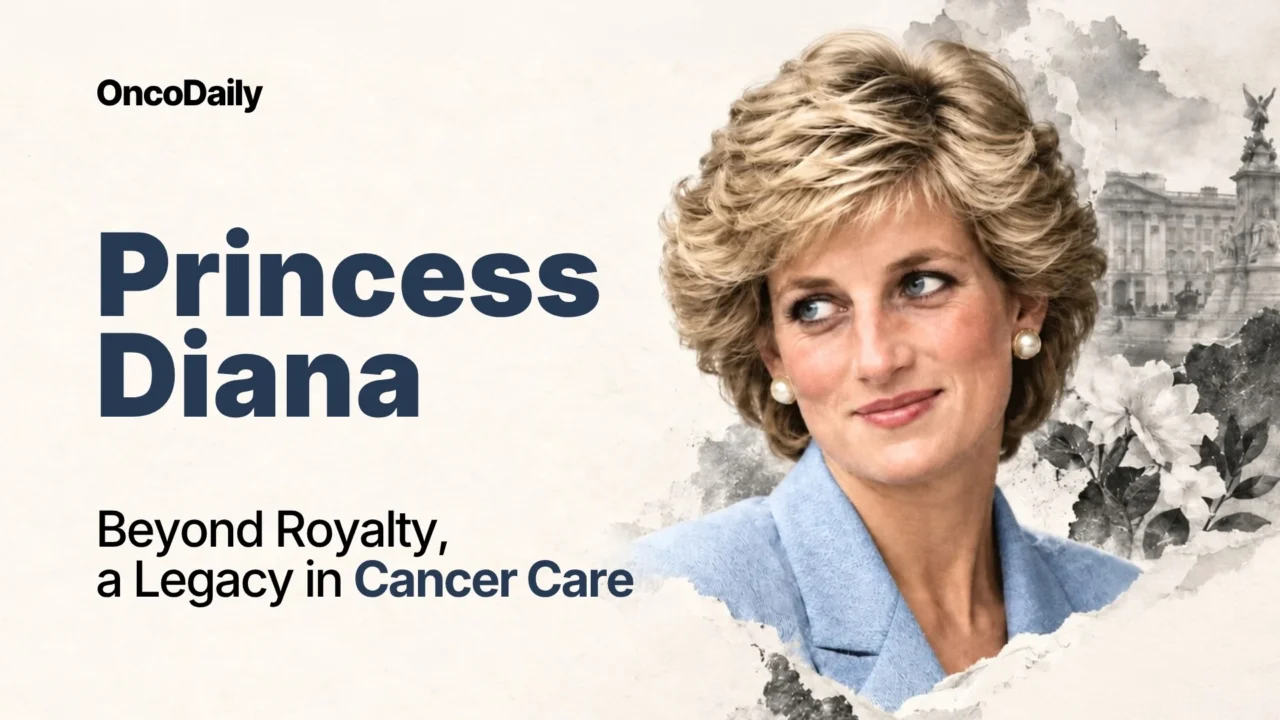
Princess Diana is remembered globally for her humanitarian work, but one of the most important parts of her legacy lies in healthcare, cancer care, and palliative medicine. Her involvement went far beyond ceremonial appearances. Through hospital patronage, public advocacy, fundraising, and later the Diana, Princess of Wales Memorial Fund, she helped bring attention to children with cancer, people living with HIV/AIDS, patients requiring palliative care, and families facing serious illness. Her approach was simple but powerful: use visibility to reduce stigma, support credible medical institutions, and direct attention toward patients whose needs were often overlooked.
Princess Diana and The Royal Marsden
One of Diana’s most important healthcare relationships was with The Royal Marsden Hospital, one of the world’s leading specialist cancer centers. She became President of The Royal Marsden in 1989 and regularly visited patients and staff. Her involvement helped bring greater public attention to cancer treatment, research, and the experiences of patients and families.
In 1993, Diana opened the Wolfson Children’s Cancer Unit, strengthening her association with pediatric oncology and cancer care for young patients. Her role was not limited to public appearances. She also supported fundraising efforts and represented the hospital internationally, including at a 1996 fundraising event in Chicago that reportedly raised more than $1 million for cancer care.
Supporting Children With Serious Illness
Diana also maintained a close relationship with Great Ormond Street Hospital Children’s Charity, supporting children with rare, complex, and life-limiting illnesses. Her visits brought visibility to pediatric healthcare at a time when childhood cancer, severe congenital disease, and long-term pediatric care received far less public attention than they do today. She met directly with children and their families and helped support fundraising for equipment, research, and care. Her presence helped humanize childhood illness in the public eye and placed families at the center of the conversation.
Challenging Stigma Around HIV/AIDS
One of Diana’s most defining contributions to healthcare communication came during the HIV/AIDS crisis. At a time when misinformation and fear surrounding HIV transmission were widespread, Diana publicly shook hands with a person living with AIDS without wearing gloves. That single act became one of the most recognizable moments in modern health advocacy.
She continued visiting hospital wards, speaking with patients, and supporting organizations involved in HIV/AIDS care and research. Her willingness to engage physically and publicly with people living with HIV helped challenge misconceptions about transmission and encouraged a more compassionate public response. Her work demonstrated something that remains relevant to cancer communication today: public figures can change health behavior and attitudes simply by showing people what fear does not need to look like.
Beyond Cancer: Fighting Stigma in Leprosy
Diana applied the same approach to leprosy. Through her work with The Leprosy Mission, she visited projects in countries including India and Nepal and openly touched people affected by the disease. At a time when leprosy remained highly stigmatized, these interactions challenged misconceptions about transmission and reinforced the dignity of patients who were often socially isolated. Although leprosy is not an oncology issue, her approach closely mirrors modern principles of patient advocacy: accurate information, public visibility, and direct human connection can reduce stigma surrounding serious disease.
The Diana, Princess of Wales Memorial Fund
After Diana’s death in 1997, her humanitarian work continued through the Diana, Princess of Wales Memorial Fund. The Fund transformed public grief into long-term philanthropy. Approximately £34 million came from public, community, and corporate donations, while around £38 million came from proceeds related to Elton John’s re-recording of Candle in the Wind 1997. Together, this represented approximately £72 million raised.
By the time the Fund closed in 2012, it had awarded 727 grants to 471 organizations and spent more than £112 million on charitable causes around the world. The Fund focused on several areas closely connected to Diana’s humanitarian interests, including palliative care, refugees and displaced people, landmine survivors, vulnerable children, bereavement, and social exclusion.
A Major Investment in Palliative Care
One of the Fund’s most important health initiatives was its investment in palliative and end-of-life care. Launched in 2000, the initiative focused particularly on patients with cancer, HIV/AIDS, and other life-limiting illnesses. The work expanded across seven sub-Saharan African countries:
- Kenya
- Malawi
- South Africa
- Tanzania
- Uganda
- Zambia
- Zimbabwe
The Fund also supported palliative care projects in the United Kingdom. By 2006, it had awarded 60 grants worth more than £2.5 million to palliative care organizations in sub-Saharan Africa. Between 2007 and 2012, the Fund committed up to £10 million more to expanding services, integrating palliative care into existing health systems, and training local healthcare professionals. Its total direct commitment to palliative care exceeded £12.5 million.
Why Palliative Care Mattered
At the time, palliative care remained severely underfunded in many low-income countries. Patients with advanced cancer, HIV/AIDS, and other serious illnesses often had little or no access to appropriate pain relief, symptom control, psychological support, or end-of-life care. The Fund helped support healthcare-worker training, hospice development, integration of palliative care into health systems, and advocacy for better access to essential pain medications. This was especially significant in oncology.
For patients with advanced cancer, palliative care can help manage pain, fatigue, breathlessness, nausea, anxiety, and other symptoms while also supporting families and caregivers. The Fund’s work helped reinforce the idea that cancer care is not only about treating tumors. It is also about protecting quality of life, dignity, comfort, and psychological wellbeing.
A Legacy Measured in More Than Money
Diana’s healthcare influence cannot be understood only through fundraising totals. Her most significant contribution may have been her ability to change the way people viewed patients. She stood beside children with cancer. She touched people living with HIV/AIDS when others were afraid to do so. She visited people affected by leprosy. She supported patients at the end of life. And she used enormous media attention to redirect public focus toward people whose voices were often missing from healthcare conversations. Her charitable work demonstrated that visibility itself can become a form of healthcare advocacy.
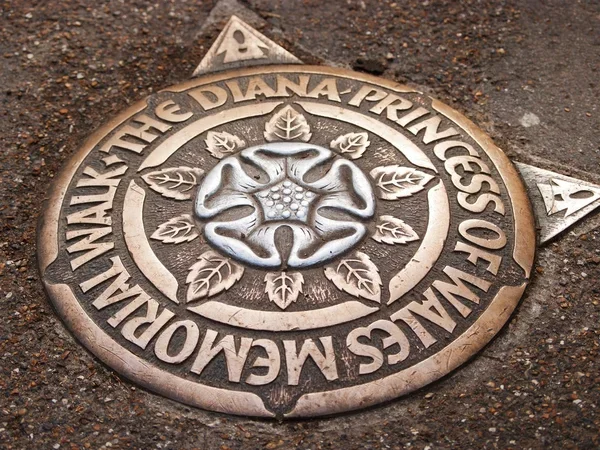
Photo: Depositphotos London, United Kingdom – April 28, 2008: The Diana, Princess of Wales Memorial Walk in Hyde Park, dedicated to the memory of Diana, Princess of Wales.
What Princess Diana’s Legacy Can Teach Cancer Communication Today
Diana’s approach offers several lessons that remain highly relevant in modern oncology. Credibility matters. She aligned herself with respected medical institutions such as The Royal Marsden and Great Ormond Street Hospital rather than promoting unverified health claims. Visibility can change attitudes. Her public interactions with patients helped normalize illnesses that were surrounded by fear and stigma. Long-term impact requires infrastructure. The Memorial Fund moved beyond individual fundraising events and invested in healthcare systems, training, and palliative care capacity. These principles are particularly important today, when cancer information can reach millions of people within minutes through traditional media and social platforms.
Public figures have the ability to amplify health information enormously. With that influence comes responsibility: messages should be accurate, evidence-based, and centered on the needs of patients.
The Lasting Impact of Princess Diana
Princess Diana’s healthcare legacy is more than a collection of hospital visits or charity events. It is a record of sustained patronage, patient advocacy, strategic philanthropy, and a willingness to use public attention to challenge fear and stigma.
Through her work with cancer hospitals and children’s charities, her advocacy for people living with HIV/AIDS, and the Memorial Fund’s investment in palliative care, her influence extended far beyond her lifetime. The numbers tell part of that story: more than £112 million distributed, hundreds of grants, and millions invested directly in palliative care. But the deeper legacy lies elsewhere.
It is found in patients who were treated with greater dignity, families who received support, healthcare workers who gained resources and training, and communities where difficult illnesses became easier to talk about. Princess Diana showed how a public figure could use visibility not simply to attract attention, but to direct that attention toward care, compassion, evidence, and human dignity.
The Spencer Family: Diana’s Aristocratic Roots
Princess Diana was born Diana Frances Spencer into one of Britain’s oldest and most prominent aristocratic families. The Spencer family rose to national prominence during the Tudor period and has been associated with Althorp, its ancestral estate in Northamptonshire, for more than five centuries. The title Earl Spencer was created in 1765, and generations of the family went on to serve in British political, military, and royal life. Members of the Spencer family held senior positions including Home Secretary and First Lord of the Admiralty, while others served closely within the Royal Household.
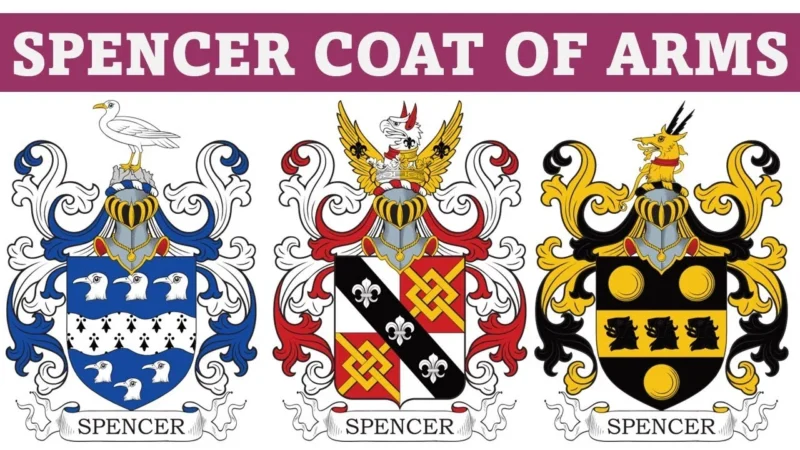
The family is also historically connected to the Churchill dynasty through the Spencer-Churchill branch, linking Diana’s ancestry to another major name in British history. Diana’s father, John Spencer, 8th Earl Spencer, inherited the family title and Althorp estate in 1975. From that point, Diana became known as Lady Diana Spencer. Her mother, Frances Shand Kydd, also came from a socially prominent family with connections to royal circles.
The Spencers had longstanding relationships with the British Royal Family even before Diana’s marriage. Her grandmothers, Cynthia Spencer and Ruth Roche, both had connections to the Royal Household, helping place Diana within the wider aristocratic world surrounding the monarchy. Diana spent part of her childhood at Park House on the Sandringham estate, close to the Royal Family’s Norfolk residence, before moving to Althorp. After her death in 1997, she was buried on an island within the grounds of the Althorp estate, making the Spencer family home an enduring part of her personal history and legacy.
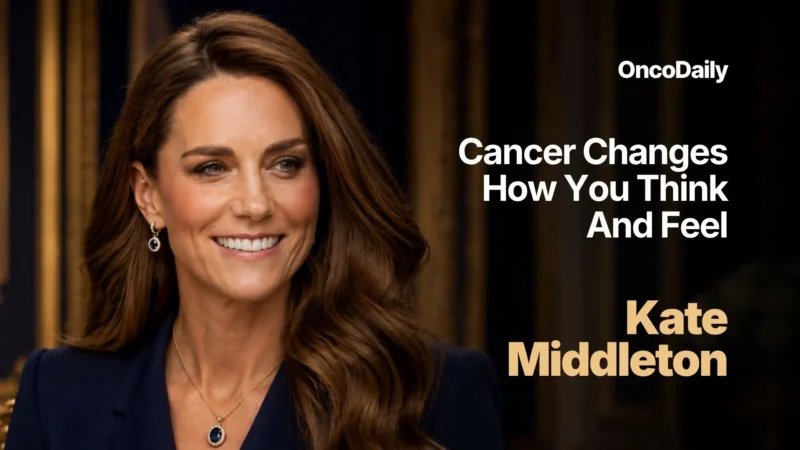
You Can Also Read Kate Middleton Says Cancer “Changes How You Think and Feel” as She Completes National Three Peaks Challenge by OncoDaily
Written by Aharon Tsaturyan, MD, Editor at OncoDaily Intelligence Unit
FAQ
What cancer charity did Princess Diana support?
Princess Diana was closely associated with The Royal Marsden, one of the world’s leading specialist cancer hospitals. She became President of The Royal Marsden in 1989 and supported its cancer care, research, fundraising, and work with patients and families.
What was Princess Diana’s role at The Royal Marsden?
Princess Diana served as President of The Royal Marsden from 1989. She regularly visited patients and staff, supported fundraising, and helped bring greater public attention to cancer treatment and research.
Did Princess Diana support children with cancer?
Yes. Diana supported pediatric cancer care through The Royal Marsden and opened the Wolfson Children’s Cancer Unit in 1993. She was also closely involved with Great Ormond Street Hospital, where she met children and families living with serious and life-limiting illnesses.
How much money did the Diana, Princess of Wales Memorial Fund raise?
The Diana, Princess of Wales Memorial Fund received approximately £72 million from public and corporate donations and proceeds associated with Elton John’s Candle in the Wind 1997. By its closure in 2012, it had spent more than £112 million on charitable causes.
What happened to the Diana, Princess of Wales Memorial Fund?
The Memorial Fund operated from 1997 until 2012. During that period, it awarded 727 grants to 471 organizations supporting causes including palliative care, displaced people, landmine survivors, vulnerable communities, and people facing serious illness.
How did Princess Diana support palliative and cancer care?
Her Memorial Fund launched a major palliative care initiative in 2000 focused on people with cancer, HIV/AIDS, and other life-limiting illnesses. The Fund ultimately committed more than £12.5 million directly to palliative care, including projects across seven sub-Saharan African countries.
What charities did Princess Diana support?
Among the major organizations associated with Diana were The Royal Marsden, Great Ormond Street Hospital, The Leprosy Mission, National AIDS Trust, Centrepoint, and English National Ballet. Healthcare, homelessness, HIV/AIDS, children, and stigma reduction were central themes of her charitable work.
What did Princess Diana do for people with HIV/AIDS?
Diana became one of the most recognizable public advocates for people living with HIV/AIDS. Her decision to shake hands with an AIDS patient without gloves in 1987 publicly challenged widespread misconceptions about HIV transmission and helped humanize people affected by the disease.
Why is Princess Diana’s healthcare legacy still important?
Diana used her global visibility to reduce stigma, highlight patients’ experiences, support established medical institutions, and attract funding toward areas such as cancer care and palliative medicine. Her work demonstrated how public figures can influence health awareness and attitudes when they communicate responsibly.
Is the Royal Family still connected to The Royal Marsden?
Yes. The Prince and Princess of Wales are currently Joint Patrons of The Royal Marsden NHS Foundation Trust. Prince William has held the role of President since 2007, a position previously held by his mother, Diana, Princess of Wales.