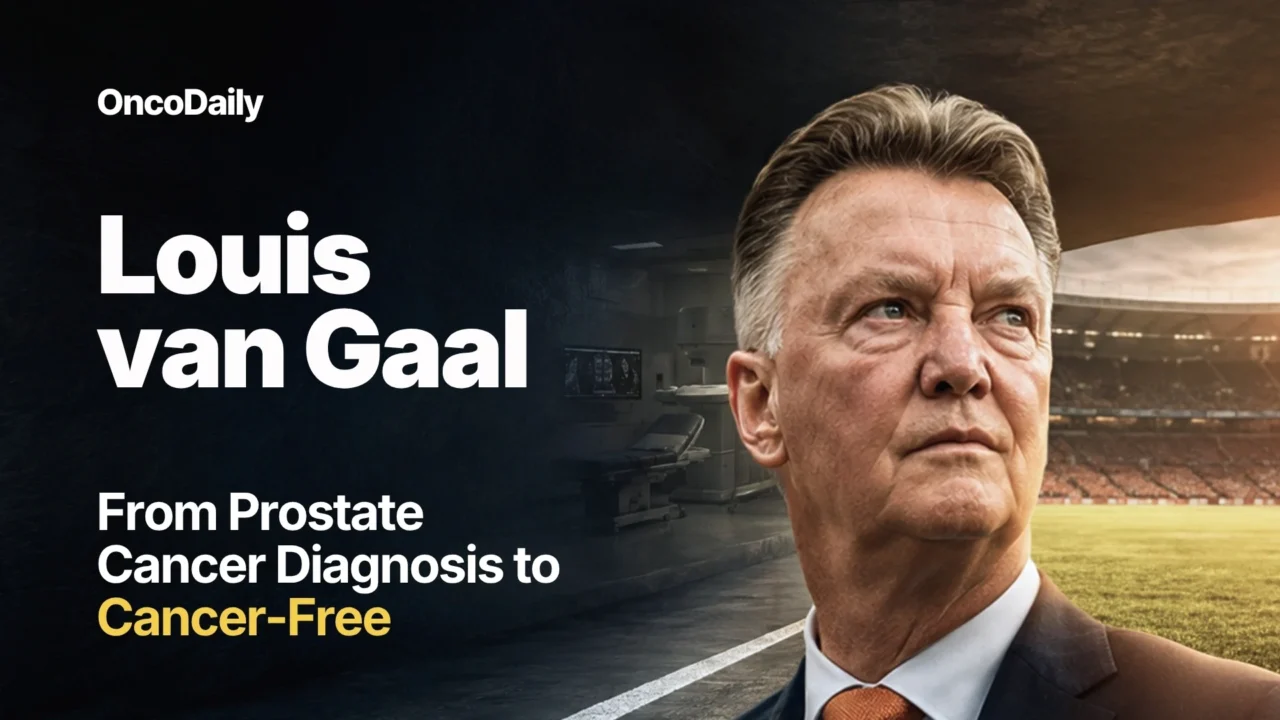
Louis van Gaal is one of the most respected managers in modern football, but one of the toughest challenges of his life came away from the touchline. Prostate cancer is the second most commonly diagnosed cancer in men worldwide, with about 1.47 million new cases and nearly 397,000 deaths estimated globally in 2022, according to the World Health Organization. Van Gaal revealed in April 2022 that he had been receiving treatment for an aggressive form of the disease while continuing to manage the Netherlands national team.
His treatment reportedly included 25 radiation sessions, multiple procedures, and hormone therapy. By 2025, Van Gaal said he was no longer troubled by cancer and that his regular follow-up checks were positive. In 2026, his improved health again became part of football discussion as Dutch media linked him with a possible return to the Netherlands job, although no appointment has been confirmed.
Who Is Louis van Gaal?
Few football managers have left a legacy as significant as Louis van Gaal. Across more than four decades in football, he has guided Ajax, Barcelona, AZ Alkmaar, Bayern Munich, Manchester United, and the Netherlands national team, winning league titles, domestic cups, and the UEFA Champions League while becoming known for his tactical innovation and ability to develop young players. His coaching career has influenced generations of footballers, making him one of the sport’s most respected figures. Away from football, however, Van Gaal faced a challenge that no tactical plan could solve.
When Was Louis van Gaal Diagnosed With Prostate Cancer?
Van Gaal was reportedly diagnosed with prostate cancer in late 2020, although he chose not to reveal the diagnosis publicly until April 2022. At the time, he was in his third spell as head coach of the Netherlands and preparing the team for the 2022 FIFA World Cup. Rather than making his illness public immediately, Van Gaal continued working while attending hospital appointments in private. He later explained that he deliberately kept the diagnosis from many of his players because he did not want them to treat him differently or become distracted by concerns about his health. His decision reflected a difficult balance between personal privacy and professional responsibility.
How Can Prostate Cancer Risk Be Reduced?
Although there is no guaranteed way to prevent prostate cancer, several strategies may help reduce risk and improve the chances of detecting clinically significant disease at an earlier, more treatable stage. Importantly, the strongest risk factors including older age, family history, inherited genetic mutations (such as BRCA2), and African ancestry—cannot be modified. Therefore, prevention focuses on maintaining overall health, identifying individuals at increased risk, and making informed decisions about screening rather than completely avoiding the disease.
Maintaining a healthy body weight, engaging in regular physical activity, avoiding tobacco, limiting excessive alcohol intake, and consuming a balanced diet rich in vegetables, fruits, whole grains, and healthy fats are recommended for overall cancer prevention and cardiovascular health. While no specific food, vitamin, or dietary supplement has been conclusively shown to prevent prostate cancer, these lifestyle measures are associated with better overall health and may contribute to lowering the risk of aggressive disease.
Men should also understand their individual risk profile. The risk of prostate cancer rises significantly with age, with most diagnoses occurring after 50 years of age. Men with a first-degree relative (father or brother) diagnosed with prostate cancer, particularly at a younger age, those carrying inherited mutations such as BRCA2, and men of African ancestry have a substantially higher lifetime risk and may benefit from earlier discussions about screening.
What Do ASCO and ESMO Recommend?
Neither the American Society of Clinical Oncology (ASCO) nor the European Society for Medical Oncology (ESMO) recommends routine PSA screening for every man. Instead, both organizations support a risk-adapted, shared decision-making approach, balancing the potential benefits of early detection against the risks of overdiagnosis and unnecessary treatment.
For men at average risk, discussions about PSA testing generally begin around 50 years of age, provided they have an expected life expectancy of at least 10 years. Men at higher risk—including those with a strong family history, inherited cancer-predisposition mutations such as BRCA2, or African ancestry should consider discussing screening with their healthcare provider from approximately 45 years of age, while those with multiple first-degree relatives affected at an early age may benefit from discussions beginning around 40 years of age.
Importantly, screening is not the same as prevention. A PSA blood test cannot prevent prostate cancer from developing, but it may help identify clinically significant disease before symptoms appear. Modern guidelines also increasingly recommend the use of multiparametric MRI before prostate biopsy in men with elevated PSA levels to improve diagnostic accuracy and reduce unnecessary biopsies.
Ultimately, the best strategy is an individualized one. Men should discuss their age, family history, genetic risk, overall health, and personal preferences with their healthcare provider to determine whether and when prostate cancer screening is appropriate. Early, informed decision-making remains one of the most effective ways to reduce the burden of advanced prostate cancer.
How Was Louis van Gaal Treated?
Van Gaal has publicly shared several aspects of his treatment but has not released complete medical details. He said he underwent 25 radiation therapy sessions, multiple operations, hormone injections, and experienced urinary complications requiring catheters and urine bags during parts of his treatment. Radiation therapy is a well-established treatment for localized and some locally advanced prostate cancers. Depending on the stage and biological characteristics of the disease, it is frequently combined with androgen deprivation therapy (ADT), which reduces testosterone levels that can stimulate prostate cancer growth.
However, Van Gaal has not publicly disclosed:
- PSA level
- Gleason score
- Grade Group
- TNM stage
- Imaging findings
- Whether lymph nodes or distant organs were involved ․
Without this information, it is not possible to determine whether his cancer was localized, locally advanced, or metastatic. That distinction is important because prostate cancer treatment is highly individualized.
How Did Louis van Gaal Continue Coaching During Cancer Treatment?
One of the most remarkable aspects of Van Gaal’s story is that many people around him were unaware he was receiving cancer treatment. While managing the Netherlands, he reportedly attended radiation appointments privately before returning to work with the national team. His experience illustrates that some patients continue working throughout treatment. However, this should not create unrealistic expectations. Cancer affects every individual differently. Some patients continue full-time employment, while others require medical leave, rehabilitation, psychological support, or significant symptom management. The ability to continue working does not reflect the severity of a person’s illness.
What Happened at the 2022 FIFA World Cup?
Only months after publicly revealing his diagnosis, Van Gaal led the Netherlands to the quarter-finals of the FIFA World Cup in Qatar. The Dutch side was eventually eliminated by eventual champions Argentina following a dramatic penalty shootout. Throughout the tournament, Van Gaal remained focused on football despite undergoing extensive cancer treatment. His leadership during that period was widely praised by players, supporters, and fellow coaches around the world.
You Can Also Read FIFA World Cup and Cancer Awareness: How Football Can Promote Early Detection Worldwide by OncoDaily

What Health Update Did Louis van Gaal Share in 2025?
In July 2025, Van Gaal provided one of his most encouraging updates. Appearing on Dutch television, he said he was no longer troubled by cancer, that his earlier operations had ultimately been successful, and that he continued to become fitter. He also explained that he still underwent regular medical assessments every few months and that those follow-up examinations had been positive. Some media reports interpreted his comments by describing him as “cancer-free.”
From a medical perspective, however, that wording should remain attributed to his public statements. His detailed clinical status has not been independently disclosed. A more accurate summary is that Van Gaal has publicly stated he is no longer troubled by prostate cancer following treatment and continues to receive positive follow-up evaluations.
Why Is Long-Term Follow-Up So Important After Prostate Cancer?
Successful treatment does not always mean medical follow-up ends. Patients treated for prostate cancer generally continue regular monitoring, which may include:
- PSA blood tests
- Physical examinations
- Imaging when clinically indicated
- Assessment of urinary function
- Evaluation of treatment-related side effects
- Long-term surveillance allows clinicians to detect possible recurrence early while also managing the lasting effects of treatment.
Van Gaal’s continued medical check-ups reflect this standard aspect of prostate cancer care.
What Do the Latest 2026 Reports Say?
During the summer of 2026, Dutch media linked Van Gaal’s improving health to speculation that he could return for a fourth spell as Netherlands manager. Reports suggested that he would be open to discussions if approached by the Dutch Football Association. However, no official appointment has been announced, and the Dutch Football Association has not confirmed a return. Importantly, these reports concern his possible coaching future rather than a new medical development. There has been no publicly reported evidence of cancer recurrence in the latest coverage. The most recent confirmed health information remains Van Gaal’s own statement that his treatment had been successful and his follow-up assessments were progressing well.
What Does Louis van Gaal’s Story Teach About Prostate Cancer?
Van Gaal’s experience highlights several important lessons. Prostate cancer is not one disease. Some tumors progress slowly, while others require aggressive treatment. Treatment plans vary widely depending on the cancer’s biology, stage, overall health, and patient preferences. Radiation therapy, hormone therapy, surgery, or combinations of these approaches may all play a role. His story also reminds us that:
- Continuing to work during treatment is a personal decision, not an expectation.
- Privacy remains an important right for every patient.
- Long-term follow-up is an essential part of survivorship.
- Public statements should not replace detailed medical information when discussing cancer outcomes.
You Can Also Read Kevin Keegan Reveals Stage 4 Cancer Diagnosis: England Football Legend Still Fighting by OncoDaily
Written by Aharon Tsaturyan, MD, Editor at OncoDaily Intelligence Unit
FAQ
Did Louis van Gaal have prostate cancer?
Yes. Louis van Gaal publicly revealed in 2022 that he had been treated for an aggressive form of prostate cancer while managing the Netherlands national team.
When was Louis van Gaal diagnosed with prostate cancer?
He was reportedly diagnosed in late 2020 but did not disclose the diagnosis publicly until April 2022.
Is Louis van Gaal cancer-free?
Van Gaal said in 2025 that he was no longer troubled by cancer and that his regular follow-up checks were positive. His full clinical status has not been publicly detailed, so “cancer-free” is best presented as based on his own update.
How was Louis van Gaal treated for prostate cancer?
He has said that his treatment included 25 radiation sessions, hormone injections, several operations, and management of urinary complications.
Did Louis van Gaal continue coaching during cancer treatment?
Yes. He continued managing the Netherlands while receiving treatment and later led the team at the 2022 FIFA World Cup.
What type of prostate cancer did Louis van Gaal have?
He described it as an aggressive form of prostate cancer, but his exact stage, Gleason score, Grade Group, PSA level, and molecular characteristics have not been publicly disclosed.
How many radiation treatments did Louis van Gaal receive?
Van Gaal said he underwent 25 radiation therapy sessions as part of his treatment.
What are the main treatments for prostate cancer?
Depending on stage and risk group, treatment can include active surveillance, surgery, radiation therapy, hormone therapy, systemic treatment, or combinations of these approaches.
When should men start prostate cancer screening?
Screening discussions commonly begin around age 50 for men at average risk, with earlier discussions for those at higher risk, such as men with a strong family history, BRCA2 mutations, or African ancestry.
Could Louis van Gaal return to football management?
In 2026, Dutch media linked him with a possible return to the Netherlands national-team job, but no official appointment had been confirmed.