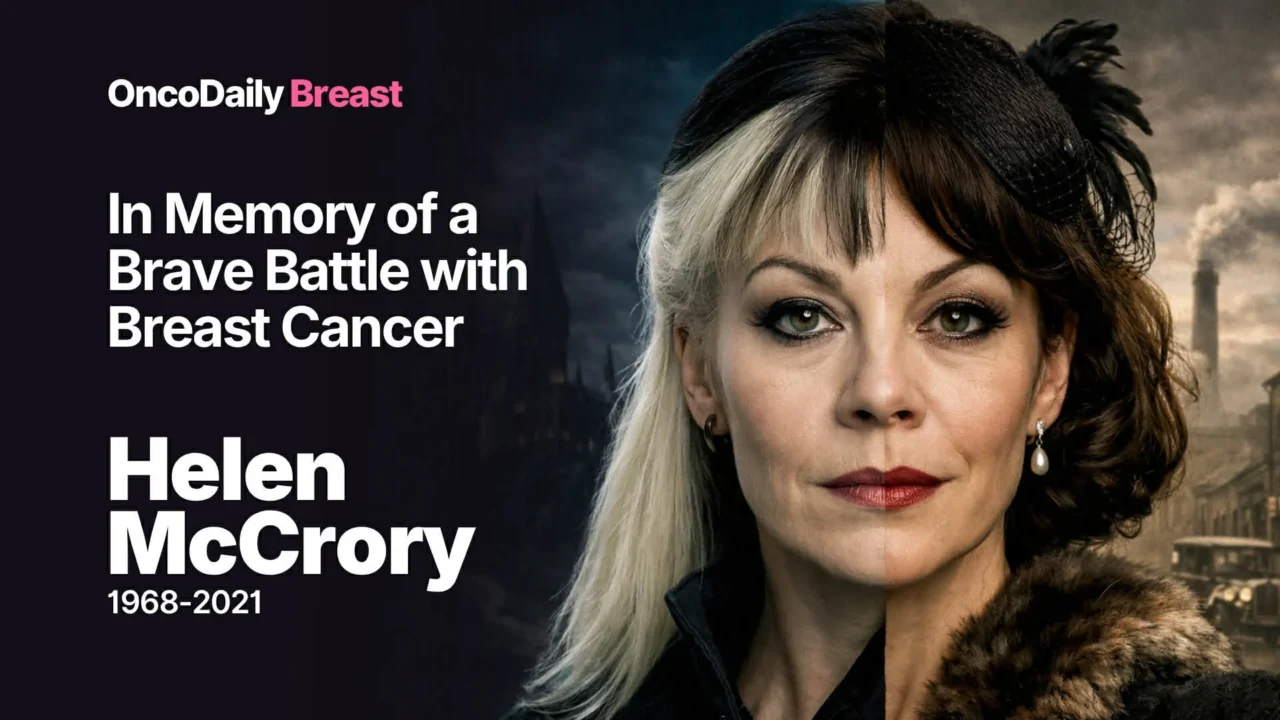
Helen McCrory, a revered English actress, was known for her powerful performances that resonated deeply on both stage and screen.
She is best known for her dual‑franchise roles as matriarch Polly Gray in Peaky Blinders and as Narcissa Malfoy in the Harry Potter film series, where her mix of steel, intelligence, and quiet vulnerability made her unforgettable to audiences around the world.
McCrory died of breast cancer at her home in London on 16 April 2021, at the age of 52. Her husband, actor Damian Lewis, announced her death with a heartfelt statement, describing her as a “beautiful and mighty woman” who had fought a “heroic battle” with cancer. She kept her diagnosis private while getting treatment and continuing to work, telling “very, very few people” about her illness to avoid it overshadowing her professional and charitable work.
These elements paint a picture of an artist who navigated the complexities of worldwide recognition while fiercely guarding her personal life. She dedicated her later years to her family, her philanthropic endeavors, and the enduring characters that continue to captivate audiences.
Her Cancer Diagnosis and Privacy
Helen McCrory was diagnosed with breast cancer but chose to keep the illness almost entirely private from the public and the wider entertainment industry. She told only “very, very few people” about her diagnosis and asked close friends and family to swear secrecy, insisting that her health struggle should not define her in the public eye.
People around her learned the full extent of her condition only in the final days before her death, when it became clear how advanced her illness was. Her treatment was described as “gruelling,” involving intensive medical care, yet she deliberately shielded her children and colleagues from the worst of it, prioritising her family’s emotional wellbeing and the continuity of her work. By controlling what was shared and when McCrory preserved a sense of normalcy in her professional life while privately enduring one of the most difficult chapters of her life.
Acting Through Treatment
Helen McCrory continued working across film, television, and theatre throughout her cancer battle, balancing demanding roles with the physical toll of intensive treatment. She fulfilled her commitments on Peaky Blinders, carefully managing filming around her health, while also taking on major stage parts such as the title role in Euripides’ Medea, a performance that demanded emotional and physical stamina. Her ability to deliver powerful performances even while undergoing chemotherapy and other therapies underscored her dedication to her craft and her refusal to let illness eclipse her professional life.
In public, early signs of her struggle were visible but often overlooked. During appearances such as her interview on Good Morning Britain to promote charity campaigns, her noticeably hoarse voice and moments of physical strain were quietly attributed to fatigue or a cold, rather than the underlying severity of her condition. Many viewers did not recognise at the time that she was simultaneously managing a gruelling treatment regimen; her composed presence on screen and stage masked the immense effort it took for her to remain “on” in front of audiences to the very end.
Peaky Blinders and Aunt Polly’s legacy
Helen McCrory portrayed Polly Gray (née Shelby), the fiercely intelligent and calculating matriarch of the Shelby crime family in Peaky Blinders. More than just the aunt of Tommy Shelby, Polly became the emotional backbone of the series—balancing ruthless pragmatism with deep loyalty, faith, and vulnerability, which made her one of the show’s most complex and beloved characters. Audiences saw in her a mix of steely authority and maternal strength that anchored the volatile Shelby dynasty.
During several earlier seasons, McCrory filmed her scenes while quietly managing her breast‑cancer treatment, keeping her illness hidden from most of the cast and crew. By the time production began on the sixth and final season in January 2021, she was too unwell to reprise the role, and her absence was written into the narrative in a way that turned the season into an emotional tribute to both the character and the actress. The delay and thoughtful reshaping of the final run of the series underscored how central Polly and McCrory herself had become to the heart of Peaky Blinders.
Helen McCrory in Harry Potter: The Power of Narcissa Malfoy
Helen McCrory’s path through the Harry Potter universe was both unexpected and quietly iconic. She was first cast as the dark, fanatical witch Bellatrix Lestrange in Harry Potter and the Order of the Phoenix, but had to step away from the role when she became pregnant and was recast. Later, she returned to the franchise in a different but equally significant part: Narcissa Malfoy, the younger sister of Bellatrix and the elegant, anxious mother of Draco Malfoy.
Though Narcissa had relatively limited screen time, McCrory imbued the character with a potent mix of icy composure and profound maternal vulnerability. Her most memorable moments came in scenes where that vulnerability surfaced, particularly when she confronts Voldemort in Harry Potter and the Deathly Hallows – Part 2, urgently asking for proof that Draco is still alive. In that single, tightly wound exchange, McCrory transformed Narcissa from a background Death‑Eater consort into a morally complex figure whose love for her son ultimately shapes the course of the story.
Helen McCrory’s Passing and the Tributes That Followed
Helen McCrory died at home in London at the age of 52, surrounded by her family, after what her husband Damian Lewis described as a “heroic battle” with cancer. In his statement, Lewis said she passed away peacefully, highlighting both the strength of her fight and the quiet dignity with which she faced her illness.
Tributes poured in from across the entertainment world, with the Peaky Blinders and Harry Potter communities especially vocal in their grief. Cast members, showrunners, and fans remembered her as an indispensable presence in both franchisesь Polly Gray’s fierce intelligence in Peaky Blinders and Narcissa Malfoy’s subtle, maternal power in Harry Potter cemented her as a beloved and deeply respected figure in modern British storytelling.
What Helen McCrory’s Story Teaches About Illness, Privacy, and Resilience
Helen McCrory’s private battle with breast cancer quietly opened a public conversation about how high‑profile figures navigate illness. Though she chose to keep her diagnosis largely hidden, the knowledge that she continued working and advocating for others while undergoing treatment has become a quiet symbol of resilience. Her decision to protect her family’s privacy rather than turn her illness into a spectacle also highlights how public figures can still inspire audiences through their strength and dignity, even when they do not share their journey openly.
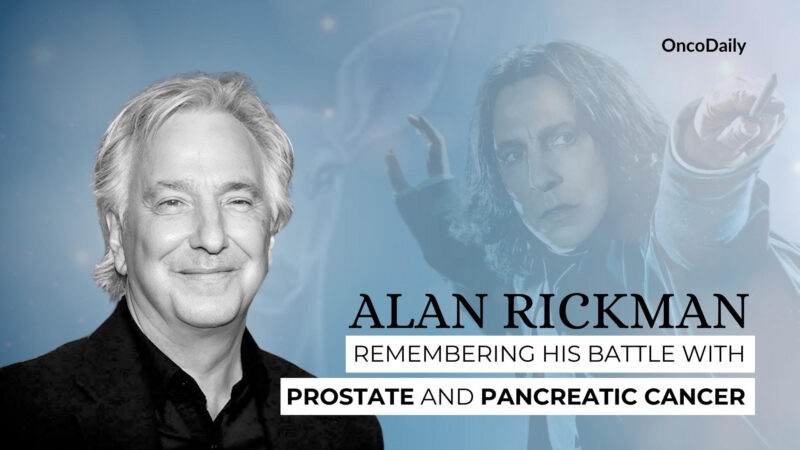
You Can Also Read In Memory of Alan Rickman and His Battle with Prostate and Pancreatic Cancer by OncoDaily
Breast Cancer in Middle-Aged Women: Incidence, Survival, and Key Outcomes
Breast cancer remains the most commonly diagnosed malignancy among women worldwide, with approximately 2.3 million new cases and over 680,000 deaths annually, according to data from the World Health Organization and International Agency for Research on Cancer. The burden of disease rises significantly with age, particularly after 40, making middle-aged women a key population for early detection and intervention. While the median age at diagnosis is around 62 years, a substantial proportion of cases occur in women aged 40 to 60, a group in which tumors may present with more aggressive biological features and are sometimes diagnosed at more advanced stages due to gaps in screening practices.
Survival outcomes in breast cancer vary markedly by stage at diagnosis. In high-income settings, the overall 5-year survival rate approaches 90%, largely driven by early detection and advances in systemic therapies. However, this figure masks significant disparities: patients diagnosed with localized disease have a 5-year survival of approximately 99%, compared with around 85–86% for regional disease, and only ~30% for metastatic breast cancer, where cure remains unlikely. These differences highlight a critical clinical reality early-stage breast cancer is highly curable, whereas advanced disease continues to carry a substantial risk of mortality.
Over the past three decades, breast cancer mortality has declined by nearly 40% in many regions, reflecting the combined impact of mammographic screening, improved surgical techniques, radiotherapy, and the introduction of targeted and endocrine therapies. In middle-aged women, the most common subtype is hormone receptor–positive (HR+) disease, which generally has a more favorable prognosis but is characterized by a prolonged risk of recurrence that can extend beyond 10–20 years. Conversely, more aggressive subtypes, such as triple-negative breast cancer, are more frequently observed in younger patients and are associated with poorer outcomes and limited targeted treatment options.
Taken together, these data underscore the importance of early detection, risk-adapted screening, and personalized treatment strategies, particularly in women between 40 and 60 years of age, where the incidence of breast cancer begins to rise and timely diagnosis can dramatically influence long-term survival.
Written by Aharon Tsaturyan, MD, Editor at OncoDaily Intelligence Unit
FAQ
How did Helen McCrory die?
Helen McCrory died of breast cancer at her home in London on April 16, 2021, at age 52. Her husband, Damian Lewis, described her as a "beautiful and mighty woman" who fought a "heroic battle."
What type of cancer did Helen McCrory have?
She battled breast cancer, keeping her diagnosis private and telling only "very, very few people" to avoid it overshadowing her work and family life.
Did Helen McCrory keep her cancer diagnosis secret?
Yes, she maintained strict privacy, swearing close friends and family to secrecy. Most people, including colleagues, only learned the full extent in her final days.
Did Helen McCrory work while undergoing cancer treatment?
Absolutely she continued acting in Peaky Blinders, theater (like Medea), and other projects despite "gruelling" treatments like chemotherapy, masking her struggle with composure.
Why was Helen McCrory absent from Peaky Blinders season 6?
Her breast cancer advanced, making her too unwell to film. The show's team reshaped the final season as an emotional tribute to her character, Polly Gray.
Who did Helen McCrory play in Peaky Blinders?
She portrayed Polly Gray, the intelligent, ruthless matriarch and emotional core of the Shelby family, filming scenes through early seasons while secretly managing cancer.
What Harry Potter role did Helen McCrory play?
She played Narcissa Malfoy, Draco's mother, bringing icy composure and maternal vulnerability to key scenes, like confronting Voldemort in Deathly Hallows – Part 2. (She was originally cast as Bellatrix but stepped away due to pregnancy.)
How did the entertainment world react to Helen McCrory's death?
Tributes flooded in from Peaky Blinders and Harry Potter casts, fans, and creators, celebrating her as a resilient icon of strength, privacy, and powerful performances.
What lessons from Helen McCrory's cancer story inspire resilience?
Her private fight highlights dignity in illness—balancing work, family, and charity without spectacle, showing how strength and privacy can still motivate others.