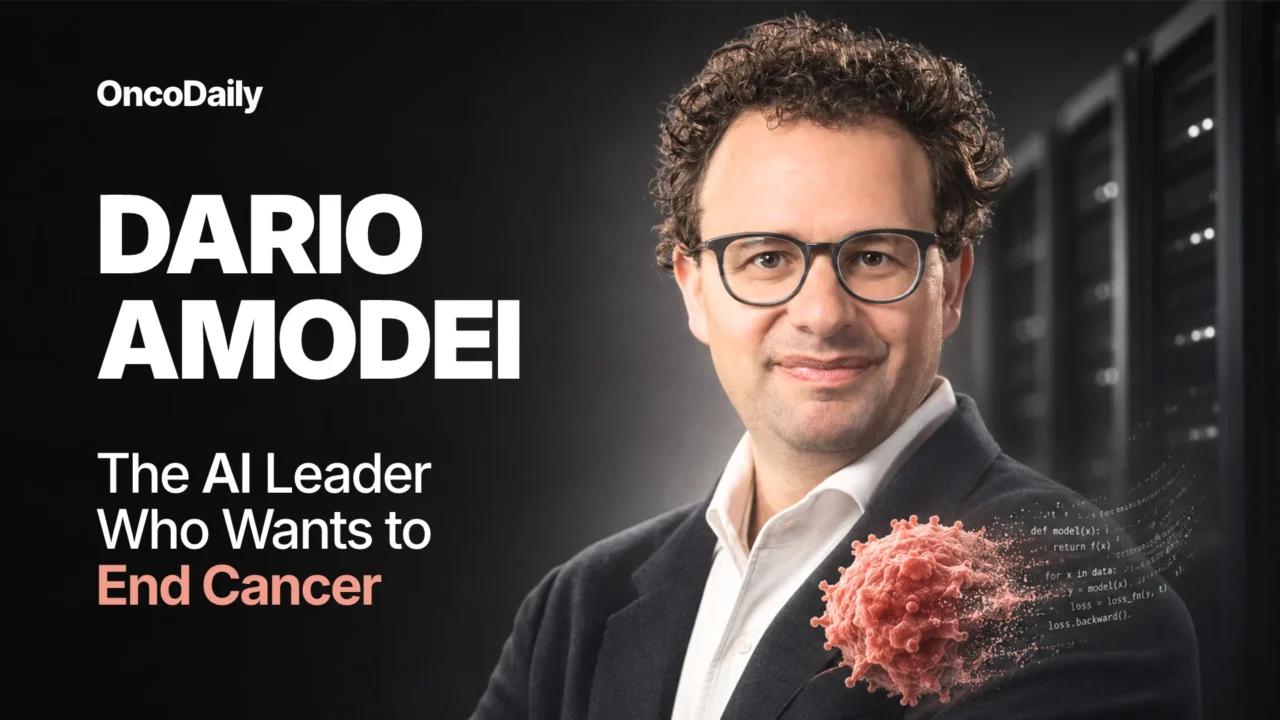
Dario Amodei, CEO and co-founder of Anthropic, has predicted that artificial intelligence could make cancer, Alzheimer’s disease, heart disease, and mental illness “relics of the past” in less than a decade. The statement, made in Anthropic’s investor-roadshow video released on November 10, 2026, has reignited debate about how quickly AI could transform medicine. Amodei believes increasingly powerful AI systems could dramatically accelerate scientific discovery, potentially compressing decades of biomedical progress into just a few years. His prediction comes as Anthropic, the company behind Claude, expands its involvement in biotechnology and experimental drug discovery.
But while AI is already supporting cancer screening, molecular research, and the development of potential new treatments, the idea that cancer could become a relic of the past within ten years remains speculative. The distinction matters because cancer is not a single disease, and promising laboratory discoveries must still demonstrate meaningful benefits in patients.
Who Is Dario Amodei?
Dario Amodei is an American artificial intelligence researcher and entrepreneur, best known as the co-founder and chief executive officer of Anthropic. He established the company in 2021 alongside his sister, Daniela Amodei, and several former OpenAI colleagues. Anthropic develops the Claude family of AI models, with a focus on advanced capabilities, reliability, and AI safety. Before founding Anthropic, Amodei worked at OpenAI, where he served as vice president of research and contributed to the development of large language models, including GPT-2 and GPT-3.
His academic background is rooted in science. Amodei studied physics at the California Institute of Technology and Stanford University before earning a PhD in physics from Princeton University. Unlike many technology executives, he also has experience in biomedical research, an aspect of his career that helps explain his longstanding interest in using artificial intelligence to address complex medical problems. However, his scientific credentials do not, by themselves, establish the validity of his latest prediction. The question is whether the technology can deliver the medical outcomes he anticipates.
What Is Dario Amodei’s Background in Cancer Research?
Before concentrating on artificial intelligence, Amodei worked as a postdoctoral researcher at Stanford Medicine, where his research involved protein analysis and mass spectrometry. His work included research relevant to cancer biomarkers, which are measurable biological characteristics that may help scientists understand, diagnose, or monitor malignancies. Biomarkers have become central to modern oncology. Certain genetic alterations, proteins, and molecular patterns can help determine which patients may benefit from specific treatments.
For example, HER2 testing helps guide treatment decisions in several cancers, while EGFR mutation testing is important in selected lung cancers. Microsatellite instability and mismatch repair testing can identify patients eligible for particular immunotherapies. Discovering clinically useful biomarkers, however, is a complex process. Researchers must establish whether a biological signal is reliable, whether it predicts meaningful outcomes, and whether testing it improves patient care.
Photo: Depositphotos
Amodei’s earlier experience exposed him to some of these challenges. His subsequent interest in AI reflects a broader scientific ambition: developing systems capable of analyzing complex biological information, generating useful hypotheses, and accelerating experiments that traditionally require extensive time and resources. This background provides context for his enthusiasm, although it does not make his predictions about the future of oncology inevitable.
What Did Dario Amodei Say About AI and Cancer?
In the final portion of Anthropic’s November 10, 2026 investor-roadshow video, Amodei predicted that cancer, Alzheimer’s disease, heart disease, and mental illness could become “relics of the past” in less than a decade. The statement was presented as his personal assessment of what increasingly capable AI systems could help humanity accomplish. He suggested that advanced artificial intelligence might accelerate the discovery of treatments for diseases that have challenged medicine for generations. The claim attracted attention because it came from the leader of one of the world’s most prominent AI companies at a time when Anthropic was expanding its biomedical research activities.
However, the investor presentation did not provide clinical trial results demonstrating that cancer could be eliminated within the proposed timeframe. Nor did Amodei identify a single treatment that would work across the many different types of cancer. His statement was a prediction about future scientific progress, not an announcement that AI had already developed a cure. That distinction is particularly important for patients and families who may interpret ambitious technological forecasts as promises of imminent medical breakthroughs.
Has Amodei Made Similar Predictions Before?
Amodei’s November 2026 comments build on ideas he presented in October 2024 in an essay titled Machines of Loving Grace. In that essay, he proposed that sufficiently powerful AI could accelerate research so dramatically that scientists might achieve the equivalent of 50 to 100 years of progress in biology and medicine within five to ten years. He described this possibility as a compressed period of scientific development. The argument was based on the idea that advanced AI systems might eventually act as highly capable scientific collaborators, helping researchers develop hypotheses, interpret experimental results, design molecules, and organize complex investigations.
For cancer research, such capabilities could improve the identification of therapeutic targets, accelerate drug discovery, and help scientists understand mechanisms of treatment resistance. Nevertheless, Amodei’s proposal was conditional on the emergence of sufficiently capable AI systems. It was not a clinical prediction established through prospective evidence. His November 2026 remarks represent a stronger expression of that earlier vision, but the scientific uncertainty remains.
What Is Anthropic Actually Doing in AI Drug Discovery?
Anthropic has recently expanded its activities in life sciences, moving beyond general-purpose AI applications toward research involving experimental medicines. On October 27, 2026, the company published an update describing collaborations with six organizations: BigHat Biosciences, Bristol Myers Squibb, Divergence Labs, Enveda, Generate Biomedicines, and The Column Group. These projects involve different parts of drug development, including molecular design, antibody optimization, cell therapy engineering, clinical trial planning, and laboratory workflows.
The company’s approach is based on a practical observation: developing a medicine involves numerous scientific and operational steps, and delays can occur throughout the process. AI may help researchers examine more possibilities, interpret complex datasets, and reduce time spent on certain technical tasks. Several of Anthropic’s partnerships have already produced promising experimental findings. However, most of the publicly reported work remains preclinical, meaning it has not yet demonstrated clinical effectiveness in patients.
AI-Assisted CAR-T Cell Therapy Research
One of the most relevant projects for oncology involves Generate Biomedicines. CAR-T cell therapy works by genetically modifying immune cells to recognize and attack cancer cells. Approved treatments have transformed care for selected patients with blood cancers, including certain leukemias, lymphomas, and multiple myeloma. Solid tumors, however, present additional challenges. Tumor heterogeneity, immunosuppressive environments, and difficulties with immune-cell persistence can limit the effectiveness of CAR-T approaches. Generate Biomedicines used Claude-assisted research tools to redesign part of the genetic instructions that control CAR-T cell activity.
According to Anthropic’s October 2026 report, one experimental design was approximately 70% shorter than a standard version. In laboratory testing using human T cells, the redesigned system produced roughly ten times as many receptors on the cell surface. Selected designs also demonstrated more efficient tumor-cell killing than the comparison construct.
These results suggest that AI may help researchers improve the engineering of cellular therapies. Importantly, these were laboratory findings. The redesigned CAR-T constructs have not yet demonstrated safety or effectiveness in cancer patients. The researchers plan additional preclinical investigations before potential clinical development. The project illustrates how AI can contribute to early therapeutic research without establishing that a new cancer treatment is ready for clinical use.
AI-Designed Antibodies
Another collaboration involves BigHat Biosciences, which combines machine learning with automated laboratory experimentation. Researchers used Claude to help optimize antibody fragments with potential applications in future medicines. The project focused on improving characteristics such as molecular binding, stability, and resistance to aggregation. According to Anthropic, approximately 1,010 molecular variants were produced and tested over about ten weeks. Some optimized molecules achieved more than tenfold stronger binding than their starting versions.
These findings demonstrate how AI-assisted experimentation may accelerate the optimization of drug candidates. However, better molecular binding does not necessarily mean a treatment will be more effective or safer in humans. The optimized molecules must still undergo appropriate development and testing before any clinical benefit can be established.
AI in Clinical Trial Planning
Anthropic has also begun collaborating with Bristol Myers Squibb to examine how AI can support early clinical development. The work includes analyzing research data, evaluating development strategies, and preparing preliminary clinical study plans. Such applications may help researchers identify potential problems earlier and make more informed decisions about study design. This could become particularly valuable in oncology, where clinical development often involves complex biomarker-defined populations, combination therapies, and multiple possible endpoints.
Still, AI-generated clinical trial plans require expert review and must meet established scientific, ethical, and regulatory standards. The practical benefit of these collaborations will ultimately depend on whether they improve research efficiency and contribute to successful development of effective treatments.
Has Anthropic Started Conducting Its Own Biological Research?
Beyond its partnerships, Anthropic has begun developing its own experimental biology capabilities. In September 2026, Reuters reported that the company had established a laboratory in the San Francisco Bay Area. Such facilities allow researchers to test computationally generated hypotheses using actual biological materials. This is an important development because AI predictions about molecular behavior must be examined experimentally. Anthropic has also disclosed its acquisition of Mithril Medicine, a biotechnology company investigating treatments for rare forms of muscular dystrophy.
According to the company’s October 2026 research update, AI-assisted coordination helped support a research program that produced promising findings in mice. These initiatives demonstrate that Anthropic is investing in the connection between computational research and laboratory experimentation. However, its own drug programs remain at an early stage. The acquisition of a biotechnology company or the establishment of a laboratory does not establish that an effective treatment has been discovered.
How Is AI Already Being Used in Cancer Care?
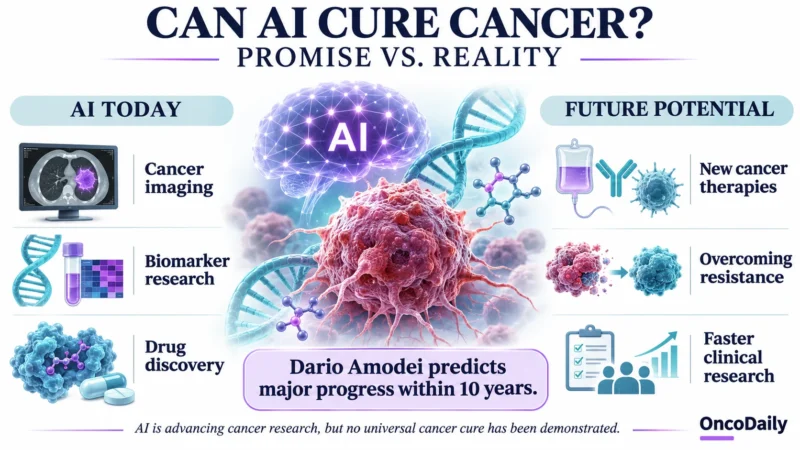
Although Amodei’s prediction remains unproven, artificial intelligence has already demonstrated value in specific areas of oncology. Some applications are used in clinical practice, while others remain under investigation. The most promising areas include medical imaging, pathology, molecular research, and drug discovery.
AI in Breast Cancer Screening
One of the strongest clinical examples comes from the Swedish Mammography Screening with Artificial Intelligence trial, known as MASAI. The randomized study enrolled approximately 105,934 women and compared AI-supported mammography screening with conventional double reading by radiologists. In results published in The Lancet in 2026, AI-supported screening achieved a sensitivity of 80.5%, compared with 73.8% for conventional double reading. Specificity was 98.5% in both groups.
The rate of interval cancers, meaning cancers diagnosed between scheduled screening examinations, was 1.55 per 1,000 participants in the AI-supported group and 1.76 per 1,000 in the conventional screening group. The study established noninferiority for interval cancer rates and reported improved sensitivity with AI support. It also found a reduction in screen-reading workload. These findings suggest that AI can improve the efficiency and performance of certain breast cancer screening programs. However, the results do not prove that AI eliminates breast cancer or reduces long-term breast cancer mortality. They demonstrate a measurable benefit in a particular screening setting, using a specific AI-supported workflow.
AI in Cancer Pathology
Artificial intelligence is also being developed to analyze digital pathology slides. These slides contain detailed information about tumor cells, surrounding tissues, and the tumor microenvironment. AI systems can assist in identifying suspicious areas, evaluating tissue patterns, and investigating characteristics that may be associated with clinically important biomarkers. Researchers are also studying whether certain molecular alterations can be predicted from routine pathology images.
Such applications could eventually help prioritize additional testing and improve laboratory efficiency. Nevertheless, models require validation across different hospitals, populations, scanners, and tissue preparation methods. Predicted molecular characteristics should not replace established diagnostic testing when treatment decisions require confirmed results.
AI in Precision Oncology
Precision oncology involves selecting treatments based on the biological characteristics of a patient’s cancer. Modern treatments may target alterations involving EGFR, ALK, BRAF, HER2, and other molecular pathways. AI may help researchers integrate genetic information, pathology findings, imaging data, and treatment outcomes to identify patterns relevant to clinical care. It may also help investigate why some tumors respond to treatment while others develop resistance. However, predicting treatment response is not equivalent to proving treatment benefit. Before an AI system is used to guide clinical decisions, researchers must demonstrate that its predictions are reliable and clinically useful.
AI in Drug Discovery
AI systems can analyze molecular structures, propose candidate compounds, and help researchers prioritize promising experimental approaches. Computational advances in protein structure prediction have already improved scientists’ ability to investigate biological mechanisms. These developments may shorten certain early research stages and reduce the number of unsuccessful experiments. However, an AI-designed molecule must still demonstrate acceptable safety, appropriate biological activity, and clinical effectiveness before it can become an approved medicine.
Why Is Making Cancer Curable So Difficult?
The central challenge with Amodei’s prediction is that cancer is not one disease. It encompasses many malignancies that differ in their tissue origins, genetic alterations, biological behavior, and response to treatment. Even cancers arising in the same organ can behave differently. Breast cancer, for example, includes hormone receptor-positive, HER2-positive, and triple-negative subtypes, each with distinct treatment approaches. Similarly, lung cancer includes multiple histological and molecular subtypes. Some cancers can already be cured in a substantial proportion of patients, particularly when diagnosed early. Others remain difficult to control despite major therapeutic advances. Several biological challenges make the development of universally effective treatments particularly difficult.
Tumor Heterogeneity and Treatment Resistance
Cancer cells within the same tumor may have different genetic and molecular characteristics. This diversity can allow some cells to survive treatments that successfully eliminate others. Over time, resistant cancer-cell populations may become dominant, leading to disease progression. Tumors may also acquire new genetic alterations or activate alternative signaling pathways that reduce treatment effectiveness. AI could help researchers identify resistance mechanisms and develop strategies to overcome them, but predicting every relevant biological change remains challenging.
The Tumor Microenvironment
Cancer cells interact with surrounding immune cells, blood vessels, connective tissue, and signaling molecules. These interactions can promote tumor growth and interfere with treatment. In solid tumors, immunosuppressive conditions may prevent immune cells from functioning effectively. These barriers are one reason treatments that work well in certain blood cancers may be less effective against solid malignancies. Understanding and overcoming the tumor microenvironment requires extensive biological research and carefully designed clinical studies.
Cancer Recurrence
Cancer can also return after apparently successful treatment. In some patients, small populations of malignant cells survive initial therapy and remain undetectable for months or years. Newer technologies, including circulating tumor DNA testing, may help identify residual disease and recurrence risk in selected settings. AI could improve the interpretation of these complex measurements. However, identifying a higher risk of recurrence does not automatically establish which intervention will prevent it. Clinical trials are necessary to determine whether acting on those findings improves survival or other meaningful outcomes.
Can AI Accelerate Clinical Trials and Drug Approval?
AI could potentially make several stages of clinical research more efficient. It may help investigators identify appropriate patient populations, improve trial eligibility criteria, evaluate potential endpoints, and analyze large amounts of research data. It could also assist with regulatory documentation and the identification of unsuccessful development strategies. These improvements may reduce administrative burdens and allow researchers to pursue more promising hypotheses. Nevertheless, clinical trials remain essential. A treatment must demonstrate that it works in humans and that its benefits justify its risks. For cancer therapies, this may require evaluating outcomes such as overall survival, progression-free survival, treatment toxicity, and quality of life.
Laboratory predictions and computational simulations cannot fully replace the information obtained from patient studies. Regulatory authorities have already authorized a growing number of AI-enabled medical devices. According to the US Food and Drug Administration, more than 1,600 AI-enabled medical devices had been authorized for marketing in the United States as of September 2026.
However, authorization applies to a device’s particular intended use and does not imply that AI can independently diagnose or treat all cancers. AI-assisted drug discovery and AI-enabled medical devices also follow different regulatory pathways. The central requirement remains the same: clinical applications must demonstrate acceptable safety and performance for their intended purpose.
What Do Medical Experts Think About Amodei’s Prediction?
Amodei’s statement has attracted both enthusiasm and skepticism. Some researchers see substantial opportunities for AI to improve the speed and efficiency of scientific discovery.
Others caution that the prediction underestimates the biological complexity of cancer and the difficulties involved in translating laboratory findings into effective treatments. Reports following the November 2026 investor presentation described criticism from German physician and former health minister Karl Lauterbach, who questioned whether diseases as complex as cancer and Alzheimer’s could become problems of the past within ten years. The disagreement is not necessarily about whether AI can contribute to medicine.
Rather, it concerns how much progress can realistically be achieved within a relatively short period. A meaningful advance might involve improving survival for a particular cancer subtype, developing a more effective immunotherapy, or identifying malignancies earlier through better screening. These outcomes are measurable. By contrast, describing cancer as a relic of the past does not specify whether the prediction refers to preventing cancer, curing all existing cancers, reducing mortality, or making most malignancies manageable. Without a clear clinical definition, the prediction remains difficult to evaluate scientifically.
What Would Need to Happen for Amodei to Be Right?
For Amodei’s vision to become medical reality, advances in AI would need to translate into substantial, reproducible improvements in patient outcomes. In oncology, that would require progress across several areas. More cancers would need to be detected at stages where effective treatment is possible. New therapies would need to overcome resistance mechanisms and demonstrate meaningful benefits in appropriately designed clinical trials. Researchers would also need better strategies for preventing recurrence and managing cancers that currently have limited treatment options.
Importantly, these treatments would need to become accessible beyond a small number of specialized hospitals or well-funded healthcare systems. Access remains a major concern in global oncology. Patients’ outcomes depend not only on scientific innovation but also on screening programs, diagnostic services, trained medical professionals, treatment infrastructure, and affordability.
A highly effective treatment cannot transform global cancer outcomes if most patients cannot receive it. It is also necessary to distinguish between eliminating cancer and making it more treatable. Cancer incidence may remain significant even if advances in prevention, early detection, and treatment substantially reduce mortality. A future in which more patients survive cancer or live for many years with controlled disease would represent a major achievement, even if cancer itself does not disappear.
You Can Also Read Steve Jobs, Apple, and Cancer: The True Story Behind His Rare Diagnosis by OncoDaily
Written by Aharon Tsaturyan, MD, Editor at OncoDaily Intelligence Unit
FAQ
Did Dario Amodei Say AI Will Cure Cancer in 10 Years?
Yes. In November 2026, Anthropic CEO Dario Amodei predicted that AI could make cancer and several other major diseases “relics of the past” in less than a decade. This was a prediction, not a medically proven outcome.
Can Artificial Intelligence Cure Cancer?
AI has not been shown to provide a universal cure for cancer. However, it is helping researchers improve cancer detection, analyze molecular data, identify potential treatments, and accelerate drug discovery.
Who Is Dario Amodei, the CEO of Anthropic?
Dario Amodei is an American AI researcher and the co-founder and CEO of Anthropic, the company behind Claude. He previously worked at OpenAI and has a scientific background that includes biomedical research.
Why Does Dario Amodei Believe AI Could Cure Cancer?
Amodei believes increasingly advanced AI systems could accelerate biological research by helping scientists analyze data, design experiments, identify therapeutic targets, and develop new medicines more efficiently.
Is Anthropic Developing AI-Powered Cancer Treatments?
Anthropic is collaborating with biotechnology and pharmaceutical companies on drug discovery and experimental therapies, including CAR-T cell engineering. Its publicly reported cancer-related results remain preclinical and have not established patient benefit.
How Is AI Currently Used in Cancer Diagnosis?
AI can assist with interpreting mammograms, pathology slides, and other medical images. Some systems have demonstrated improvements in screening performance or workflow efficiency, although results depend on the technology and clinical setting.
Can AI Help Develop New Cancer Drugs Faster?
Potentially, yes. AI can assist with molecular design, identifying drug targets, and planning experiments. However, AI-designed treatments must still undergo appropriate laboratory evaluation, clinical trials, and regulatory review.
Can AI Improve CAR-T Cell Therapy for Cancer?
Researchers are investigating whether AI can improve the design and function of engineered T cells. Anthropic has reported encouraging laboratory findings, but these experimental improvements have not yet demonstrated clinical effectiveness in patients.
Why Is It So Difficult to Cure All Types of Cancer?
Cancer includes many biologically distinct diseases. Tumor heterogeneity, genetic mutations, treatment resistance, metastatic spread, and differences in the tumor microenvironment make a single universal treatment extremely difficult to develop.
Will AI Eliminate Cancer by 2036?
There is currently no clinical evidence establishing that AI will eliminate cancer by 2036. AI may accelerate scientific discovery and improve cancer treatment, but its long-term impact will depend on validated clinical results and patient access to effective therapies.