
A routine NFL drug test changed everything for Denver Broncos linebacker Alex Singleton. In early November 2025, mandatory league testing detected elevated levels of human chorionic gonadotropin, commonly known as hCG. The hormone can be used as a tumor marker in some forms of testicular cancer, and the unexpected result prompted Singleton to seek further medical evaluation.
An ultrasound subsequently confirmed a testicular tumor. Only days later, Singleton played in the Broncos’ 10–7 victory over the Las Vegas Raiders, recorded nine tackles, and underwent surgery the following morning. By the end of the month, he had returned to NFL action. His experience became one of the most striking sports-health stories of the 2025 season: an unexpected diagnosis, rapid treatment, a remarkably fast return, and a new commitment to testicular cancer awareness.
Who Is Alex Singleton?
Alex Singleton is a professional football linebacker for the Denver Broncos. Before joining Denver, he played for the Philadelphia Eagles and built a reputation as a highly productive and dependable defender. By the time of his cancer diagnosis, Singleton was an experienced NFL player and an important part of the Broncos’ defense.
His 2025 season was already significant because he had returned after an anterior cruciate ligament injury that ended much of his previous campaign. He would go on to finish the season with 135 tackles in 16 starts and earn recognition as a Pro Bowl alternate despite undergoing cancer surgery during the season. Singleton’s public profile also extended beyond football. He had previously supported Special Olympics initiatives, inspired in part by his older sister, Ashley, who has participated in Special Olympics for many years. His testicular cancer diagnosis added an entirely unexpected chapter to his career.
When Was Alex Singleton Diagnosed With Testicular Cancer?
Singleton said the process began after a random NFL drug test detected elevated hCG levels. On Monday, November 3, 2025, Singleton and his wife, Sam, met with a physician after the abnormal laboratory result raised concern about testicular cancer. An ultrasound confirmed the presence of a tumor. The timing was especially difficult because the Broncos were preparing for a Thursday night game against the Las Vegas Raiders.
Singleton appeared physically healthy and had not been experiencing obvious symptoms. In a later interview, he said he “felt fine” when the confidential test result arrived. The finding therefore came as a shock and demonstrated that testicular cancer may sometimes be identified before a patient notices a lump, pain, swelling, or another physical change. Following further evaluation, doctors recommended prompt surgery.
How Was Alex Singleton’s Cancer Discovered?
The cancer was discovered through the NFL’s routine drug-testing programme rather than through a conventional cancer screening test. Singleton received a confidential notice explaining that his hCG level was elevated. In men, a raised hCG level may suggest the use of certain performance-enhancing substances, but it can also be associated with testicular germ-cell tumors. Singleton knew he had not used a prohibited substance, so he sought medical advice. At his wife’s urging, he arranged an appointment with a urologist, and an ultrasound identified a testicular tumor.
This was not an example of routine population screening for testicular cancer. Instead, it was an incidental finding from an unrelated test that triggered the appropriate diagnostic work-up. The distinction matters because there is no standard laboratory screening programme for all men without symptoms. Testicular cancer is usually detected after a person notices a lump, swelling, change in testicular size, discomfort, or heaviness and seeks medical evaluation. Singleton’s case was unusual, but it showed how quickly acting on an abnormal result can alter the course of care.
Did Alex Singleton Play Before Surgery?
After receiving the diagnosis, Singleton chose to play in the Broncos’ Thursday Night Football game against the Las Vegas Raiders on November 6, 2025. He recorded nine tackles as Denver secured a 10–7 victory. The following morning, he underwent surgery to remove the tumor. Football became a temporary mental escape during an emotionally overwhelming week. Singleton later explained that the short preparation period allowed him to immerse himself in the game while he waited for surgery and further results.
To fans watching that evening, he was simply a linebacker helping his team win. Privately, he was carrying the knowledge that he had cancer and would undergo an operation within hours. The decision to play should not be interpreted as medical advice for other patients. Treatment decisions, physical activity, and return-to-sport plans must be individualized. In Singleton’s case, however, the timing became one of the defining details of his story.
How Was Alex Singleton Treated?
Singleton underwent surgery on Friday, November 7, 2025, to remove the cancerous tumor. The procedure used for most suspected testicular cancers is a radical inguinal orchiectomy, in which the affected testicle is removed through an incision in the groin. Reports about Singleton’s treatment described the successful removal of the tumor. A CT scan showed no evidence that the cancer had spread, although Singleton initially noted that additional test results were still being evaluated. He described the cancer as having been caught early and said he had received a “great prognosis.” The early stage of the disease was central to his rapid recovery.
Singleton also credited his wife, family, doctors, teammates, and the Broncos organization for supporting him through the diagnosis and surgery. He spoke openly about the fear associated with the word “cancer” and emphasized the importance of approaching recovery with a positive mindset. His comments helped present recovery not as an individual act of toughness, but as a process supported by medical care, family involvement, and a strong professional community.
When Did Alex Singleton Return to Football?
Singleton returned remarkably quickly. On November 26, 2025, only 19 days after surgery, he was listed as a full participant in Broncos practice. He had missed Denver’s Week 11 game while recovering but was preparing to return after the team’s bye week. On November 30, he returned against the Washington Commanders. Singleton recorded six tackles and two passes defended in Denver’s 27–26 overtime victory. One of those pass breakups came at a critical point late in the fourth quarter. His return came just over three weeks after surgery.
For an NFL linebacker, the speed of the comeback was extraordinary. The position requires sprinting, rapid directional changes, tackling, physical collisions, and substantial core and lower-body strength. His return reflected the early stage of the cancer, successful surgery, appropriate postoperative assessment, and his physical recovery. It was not evidence that every patient can or should resume intense activity on the same schedule. Singleton ultimately missed only one game because of the diagnosis and surgery.
What Did Alex Singleton Say About His Diagnosis?
Singleton described the experience as sudden, frightening, and emotionally difficult. At the same time, he repeatedly emphasized that the cancer had been caught early and that his prognosis was positive. In his public statement, Singleton explained that he had hesitated before sharing such personal medical information. He ultimately decided to speak because his experience might encourage another person to pay closer attention to their health.
He also highlighted the support of his wife, Sam, who encouraged him to seek prompt medical follow-up after the abnormal test result. His teammates, coaches, medical team, and the wider Broncos organization also helped him manage the emotional and practical consequences of the diagnosis. The honesty of his comments helped move the story beyond an athlete’s rapid return. It showed the fear, uncertainty, and dependence on others that can accompany cancer even when the prognosis is favorable.
What Is the Prognosis for Early Testicular Cancer?
Testicular cancer is among the most treatable solid tumors, particularly when identified before it has spread. Current U.S. data show a 99% five-year relative survival rate for localized testicular cancer. Five-year relative survival is approximately 96% for regional disease and 72% when the cancer has spread to distant parts of the body. These figures are based on patients diagnosed between 2015 and 2021.
The prognosis depends on several factors, including tumor type, stage, serum tumor-marker levels, sites of spread, and response to treatment. Surgery is generally the first treatment when testicular cancer is suspected. Depending on the final pathology and stage, some patients require only active surveillance after surgery. Others may receive chemotherapy, radiotherapy in selected seminoma cases, or additional procedures. Singleton’s public comments indicated that his tumor had been found early and imaging had not shown spread, helping explain why surgery could be followed by such a rapid return to activity.
His case demonstrates the difference early identification can make, but a favorable prognosis does not remove the emotional impact of receiving a cancer diagnosis or the need for continued medical follow-up.
Why Does Early Detection Matter in Testicular Cancer?
Testicular cancer is relatively uncommon overall, but it disproportionately affects adolescents and younger adult men. It is the most commonly diagnosed cancer among U.S. men between the ages of 15 and 35. The American Cancer Society estimates that approximately 9,810 new cases and 630 deaths from testicular cancer will occur in the United States in 2026.
The most common early sign is a lump, swelling, or enlargement of one testicle. Many testicular tumors are painless. Other possible symptoms include heaviness in the scrotum, a dull ache in the groin or lower abdomen, sudden fluid accumulation, or discomfort in the testicle or scrotum. These symptoms do not always indicate cancer, but they require medical evaluation. Early detection is important because disease confined to the testicle is usually highly curable and may be managed with surgery followed by surveillance.
More advanced disease can also often be cured, but treatment may require chemotherapy, additional surgery, or a longer recovery period. Singleton’s diagnosis was not triggered by a symptom, but his response to the abnormal laboratory result illustrates the same principle: unusual findings should not be ignored.
How Is Alex Singleton Promoting Testicular Cancer Awareness?
After surgery, Singleton said he hoped to become a voice encouraging other people to undergo preventive health evaluations and seek medical advice when something appeared wrong. His first game back also became part of that awareness effort. Singleton wore custom footwear through the NFL’s My Cause My Cleats initiative to support the Testicular Cancer Awareness Foundation. The cleats emphasized early detection and the importance of seeking medical care.
By speaking publicly about his diagnosis, he helped bring a sensitive men’s health topic into mainstream sports coverage. Testicular cancer can be difficult for some patients to discuss because it involves reproductive organs, sexuality, fertility, and body image. An NFL player addressing the experience openly can reduce embarrassment and encourage conversations that might otherwise be postponed. By May 2026, Singleton was discussing the experience as part of an extraordinary season in which he returned from an ACL injury, underwent cancer surgery, missed only one game, and continued performing at a high level. His message was no longer only about returning to football. It had become an argument for awareness, prompt evaluation, and early action.
Why Is Alex Singleton’s Story Important?
Singleton’s experience combines several elements that make it especially powerful. The cancer was detected through an unexpected laboratory result. Medical follow-up happened quickly. He played an NFL game while privately processing the diagnosis. Surgery took place the following morning. Imaging showed no spread, and he returned to competition within weeks. But the deeper lesson is not about playing through cancer or recovering unusually fast. It is about acting on information.
An abnormal result could have been delayed or dismissed. Singleton and his wife instead pursued medical evaluation immediately. That decision led to an ultrasound, early diagnosis, and timely surgery. His story also reminds readers that physical fitness does not protect someone from cancer. Singleton was an elite professional athlete who felt healthy and continued performing at the highest level. Cancer can exist without visible weakness or obvious symptoms.
A Story of Awareness, Recovery, and Hope
Alex Singleton’s testicular cancer battle became one of the most memorable sports-health stories of the 2025 NFL season. A random drug test identified an abnormal hormone level. An ultrasound confirmed the tumor. Surgery removed the cancer, and a CT scan showed no evidence of spread. Nineteen days after the operation, Singleton returned to practice. Four days later, he was back in an NFL game. His return was remarkable, but the most important part of the story came afterward. By sharing what happened, Singleton transformed a private diagnosis into a public message about men’s health and early detection.
His experience demonstrates that testicular cancer can affect young, healthy, physically active men. It also shows what may be possible when an abnormal result is investigated quickly and disease is identified at an early stage. Alex Singleton’s story is a rare example of how early detection, prompt surgery, strong support, and a determined recovery can turn a cancer diagnosis into a message of awareness and hope.
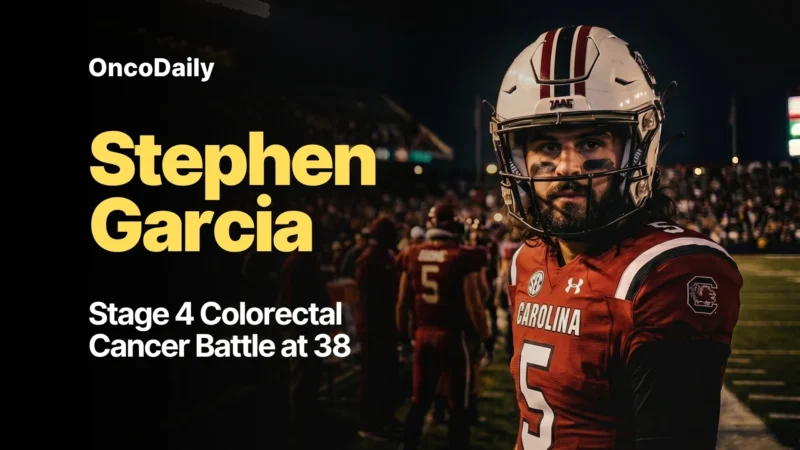
You Can Also Read Former NFL Prospect and South Carolina QB Stephen Garcia Diagnosed With Stage 4 Colon Cancer by OncoDaily
Written by Aharon Tsaturyan, MD, Editor at OncoDaily Intelligence Unit
FAQ
Does Alex Singleton have testicular cancer?
Yes. Denver Broncos linebacker Alex Singleton was diagnosed with testicular cancer in November 2025 after a routine NFL drug test detected elevated hCG levels. An ultrasound later confirmed a testicular tumor.
How was Alex Singleton’s testicular cancer discovered?
His cancer was discovered after routine NFL drug testing showed an abnormally elevated level of human chorionic gonadotropin, or hCG. Because elevated hCG in men can be associated with testicular germ-cell tumors, Singleton underwent further medical evaluation.
Did Alex Singleton fail an NFL drug test?
The test identified an unusual hormone result rather than confirming prohibited drug use. Since Singleton had not used a banned substance, the elevated hCG result prompted him to consult a urologist, leading to the cancer diagnosis.
Did Alex Singleton play after his cancer diagnosis?
Yes. Singleton played against the Las Vegas Raiders on November 6, 2025, and recorded nine tackles. He underwent surgery to remove the tumor the following day.
What surgery did Alex Singleton have?
Singleton underwent surgery to remove the cancerous testicular tumor. The standard initial surgery for suspected testicular cancer is usually a radical inguinal orchiectomy, which removes the affected testicle through an incision in the groin.
How quickly did Alex Singleton return to football?
He returned to practice 19 days after surgery and resumed NFL game action on November 30, 2025, less than one month after the operation.
Did Alex Singleton’s cancer spread?
Public reports stated that the cancer was caught early and that imaging did not show evidence of spread. Singleton described his prognosis as positive.
What are the early symptoms of testicular cancer?
The most common sign is a painless lump or swelling in one testicle. Other symptoms may include testicular enlargement, heaviness in the scrotum, discomfort, or a dull ache in the groin or lower abdomen.
What is the survival rate for testicular cancer?
Testicular cancer is one of the most treatable solid tumors. Survival is particularly high when the disease is diagnosed before it spreads, and most younger patients survive for many years after treatment.
Why is Alex Singleton raising testicular cancer awareness?
Singleton has shared his experience to encourage men to act on unusual symptoms or medical results and seek prompt evaluation. His story demonstrates how early detection and rapid treatment can lead to an excellent prognosis and a return to normal life.