Tempus AI shared on LinkedIn:
“In cancer care, getting patients onto the right treatment at the right time requires equipping care teams with timely, accurate diagnostic information.
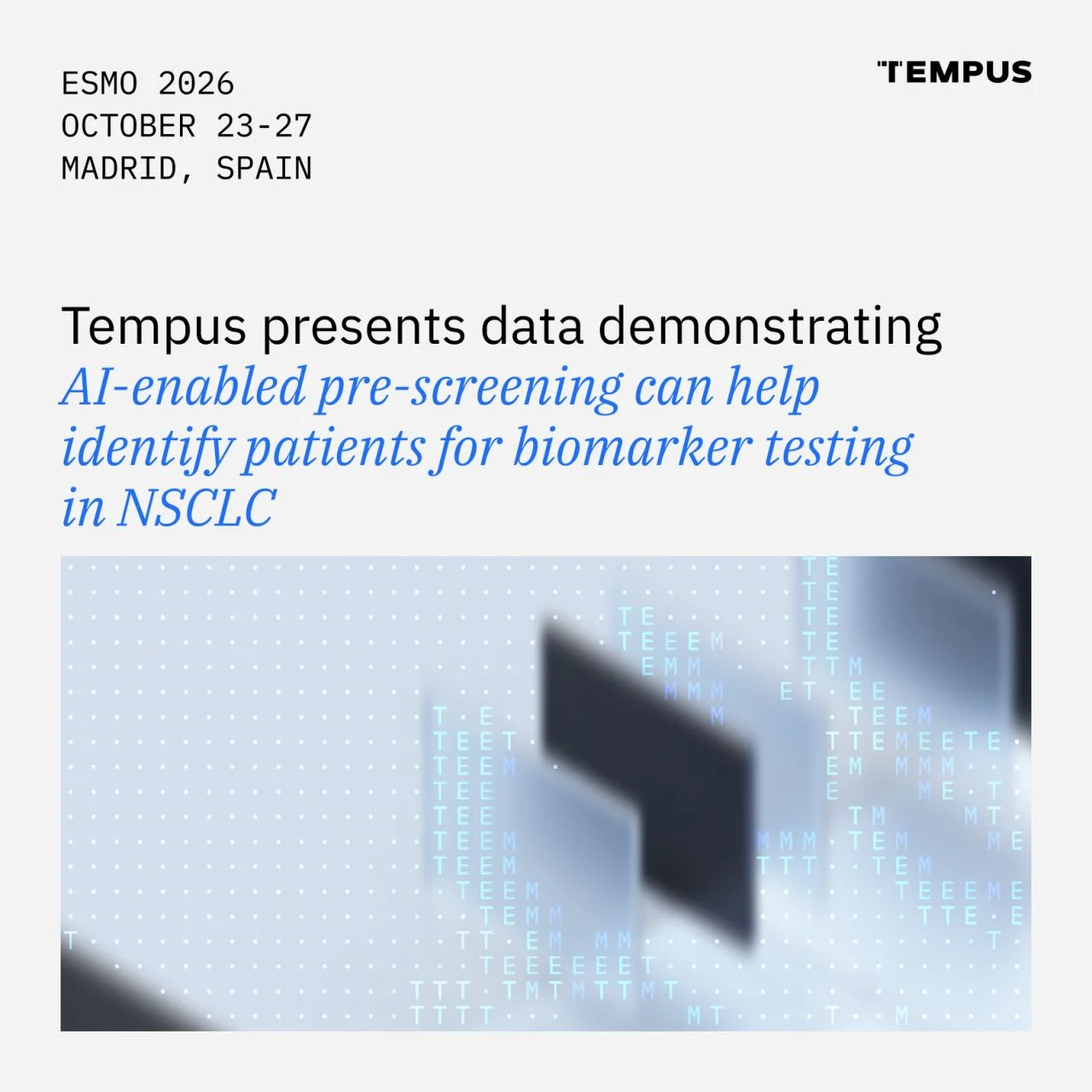
New data presented at ESMO 2026 from our collaboration with Pfizer demonstrates how AI helps make this possible in advanced NSCLC by leveraging insights from routine H&E pathology images, already generated as part of care, to identify patients who may need confirmatory biomarker testing.
AI-enabled pre-screening is designed to help clinicians:
- prioritize diagnostic testing,
- increase the number of patients who receive appropriate biomarker testing,
- accelerate access to clinically actionable results
- and preserve limited tissue samples.
About Tempus AI-Enabled Pre-Screening Data
The panel achieved greater than 80% sensitivity across all 12 biomarkers assessed, with sensitivity exceeding 90% for several biomarkers, supporting its potential to identify patients who may need confirmatory biomarker testing.
As the number of biomarker-driven therapies for advanced NSCLC continues to grow, identifying the right biomarkers can require multiple, time-consuming tests and sufficient tumor tissue.
Results from a multi-center analysis of over 60,000 advanced NSCLC cases demonstrate that Tempus’s AI-enabled panel analyzes standard H&E whole slide images to predict genomic and IHC biomarkers, facilitating timely access to targeted therapies.
Developed in collaboration with Pfizer, this initiative aims to overcome diagnostic barriers regardless of treatment.
Building on Tempus’ AI platforms – including Paige Predict for tissue-limited cases and Tempus Preview for rapid biomarker predictions – the H&E pre-screening tool is currently under development.
It is designed to help inform and prioritize subsequent diagnostic testing, rather than replace standard molecular and IHC testing.
Read the full announcement: Tempus’s Official Press Release.”
You can also read: Tempus AI to Acquire Personalis in $1.5 Billion Deal, Deepening Its Foothold in Cancer Monitoring