






Key takeaways
- The deal: Tempus AI (NASDAQ: TEM) has agreed to acquire MRD specialist Personalis (NASDAQ: PSNL) for $16.25 per share, an enterprise value of roughly $1.7 billion (~$1.5B net of Tempus' existing ~12.5% stake).
- Structure: Primarily all-stock with a floating exchange ratio capped at 0.3356 shares; Tempus may elect up to 50% cash. Personalis can walk if Tempus Class A shares fall below $46.00 before closing.
- Approvals & timeline: Both boards approved; Merck (~13% voting power) will vote in favor. Still needs Personalis shareholder and regulatory approval, with closing targeted for late 2026 or early 2027.
Chicago-based Tempus AI is buying molecular residual disease (MRD) specialist Personalis, folding one of oncology’s most closely watched liquid biopsy technologies into its AI-driven precision medicine platform.
Tempus AI, Inc. (NASDAQ: TEM) announced on July 20, 2026, that it has entered into a definitive agreement to acquire Personalis, Inc. (NASDAQ: PSNL), a Fremont, California-based cancer genomics company known for its NeXT Personal MRD test. The deal ranks among the more significant consolidations in the fast-growing MRD space this year, and it deepens a partnership between the two companies that dates back to late 2023.
Deal Terms
Under the agreement, Personalis shareholders will receive $16.25 per share, a 6% premium to Personalis’ closing price on Friday, July 17, and a 28% premium over the company’s unaffected 30-day volume-weighted average price. The transaction carries a total enterprise value of roughly $1.7 billion, though the figure comes to about $1.5 billion once Tempus’ existing stake in Personalis, around 12.5%, is netted out.
The consideration is structured primarily as stock. Personalis shareholders will receive a floating exchange ratio of Tempus common shares for each Personalis share they hold, capped at a maximum ratio of 0.3356 and finalized closer to closing based on Tempus’ recent trading price. Tempus can elect to pay up to 50% of the consideration in cash, which it says would be funded through cash on hand and borrowings under its existing credit facilities. The agreement also gives Personalis the right to walk away if Tempus’ Class A shares fall below $46.00 before closing, a floor that guards against too much erosion in the value of the stock Personalis holders would receive.
Both companies’ boards have approved the transaction, which still requires Personalis shareholder approval and customary regulatory clearances. Merck, which holds roughly 13% of Personalis’ voting power, has agreed to vote its shares in favor. The deal is expected to close in late 2026 or early 2027.
Markets reacted cautiously. Tempus shares slipped following the announcement, while Personalis stock fell as much as 15% intraday, a reaction analysts tied to the all-stock structure of the deal. Needham downgraded Personalis to Hold from Buy in the wake of the news.
Why MRD, and Why Now
Molecular residual disease testing, technology that hunts for trace amounts of cancer-derived DNA in a patient’s blood after treatment, has become one of the most competitive frontiers in oncology diagnostics. Tempus and Personalis peg the U.S. MRD total addressable market at more than $20 billion, a category still early in its clinical adoption curve.
Personalis’ flagship offering, NeXT Personal, is a tumor-informed, ultrasensitive assay built to detect recurrence earlier and with greater sensitivity than many existing MRD tests, giving oncologists a tool to inform decisions about adjuvant therapy, surveillance intervals, and early intervention. It carries Medicare coverage in three indications, with additional coverage anticipated. Tempus, meanwhile, has built its business around a multimodal data and AI platform spanning genomic sequencing, pathology, radiology, and clinical data, serving biopharma partners, health systems, and physicians.
Adoption appears to be building. Personalis reported preliminary second-quarter revenue of $22.4 million and said it ran 10,384 clinical tests in the quarter, a 33% sequential increase in volume, momentum Tempus has cited in framing the deal’s rationale.
By combining the two, Tempus is positioning itself to offer a more complete arc of cancer care, from initial diagnosis and treatment selection through recurrence monitoring, under a single AI-enabled infrastructure. The company describes the acquisition as a way to integrate MRD more tightly into that continuum rather than relying on the arm’s-length commercial relationship the two firms have operated under since 2023, when Tempus first invested in Personalis and began commercializing NeXT Personal.
Tempus CEO Eric Lefkofsky characterized MRD as a market with the potential to reshape how recurrence is tracked, enabling clinicians to act faster once cancer returns.

Eric Lefkofsky/wikipedia.org
Personalis CEO Chris Hall said the deal gives his company the scale, capabilities, and resources to accelerate innovation for patients, clinicians, and biopharma partners.
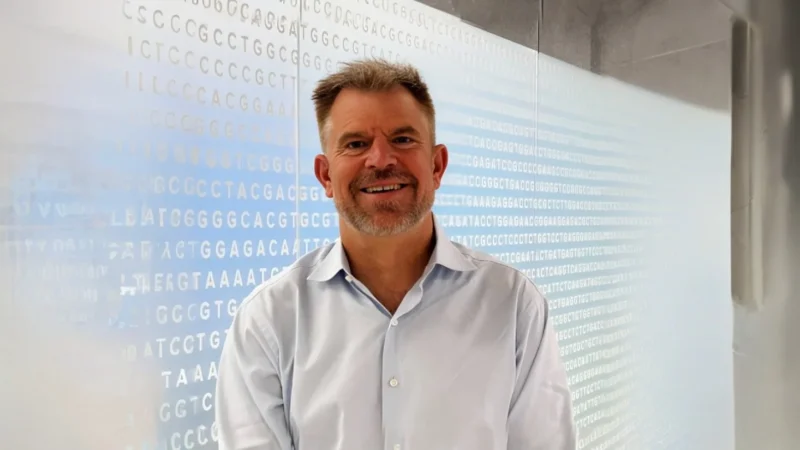
Chris Hall/LinkedIn
Part of a Broader Consolidation Wave
The Tempus-Personalis tie-up is not happening in isolation. The MRD and broader liquid biopsy diagnostics space has seen a string of deals over the past year as larger platforms move to consolidate testing capabilities. In December 2025, Natera acquired Foresight Diagnostics in an all-stock transaction worth up to $450 million, $275 million upfront plus as much as $175 million in milestone payments, adding phased variant technology aimed at strengthening its MRD offerings across solid tumors and lymphoma.
In April 2026, Roche agreed to acquire Saga Diagnostics for up to $595 million, folding the company’s structural-variant MRD platform into its Foundation Medicine subsidiary; leadership there described MRD testing as one of the fastest-growing segments in diagnostics. That transaction is expected to close by the third quarter of 2026.
Tempus itself has been acquisitive in adjacent areas. In August 2025, it acquired Paige, an AI-enabled digital pathology platform, for $81.25 million, adding a large library of digitized pathology slides, clinical reports, and genomic data, infrastructure that could plausibly work in tandem with Personalis’ MRD assets going forward.
What It Means for the Field
For oncologists and biopharma sponsors, the acquisition signals further consolidation of MRD capability inside a small number of vertically integrated, AI-driven diagnostics companies, rather than distributed across independent specialty labs. That could streamline data integration for clinical trial sponsors running MRD-informed studies, while also raising the questions that tend to accompany diagnostics consolidation, around test pricing, access, and whether integration accelerates or narrows innovation in the space.
For now, the deal remains subject to shareholder and regulatory approval, with a close targeted for late 2026 or early 2027. Until then, Personalis will continue operating independently, and NeXT Personal will remain available under existing commercial arrangements as the two companies work toward integration.
Read more biotech insights on OncoDaily Biotech.
Written by: Semiramida Nina Markosyan, Editor, OncoDaily Canada