Herbert Loong, Advisor at Greater Bay Area International Clinical Trial Institute, and Steering Committee Member at Lung Cancer Policy Network, shared on X:
“In 2019, Pennell et al. showed that upfront NGS saved money in the US. We asked whether that held in Hong Kong, where EGFR mutations are found in roughly 40 – 60% of lung adenocarcinomas.
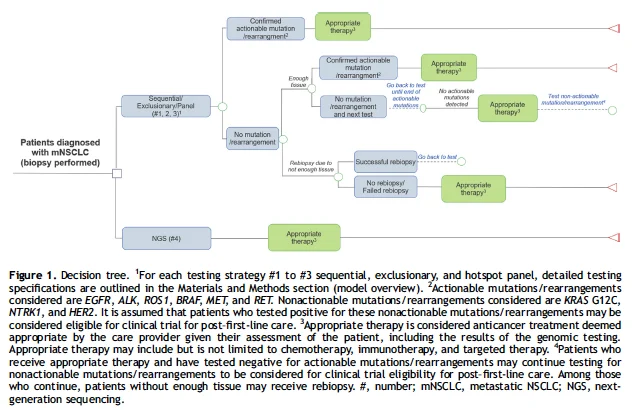
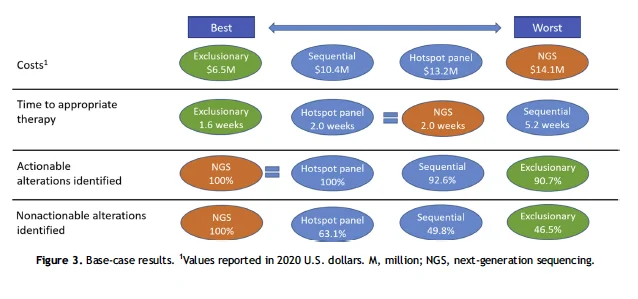
At the time, it didn’t. Our decision model compared sequential, hotspot panel, exclusionary (EGFR/ALK first, then NGS) and upfront NGS testing. Exclusionary testing came out:
- Cheapest: ~US$4.6M saved per year vs the status quo
- Fastest: 1.6 weeks to appropriate therapy
But it missed about 9% of actionable and more than half of non-actionable alterations.
What matters now is the caveat in our conclusion. NGS would become cost-saving once:
- More alterations became actionable and
- NGS prices came down. Our model put the break-even at a 28% NGS price cut, or only 5.5% if every alteration were actionable.
In 2026:
- The alterations we classed as ‘non-actionable’ (KRAS G12C, HER2, NTRK) now have approved targeted therapies
- NGS has been built into public NSCLC diagnostics in HK.
- Prices and turnaround times have kept falling.
The lesson was never ‘single-gene beats NGS.’ It was that testing strategy should follow local epidemiology, local prices and the local drug formulary, and should be re-checked whenever any of these change. Many have.”
Title: Clinical and Economic Impact of Upfront Next-Generation Sequencing for Metastatic NSCLC in East Asia
Authors: Herbert H. Loong, Carlos K.H. Wong, Catherine P.K. Chan, Andrea Chang, Zheng-Yi Zhou, Wenxi Tang, Meaghan Gibbs
You can also read:
Small-Molecule Inhibitors in NSCLC: A 2026 Practical Guide to Drug Interactions and Toxicity