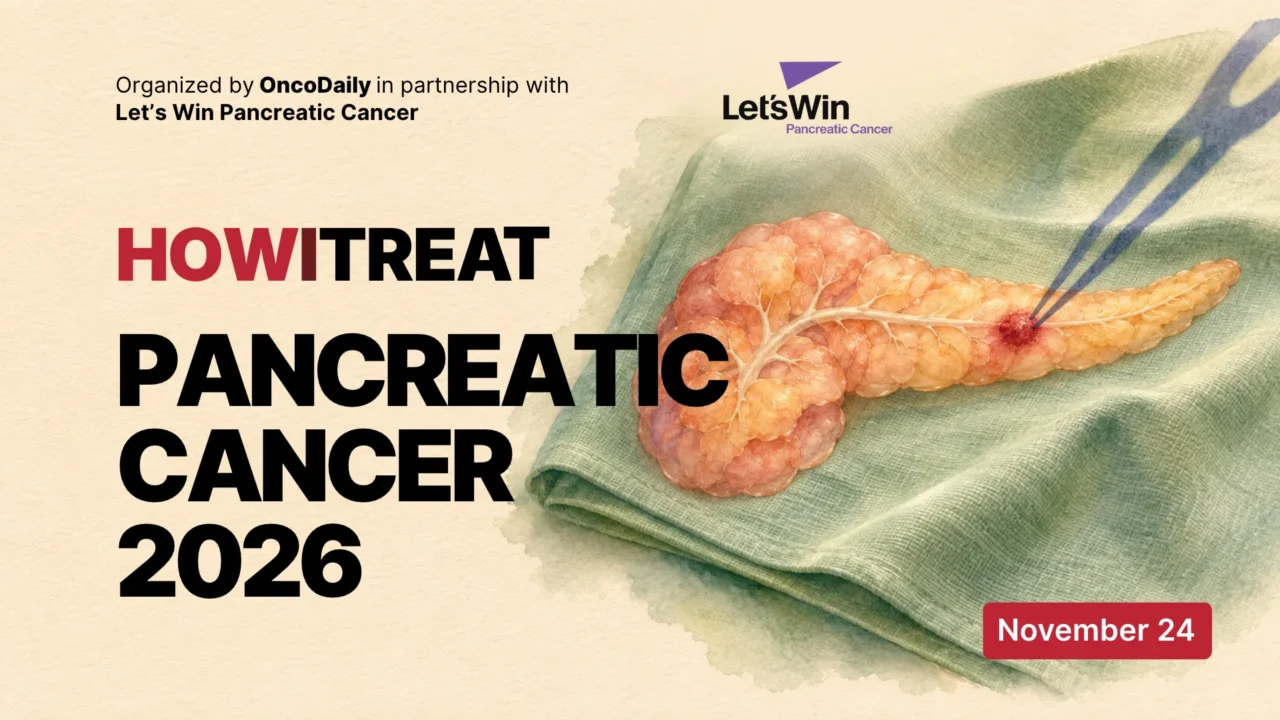
On November 24, 2026, OncoDaily will host How I Treat Pancreatic Cancer in 2026, a global virtual summit dedicated to one of the most challenging diseases in modern oncology. Bringing together leading international experts, the congress will focus on advances in early diagnosis, multidisciplinary treatment, precision oncology, and emerging approaches to pancreatic cancer management.
Part of OncoDaily’s How I Treat series, the summit will provide a platform for scientific discussion and clinical exchange, addressing the challenges that continue to shape pancreatic cancer care and the developments offering new possibilities for patients.
Pancreatic Cancer: A Continuing Global Challenge
Pancreatic cancer remains among the leading causes of cancer-related mortality worldwide, with outcomes often influenced by the stage at which the disease is diagnosed.
In 2022, approximately 510,922 new cases of pancreatic cancer and 467,409 deaths were reported globally. In the United States, an estimated 67,530 new cases and 52,740 deaths are expected in 2026.
These figures reflect the considerable burden of pancreatic cancer and the urgent need for improvements in early detection, treatment strategies, and long-term patient outcomes.
For patients diagnosed at an early stage, surgery may offer an opportunity for curative-intent treatment. However, most patients continue to present with advanced or metastatic disease, where treatment options remain limited and long-term survival continues to be a major challenge.
Despite these difficulties, recent advances in pancreatic oncology are creating new opportunities to improve disease management.
A Changing Treatment Landscape: What Is Different in 2026?
The management of pancreatic cancer has undergone important developments in recent years, particularly with the introduction of multi-agent chemotherapy regimens, targeted therapies for actionable mutations, and biomarker-driven treatment approaches.
Precision oncology is becoming an increasingly important component of clinical decision-making, allowing treatment strategies to be informed by the molecular characteristics of individual tumors.
These developments are influencing the management of both pancreatic ductal adenocarcinoma and pancreatic neuroendocrine tumors, with the potential to improve survival and quality of life in selected patients.
However, translating scientific advances into routine clinical practice remains an important challenge. Questions surrounding patient selection, access to molecular testing, treatment sequencing, and multidisciplinary coordination continue to influence clinical decisions.
How I Treat Pancreatic Cancer in 2026 will address these developments and their implications for contemporary pancreatic cancer care.
Earlier Diagnosis, Better Decisions: The Role of Multidisciplinary Care
One of the central priorities of the summit will be the importance of earlier diagnosis and coordinated treatment planning.
Because pancreatic cancer is frequently diagnosed at an advanced stage, improving opportunities for timely detection remains essential.
The congress will examine the role of multidisciplinary treatment strategies in addressing the complexity of pancreatic cancer management, bringing attention to the importance of coordinated clinical decision-making across different areas of oncology.
From diagnosis and treatment selection to the integration of emerging therapeutic approaches, multidisciplinary collaboration remains fundamental to improving patient care.
The summit will provide an opportunity to examine how these strategies can be incorporated into clinical practice and how international scientific exchange can contribute to better treatment approaches.
Precision Oncology and Personalized Treatment: Where Are We Heading?
Advances in biomarker testing and molecularly guided therapies are changing how pancreatic cancer is understood and treated.
Identifying actionable mutations and integrating molecular information into treatment decisions may help clinicians select more appropriate therapeutic strategies for individual patients.
At the same time, the increasing use of multi-agent chemotherapy regimens and targeted treatments has introduced new considerations in the management of pancreatic malignancies.
The summit will explore the growing role of precision oncology, the clinical application of biomarker testing, and the future direction of personalized treatment.
These discussions will address an important question in pancreatic oncology: How can advances in research be translated into meaningful improvements in everyday patient care?
Bringing the Global Oncology Community Together
As pancreatic cancer treatment becomes increasingly complex, international collaboration and the exchange of clinical experience remain essential.
Through its How I Treat series, OncoDaily continues to connect oncology professionals around important questions in cancer management.
The November 24 summit will bring together international experts to discuss current treatment strategies, examine developments in pancreatic oncology, and consider future directions in the field.
With a dedicated focus on pancreatic cancer, the virtual format will provide an opportunity for oncology professionals worldwide to engage with discussions addressing both established approaches and emerging developments.
Event Details: How I Treat Pancreatic Cancer in 2026
Event: How I Treat Pancreatic Cancer in 2026 – Virtual Summit
Date: November 24, 2026
Time: 7:00 AM – 1:30 PM
Format: Global Virtual Summit
Event Series: OncoDaily How I Treat
Key Areas of Focus:
- Earlier diagnosis and multidisciplinary treatment strategies
- Precision oncology and biomarker testing
- Personalized therapies and emerging treatment approaches
- Advances in pancreatic ductal adenocarcinoma and neuroendocrine tumor management
- International collaboration and future directions in pancreatic cancer care
Join the Conversation on the Future of Pancreatic Cancer Care
Pancreatic cancer continues to present substantial clinical challenges, but advances in treatment and molecular medicine are gradually expanding the possibilities for patient care.
The need for earlier diagnosis, effective therapeutic strategies, and stronger multidisciplinary collaboration remains central to progress.
On November 24, How I Treat Pancreatic Cancer in 2026 will bring these priorities into focus, offering an international forum for examining the current state of pancreatic oncology and the developments that may shape its future.
Registration is open for the global virtual summit. Oncology professionals are invited to join OncoDaily for a dedicated discussion on the evolving management of pancreatic cancer.