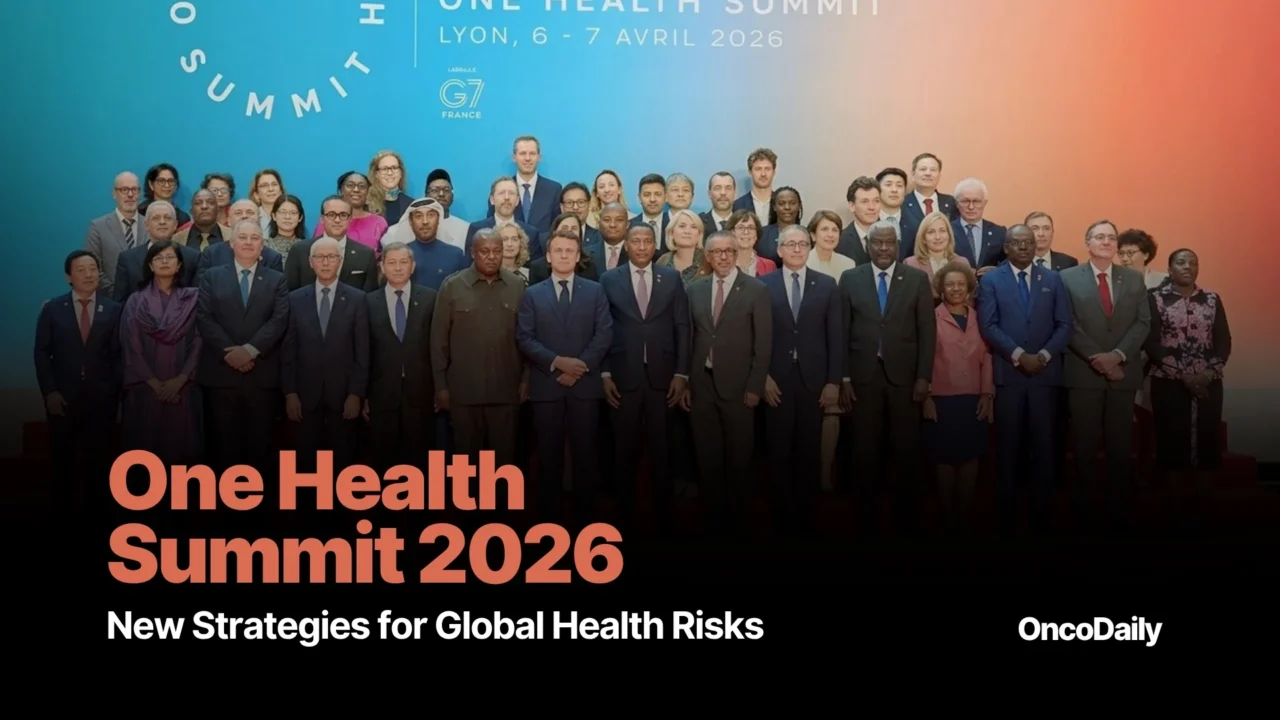
World Health Day 2026 marked a decisive shift in global health priorities. While April 7 has long served as a moment to reflect on health challenges, this year’s discussions moved beyond awareness. The focus turned to implementation, how to translate years of scientific understanding into coordinated global action.
At the heart of this transition was the One Health Summit, convened alongside World Health Organization and international partners. Rather than revisiting familiar concepts, the Summit positioned One Health as an operational framework for preventing future crises.
Why One Health Has Become Urgent
A majority of infectious threats affecting humans originate at the interface between animals and ecosystems. Around 60% of known infectious diseases are zoonotic, and nearly three-quarters of emerging pathogens follow the same pattern. The global disruption caused by the COVID-19 pandemic demonstrated how quickly local outbreaks can escalate into worldwide emergencies when surveillance, coordination, and preparedness are fragmented.
Beyond infectious diseases, broader pressures, climate change, biodiversity loss, unsafe food systems, and water contamination, are reshaping patterns of disease. These are not isolated challenges; they are interconnected drivers that demand integrated responses.
A Summit Designed for Action, Not Declaration
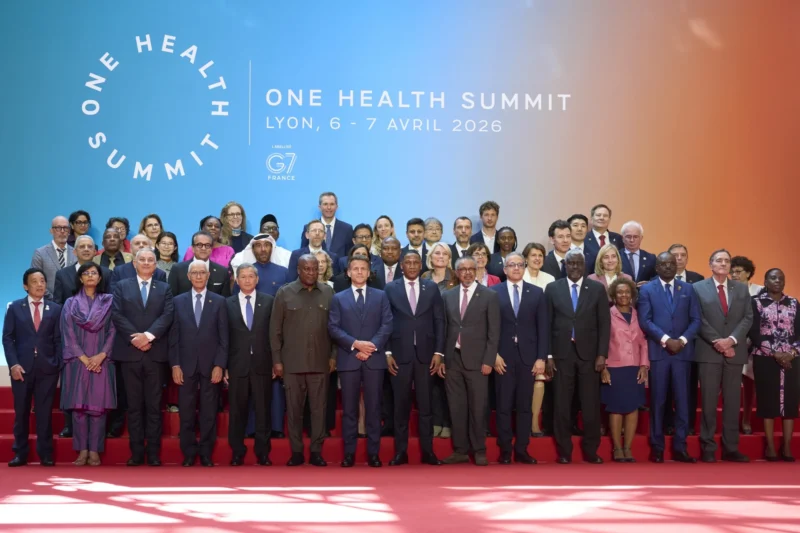
The 2026 One Health Summit, hosted in France, was structured to deliver outcomes rather than statements. Political leadership and scientific institutions converged around a shared objective: shifting from strategy to measurable implementation.
Emmanuel Macron emphasized that health must be understood as a unified system, where human, animal, and environmental well-being cannot be separated. This framing reflects a broader recognition that fragmented governance has been a limiting factor in global health responses.
The Summit also reinforced the role of multilateral cooperation. By bringing together heads of state, ministers, and technical experts, it created alignment across sectors that are rarely coordinated at this scale public health, agriculture, environmental science, and policy.
Importantly, the outcomes are expected to inform ongoing global discussions, including high-level coordination platforms such as the G7, signaling that One Health is moving into the core of international policy agendas.
Four Strategic Actions That Redefine Preparedness
The Summit translated its vision into four concrete actions, each targeting a critical gap in global preparedness.
The first is the creation of a Global Network of One Health Institutions, designed to bridge the gap between global recommendations and country-level implementation. By mobilizing multidisciplinary expertise, this network aims to provide practical tools, strengthen training systems, and support real-time responses to emerging threats.
The second focuses on strengthening scientific guidance through the expansion of the One Health High-Level Expert Panel. By extending its mandate, global health strategies will remain anchored in evolving evidence, ensuring that policy decisions reflect current scientific understanding.
Third, the renewed commitment to eliminate dog-mediated rabies deaths by 2030 highlights how targeted interventions can serve as models for broader system strengthening. Despite being preventable, rabies continues to cause approximately 60,000 deaths annually, underscoring persistent gaps in access, surveillance, and coordination.
Finally, a unified strategic framework for avian influenza addresses one of the most complex and persistent zoonotic threats. By aligning surveillance, risk assessment, and response strategies, this initiative aims to replace fragmented national approaches with coordinated global action.
WHO’s Expanding Leadership Role
A critical outcome of the Summit is the evolving leadership role of the World Health Organization within the global health architecture.
By assuming the chairmanship of the Quadripartite collaboration alongside key international partners, WHO is positioned to streamline coordination across sectors that have historically operated independently. This shift is expected to improve efficiency, reduce duplication, and align efforts around measurable priorities.
Building a Global Scientific Ecosystem
The Summit also highlighted the importance of strengthening scientific infrastructure. The launch of the Global Forum of WHO Collaborating Centres brings together more than 800 institutions across over 80 countries, creating a platform for coordinated research, data sharing, and innovation.
This initiative reflects a broader understanding that preparedness depends not only on policy, but on the ability to generate, share, and apply knowledge rapidly across borders.
In an era defined by complex, cross-sectoral threats, isolated research efforts are no longer sufficient. Global health now requires integrated scientific ecosystems capable of responding in real time.
As World Health Day 2026 unfolded, global attention turned toward a defining moment for international health policy. In a post shared on X, Tedros Adhanom Ghebreyesus, Director-General of the World Health Organization, underscored the urgency of moving beyond discussion toward coordinated action.
“The health of humans, animals and the environment are woven together inextricably. We cannot protect one without protecting all three. This demands a One Health approach. That’s why WHO, FAO and WOAH formed the tripartite in 2010, which became the Quadripartite in 2022 when UNEP joined. At the One Health summit today, I was pleased to announce that we are extending the term of the One Health High-Level Expert Panel (OHHLEP) until April 2027. Thank you President Emmanuel Macron and the Government of France for convening the summit.”
Implications Beyond Infectious Disease
While the One Health framework is often associated with zoonotic diseases, its implications extend far beyond infectious threats.
Environmental exposures, food systems, and access to care influence a wide range of conditions, including cancer. The same structural challenges highlighted at the Summit inequity, fragmentation, and delayed response are also evident in oncology care worldwide.
For the oncology community, the relevance is clear. Strengthening surveillance systems, improving global coordination, and addressing environmental determinants of health are essential not only for preventing pandemics, but also for reducing the global cancer burden.
A Structural Shift in Global Health Governance
The 2026 One Health Summit signals more than a policy update. It represents a structural shift in how global health is approached.
The transition from siloed systems to integrated frameworks reflects a growing recognition that future challenges will not fit within traditional boundaries. Health systems, environmental policies, and scientific research must operate as part of a unified strategy.
What emerged from this year’s World Health Day is not simply a call to action, but a blueprint for how that action should be organized.
“Closing message by President Emmanuel Macron and World Health Organization Director-General Dr Tedros at the One Health Summit in Lyon.”
Stay informed with more articles like this on OncoDaily.
Written by Nare Hovhannisyan,MD