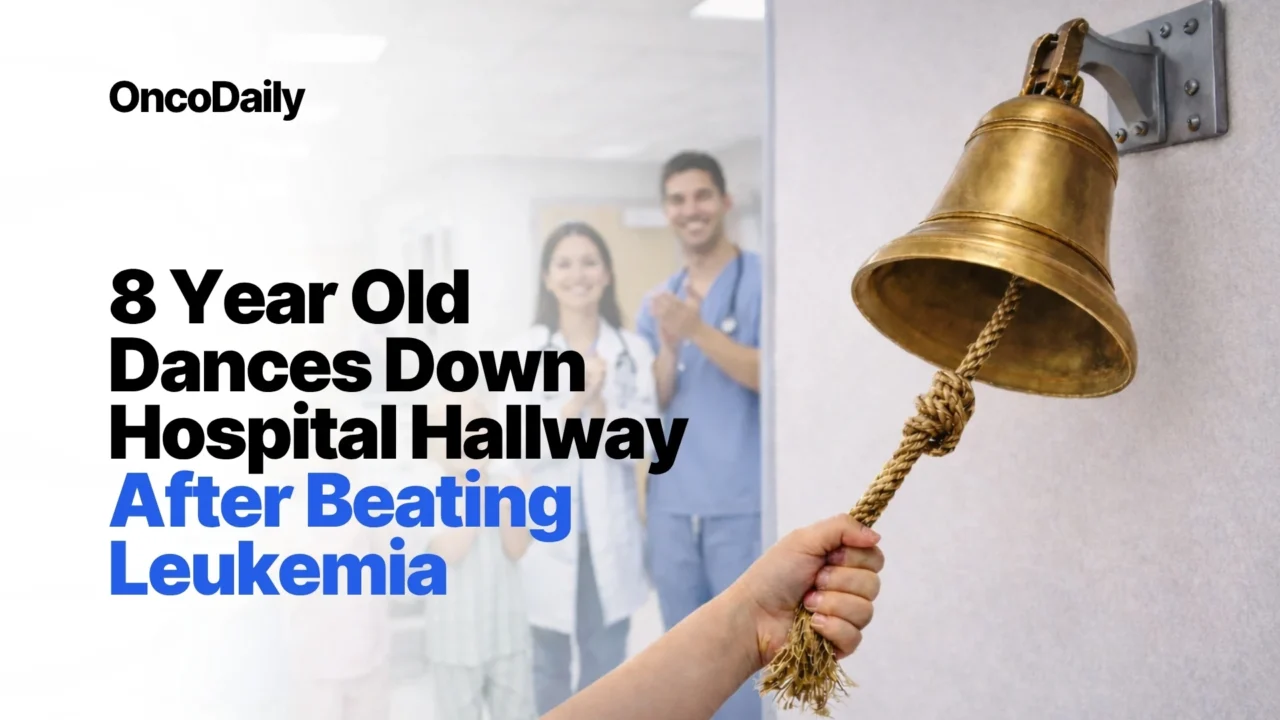
A short video filmed in a hospital hallway has captured global attention not for its clinical setting, but for the joy it carried. An 8-year-old boy, recently declared in remission from leukemia, turned a routine discharge moment into something unforgettable. Walking down the corridor, he danced, smiled, and even performed a cartwheel before ringing the bell that marks the end of treatment.
The video, shared by his mother, quickly spread across social media platforms, resonating with patients, families, and healthcare professionals alike. It was not just a celebration of remission it was a visible expression of resilience after months of treatment.
The Story Behind the Celebration
Royce, diagnosed with B-cell acute lymphoblastic leukemia (ALL) in July 2025, had spent months undergoing treatment at Cook Children’s Medical Center. Like many children with cancer, his treatment required prolonged hospitalization and separation from normal childhood experiences.
During this time, he missed significant family moments, including his younger sister’s third birthday. While he was able to see some family members, the limitations imposed by treatment and infection control made full family interaction difficult.
By March, his clinical team confirmed a milestone every family hopes for remission. With that came the long-awaited discharge.
What followed was not scripted. It was a spontaneous release of emotion.
Why This Video Matters in Oncology Care
In pediatric oncology, milestones such as remission or treatment completion are often marked by symbolic gestures, including ringing a bell. These moments are deeply meaningful, not only for patients and families but also for clinical teams who have accompanied them through diagnosis, treatment, and uncertainty.
Royce’s celebration stands out because it captures something often difficult to quantify in clinical reports: the psychological and emotional recovery that accompanies physical healing.
The viral nature of the video reflects a broader reality. Stories like this provide visibility to pediatric cancer journeys beyond statistics and protocols. They humanize oncology care and remind both the public and professionals what success looks like in real life.
Understanding Acute Lymphoblastic Leukemia in Children
According to the National Cancer Institute, acute lymphoblastic leukemia (ALL) is the most common cancer in children, accounting for approximately 25% of all pediatric cancer cases in the United States.
ALL is a malignancy of the blood and bone marrow characterized by the rapid proliferation of immature lymphoid cells. While historically a devastating diagnosis, advances in treatment have significantly improved outcomes, with survival rates now exceeding 85% in many settings.
Treatment is complex and typically includes multi-phase chemotherapy, with some patients requiring additional approaches such as immunotherapy, targeted agents, or hematopoietic stem cell transplantation. Therapy often extends over months to years and requires close monitoring for complications.
Royce’s journey reflects this broader progress, where remission is increasingly achievable, but the path remains physically and emotionally demanding.
The Hidden Burden of Pediatric Cancer Treatment
Behind moments of celebration lies a prolonged period of disruption. Children undergoing leukemia treatment often face:
- Extended hospital stays
- Separation from siblings and peers
- Interruption of education
- Physical side effects such as fatigue and immunosuppression
For families, the burden is equally significant, requiring constant vigilance, emotional resilience, and adaptation to a new daily reality.
Royce’s story highlights one particularly important aspect, the emotional impact of isolation. His mother noted that while he could see some family members, he was unable to spend time with his younger sister during treatment, making his return home especially meaningful.
The Role of Awareness and Early Recognition
An important detail in this story is how Royce’s diagnosis began. According to his mother, he was the one who first recognized that something was wrong and insisted on further evaluation.
This aligns with a critical principle in pediatric care: early recognition of symptoms can significantly influence outcomes.
Parents and caregivers are often advised to pay close attention to persistent or unusual symptoms such as fatigue, bruising, infections, or unexplained pain. Advocacy especially when something “does not feel right”, remains a key component of early diagnosis.
Life After Treatment: A Gradual Return to Normalcy
Following discharge, Royce has returned home and is currently being homeschooled before transitioning back to in-person education. He has also resumed everyday activities, including gaming and creating content online small but meaningful indicators of recovery.
In pediatric oncology, survivorship is not defined solely by remission status. It includes reintegration into daily life, emotional recovery, and long-term follow-up to monitor for late effects of treatment.
Moments like Royce’s dance are part of this transition, a bridge between hospital life and the return to childhood.
A Reminder of What Success Looks Like
In oncology, success is often presented in numbers response rates, survival curves, hazard ratios. Yet, stories like this offer a different perspective.
Success can look like a child dancing down a hospital corridor.
It can look like a family reunited after months apart.
It can look like a moment of pure relief after uncertainty.
Royce’s celebration is more than a viral video. It is a reminder of why oncology care exists, not only to extend life, but to restore it.
Explore more oncology news and features on OncoDaily.
Written by Nare Hovhannisyan,MD