Key takeaways
- Red 40 has not been proven to cause cancer in humans. Current evidence is insufficient to establish a direct causal relationship.
- Animal studies suggest that chronic Red 40 exposure may contribute to intestinal inflammation and microbiome changes, but these findings do not prove increased cancer risk.
- EFSA and the WHO's food additive expert committee have established an acceptable daily intake of 0–7 mg/kg body weight per day.
- Some children may be sensitive to synthetic food dyes, particularly in relation to activity and attention.
- The FDA is pursuing a phaseout of Red 40 and several other synthetic food dyes by the end of 2027.
- - Avoiding Red 40 is a personal dietary choice, but a balanced diet and established cancer prevention measures remain more important for long-term health.
Does Red 40 cause cancer? Current scientific evidence does not establish that Red 40 causes cancer in humans. However, animal and laboratory studies have raised concerns about its potential effects on intestinal inflammation, gut bacteria, and cellular processes associated with cancer development. Researchers are continuing to investigate whether long-term exposure could affect colorectal cancer risk.
Red 40, also known as Allura Red AC, is a synthetic food coloring found in candies, breakfast cereals, soft drinks, desserts, and other processed foods. Although it has been approved for use in food by the U.S. Food and Drug Administration (FDA) and the European Food Safety Authority (EFSA), concerns about its long-term safety have led to increased scientific scrutiny and regulatory efforts to reduce synthetic food dyes.
In April 2025, the FDA announced plans to phase out petroleum-based synthetic food dyes from the U.S. food supply. Its current initiative includes working with manufacturers to eliminate Red 40 and several other certified dyes by the end of 2027. This is a phaseout initiative, not evidence that Red 40 has been proven to cause cancer.
What Is Red 40 and Why Is It Used in Food?
Red 40 is an artificial food coloring used to give foods and beverages a bright red, pink, or orange appearance. Its chemical name is Allura Red AC, and it belongs to a group of synthetic compounds known as azo dyes.
Red 40 is manufactured from petroleum-derived chemical materials. Although its origin sometimes raises concerns, the health effects of a finished food additive depend on its chemical properties, purity, exposure levels, and biological activity rather than simply the source materials used to produce it.
According to the American Chemical Society, Allura Red AC is widely used because it produces a consistent, intense color and can be incorporated into different food products.
Manufacturers use Red 40 primarily to improve the appearance of food. It does not provide vitamins, minerals, or other nutritional benefits.
Red 40 may appear on ingredient labels under several names:
- FD&C Red No. 40
- Red 40
- Allura Red AC
- E129 (European labeling)
- Red 40 Lake or FD&C Red No. 40 Aluminum Lake
The aluminum lake form is a pigment form of the dye used in products where a water-insoluble coloring is useful. It should not be confused with metallic aluminum.
The FDA regulates Red 40 as a certified color additive, meaning manufacturers must meet established identity and purity specifications.
Does Red 40 Cause Cancer in Humans?
There is currently no established causal relationship between Red 40 consumption and cancer in humans. Nevertheless, some experimental findings suggest that prolonged exposure may influence biological processes involved in inflammation and potentially cancer development.
The concerns surrounding Red 40 generally involve three potential mechanisms:
- Chronic inflammation: Persistent intestinal inflammation can contribute to cellular changes associated with certain cancers.
- Gut microbiome changes: Alterations in intestinal bacteria may influence inflammation, metabolism, and the intestinal environment.
- Cellular damage: Certain experimental studies have investigated whether synthetic food dyes or their metabolites can affect DNA integrity and other cellular processes.
These mechanisms are scientifically relevant because cancer can develop when genetic damage and changes in cellular regulation allow abnormal cells to grow uncontrollably. However, showing that a substance affects one of these pathways does not establish that it causes cancer in people.
A 2026 review published by City of Hope, a U.S. cancer research and treatment institution, discussed concerns about Red 40 and colorectal cancer. Its experts emphasized that a direct relationship between Red 40 consumption and human cancer has not been established.
The distinction is important: laboratory evidence suggesting a potential cancer-related mechanism is not the same as clinical or epidemiological evidence demonstrating increased cancer incidence.
The National Cancer Institute also explains that identifying a carcinogenic risk generally requires evaluating evidence across multiple studies, including human population research and plausible biological mechanisms.
At present, it would be inaccurate to classify Red 40 as a proven human carcinogen based on the available evidence.
What Does Scientific Research Say About Red 40 and Cancer Risk?
Research on Red 40 has identified possible effects on intestinal health, but the evidence connecting it directly to cancer remains limited. Much of the available experimental research involves animals rather than human populations.
One particularly important study was published in Nature Communications in December 2022.
Red 40 and intestinal inflammation: A 2022 animal study
Researchers investigated how exposure to Allura Red AC affected intestinal inflammation in mice.
The study found that:
- Chronic Red 40 exposure increased susceptibility to experimentally induced colitis.
- Long-term exposure was associated with increased serotonin levels in the colon.
- Red 40 affected intestinal barrier function and altered gut microbial communities.
- Exposure during early life increased susceptibility to colitis later in the experimental model.
- Intermittent exposure over 12 weeks did not increase colitis susceptibility under the conditions studied.
These findings suggest that exposure duration and timing may influence the dye’s biological effects.
Importantly, the study investigated colitis, not cancer incidence. It did not demonstrate that Red 40 causes colorectal cancer in mice or humans.
Because chronic intestinal inflammation is an established factor in some pathways of colorectal carcinogenesis, the results provide a reason for further investigation, but they cannot establish cancer causation.
Why is intestinal inflammation relevant to cancer?
Chronic intestinal inflammation is associated with an increased risk of colorectal cancer, especially in individuals with longstanding inflammatory bowel diseases such as ulcerative colitis and Crohn’s disease.
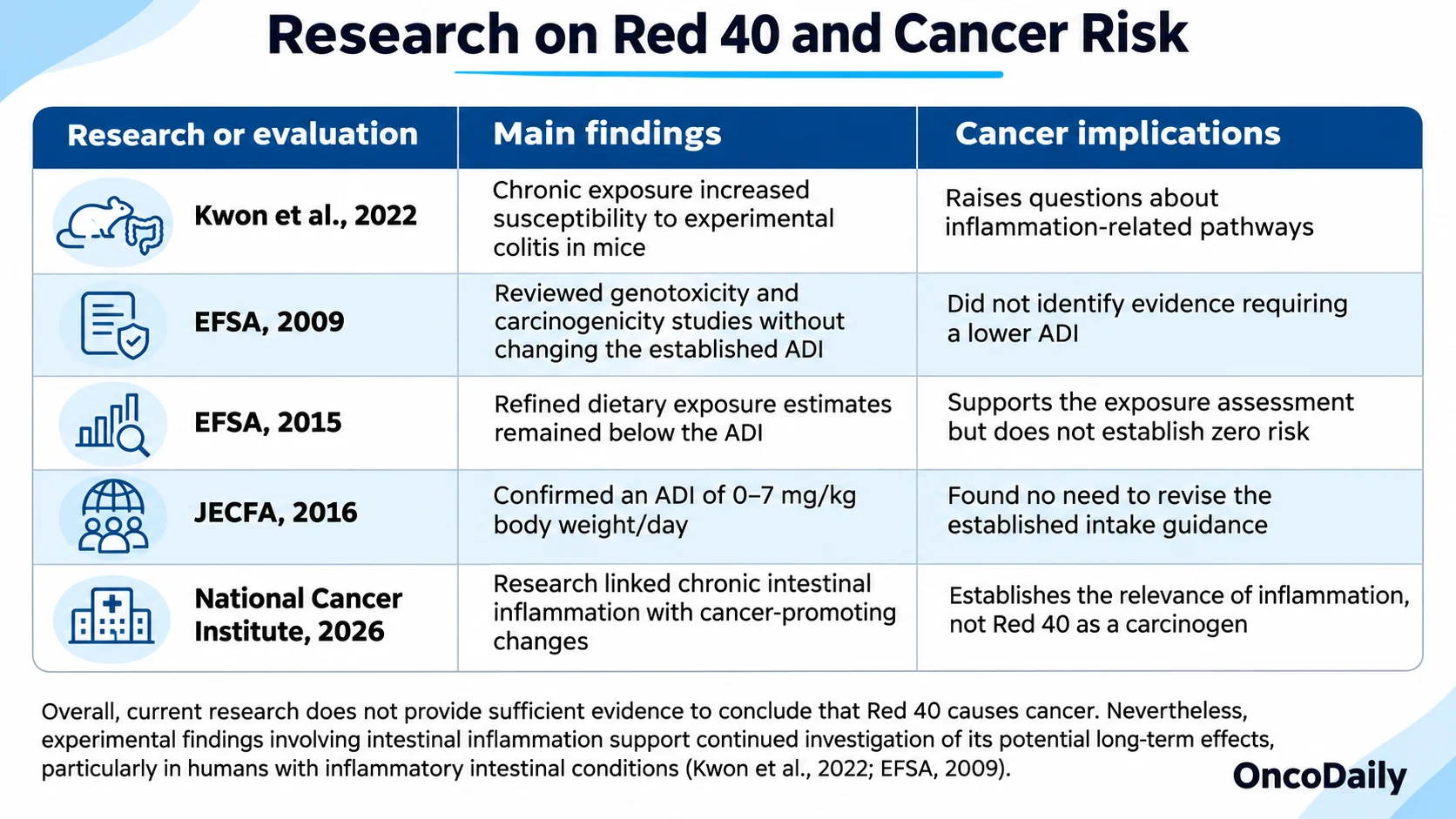
In March 2026, the National Cancer Institute highlighted research showing that repeated intestinal inflammation can produce lasting changes in gut stem cells and promote tumor development in experimental models. These findings help explain how persistent inflammation may contribute to colorectal cancer (National Cancer Institute, 2026).
However, the inflammation observed in experimental Red 40 studies cannot automatically be equated with chronic inflammatory bowel disease in humans. More research is needed to determine whether dietary exposure to the dye produces clinically meaningful changes in cancer risk.
What have food safety authorities concluded?
EFSA evaluated the available toxicological evidence for Allura Red AC in 2009 and maintained an acceptable daily intake of 0–7 milligrams per kilogram of body weight per day. A refined exposure assessment published in 2015 found that estimated exposure levels were below this limit in the populations evaluated using updated data (EFSA, 2009; EFSA, 2015).
The Joint FAO/WHO Expert Committee on Food Additives also reviewed Allura Red AC and confirmed the same acceptable daily intake in 2016 (JECFA, 2016).
How Does Red 40 Affect the Body?
Red 40 may affect the digestive system, intestinal bacteria, and inflammatory signaling, although the clinical significance of these effects remains uncertain. Studies suggest that the dye can interact with biological processes in the gut, but the strongest evidence comes from laboratory and animal research rather than human clinical studies (Kwon et al., 2022).
After consumption, Red 40 enters the digestive tract, where intestinal microorganisms can break down the dye into smaller chemical compounds. Researchers have investigated how this metabolism may influence the intestinal environment and whether repeated exposure affects normal digestive functions.
Several potential effects have been studied:
- Intestinal inflammation: Chronic exposure has been associated with increased inflammatory activity in experimental mouse models.
- Gut microbiome changes: Red 40 exposure may alter the balance and activity of intestinal microorganisms.
- Intestinal barrier function: Animal studies suggest that sustained exposure can affect the protective lining of the intestine.
- Serotonin signaling: Experimental research has found increased serotonin activity in the colon following chronic exposure.
- Behavioral sensitivity: Some children may experience changes in activity or attention following exposure to certain synthetic food dyes.
The 2022 study by Kwon and colleagues identified intestinal serotonin as an important mediator of the inflammatory effects observed in mice. The researchers also found that changes in the gut microbiome contributed to greater susceptibility to experimental colitis (Kwon et al., 2022).
However, these findings should not be interpreted as evidence that Red 40 causes the same effects in every person. Differences in metabolism, exposure levels, intestinal health, and individual sensitivity may influence how the body responds.

Is Red 40 Safe for Children and Adults?
Red 40 is permitted in regulated food products, but concerns about children’s behavioral sensitivity and repeated dietary exposure have prompted additional safety assessments. Available evidence suggests that most consumers do not experience obvious adverse effects from approved uses, although some individuals may be more sensitive to synthetic food dyes (FDA, n.d.; OEHHA, 2021).
Can Red 40 affect children’s behavior?
Research has suggested that certain synthetic food dyes may contribute to hyperactivity or attention-related changes in some children.
A 2007 study published in The Lancet investigated the effects of mixtures of artificial food colors and sodium benzoate on children’s behavior. The researchers reported increased hyperactivity-related behavior associated with some additive mixtures. However, because multiple additives were administered together, the study could not establish that Red 40 alone caused these changes (McCann et al., 2007).
In 2021, California’s Office of Environmental Health Hazard Assessment reviewed evidence concerning synthetic food dyes and children’s neurological and behavioral health. The report concluded that synthetic food dyes can contribute to hyperactivity and other neurobehavioral effects in some children and that sensitivity varies between individuals (OEHHA, 2021).
These findings relate primarily to behavioral health, not cancer. They do not establish that children exposed to Red 40 have a higher risk of developing cancer later in life.
How much Red 40 is considered safe?
EFSA established an acceptable daily intake for Allura Red AC of 0–7 mg per kilogram of body weight per day. This value represents an amount that can be consumed daily over a lifetime without an appreciable health risk based on the available toxicological evidence (EFSA, 2009).
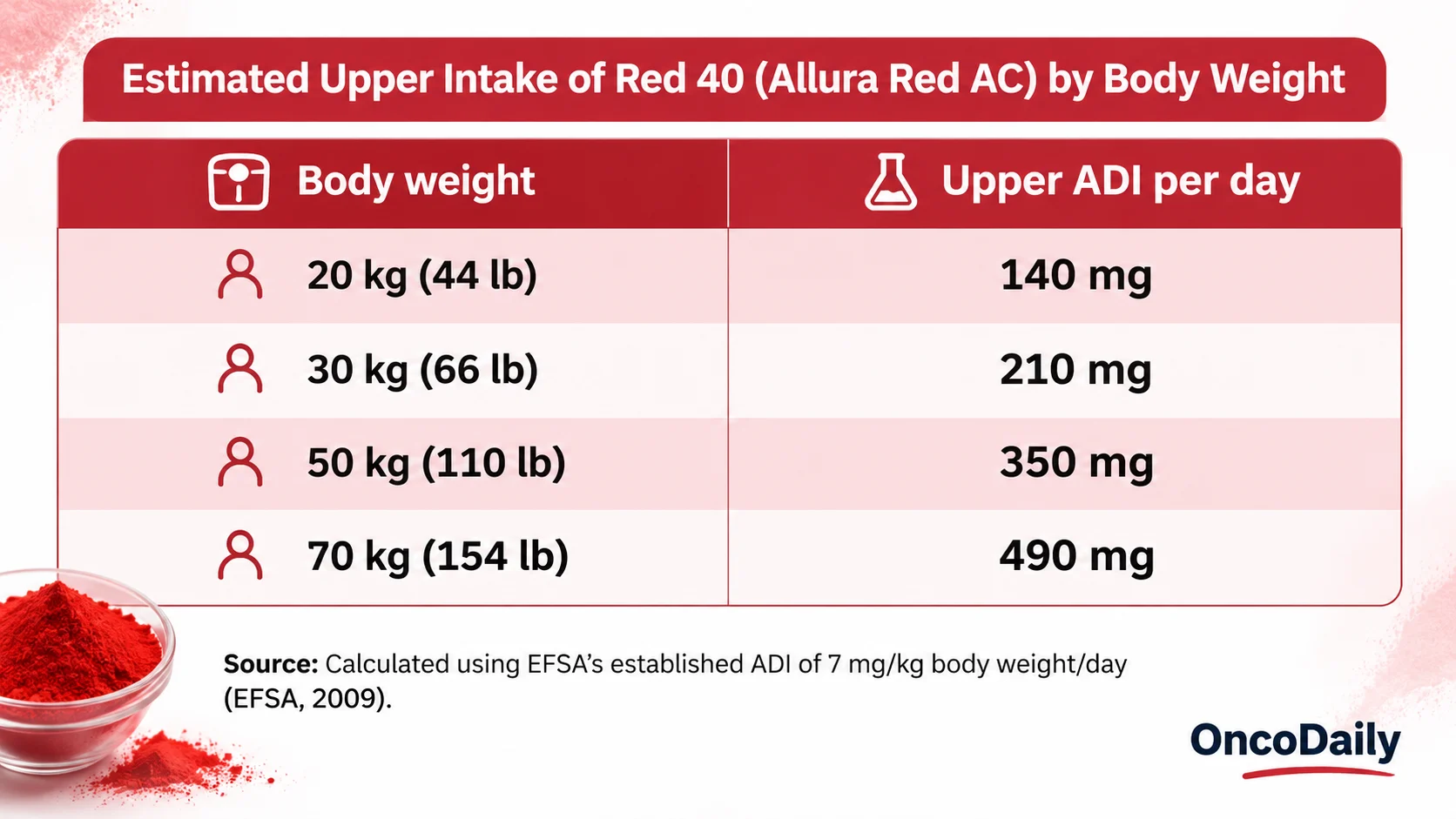
The acceptable daily intake is not a recommended amount to consume. It is a safety assessment value used by regulators. Temporarily exceeding an ADI does not necessarily mean harm will occur, while remaining below it does not guarantee that every individual will be free from sensitivity reactions.
Children may have higher exposure relative to their body weight because some commonly consumed snacks, beverages, and sweets contain synthetic dyes. Parents concerned about sensitivity may consider choosing products without artificial color additives (OEHHA, 2021).
Which Foods and Drinks Contain Red 40?
Red 40 is commonly found in processed foods and beverages, particularly products with bright red, pink, purple, or orange colors. Manufacturers use it to produce consistent coloring in sweets, drinks, desserts, and other packaged products (FDA, n.d.).
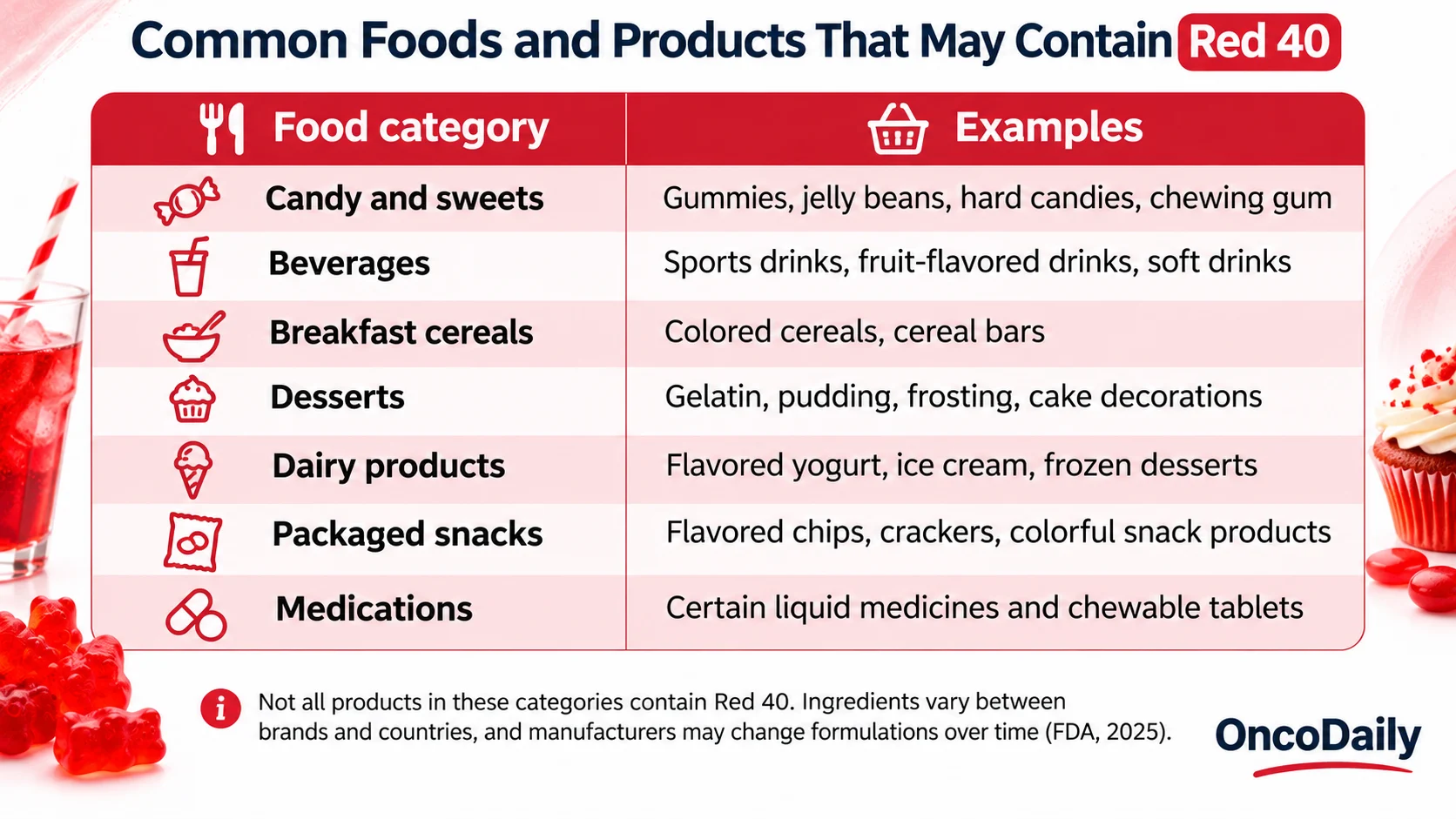
Consumers can check ingredient lists for names such as FD&C Red No. 40, Allura Red AC, or E129. Red 40 can also be combined with other dyes to produce different shades, meaning it may appear in foods that are not visibly red.
Is Red 40 Banned in Europe or the United States?
Red 40 is not generally banned across the United States or European Union, although its use is regulated and the United States is pursuing a phaseout of several synthetic food dyes.
Is Red 40 banned in the United States?
The FDA has historically authorized Red 40 for use in food products under specific regulatory conditions. However, in April 2025, the agency announced an initiative to reduce the use of petroleum-based synthetic dyes in the American food supply (FDA, 2025).
The FDA is working with manufacturers and food industry organizations to eliminate six frequently used synthetic color additives, including Red 40, by the end of 2027. This is an industry-focused phaseout effort rather than an immediate nationwide ban on Red 40 (FDA, 2025).
Is Red 40 banned in Europe?
Red 40 is known as Allura Red AC or E129 in the European Union and remains authorized for certain food applications.
However, foods containing E129 generally require a warning indicating that the additive may affect children’s activity and attention, with exceptions established under EU regulations. This requirement reflects concerns about possible behavioral effects rather than evidence that Red 40 causes cancer (European Parliament and Council, 2008; EFSA, 2008).
What is the difference between Red 40 and Red 3?
Red 40 and Red 3 are different synthetic food dyes and should not be confused.
In January 2025, the FDA revoked authorization for FD&C Red No. 3 in food and ingested drugs following evidence that high doses caused cancer in male laboratory rats. The agency explained that the hormonal mechanism responsible for these tumors is specific to male rats and that the available evidence does not demonstrate the same cancer effect in humans (FDA, 2025).
Food manufacturers have until January 15, 2027, to comply with the Red 3 food restriction, while manufacturers of ingested drugs have until January 18, 2028 (FDA, 2025).
The action involving Red 3 does not establish that Red 40 causes cancer. The two dyes have different chemical structures, toxicological evidence, and regulatory histories.
How Can You Reduce Your Exposure to Red 40?
Reducing Red 40 exposure mainly involves checking ingredient labels and choosing foods without synthetic coloring.Although Red 40 has not been proven to cause cancer, people who prefer to minimize artificial additives can do so without compromising their nutritional intake.
Several practical steps can help:
- Read food labels. Look for Red 40, FD&C Red No. 40, Allura Red AC, or E129 in the ingredient list.
- Choose minimally processed foods. Fresh fruits, vegetables, legumes, and whole grains generally do not require added synthetic colors.
- Limit brightly colored drinks and sweets. These products may contain Red 40 alongside added sugars and other ingredients.
- Look for alternatives. Some manufacturers use beetroot extracts or other approved color additives instead of synthetic dyes.
- Check frequently consumed children’s products. Snacks, cereals, sweets, and beverages may contribute to repeated exposure.
For cancer prevention, the overall quality of the diet is more important than eliminating a single food coloring. Established colorectal cancer risk factors include excessive alcohol consumption, smoking, obesity, and certain inflammatory bowel diseases (National Cancer Institute, 2025).
In March 2026, the National Cancer Institute highlighted additional research supporting the connection between chronic intestinal inflammation and colorectal cancer development. However, these findings do not demonstrate that avoiding Red 40 reduces cancer incidence (National Cancer Institute, 2026).
Choosing products without synthetic dyes is a reasonable personal preference, but it should not replace evidence-based cancer prevention measures, including maintaining a healthy weight, limiting alcohol consumption, avoiding tobacco, being physically active, and participating in recommended cancer screening.
FAQ
Does Red 40 cause cancer?
There is no conclusive evidence that Red 40 causes cancer in humans. Animal studies have raised concerns about intestinal inflammation, but more research is needed (Kwon et al., 2022).
Is Red 40 harmful to your body?
Red 40 is considered safe within established regulatory limits, although some individuals may experience sensitivity or behavioral effects (EFSA, 2009; OEHHA, 2021).
Is Red 40 banned in the United States?
No. Red 40 is not federally banned, but the FDA announced plans in 2025 to work with manufacturers to phase it out by the end of 2027 (FDA, 2025).
What foods contain the most Red 40?
Red 40 is commonly found in candies, soft drinks, sports drinks, breakfast cereals, and colorful desserts. The amount varies by product and manufacturer (FDA, n.d.).
Is Red 40 worse than Red 3?
Red 3 has been linked to cancer in male laboratory rats, leading the FDA to revoke its authorization in 2025. Red 40 has not been shown to cause cancer in humans (FDA, 2025).