A new combination of two targeted cancer drugs is moving closer to becoming a first-line treatment option for patients with advanced lung cancer in China, following encouraging Phase 3 trial results showing longer disease control and a potential survival benefit.
On November 26, 2026, HUTCHMED announced that China’s National Medical Products Administration (NMPA) had accepted its New Drug Application (NDA) for savolitinib plus osimertinib in previously untreated patients with locally advanced or metastatic non-small cell lung cancer (NSCLC) harboring EGFR mutations and MET overexpression.
Developed in collaboration with AstraZeneca, the all-oral combination targets two molecular pathways involved in cancer growth. The regulatory submission is supported by the Phase 3 SANOVO trial, which demonstrated significant improvements in progression-free survival compared with osimertinib alone.
SANOVO Trial Shows Nearly 25 Months Without Disease Progression
The Phase 3 SANOVO trial (NCT05009836) enrolled 326 patients in China with previously untreated advanced NSCLC carrying common EGFR mutations, including exon 19 deletions and L858R mutations, alongside MET overexpression.
Patients were randomly assigned to receive savolitinib plus osimertinib or osimertinib with placebo. The study investigated whether simultaneously blocking EGFR and MET signaling from the beginning of treatment could improve clinical outcomes.
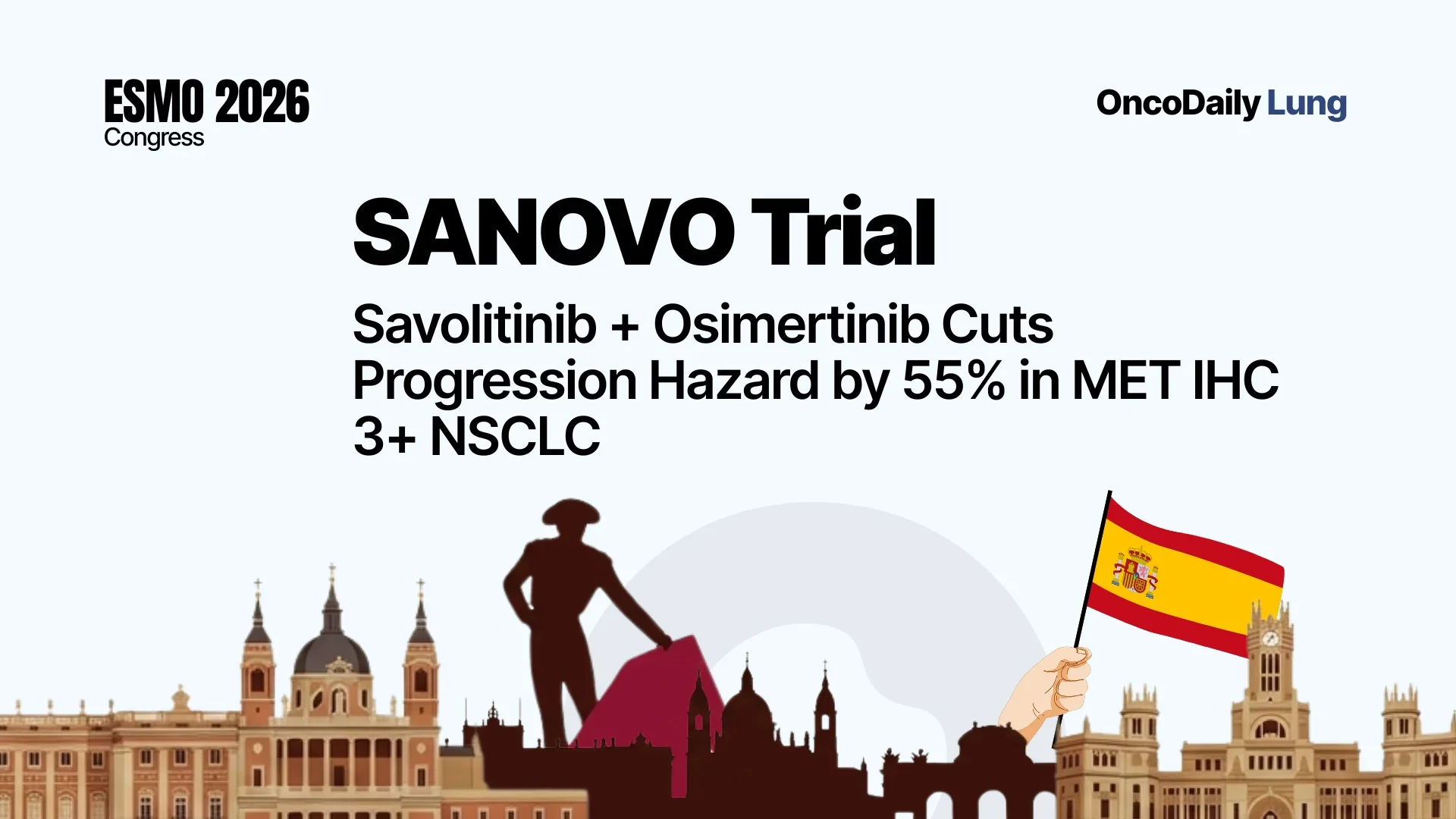
Results presented at the ESMO Congress 2026 demonstrated that patients receiving the combination experienced a median progression-free survival of 24.9 months, compared with 13.8 months for those treated with osimertinib alone.
This represented an additional 11.1 months without disease progression or death at the median and a 44% reduction in the hazard of progression or death (HR 0.56; 95% CI 0.43–0.74; p<0.0001).
The benefit was particularly pronounced among patients with high MET expression, defined as MET IHC 3+, where median progression-free survival reached 24.8 months with the combination versus 11.1 months with osimertinib alone.
A Promising Overall Survival Benefit
Beyond delaying disease progression, SANOVO also reported encouraging overall survival findings.
Median overall survival reached 44.5 months with savolitinib plus osimertinib, compared with 34.9 months in the control group, representing a 9.6-month difference. The reported hazard ratio for death was 0.48 (95% CI 0.33–0.68).
Although these findings suggest a potentially important survival benefit, the overall survival data remain immature, and longer follow-up will be important to confirm the durability of the observed advantage.
The additional efficacy also came with increased toxicity. Grade 3 or higher treatment-emergent adverse events were reported in 77.2% of patients receiving the combination, compared with 38.4% receiving osimertinib alone. Investigators reported no new safety signals, but the greater treatment burden remains an important consideration.
Why Targeting Both EGFR and MET Matters in Lung Cancer
EGFR mutations are among the most important treatment targets in NSCLC, particularly in Asian populations. Osimertinib has become an established treatment for patients whose tumors carry specific EGFR mutations, but resistance to EGFR-targeted therapy remains a major clinical challenge.
One pathway associated with resistance involves MET, a protein that can promote cancer cell growth and survival. In some tumors, MET overexpression is already present before treatment begins, potentially limiting the effectiveness of targeting EGFR alone.
Savolitinib is a selective MET inhibitor, while osimertinib blocks EGFR signaling. Combining the two drugs aims to suppress both pathways simultaneously and delay the development of resistance.
The SANOVO findings suggest that identifying MET overexpression at diagnosis could help define a subgroup of patients who may benefit from a more intensive targeted treatment strategy from the outset.
HUTCHMED and AstraZeneca Expand Their Lung Cancer Strategy
The latest regulatory submission builds on the companies’ existing collaboration in lung cancer treatment.
In China, savolitinib plus osimertinib is already approved for patients with advanced EGFR-mutated, non-squamous NSCLC and MET amplification whose disease has progressed following EGFR-targeted treatment. That approval was supported by the Phase 3 SACHI trial.
The new application seeks to extend the combination into the first-line setting, allowing eligible patients with MET-overexpressing tumors to receive both targeted agents before previous systemic treatment for advanced disease.
Commenting on the development, Johnny Cheng, Acting Chief Executive Officer and Chief Financial Officer of HUTCHMED, emphasized that “targeting both pathways upfront can deliver meaningful improvements across both progression-free survival and overall survival.”
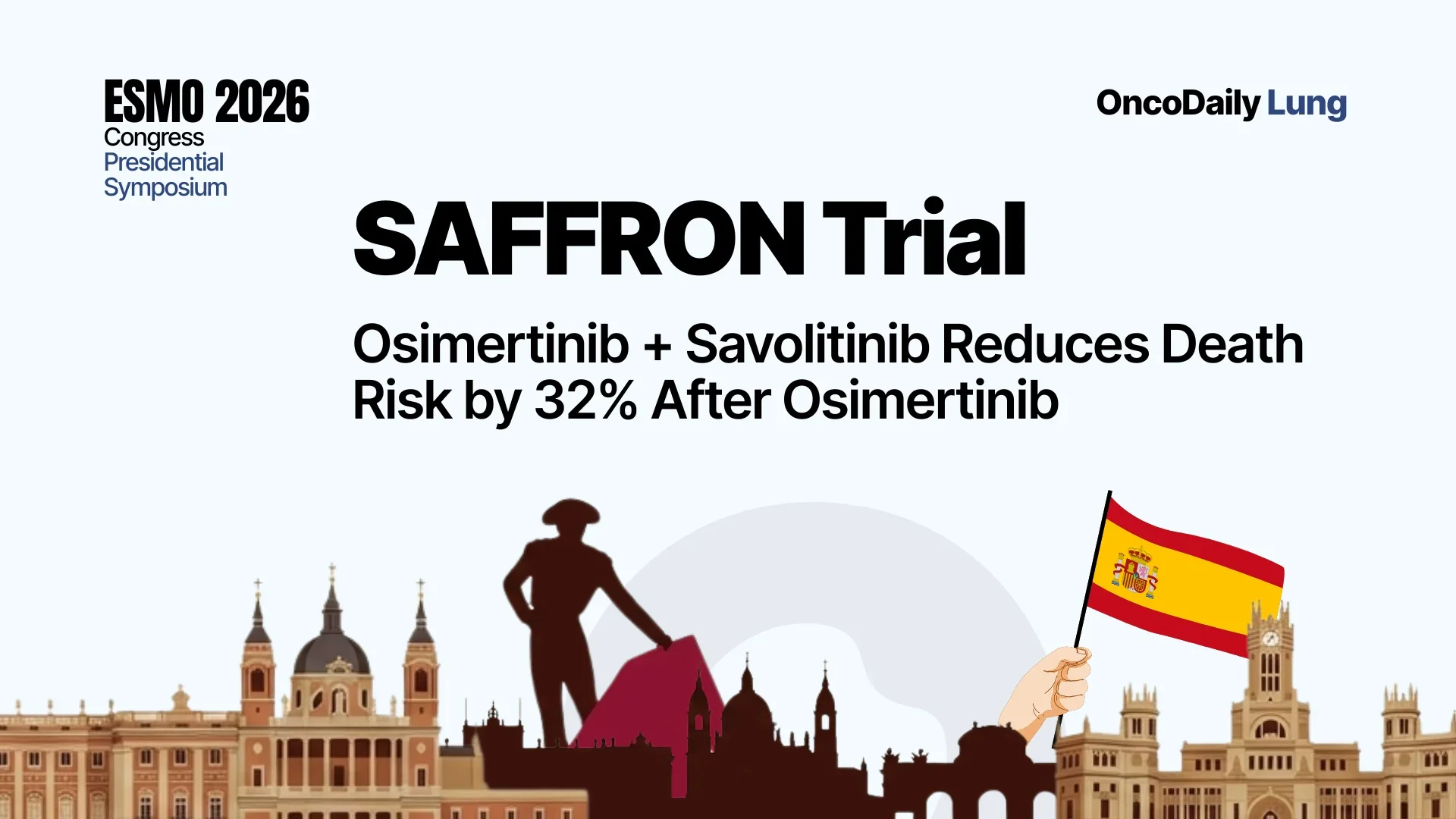
The companies are also pursuing regulatory expansion internationally. Applications and regulatory processes in the United States, Europe, and Japan involve the combination after prior EGFR-targeted therapy, supported by the global Phase 3 SAFFRON trial.
Unlike SANOVO, which investigated previously untreated patients, SAFFRON evaluated the combination after progression on osimertinib.
What Happens Next?
China’s acceptance of the application marks the beginning of the formal regulatory review rather than an approval for first-line use.
If authorized, savolitinib plus osimertinib could provide another treatment option for patients with advanced EGFR-mutated NSCLC whose tumors also demonstrate MET overexpression.
The decision will be particularly relevant as lung cancer treatment becomes increasingly personalized, with additional molecular characteristics helping oncologists determine not only which therapies to use, but also when to introduce them.
For now, the SANOVO results provide strong evidence of improved disease control, while longer-term survival follow-up, toxicity considerations, and the outcome of China’s regulatory review will help determine how this dual-targeted approach fits into first-line lung cancer care.