Can laser hair removal cause cancer? As laser hair removal becomes an increasingly popular option for long-term hair reduction, questions about its safety and potential cancer risks remain common. Unlike X-rays and other forms of ionizing radiation, laser hair removal uses non-ionizing light to target hair follicles. Current scientific evidence has not established a link between laser hair removal and an increased risk of cancer, including skin cancer. However, the procedure is not entirely risk-free, particularly for people with sensitive skin, suspicious moles, or a history of cancer treatment. Understanding how laser hair removal works, what research says about its cancer risk, and which precautions matter most can help patients make informed decisions about its safety.
Can Laser Hair Removal Cause Cancer?
Current scientific evidence has not established a link between laser hair removal and an increased risk of cancer, including skin cancer. Laser hair removal is generally considered safe in terms of cancer risk because it uses non-ionizing light rather than the ionizing radiation associated with certain forms of DNA damage and cancer development.
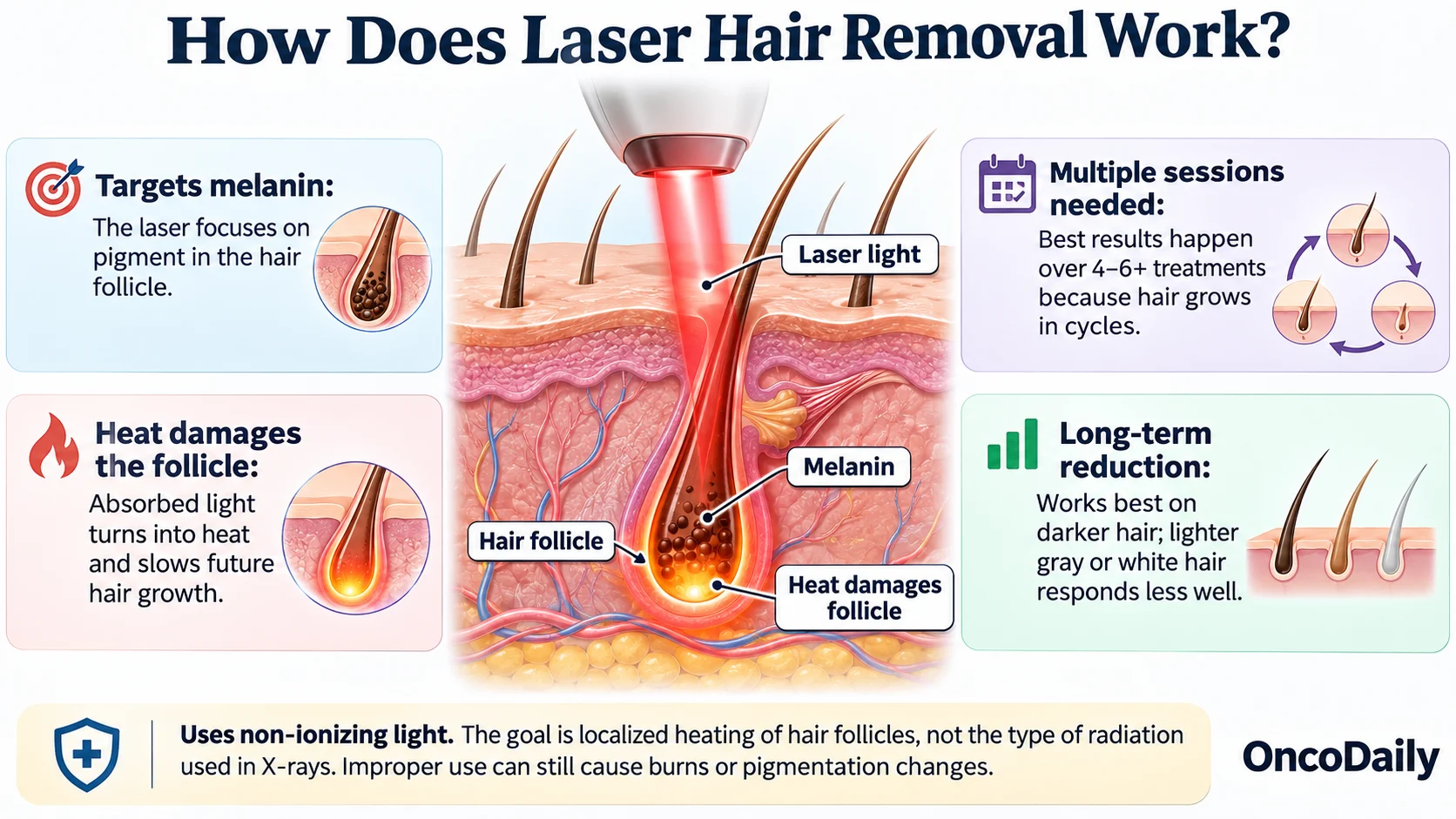
Laser hair removal works by directing concentrated light energy toward melanin, the pigment found in hair follicles. The absorbed light produces heat that damages the follicles and reduces future hair growth. Commonly used hair-removal lasers operate in the visible and near-infrared spectrum, which differs from ultraviolet (UV) radiation. Although UV radiation can damage DNA and contribute to skin cancer, conventional hair-removal lasers are not known to produce this type of carcinogenic effect.
A scientific review published in Lasers in Medical Science examined the relationship between laser treatments, intense pulsed light (IPL), and cancerous skin lesions. The researchers found no credible evidence that these treatments increase cancer risk, despite more than 25 years of clinical use. While isolated cases of skin cancer have been reported following laser or IPL treatments, these reports did not establish a causal relationship (Ash et al., 2017).
Cancer Council Australia also states that there is no evidence that laser hair removal causes skin cancer. However, long-term studies specifically evaluating cancer incidence following repeated treatments remain limited. This means that while available findings are reassuring, they should not be interpreted as proof that every potential long-term risk has been excluded.
One important consideration is the treatment of existing moles or suspicious skin lesions. Laser exposure can change the appearance of pigmented lesions, potentially complicating the early detection of melanoma or other skin cancers. Individuals with atypical moles, changing skin lesions, or a personal history of skin cancer should consult a dermatologist before undergoing laser hair removal.
Overall, laser hair removal is not recognized as a cause of cancer based on current evidence. Its established risks are primarily related to skin injury, including burns, changes in pigmentation, blistering, and occasional scarring, particularly when treatment is performed without appropriate precautions.
How Does Laser Hair Removal Work?
Laser hair removal uses concentrated light energy to damage hair follicles and reduce future hair growth. The procedure targets melanin, the pigment responsible for hair color, through a process called selective photothermolysis. When melanin absorbs the laser energy, it converts the light into heat, damaging the follicle and limiting its ability to produce new hair (NCBI Bookshelf, 2023).
The treatment is most effective during the active growth phase (anagen phase). Because hair follicles grow at different stages, multiple sessions are necessary to achieve optimal results. Most patients require approximately four to six or more treatments, depending on the treatment area, hair type, and individual response (American Academy of Dermatology).
Laser hair removal generally works best on darker hair because it contains more melanin. Modern technologies, including Nd:YAG lasers, can also be used safely on darker skin tones when appropriate settings are selected. However, lighter hair, particularly white or gray hair, responds less effectively.
Laser hair removal provides long-term hair reduction rather than guaranteed permanent removal. Unlike ionizing radiation, the laser produces non-ionizing light that works primarily through localized heating of hair follicles. Although this mechanism is not known to cause cancer, improper treatment can result in burns, pigmentation changes, or other skin injuries.
Does Laser Hair Removal Use Harmful Radiation?
Laser hair removal uses non-ionizing radiation, which does not carry the same cancer-related risks as ionizing radiation, such as X-rays or gamma rays. The procedure uses concentrated light, typically in the visible or near-infrared spectrum, to heat and damage hair follicles without directly ionizing atoms or molecules (National Cancer Institute, 2019).
Unlike ionizing radiation, which can directly damage DNA and contribute to cancer development, the light used in conventional laser hair removal is not known to cause cancer through this mechanism. The U.S. Food and Drug Administration (FDA) confirms that medical lasers use non-ionizing radiation and do not carry the same long-term radiation risks as X-rays (FDA, 2026).
However, non-ionizing radiation does not mean completely harmless radiation. The intense light energy used during laser hair removal can damage surrounding skin if applied incorrectly. Potential complications include burns, blistering, pigmentation changes, and eye injuries, particularly when appropriate protective eyewear is not used (Health Canada, 2011).
Overall, the main safety concerns associated with laser hair removal involve thermal injury rather than radiation-induced cancer. Proper equipment, suitable treatment settings, and trained professionals are essential to minimizing these risks.
Can Laser Hair Removal Increase the Risk of Skin Cancer?
Current scientific evidence does not indicate that laser hair removal increases the risk of skin cancer, including melanoma.Unlike ultraviolet (UV) radiation from sunlight, which is a known cause of skin cancer, conventional hair-removal lasers use light wavelengths that are not known to have the same carcinogenic effects (Ash et al., 2017).
A 2023 systematic review published in Lasers in Surgery and Medicine examined changes in melanocytic nevi (moles) following laser hair removal. The researchers analyzed 10 studies and found no documented cases of melanoma developing within treated moles. However, they emphasized that additional long-term research is needed to better understand potential risks (Cices et al., 2023).
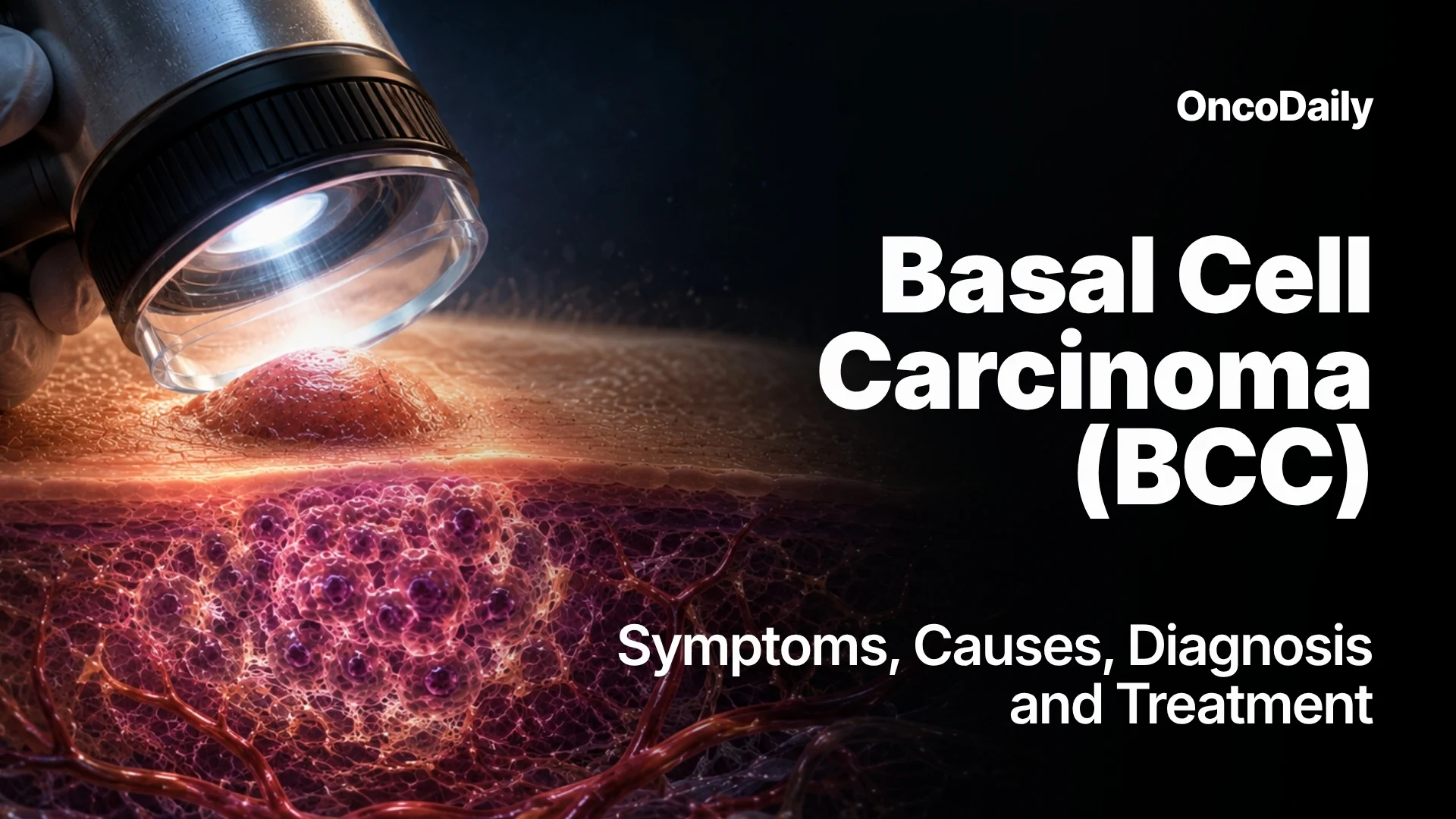
One important concern is that laser hair removal can change the appearance of existing moles, including their color, size, and pigmentation patterns. These changes may resemble features associated with melanoma, potentially complicating skin cancer detection. A prospective study involving 66 moles in 27 patients documented changes in color, size, and dermoscopic appearance after treatment (Nasimi et al., 2021).
Cancer Council Australia recommends additional caution for individuals with atypical moles or a personal or family history of skin cancer. Suspicious or changing skin lesions should be evaluated by a dermatologist before treatment, and laser exposure directly over such lesions should be avoided.
Overall, laser hair removal is not recognized as a cause of skin cancer, but protecting existing moles and ensuring appropriate dermatological assessment remain important safety precautions.
What Are the Side Effects and Risks of Laser Hair Removal?
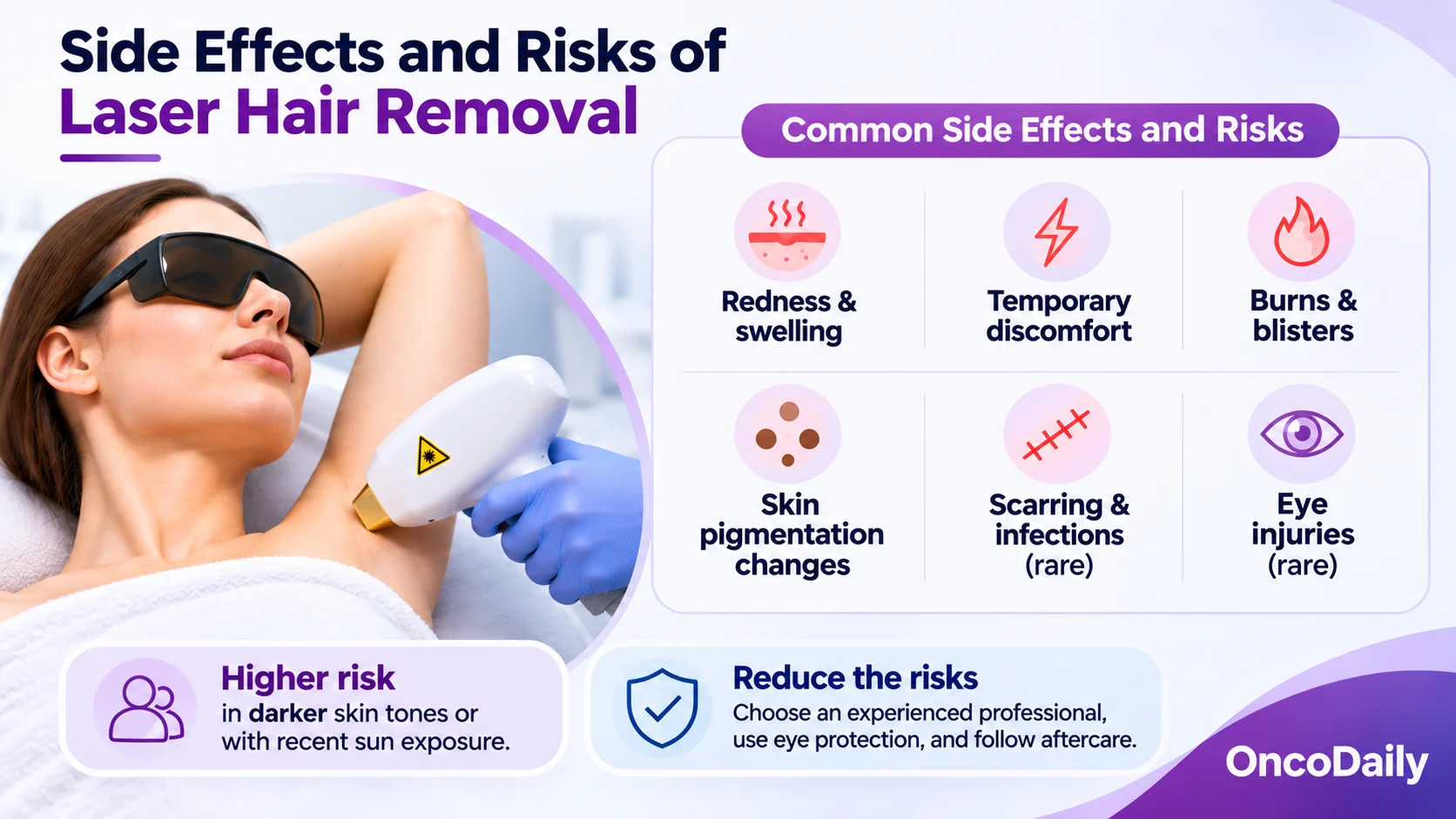
Laser hair removal is generally considered safe when performed by a qualified professional, but it can cause temporary skin irritation and, less commonly, more serious complications. Most side effects are mild and resolve within a few days, although the risk depends on skin type, laser settings, treatment area, and the operator’s experience (American Academy of Dermatology).
The most common side effects include:
- Redness and swelling: Mild inflammation around treated hair follicles, usually lasting one to three days.
- Temporary discomfort: A warm, stinging, or burning sensation during or shortly after treatment.
- Skin pigmentation changes: Temporary darkening (hyperpigmentation) or lightening (hypopigmentation), particularly in darker or recently tanned skin.
- Burns and blisters: Excessive heat can damage surrounding skin, especially when inappropriate laser settings are used.
- Scarring and infections: Uncommon complications that may develop following significant skin injury.
- Eye injuries: Accidental exposure to laser light can damage the eyes, making appropriate protective eyewear essential.
A systematic review published in Lasers in Surgery and Medicine examined 104 publications on adverse events associated with laser and light-based hair removal. Reported complications included burns, pigmentation changes, folliculitis, eye injuries, and paradoxical hypertrichosis, a condition in which hair growth unexpectedly increases after treatment. The authors found that complications were influenced by patient characteristics, treatment location, device type, and laser settings (2023).
People with darker skin tones or recent sun exposure may have a higher risk of burns and pigmentation changes if unsuitable equipment or settings are used. Choosing an experienced professional, using appropriate eye protection, and following recommended skin-care instructions can significantly reduce these risks.
Is Laser Hair Removal Safe for Cancer Patients and Survivors?
Laser hair removal may be safe for some cancer survivors, but patients undergoing active cancer treatment should consult their oncology team before considering the procedure. Safety depends on the type of cancer treatment, the condition of the skin, the medications being used, and whether the intended treatment area has previously received radiotherapy.
Cancer treatments can affect skin sensitivity and healing. Chemotherapy may cause skin changes and lower blood cell counts, while targeted therapies and immunotherapy can produce rashes or inflammation. These effects may increase the risk of complications from cosmetic procedures, particularly when the skin is already irritated or damaged.
Several precautions are important:
- During chemotherapy: Elective laser hair removal is generally best postponed unless the oncology team confirms it is appropriate, particularly in patients with low blood counts, infections, or significant skin reactions.
- During radiotherapy: Laser hair removal should be avoided on the irradiated area. Radiotherapy can make the skin sensitive and vulnerable to injury, and NHS guidance specifically advises against laser hair removal in the treatment area.
- After cancer treatment: Laser hair removal may be considered once the skin has recovered, although previously irradiated areas require individual assessment.
- For skin cancer survivors: A dermatologist should examine suspicious moles or lesions before treatment. Laser hair removal should not be performed directly over lesions that have not been evaluated.
A review published in Frontiers in Medicine discussed dermatological care following cancer treatment, including the use of laser hair removal for unwanted hair growth in selected patients. This suggests that laser treatment can be an option for some cancer survivors, provided that skin condition, treatment history, and individual risks are carefully assessed (Freites-Martinez et al., 2021).
Having a history of cancer does not automatically make laser hair removal unsafe. However, there is no universally established waiting period after chemotherapy or radiotherapy. The decision should be individualized with guidance from an oncologist and dermatologist.
How Can You Make Laser Hair Removal Safer?
Laser hair removal is generally safe when performed by an experienced professional using equipment and settings appropriate for the patient’s skin type. Although serious complications are uncommon, proper preparation and aftercare can help reduce the risk of burns, pigmentation changes, scarring, and eye injuries (American Academy of Dermatology).
To make laser hair removal safer, dermatologists recommend several precautions:
- Choose a qualified professional: Seek treatment from a dermatologist or appropriately trained laser specialist with experience treating your skin tone.
- Avoid tanning before treatment: Sun exposure, tanning beds, and self-tanning products can increase the risk of burns and pigmentation changes.
- Discuss medications and medical conditions: Inform the provider about prescription medications, skin disorders, previous scarring, and cancer treatments, as some may affect skin sensitivity or healing.
- Protect your eyes: Both the patient and operator should wear protective eyewear designed for the specific laser wavelength.
- Check existing moles: Suspicious or changing pigmented lesions should be examined by a dermatologist before treatment.
- Follow aftercare instructions: Avoid unnecessary sun exposure, protect treated skin, and use broad-spectrum sunscreen with SPF 30 or higher.
- Report unusual reactions: Persistent pain, blistering, significant burns, or signs of infection require medical evaluation.
The American Academy of Dermatology emphasizes that the experience of the person performing laser hair removal is one of the most important factors in preventing complications. Health Canada also recommends appropriate operator training, protective equipment, and safety procedures to minimize laser-related injuries.
For cancer patients and survivors, additional precautions may be needed, particularly when the intended treatment area has previously received radiotherapy or when ongoing treatment affects the skin. In these situations, consultation with the oncology team and a dermatologist is recommended before proceeding.
FAQ
Can Laser Hair Removal Cause Cancer Later in Life?
Current evidence has not linked laser hair removal to cancer. However, long-term studies remain limited.
Can Laser Hair Removal Cause Skin Cancer or Melanoma?
There is no established link between laser hair removal and skin cancer. However, treatment can alter existing moles, so suspicious lesions should be examined first.
Is Laser Hair Removal Safe for Cancer Survivors?
It may be safe for some cancer survivors, depending on their treatment history and skin condition. Consult an oncologist before treatment.
Does Laser Hair Removal Damage DNA?
Laser hair removal uses non-ionizing light and is not known to cause cancer-related DNA damage. However, excessive heat can injure skin tissue.
What Are the Long-Term Side Effects of Laser Hair Removal?
Uncommon long-term effects include persistent pigmentation changes, scarring, and increased hair growth in treated areas.