
Key takeaways
- Normal CA-125 levels are generally 35 U/mL or lower.
- High CA-125 does not always mean cancer and can occur in several noncancerous conditions.
- Ovarian cancer can occur with normal CA-125 levels, especially in its early stages.
- Very high CA-125 levels require medical evaluation but do not confirm cancer.
- 1. CA-125 testing is mainly used to monitor ovarian cancer treatment and possible recurrence.
High CA-125 level on a blood test can be concerning, especially because CA-125 is often linked to ovarian cancer. However, an elevated CA-125 result does not necessarily mean cancer. Many noncancerous conditions, including endometriosis, menstruation, pregnancy, and ovarian cysts, can also cause CA-125 levels to rise.
CA-125 is a tumor marker commonly used to help evaluate ovarian cancer and monitor treatment response. Although levels above 35 U/mL are generally considered elevated, the meaning of the result depends on several factors, including age, symptoms, menopausal status, and medical history.
Understanding what causes high CA-125 levels, what results are considered normal, and when additional testing is needed can help patients better understand their blood test results.
What Is CA-125 and What Is the Normal Range?
CA-125 (cancer antigen 125) is a protein found in the blood that can be measured through a simple blood test. It is mainly used to help doctors evaluate and monitor certain gynecologic cancers, particularly ovarian, fallopian tube, and primary peritoneal cancers (Gandhi et al., 2024).
The normal CA-125 range is generally 35 units per milliliter (U/mL) or lower. Results above this level are usually considered elevated, although reference ranges may vary between laboratories.
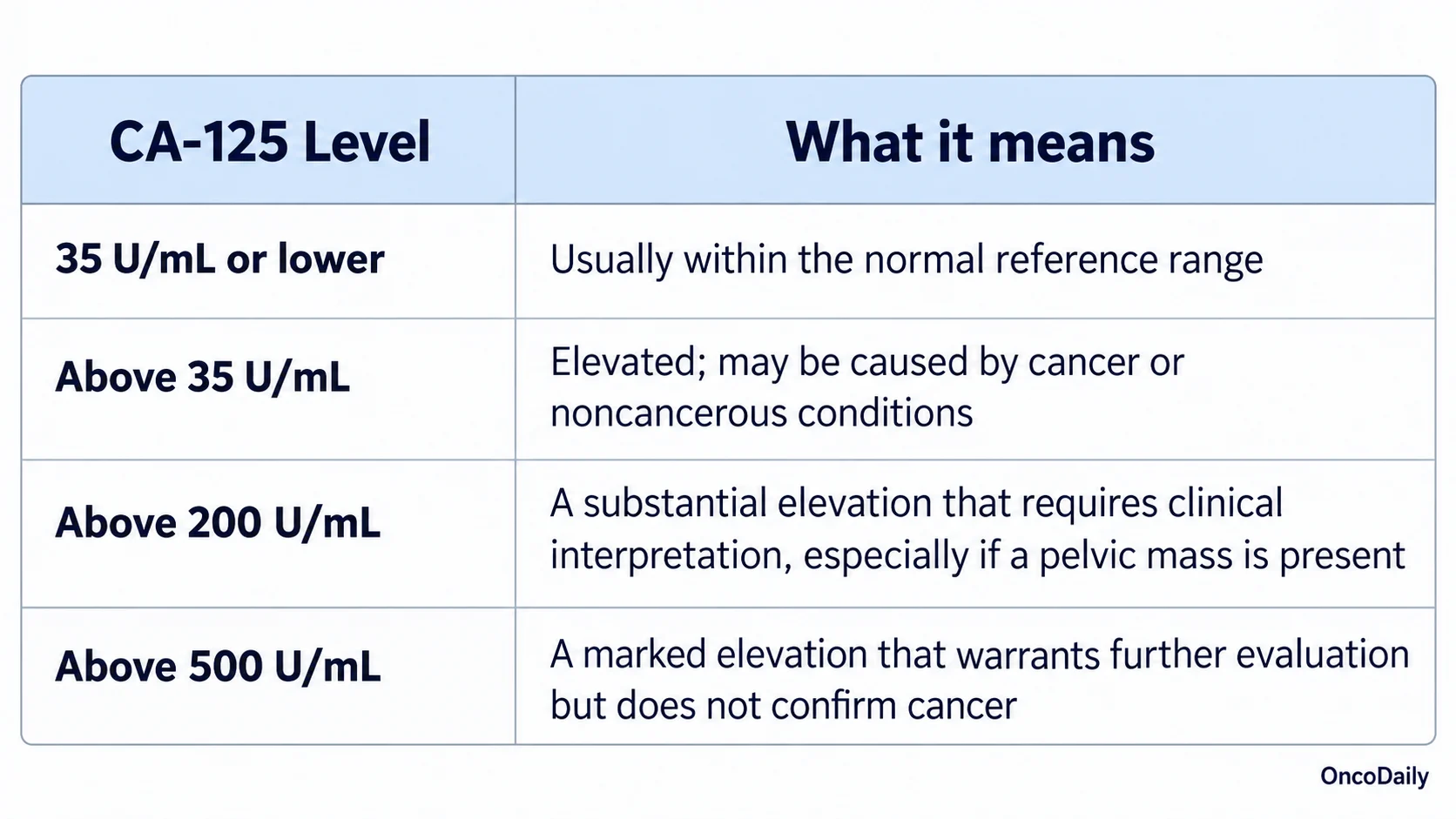
These are descriptive ranges, not separate diagnostic categories. A higher CA-125 value does not automatically mean that cancer is present or advanced.
CA-125 is particularly useful for monitoring patients who have already been diagnosed with epithelial ovarian cancer. Changes in the level over time can help doctors assess treatment response or investigate possible recurrence. However, a normal result does not completely rule out ovarian cancer, particularly in its early stages (Charkhchi et al., 2020).

What Causes High CA-125 Levels?
High CA-125 levels can occur when certain tissues become inflamed, irritated, or affected by disease. Although this protein is associated with ovarian cancer, many elevated results have noncancerous explanations.
Common noncancerous causes of elevated CA-125 include menstruation, pregnancy, endometriosis, uterine fibroids, benign ovarian cysts, and pelvic inflammatory disease. Liver conditions, particularly cirrhosis with fluid buildup in the abdomen, can also increase CA-125 levels (Özhan et al., 2014; Gandhi et al., 2024).
Certain cancers may also raise CA-125 levels. These include ovarian, fallopian tube, primary peritoneal, and endometrial cancers. Elevated levels can sometimes occur in pancreatic, lung, breast, and colorectal cancers, although CA-125 is not commonly used to diagnose these diseases.
Because so many conditions can affect CA-125, doctors consider the patient’s overall health and other test results before determining the possible cause.
Does a High CA-125 Level Mean Cancer?
No. A high CA-125 level does not confirm that a person has cancer. The test measures a protein that can increase in several conditions, meaning it cannot reliably distinguish between cancer and noncancerous disease on its own (Gandhi et al., 2024).
An elevated result may raise greater concern when accompanied by symptoms such as persistent abdominal bloating, pelvic pain, feeling full after eating small amounts, or frequent urination. Doctors also pay particular attention to elevated CA-125 levels in postmenopausal women, especially when imaging shows a suspicious ovarian mass.
Importantly, some people with ovarian cancer have normal CA-125 levels, particularly during the early stages of the disease. For this reason, CA-125 is not recommended as a routine ovarian cancer screening test for people at average risk(Charkhchi et al., 2020; American Cancer Society, 2026).
A CA-125 result is therefore only one part of the diagnostic process. Doctors may use pelvic ultrasound and other investigations when symptoms or examination findings suggest an underlying problem.

What CA-125 Level Is Considered Dangerous?
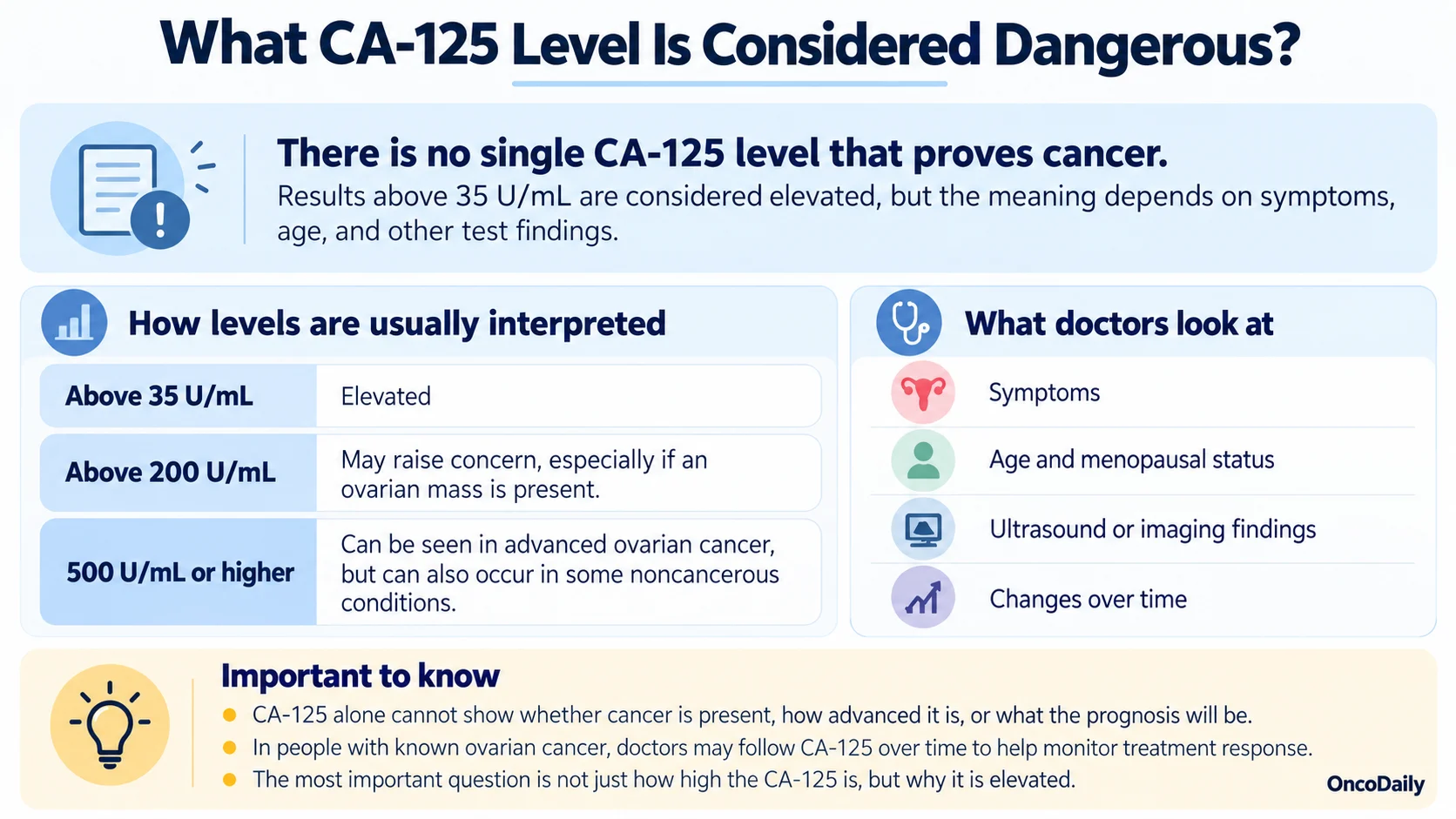
There is no single CA-125 level that is considered dangerous or proves cancer. Although values above 35 U/mL are commonly described as elevated, the significance of the result depends on the patient’s symptoms, age, and other medical findings.
Levels above 200 U/mL may raise concern, particularly when an ovarian mass is present. Very high levels, such as 500 U/mL or higher, can occur in advanced ovarian cancer, but they may also be seen in certain noncancerous conditions. Therefore, CA-125 levels alone cannot determine whether a person has cancer, how advanced it is, or what their prognosis will be (Charkhchi et al., 2020; Gupta and Lis, 2009).
For patients already diagnosed with ovarian cancer, doctors often monitor CA-125 levels over time. A decreasing level during treatment may indicate a positive response, while a sustained increase may lead to further investigations.
The most important factor is not just how high the CA-125 level is, but why it is elevated.
Can CA-125 Be High Without Cancer?
Yes, CA-125 can be high in people who do not have cancer. In fact, several common gynecologic and inflammatory conditions can cause elevated results.
For example, endometriosis can increase CA-125 because it causes inflammation in the pelvic area. Menstruation and pregnancy can also temporarily affect the result. Conditions involving fluid accumulation in the abdomen or chest, including liver cirrhosis and some cases of heart failure, may cause substantial elevations (Gandhi et al., 2024; Foundation for Women’s Cancer, 2023).
Sometimes, CA-125 levels return to normal once the underlying condition improves. In other cases, levels remain elevated because of a chronic condition, such as endometriosis.
Doctors may recommend repeating the test after a suitable interval or performing additional investigations when necessary. An elevated CA-125 level without cancer is possible, even when the increase is significant.
What Should You Do If Your CA-125 Level Is High?
If your CA-125 level is elevated, the first step is to discuss the result with your doctor. There is no need to assume the worst, but an abnormal result should not be ignored.
Your doctor will review your medical history, symptoms, age, and menopausal status to decide whether further investigations are needed. A pelvic or abdominal ultrasound is often recommended when there are symptoms suggesting an ovarian condition or when the CA-125 result raises concern.
Symptoms that deserve medical attention include persistent bloating, pelvic or abdominal pain, feeling full quickly, frequent urination, and unexplained weight loss.
Guidelines from the National Institute for Health and Care Excellence (NICE) recommend age-specific CA-125 thresholds for arranging an urgent ultrasound in symptomatic patients aged 40 and older. These thresholds may be lower than the traditional 35 U/mL reference limit, particularly after age 50. For younger patients with persistent symptoms, ultrasound may be appropriate even without an elevated CA-125 result (NICE, 2026).
If an ultrasound identifies a suspicious mass, your doctor may refer you to a gynecologist or gynecologic oncologist for further assessment. If the imaging is normal, other possible causes can be investigated, and follow-up may still be necessary if symptoms continue.
Sudden severe abdominal pain, fainting, or heavy vaginal bleeding requires urgent medical attention, regardless of CA-125 levels.
Ultimately, a high CA-125 result is a reason for medical evaluation, not a cancer diagnosis. Appropriate follow-up can help identify the cause and determine whether treatment or monitoring is needed.
FAQ
Is a CA-125 Level of 50 High?
Yes, a CA-125 level of 50 U/mL is considered mildly elevated because the usual normal range is 35 U/mL or lower. However, a level of 50 does not mean cancer. Menstruation, endometriosis, ovarian cysts, and other noncancerous conditions can cause mild elevations. Doctors may recommend additional testing depending on symptoms and medical history.
Can You Have Ovarian Cancer With Normal CA-125 Levels?
Yes. A normal CA-125 result does not rule out ovarian cancer, particularly in its early stages. Some ovarian tumors do not produce enough CA-125 to cause a noticeable increase in the blood. If symptoms persist, doctors may recommend pelvic ultrasound or other investigations even when CA-125 levels are normal.
Can Stress or Anxiety Increase CA-125 Levels?
There is no strong clinical evidence that everyday stress or anxiety directly causes significant increases in CA-125 levels. Elevated results are more commonly associated with conditions such as endometriosis, inflammation, menstruation, pregnancy, or certain cancers. A high result should not automatically be attributed to stress.
Can High CA-125 Levels Return to Normal?
Yes. CA-125 levels can return to normal when the underlying cause resolves. For example, temporary elevations associated with menstruation or inflammation may decrease afterward. In patients receiving ovarian cancer treatment, falling CA-125 levels can sometimes indicate a positive treatment response. However, changes should always be interpreted by a healthcare professional.
How Often Should CA-125 Levels Be Checked?
There is no single recommended testing schedule for everyone. The frequency depends on why the test was ordered. Patients undergoing ovarian cancer treatment may have CA-125 checked regularly to monitor their response. For people without a cancer diagnosis, repeat testing is considered based on symptoms, initial results, and other findings. CA-125 is not recommended as a routine ovarian cancer screening test for people at average risk.