
Key takeaways
- High AST and ALT rarely indicate cancer. Fatty liver disease, hepatitis, alcohol use, and medications are more common causes.
- Liver cancer and metastases can raise liver enzymes, but normal AST and ALT levels do not exclude cancer.
- The AST/ALT ratio cannot diagnose cancer, although it has been studied as a prognostic marker in certain cancers.
- There is no specific AST or ALT level that confirms cancer. The degree of elevation, symptoms, and changes over time matter.
- 1. Persistent elevations require medical evaluation, which may include additional blood tests and liver imaging.
High AST and ALT levels are common findings in routine blood tests, but seeing these results outside the normal range can raise concerns about liver disease or even cancer. Although certain cancers can affect liver enzymes, most elevations are caused by more common conditions, including fatty liver disease, viral hepatitis, alcohol-related liver injury, or medications.
AST and ALT are enzymes that enter the bloodstream when cells become damaged. Their levels can help doctors identify possible liver injury, but they cannot determine its cause on their own. Understanding the relationship between high AST and ALT and cancer, including which cancers may affect these enzymes and when further testing is necessary, can help patients better understand their results.
Do High AST and ALT Mean Cancer?
High AST and ALT levels do not usually mean cancer. These enzymes are commonly elevated in people with liver inflammation, fatty liver disease, or medication-related liver injury. Although certain cancers can affect liver enzymes, an abnormal result alone is not enough to suggest a malignancy (Oh et al., 2017).
AST (aspartate aminotransferase) and ALT (alanine aminotransferase) are enzymes found inside cells. ALT is mainly present in the liver, while AST is also found in skeletal muscle, the heart, and other tissues. When these cells are injured, the enzymes can enter the bloodstream, causing their levels to increase.
This means that elevated AST and ALT indicate possible cellular injury rather than a specific disease. Liver cancer, bile duct cancer, and cancers that spread to the liver may cause these changes, but liver enzymes can also remain normal in people with cancer.
Doctors therefore consider the degree of elevation, changes over time, symptoms, and other blood test results before deciding whether further investigation is needed.
What Causes High AST and ALT Levels?
Most cases of elevated AST and ALT are related to non-cancerous liver conditions. These conditions can cause inflammation or damage to liver cells, allowing enzymes to enter the bloodstream (Kalas et al., 2021).
The main causes include:
- Metabolic dysfunction-associated steatotic liver disease (MASLD): Previously known as nonalcoholic fatty liver disease, MASLD occurs when excess fat accumulates in the liver. It is commonly associated with obesity, insulin resistance, and type 2 diabetes.
- Alcohol-related liver disease: Excessive alcohol consumption can damage liver cells, often causing AST to rise more than ALT.
- Viral hepatitis: Hepatitis A, B, and C can cause liver inflammation. Chronic hepatitis B and C may lead to progressive liver damage over time.
- Medications and supplements: Certain drugs, including acetaminophen, antibiotics, and some herbal supplements, can cause temporary or more significant liver enzyme elevations.
- Autoimmune liver disease: Autoimmune hepatitis occurs when the immune system attacks liver cells, causing inflammation and elevated enzymes.
Not all elevated AST levels originate from the liver. Strenuous exercise, muscle injuries, and certain muscle disorders can also increase AST because this enzyme is present in skeletal muscle (Aragon and Younossi, 2010).
These causes are considerably more common than cancer and are generally investigated first when abnormal liver enzymes are identified.
Can Liver Cancer Cause High AST and ALT?
Liver cancer can cause elevated AST and ALT levels, although these enzymes do not always increase when cancer is present.
Hepatocellular carcinoma (HCC) is the most common type of primary liver cancer. It frequently develops in people with chronic hepatitis B or C, cirrhosis, or metabolic liver disease. In these patients, elevated liver enzymes may be caused by the underlying liver condition rather than the tumor itself (Singal et al., 2023).
As liver cancer develops, it may damage surrounding liver cells, interfere with bile drainage, or affect the liver’s ability to function normally. These changes can influence several blood tests.
AST and ALT may increase when liver cells are injured, while alkaline phosphatase (ALP) and bilirubin may rise when bile flow is obstructed. Albumin and clotting tests, including INR, can also become abnormal when liver function is significantly impaired.
Another important test is alpha-fetoprotein (AFP), a protein that may be elevated in patients with HCC. However, AFP is not specific to liver cancer and may also increase in people with hepatitis or cirrhosis. Some patients with HCC have normal AFP levels, particularly in earlier stages (Singal et al., 2023).
Early liver cancer may develop without causing noticeable changes in AST or ALT. For this reason, people at increased risk of HCC are generally monitored with liver ultrasound and AFP testing approximately every six months, even when their liver enzymes are normal.
When imaging identifies a suspicious lesion, multiphasic CT or contrast-enhanced MRI can help determine whether liver cancer is present. A biopsy may be needed in selected cases.

Which Cancers Can Cause Elevated AST and ALT?
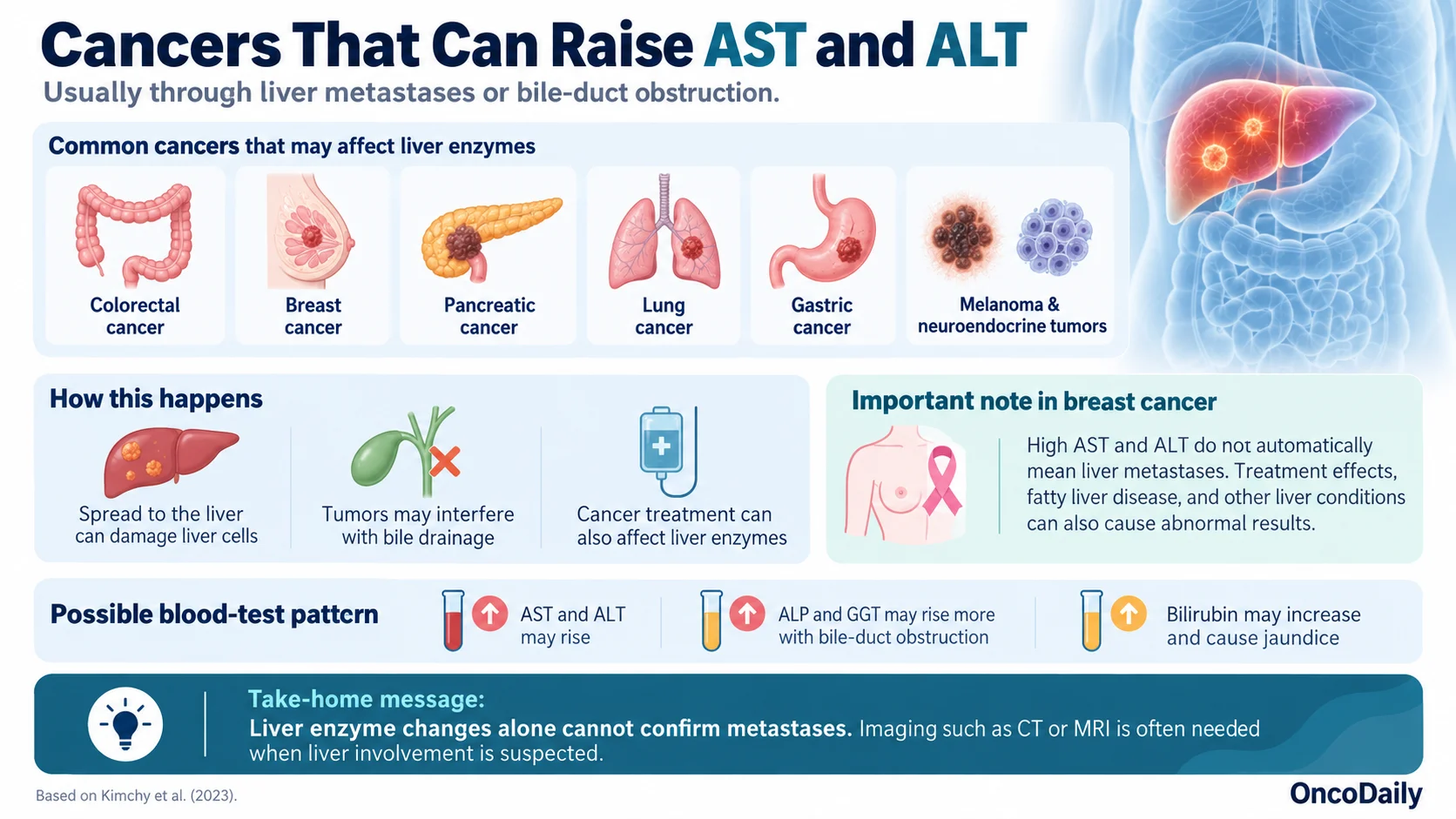
Several cancers can affect liver enzymes when they spread to the liver or interfere with bile drainage. The liver is a common site of metastasis, particularly in colorectal, breast, pancreatic, lung, and gastric cancers. Melanoma and neuroendocrine tumors can also spread to the liver (Kimchy et al., 2023).
Colorectal cancer is one of the most common cancers to metastasize to the liver. As tumors grow, they may damage surrounding liver cells or affect bile flow, causing changes in liver blood tests. Lung and stomach cancers can produce similar abnormalities when liver metastases develop.
In pancreatic cancer, elevated liver tests may result from liver metastases or obstruction of the bile duct, particularly when a tumor develops in the head of the pancreas.
In breast cancer, elevated AST and ALT do not necessarily mean that the disease has spread to the liver. Abnormal results may also be related to cancer treatment, fatty liver disease, or other liver conditions.
A study by Kimchy et al. (2023) found that patients with liver metastases from several cancer types, including breast and colorectal cancer, tended to have higher levels of certain liver enzymes than patients without liver metastases. However, these differences were not reliable enough to diagnose metastatic disease.
Liver involvement can also affect bile drainage. When this happens, ALP and gamma-glutamyl transferase (GGT) may increase more noticeably than AST and ALT. Bilirubin may also rise, sometimes causing yellowing of the skin or eyes, known as jaundice.
For patients with a cancer diagnosis, unexplained liver enzyme changes are assessed alongside treatment history, symptoms, and imaging findings. CT or MRI may be recommended when liver metastases are suspected.
What Do High AST, ALT, and the AST/ALT Ratio Mean in Cancer?
The degree of AST and ALT elevation can help doctors understand the possible extent and pattern of liver injury. Another measurement, known as the AST/ALT ratio or De Ritis ratio, compares the two enzyme levels by dividing AST by ALT.
A ratio above 2 is often associated with alcohol-related liver disease, although higher ratios can also occur in cirrhosis, muscle injury, and other conditions. The ratio alone cannot identify the cause of an abnormal result (Lee et al., 2012).
Researchers have also studied whether the AST/ALT ratio may help predict outcomes in certain cancers. In a study involving 536 patients with stage II and III colorectal cancer, a higher ratio was associated with shorter disease-free survival, although it was not significantly associated with overall survival (Scheipner et al., 2021).
These findings are relevant to cancer research, but the AST/ALT ratio is not a validated test for detecting or diagnosing cancer.
The extent of enzyme elevation also matters. Doctors generally interpret AST and ALT according to the laboratory’s upper limit of normal (ULN).
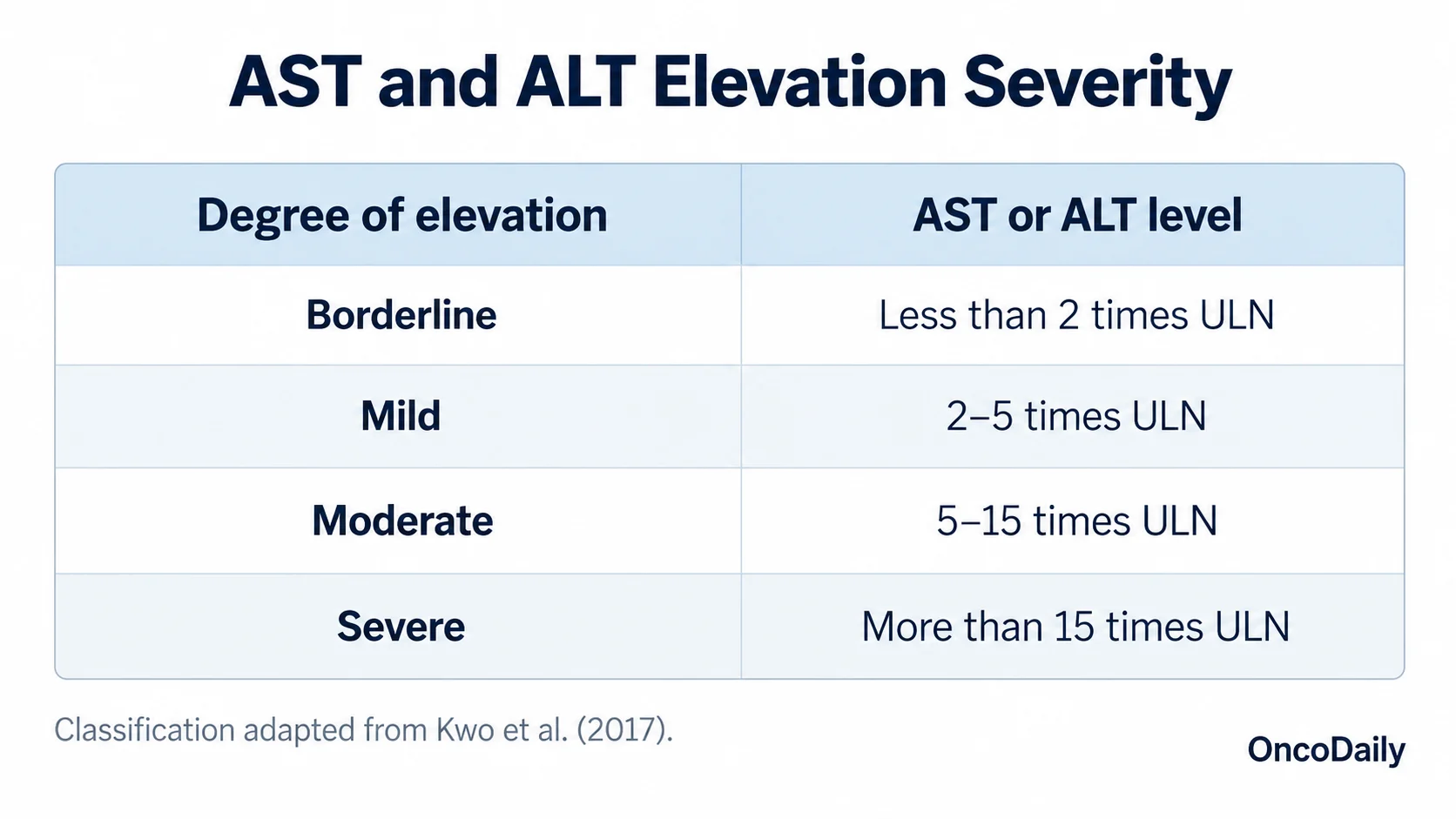
Mild elevations are common and may occur with fatty liver disease, alcohol use, or medications. More substantial elevations often require prompt investigation, particularly when they develop suddenly. Very high levels are more frequently associated with acute liver injury, such as viral hepatitis, medication toxicity, or reduced blood flow to the liver, than with cancer.
An isolated increase in AST may also occur after strenuous exercise or muscle injury. In such cases, a creatine kinase (CK) blood test can help determine whether the elevation originates from muscle rather than the liver (Villavicencio Kim and Wu, 2020).
There is no specific AST level, ALT level, or AST/ALT ratio that confirms cancer. The results become more meaningful when considered alongside symptoms, medical history, and other laboratory findings.
What Happens If AST and ALT Stay Elevated?
When AST and ALT remain elevated, doctors usually begin by reviewing the patient’s medical history and repeating blood tests when appropriate. A single mildly abnormal result may be temporary, but persistent or increasing levels can indicate ongoing liver injury (Lee et al., 2012).
The initial evaluation often includes a review of alcohol consumption, medications, supplements, metabolic conditions, and possible viral hepatitis. Additional blood tests may measure ALP, bilirubin, albumin, and INR to provide a clearer picture of liver health.
Depending on the findings, doctors may also request hepatitis screening, iron studies, autoimmune markers, or other tests. Liver ultrasound can help identify structural changes, bile duct obstruction, or suspicious lesions. CT or MRI may be recommended when more detailed imaging is necessary.
Patients with persistent unexplained abnormalities may be referred to a gastroenterologist or hepatologist for further investigation (Kwo et al., 2017).
Certain symptoms require more immediate medical attention, particularly jaundice, dark urine, persistent abdominal pain, unexplained weight loss, or abdominal swelling. Confusion, unusual bleeding, or severe abdominal pain should be assessed urgently.
For people undergoing cancer treatment, liver enzyme changes also need to be interpreted in relation to their medications and treatment history. Some chemotherapy drugs, immunotherapies, and targeted therapies can affect the liver without indicating cancer progression.
Persistently elevated liver enzymes do not automatically suggest cancer. Identifying the cause depends on how the results change, whether other blood tests are abnormal, and what additional investigations reveal.
FAQ
Can high AST and ALT levels mean cancer?
High AST and ALT levels do not usually mean cancer. They are more commonly caused by fatty liver disease, hepatitis, alcohol use, or medications. However, liver cancer and liver metastases can sometimes increase these enzymes.
Can you have liver cancer with normal AST and ALT levels?
Yes. Liver cancer, particularly in its early stages, may not cause significant liver-cell damage. As a result, AST and ALT levels can remain within the normal range even when cancer is present.
Does high AST and ALT in breast cancer mean liver metastases?
Not necessarily. In patients with breast cancer, elevated liver enzymes may result from treatment-related liver injury, fatty liver disease, or other conditions. Imaging is needed when liver metastases are suspected.
What AST or ALT level is concerning for cancer?
There is no specific AST or ALT level that indicates cancer. Persistently elevated or rapidly increasing levels require evaluation, particularly when accompanied by jaundice, abdominal pain, or unexplained weight loss.
Can the AST/ALT ratio detect cancer?
No. The AST/ALT ratio, also called the De Ritis ratio, may provide information about liver injury and has been studied as a prognostic marker in certain cancers. However, it cannot diagnose cancer or replace imaging and other diagnostic tests.