
Gynecologic cancers affect organs of the female reproductive system and represent a diverse group of diseases with different causes, clinical features, and treatment approaches. Some are relatively common, while others are rare, and their presentation can vary considerably from one patient to another.
Understanding gynecologic oncology can help patients recognize why specialist care, accurate diagnosis, and individualized treatment planning are important. This overview explains the main cancers managed in gynecologic oncology, the factors that may influence risk, how these diseases can present, how they are diagnosed and staged, and what can affect treatment outcomes.
What Is Gynecologic Oncology?
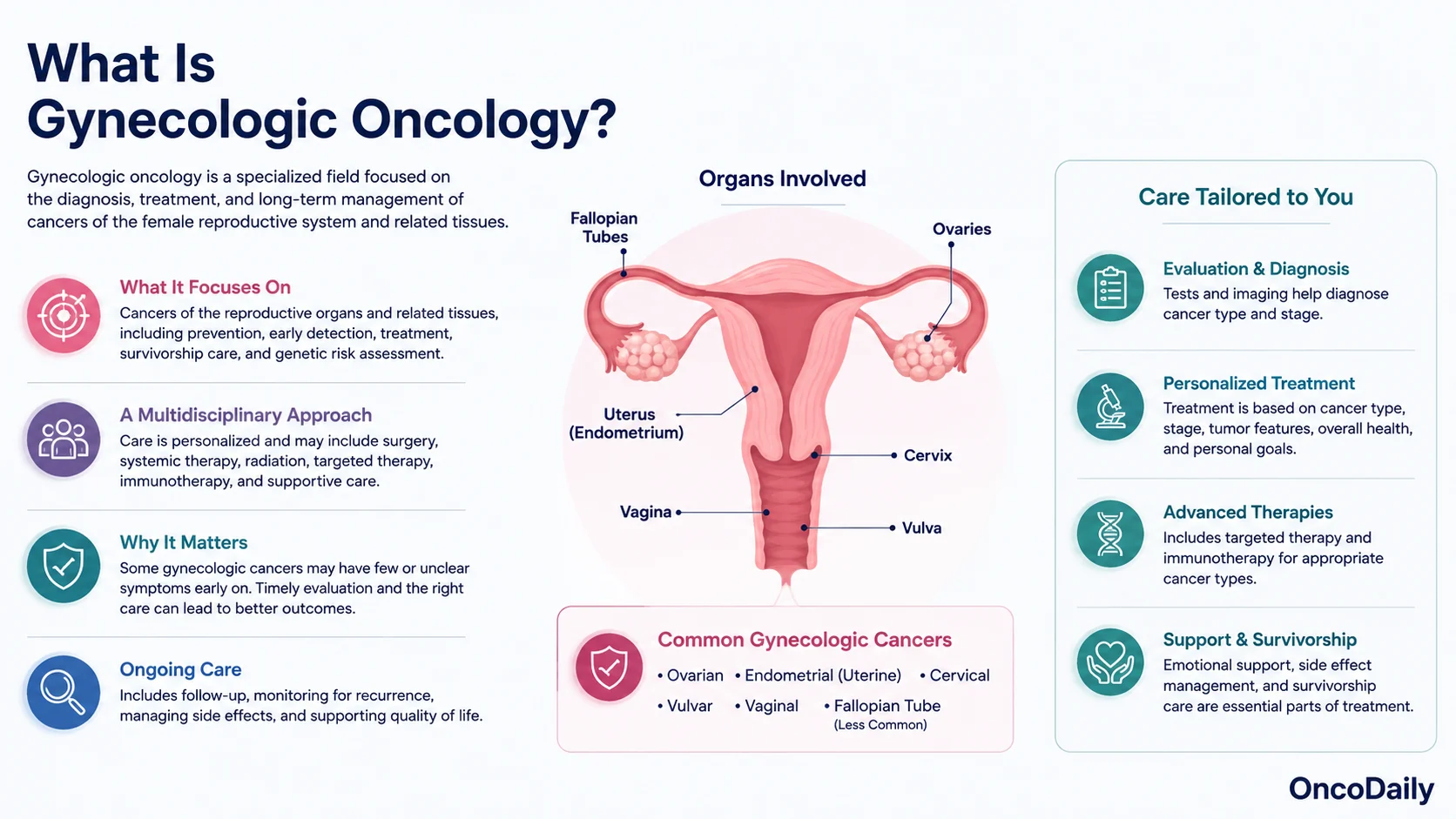
Gynecologic oncology is a specialized area of medicine focused on the diagnosis, treatment, and long-term management of cancers that develop in the female reproductive system. These cancers can arise from organs such as the uterus, cervix, ovaries, fallopian tubes, vagina, and vulva, as well as from related tissues such as the peritoneum.
The field combines principles of gynecology and oncology. Unlike general gynecology, which covers a broad range of reproductive and hormonal conditions, gynecologic oncology specifically focuses on cancer and precancerous disease.
Care is often multidisciplinary because treatment may involve several different approaches, including surgery, systemic therapy, radiation therapy, and newer targeted or immune-based treatments. The exact strategy depends on the type of cancer, its stage, tumor characteristics, the patient’s overall health, and individual treatment goals.
Gynecologic oncology also includes cancer prevention, early detection, surveillance after treatment, genetic risk assessment, and management of treatment-related effects. Because some gynecologic cancers may initially cause few or nonspecific symptoms, appropriate screening, evaluation of abnormal findings, and timely diagnosis can play an important role in improving outcomes.
What Cancers Are Treated in Gynecologic Oncology?
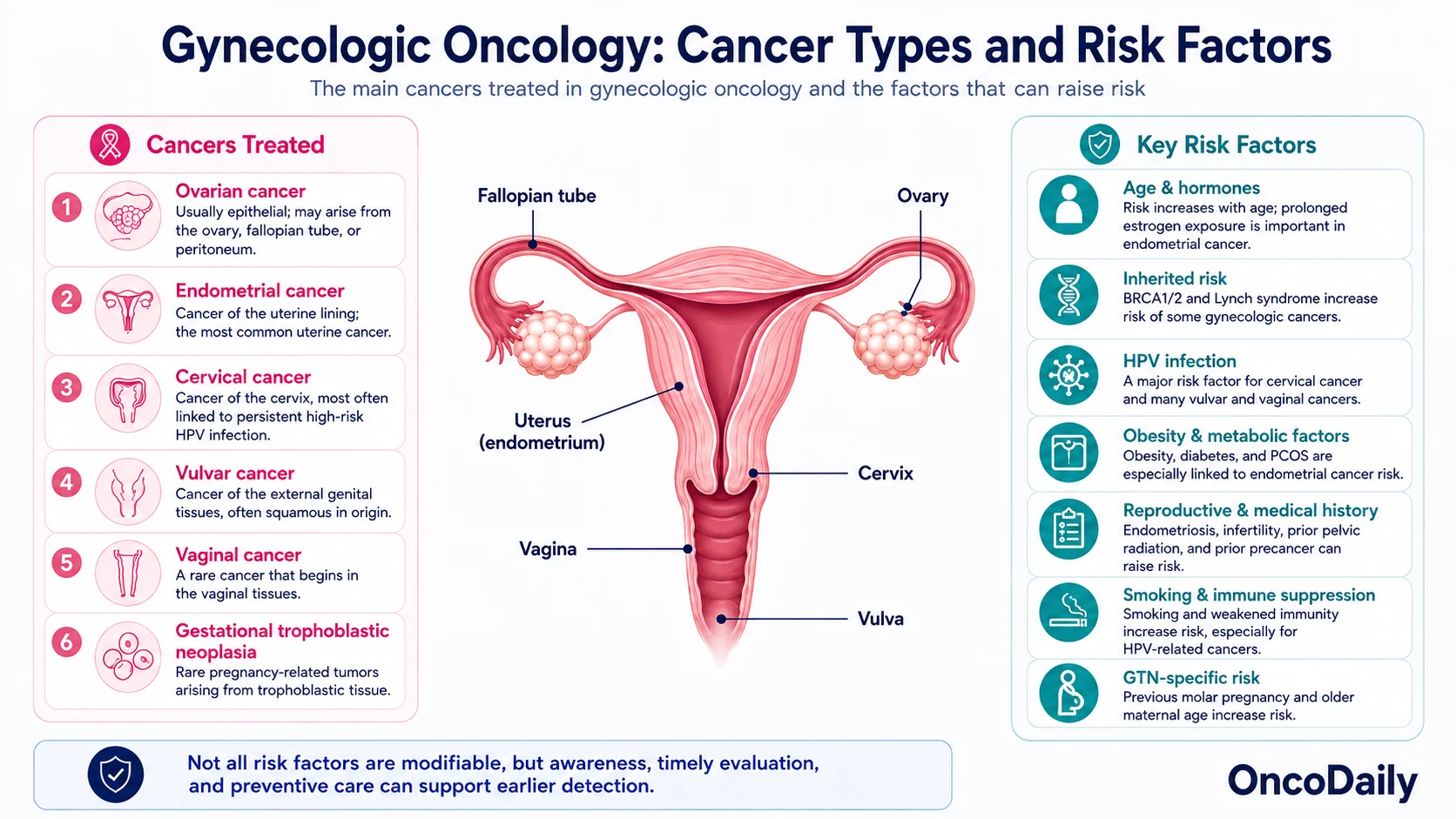
Gynecologic oncology covers several cancers that develop in the female reproductive system. Although these cancers may affect nearby organs, they differ in their biology, risk factors, symptoms, and treatment approaches.
Ovarian Cancer
Ovarian cancer develops in or around the ovaries and is most commonly epithelial in origin. Many high-grade serous ovarian cancers are now thought to begin in the fallopian tubes. Primary peritoneal cancer is biologically similar and is generally managed using the same treatment principles. (American Cancer Society, 2026)
Endometrial Cancer
Endometrial cancer begins in the lining of the uterus and is the most common type of uterine cancer. Most cases are endometrioid adenocarcinomas, although several other histologic and molecular subtypes are recognized. (National Cancer Institute, 2026)
Cervical Cancer
Cervical cancer develops in the cervix, the lower part of the uterus. Persistent infection with high-risk human papillomavirus (HPV), particularly HPV types 16 and 18, is the main cause of most cervical cancers.
Vulvar Cancer
Vulvar cancer develops in the external female genital tissues. Squamous cell carcinoma is the most common type, and some cases are associated with HPV infection, while others are linked to chronic vulvar skin conditions.
Vaginal Cancer
Vaginal cancer is a rare malignancy that begins in the tissues of the vagina. Most cases are squamous cell carcinomas, although adenocarcinoma and other uncommon histologic types can also occur. (National Cancer Institute, 2026)
Gestational Trophoblastic Neoplasia
Gestational trophoblastic neoplasia is a rare group of pregnancy-related tumors that arise from trophoblastic tissue, which normally contributes to formation of the placenta. It includes invasive mole, choriocarcinoma, placental-site trophoblastic tumor, and epithelioid trophoblastic tumor. (Braga et al., 2025)
Together, these diseases account for the main cancers managed within gynecologic oncology, although their clinical course and management can vary considerably.
What Are the Risk Factors for Gynecologic Cancers?
Risk factors for gynecologic cancers vary depending on the organ involved and the type of cancer. Having one or more risk factors does not mean that cancer will develop, and some patients are diagnosed without any known risk factors.
Age and Hormonal Factors
The risk of several gynecologic cancers increases with age, particularly after menopause. Prolonged estrogen exposure without sufficient progesterone is especially important in endometrial cancer and may occur with obesity, irregular ovulation, early menstruation, late menopause, or estrogen-only hormone therapy. (National Cancer Institute, 2026)
Family History and Inherited Genetic Changes
Inherited mutations can significantly increase the risk of some gynecologic cancers. BRCA1 and BRCA2 mutations are strongly associated with ovarian and fallopian tube cancers, while Lynch syndrome increases the risk of endometrial and ovarian cancers. A strong family history of ovarian, breast, endometrial, or colorectal cancer may therefore indicate the need for genetic counseling. (CDC, 2025)
HPV Infection
Persistent infection with high-risk human papillomavirus (HPV) is the most important risk factor for cervical cancer and also contributes to many vulvar and vaginal cancers. Smoking and weakened immunity can make persistent HPV infection and progression to cancer more likely. (CDC, 2025)
Obesity and Metabolic Factors
Obesity is one of the strongest modifiable risk factors for endometrial cancer and is also associated with an increased risk of some ovarian cancers. Diabetes, metabolic syndrome, and conditions such as polycystic ovary syndrome may further increase endometrial cancer risk. (National Cancer Institute, 2026)
Reproductive and Medical History
Certain reproductive factors, including never having been pregnant and some patterns of prolonged lifetime ovulation, are associated with increased ovarian or endometrial cancer risk. Endometriosis is also linked to an increased risk of certain ovarian cancer subtypes.
Previous cervical precancer or cancer may increase the risk of later vulvar or vaginal cancer, while previous pelvic radiation can contribute to the development of some secondary gynecologic malignancies. (CDC, 2025)
Smoking and Immune Suppression
Smoking increases the risk of cervical, vulvar, and vaginal cancers, particularly in people with persistent HPV infection. A weakened immune system, including from HIV infection or immunosuppressive treatment, can also increase the likelihood that HPV-related precancerous changes will persist and progress. (CDC, 2025)
Risk Factors for Gestational Trophoblastic Disease
Gestational trophoblastic neoplasia has a different set of risk factors because it develops from pregnancy-related trophoblastic tissue. The strongest risk factor is a previous molar pregnancy. The risk of molar pregnancy is also higher at the extremes of maternal age, particularly after age 40. (Seckl et al., 2022)
What Are the Common Symptoms of Gynecologic Cancers?
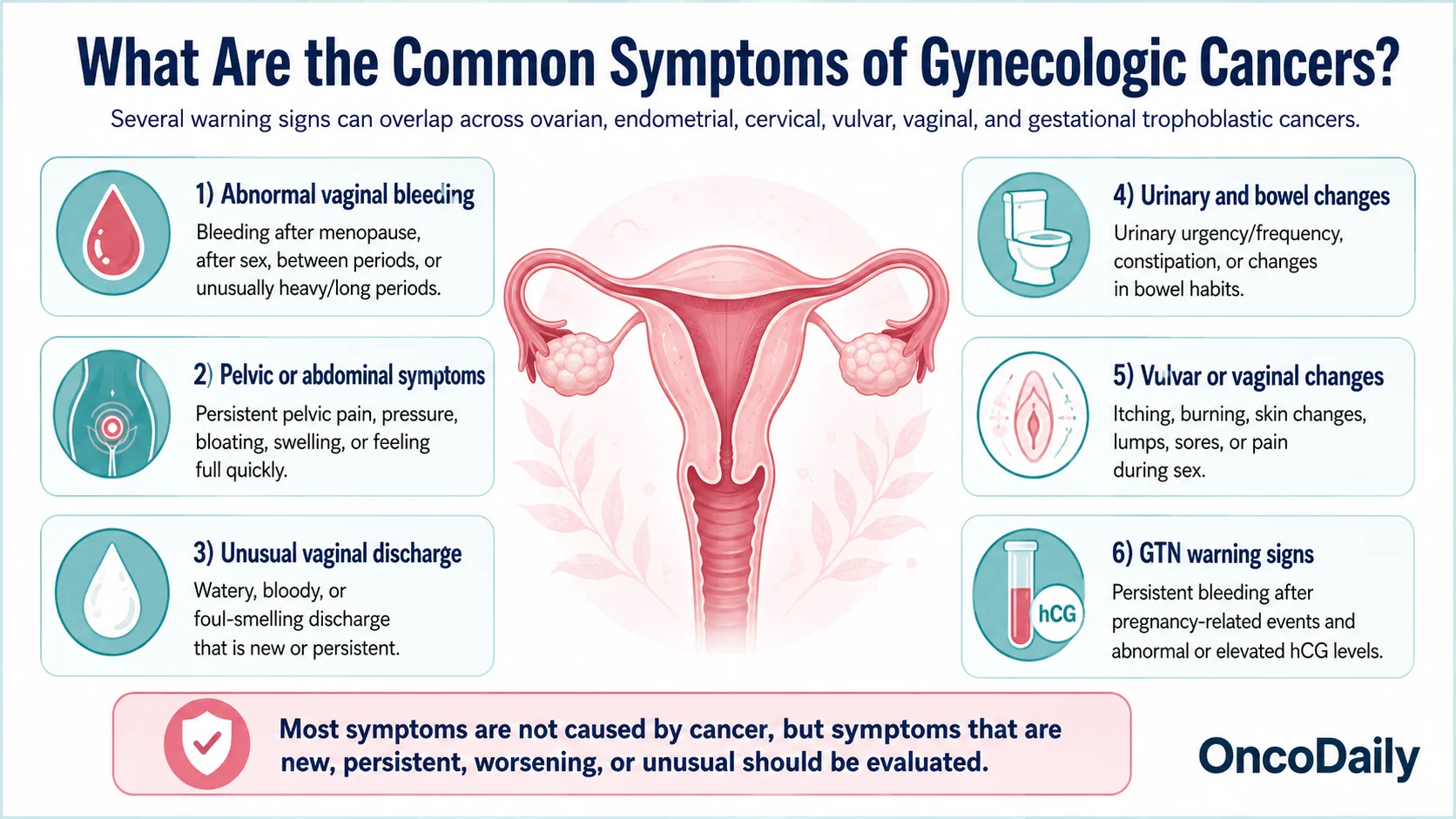
Symptoms of gynecologic cancers vary depending on where the cancer develops, but several warning signs are shared across different cancer types. Some gynecologic cancers may cause few or no symptoms in their early stages, while others are more likely to produce noticeable changes.
Abnormal Vaginal Bleeding
Abnormal bleeding is one of the most important symptoms of gynecologic cancer. It may include bleeding after menopause, bleeding after sex, bleeding between periods, or menstrual bleeding that is heavier or lasts longer than usual.
This symptom is particularly common in endometrial and cervical cancers and may also occur with vaginal or vulvar cancers. (NHS, 2024)
Pelvic or Abdominal Symptoms
Persistent pelvic or abdominal pain, pressure, swelling, or bloating can occur with several gynecologic cancers. Ovarian cancer in particular may cause frequent bloating, abdominal discomfort, difficulty eating, or feeling full quickly. (American Cancer Society, 2026)
Unusual Vaginal Discharge
Watery, bloody, or unusually strong-smelling vaginal discharge may occur with cervical, endometrial, or vaginal cancer. New or persistent changes in discharge should be evaluated, particularly when accompanied by bleeding or pelvic pain. (NHS, 2024)
Urinary and Bowel Changes
Some gynecologic cancers can affect nearby organs and cause changes in urination or bowel habits. Symptoms may include urinary frequency or urgency, constipation, difficulty passing urine, or changes in bowel movements. These symptoms are more common when a pelvic tumor becomes larger or more advanced.
Vulvar or Vaginal Changes
Vulvar cancer may cause persistent itching, burning, pain, changes in skin color or texture, or a lump, sore, or ulcer that does not heal. Vaginal cancer may also present with a vaginal lump, bleeding, discharge, or pain during sexual intercourse. (NHS, 2025)
Symptoms of Gestational Trophoblastic Neoplasia
Gestational trophoblastic neoplasia typically occurs after a molar pregnancy or another pregnancy-related event. Persistent or recurrent vaginal bleeding and abnormal or persistently elevated human chorionic gonadotropin (hCG) levels are important warning signs.
Most symptoms associated with gynecologic cancers can also be caused by non-cancerous conditions. However, symptoms that are new, persistent, worsening, or unusual for the individual should be evaluated by a healthcare professional.
How Are Gynecologic Cancers Diagnosed and Staged?
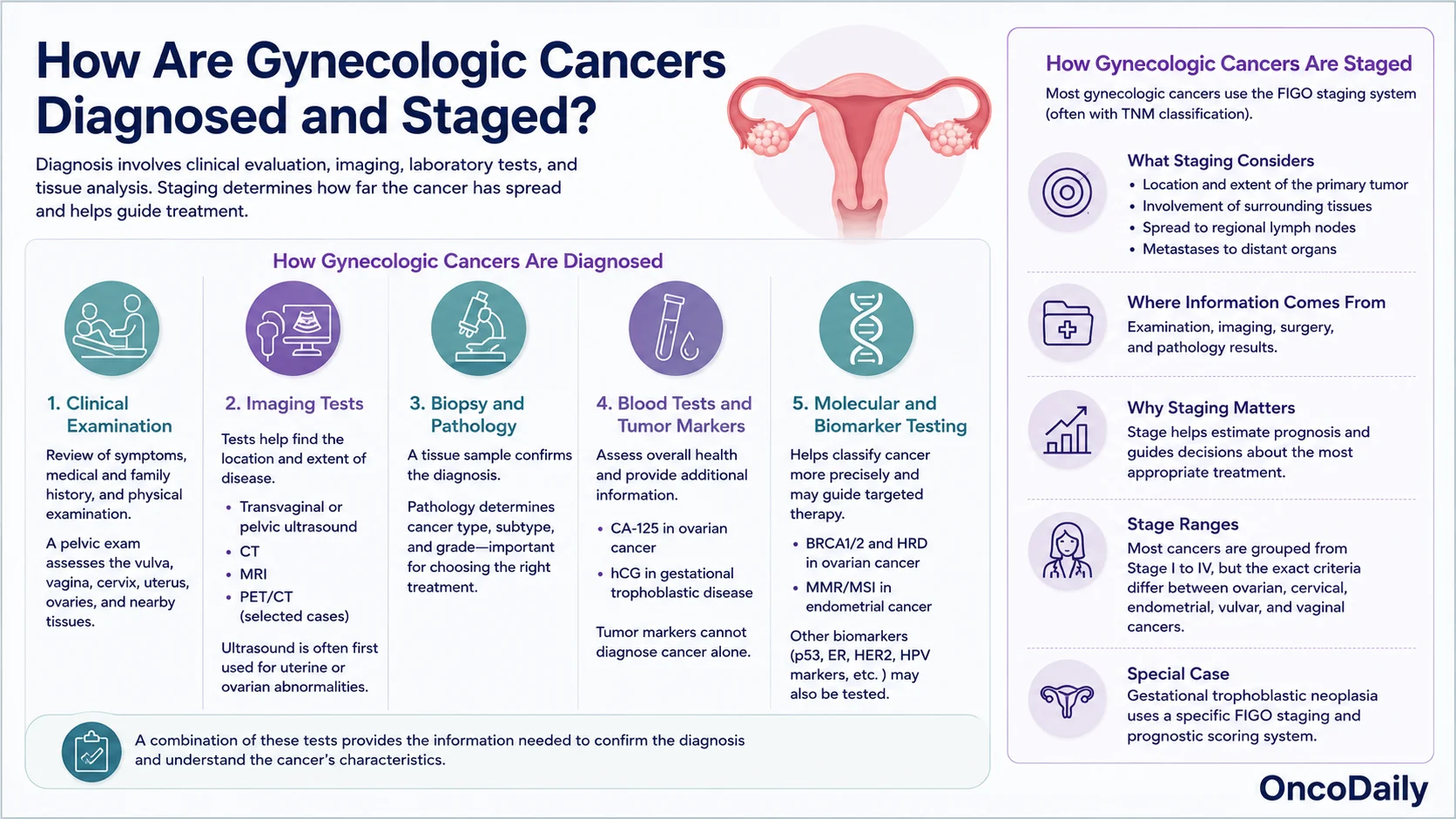
Diagnosing a gynecologic cancer usually involves a combination of clinical examination, imaging, laboratory tests, and tissue analysis. Once cancer is confirmed, additional testing is used to determine its stage, which describes how far the disease has spread and helps guide treatment.
Clinical Examination
Evaluation usually begins with a review of symptoms, medical and family history, previous screening results, and a physical examination. A pelvic examination may be performed to assess the vulva, vagina, cervix, uterus, ovaries, and surrounding tissues for abnormalities. (MSD Manual, 2024)
Imaging Tests
Imaging helps identify the location and extent of disease. Depending on the suspected cancer, tests may include:
- Transvaginal or pelvic ultrasound
- CT
- MRI
- PET/CT in selected situations
Ultrasound is commonly used to evaluate uterine or ovarian abnormalities, while CT and MRI can provide more detailed information about local tumor involvement, lymph nodes, and possible metastatic disease. (MSD Manual, 2024)
Biopsy and Pathology
In most gynecologic cancers, a tissue sample is needed to confirm the diagnosis. This may involve an endometrial biopsy, cervical or vulvar biopsy, colposcopy, dilation and curettage, or tissue obtained during surgery.
A pathologist determines the cancer type, histologic subtype, and grade. These findings are important because tumors arising from the same organ may behave differently and require different treatments.
Blood Tests and Tumor Markers
Blood tests may be used to assess overall health and provide additional information about certain cancers. Tumor markers are useful in selected situations, including CA-125 in ovarian cancer and human chorionic gonadotropin (hCG) in gestational trophoblastic disease.
Other markers may be measured for particular ovarian tumor subtypes, but tumor markers generally cannot diagnose gynecologic cancer on their own.
Molecular and Biomarker Testing
Molecular testing has become increasingly important in gynecologic oncology. Examples include BRCA1/2 and homologous recombination testing in ovarian cancer and mismatch repair or microsatellite instability testing in endometrial cancer.
Additional biomarkers, including p53, hormone receptors, HER2, and HPV-related markers, may be evaluated depending on the tumor type. These results can help classify the cancer more precisely and may influence targeted therapy or immunotherapy decisions.
How Are Gynecologic Cancers Staged?
Most gynecologic cancers are staged using systems developed by the International Federation of Gynecology and Obstetrics (FIGO), often alongside the TNM classification.
Staging considers factors such as:
- The location and extent of the primary tumor
- Involvement of surrounding tissues
- Spread to regional lymph nodes
- Metastases to distant organs
The information used to determine stage may come from examination, imaging, surgery, and pathology. Although FIGO stages are generally described from I to IV, the exact criteria differ substantially between ovarian, cervical, endometrial, vulvar, and vaginal cancers. Gestational trophoblastic neoplasia also uses a specific FIGO staging and prognostic scoring system. (FIGO, 2025)
Can Gynecologic Cancers Be Prevented or Detected Early?
Prevention and early detection strategies differ considerably between gynecologic cancers. Cervical cancer is the main gynecologic cancer for which routine population screening is recommended, while there are currently no standard screening tests for ovarian, endometrial, vulvar, or vaginal cancers in average-risk individuals. (WHO, 2026; CDC, 2024)
Cervical Cancer Prevention and Screening
Persistent infection with high-risk HPV causes most cervical cancers. HPV vaccination can substantially reduce the risk of HPV-related precancer and cancer, while regular HPV testing and/or cervical cytology can identify precancerous changes before they progress. (WHO, 2021)
Reducing Risk of Other Gynecologic Cancers
Some risk factors cannot be changed, including age and inherited genetic mutations. However, maintaining a healthy weight, avoiding tobacco, and discussing appropriate hormone therapy with a healthcare professional may reduce the risk of certain gynecologic cancers.
People with inherited cancer syndromes such as BRCA1/2 mutations or Lynch syndrome may require genetic counseling, increased surveillance, or risk-reducing strategies based on their individual risk.
Recognizing Symptoms Early
Because routine screening is not available for several gynecologic cancers, awareness of symptoms remains important. Medical evaluation is recommended for:
- Vaginal bleeding after menopause
- Bleeding after sex or between periods
- Persistent pelvic or abdominal pain or bloating
- Feeling full unusually quickly
- Persistent or unusual vaginal discharge
- A new lump, sore, or skin change involving the vulva or vagina
These symptoms are often caused by non-cancerous conditions, but persistent or unexplained changes should be evaluated.
Early recognition, appropriate screening where available, and assessment of inherited risk can help some gynecologic cancers be detected at an earlier and more treatable stage.
You can also read Gynecological Cancers, Cancer Vaccines & Immunotherapy: Are We Near Elimination? by OncoDaily.
What Is the Prognosis for Gynecologic Cancers?
The prognosis for gynecologic cancers varies considerably depending on the cancer type, stage at diagnosis, tumor biology, response to treatment, and the patient’s overall health. In general, cancers detected at an earlier stage have better outcomes than cancers that have spread to lymph nodes or distant organs.
Survival statistics are usually reported as 5-year relative survival rates. These figures describe outcomes for groups of patients and cannot predict what will happen to an individual person.
Ovarian Cancer
Ovarian cancer often has a less favorable overall prognosis because many cases are diagnosed after the disease has spread beyond the ovary. Five-year relative survival is above 90% for localized disease but falls substantially when distant metastases are present. Tumor subtype, BRCA status, response to platinum-based chemotherapy, and the amount of residual disease after surgery can also influence outcomes. (American Cancer Society, 2026)
Endometrial Cancer
Endometrial cancer generally has a favorable prognosis because abnormal uterine bleeding often leads to diagnosis at an early stage. Five-year relative survival for localized disease is approximately 95%. Prognosis is also influenced by histologic subtype, tumor grade, lymph node involvement, and molecular classification. (American Cancer Society, 2026)
Cervical Cancer
Cervical cancer outcomes are strongly related to stage. Five-year relative survival is around 90% when the cancer is localized, while survival is considerably lower in metastatic disease. Screening and treatment of precancerous lesions can prevent many cervical cancers or allow them to be detected earlier. (National Cancer Institute, 2022)
Vulvar and Vaginal Cancers
Both vulvar and vaginal cancers are relatively uncommon. Localized disease generally has a better prognosis, while lymph node involvement and distant spread are associated with poorer outcomes. For vulvar cancer in particular, lymph node status is one of the most important prognostic factors. (American Cancer Society, 2025; American Cancer Society, 2026)
Gestational Trophoblastic Neoplasia
Gestational trophoblastic neoplasia has one of the most favorable prognoses among gynecologic malignancies. Cure rates for low-risk disease approach 100%, while most patients with high-risk disease can also be cured with appropriate multi-agent chemotherapy and close hCG monitoring. (Canadian Cancer Society, 2024)
What Factors Affect Prognosis?
Across gynecologic cancers, important prognostic factors include:
- Stage at diagnosis
- Tumor type and grade
- Lymph node involvement
- Molecular and genetic characteristics
- Completeness of surgery when surgery is required
- Response to systemic therapy or radiation
- Age, performance status, and other medical conditions
Prognosis therefore cannot be determined by stage alone. Modern molecular classification and targeted treatments are increasingly helping clinicians provide a more individualized estimate of expected outcomes.
You can also read Could the HPV Vaccine Save Your Life? on OncoDaily.

FAQ
What is gynecologic oncology?
It is the field focused on cancers of the female reproductive system.
What cancers does a gynecologic oncologist treat?
Ovarian, endometrial, cervical, vulvar, vaginal, and gestational trophoblastic cancers.
What are common symptoms of gynecologic cancers?
Abnormal bleeding, pelvic pain, bloating, unusual discharge, and vulvar or vaginal changes.
Are gynecologic cancers hereditary?
Some can be linked to inherited mutations such as BRCA1/2 or Lynch syndrome.
Can gynecologic cancers be prevented?
Some risks can be reduced through HPV vaccination, healthy lifestyle choices, and risk-based prevention.
Is there screening for gynecologic cancers?
Routine screening is mainly available for cervical cancer.
How are gynecologic cancers diagnosed?
Diagnosis may involve examination, imaging, blood tests, biopsy, and pathology.
How are gynecologic cancers staged?
Most use FIGO staging, which evaluates how far the cancer has spread.
How are gynecologic cancers treated?
Treatment may include surgery, chemotherapy, radiation, targeted therapy, immunotherapy, or hormone therapy.
What affects prognosis?
Cancer type, stage, tumor biology, treatment response, and overall health all influence prognosis.