At the 2026 ASCO Annual Meeting, Vincent Chung, MD, from City of Hope Comprehensive Cancer Center, presented results from SWOG S2001, a randomized phase 2 trial evaluating pembrolizumab plus olaparib versus olaparib alone as maintenance therapy in metastatic pancreatic cancer with germline BRCA1 or BRCA2 mutations.
Preclinical studies have shown that PARP inhibitors may modulate the immune microenvironment by increasing genomic instability, PD-L1 expression, and activation of the STING pathway. The POLAR trial previously reported promising results with pembrolizumab plus olaparib in patients with BRCA1/2- and PALB2-mutated metastatic pancreatic ductal adenocarcinoma.
SWOG S2001 evaluated whether adding pembrolizumab to olaparib maintenance could improve outcomes in patients with germline BRCA1/2-mutated metastatic pancreatic cancer.

You can also read about Results from the Phase 2 POLAR Trial on OncoDaily.
Study Design
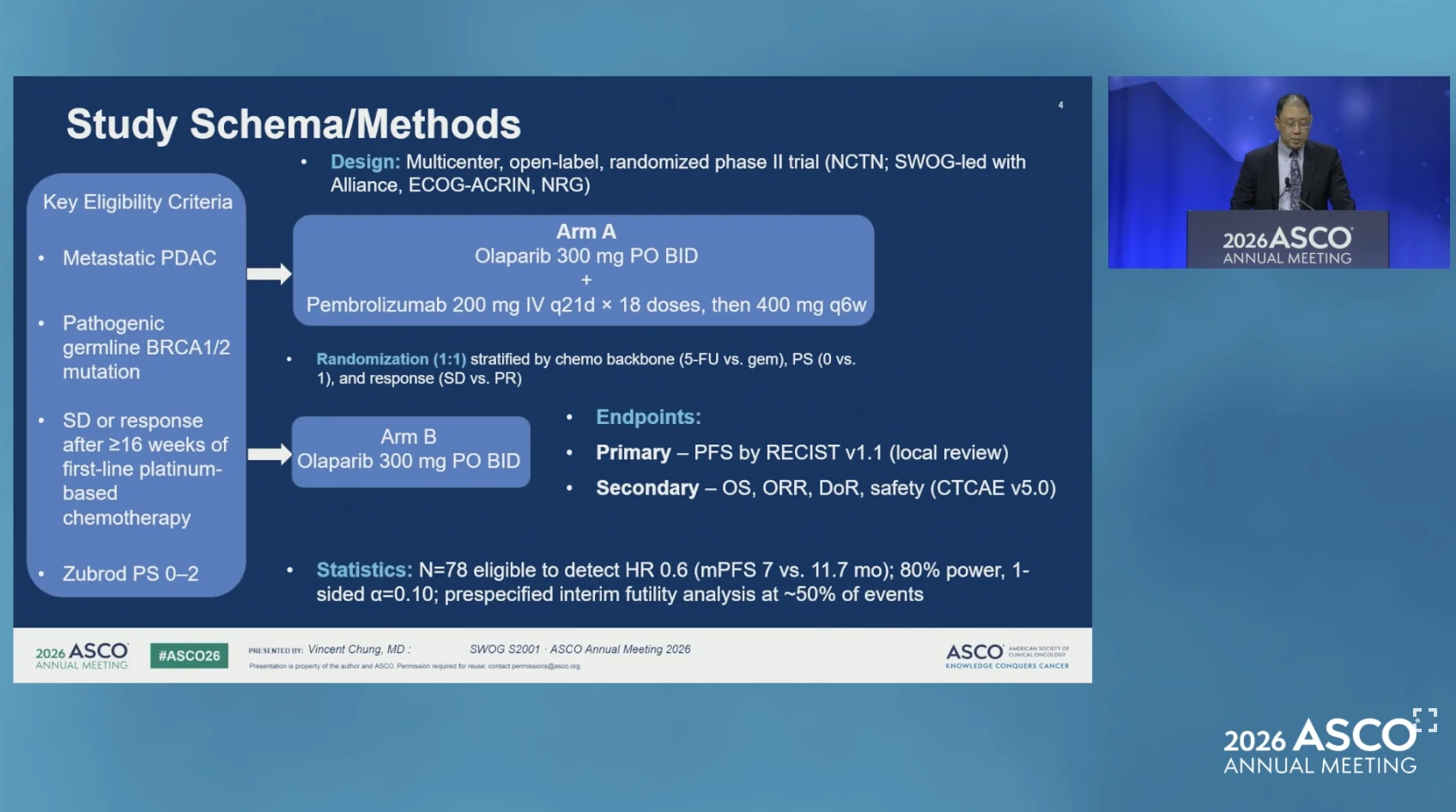
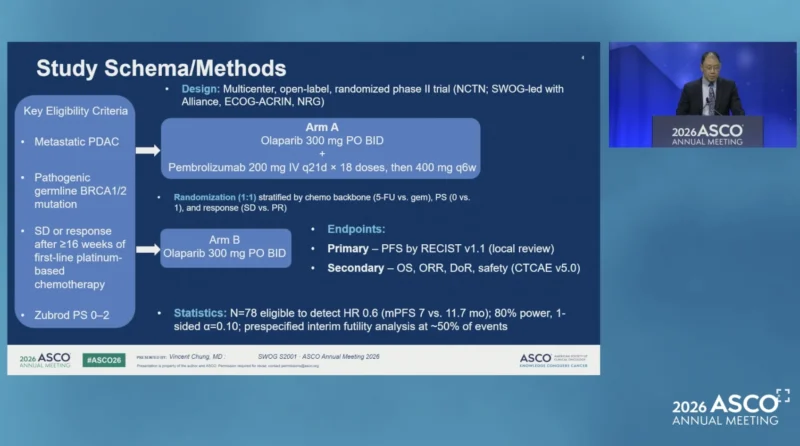
Eligible patients had metastatic pancreatic ductal adenocarcinoma with germline BRCA1 or BRCA2 mutations and had received at least 16 weeks of first-line platinum-based chemotherapy without progression.
Patients were randomized 1:1 to receive olaparib 300 mg twice daily plus pembrolizumab 200 mg every 3 weeks for 18 doses, followed by pembrolizumab 400 mg every 6 weeks, or olaparib 300 mg twice daily alone. The primary endpoint was progression-free survival by RECIST v1.1 local review. Secondary endpoints included overall survival, overall response rate, duration of response, and safety.
The target accrual was 88 patients, with 78 expected to be eligible for analysis. Differences in progression-free survival by treatment arm were assessed using a stratified log-rank test, with first-line platinum-based chemotherapy backbone, Zubrod performance status, and disease status after first-line treatment as stratification factors. Tissue and blood samples for correlative studies were banked.
Results
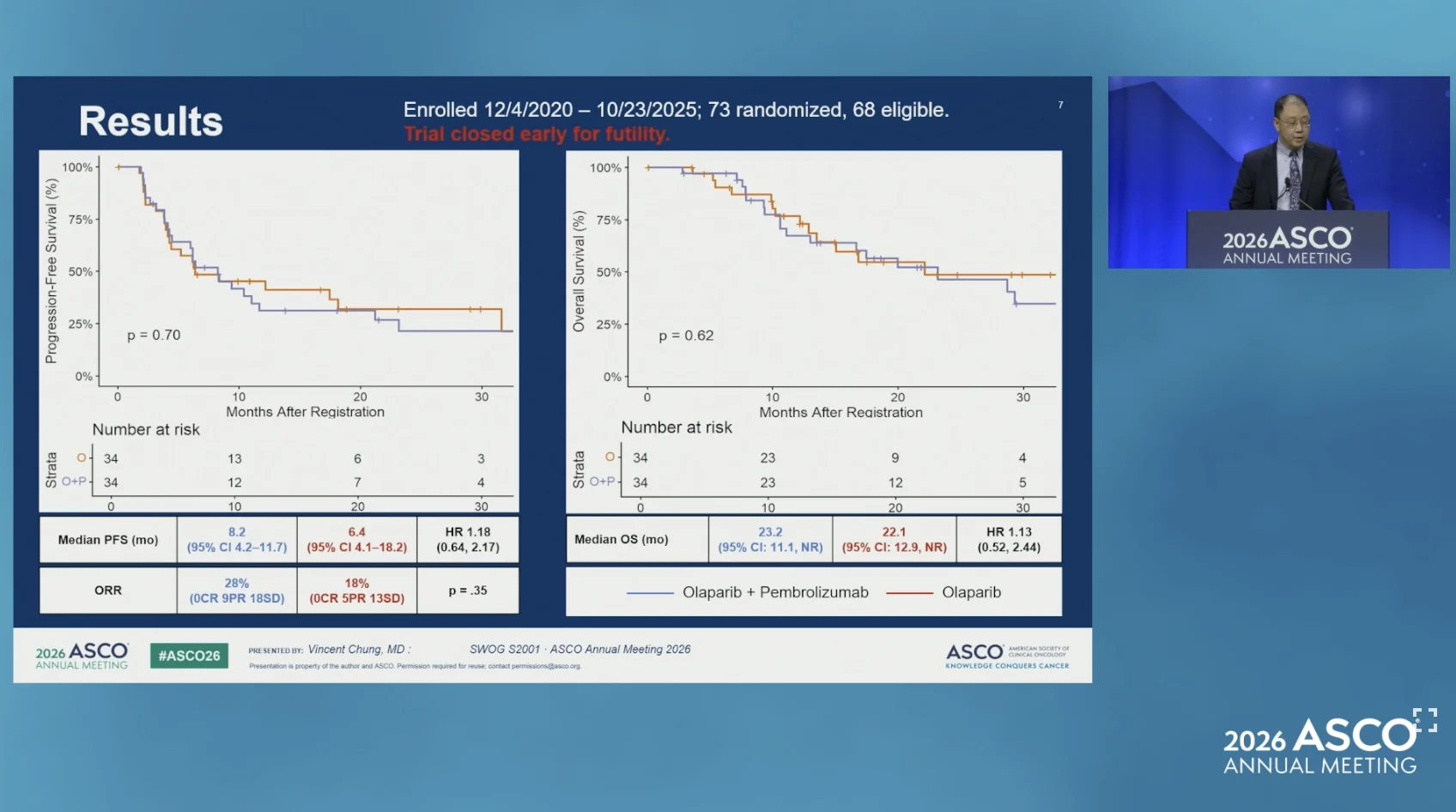
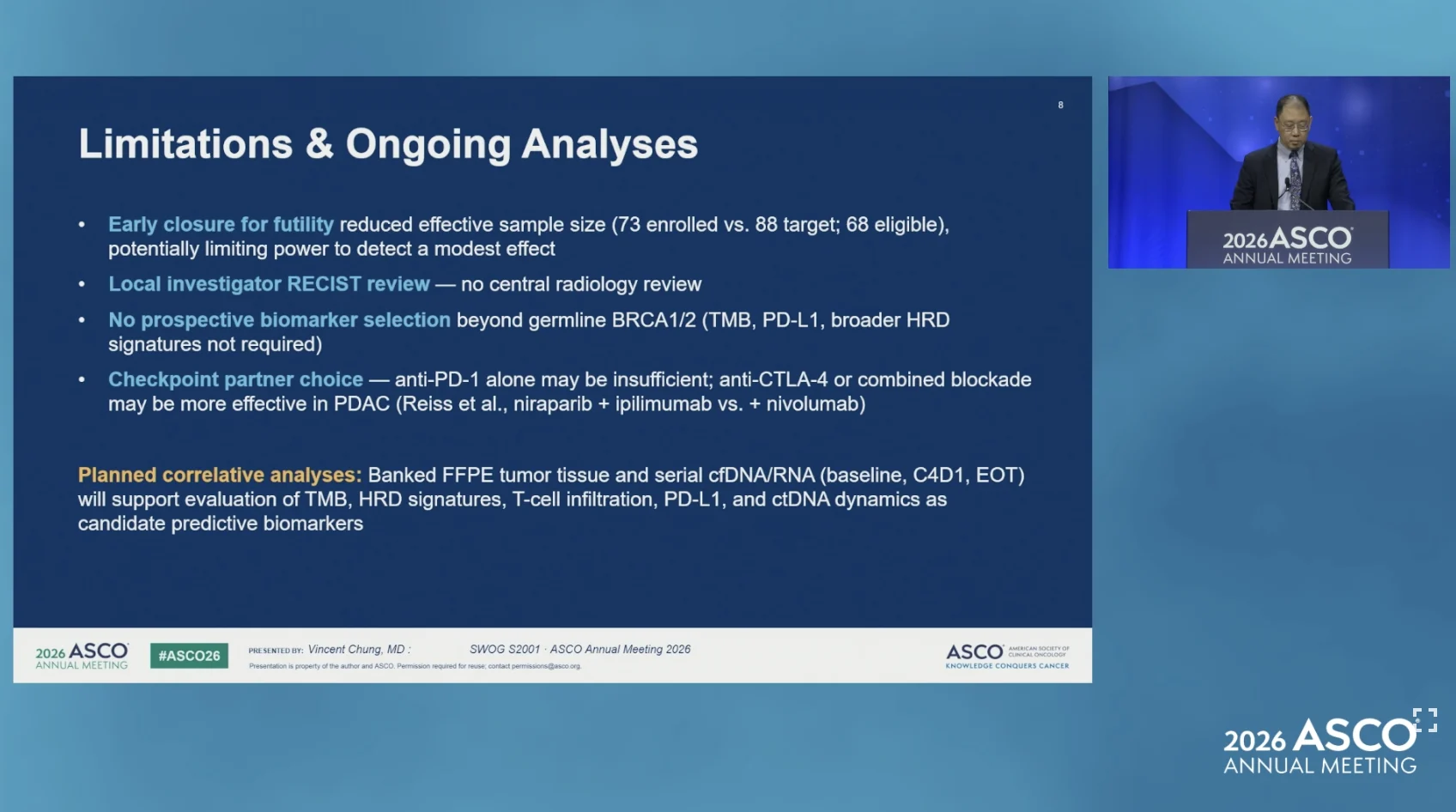
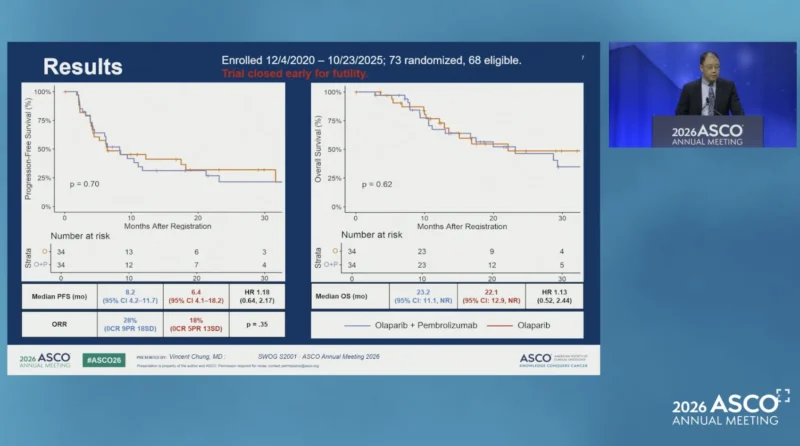
The study enrolled 73 patients, with 68 eligible for analysis, and was closed early for futility after the planned interim analysis.
Median progression-free survival was 8.2 months with pembrolizumab plus olaparib and 6.4 months with olaparib alone. The hazard ratio was 1.18, and the difference was not statistically significant.
Median overall survival was 23.2 months with pembrolizumab plus olaparib and 22.1 months with olaparib alone. The hazard ratio was 1.13, and the difference was not statistically significant. Overall response rate was 28% with pembrolizumab plus olaparib and 18% with olaparib alone.
Treatment-related grade ≥3 adverse events reported in at least 5% of patients in either arm included anemia, neutropenia, decreased lymphocyte count, fatigue, and gastrointestinal toxicity. One grade 4 treatment-related adverse event occurred in each arm.
Immune-related adverse events occurred in 15% of patients in the pembrolizumab plus olaparib arm and included adrenal insufficiency, hyperthyroidism, and hypothyroidism. Discontinuation due to toxicity occurred in 12% of patients receiving pembrolizumab plus olaparib and in no patients receiving olaparib alone.
Conclusion
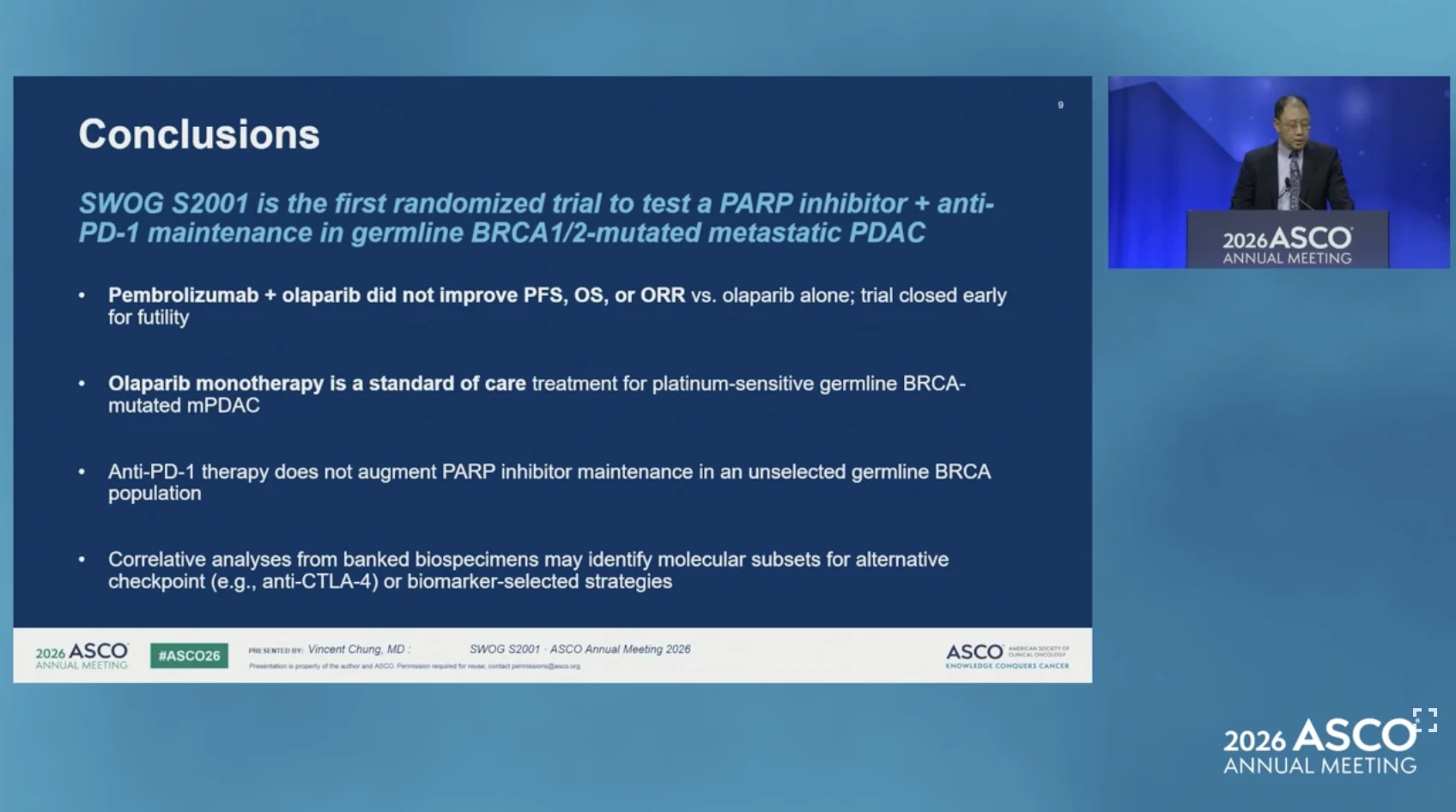
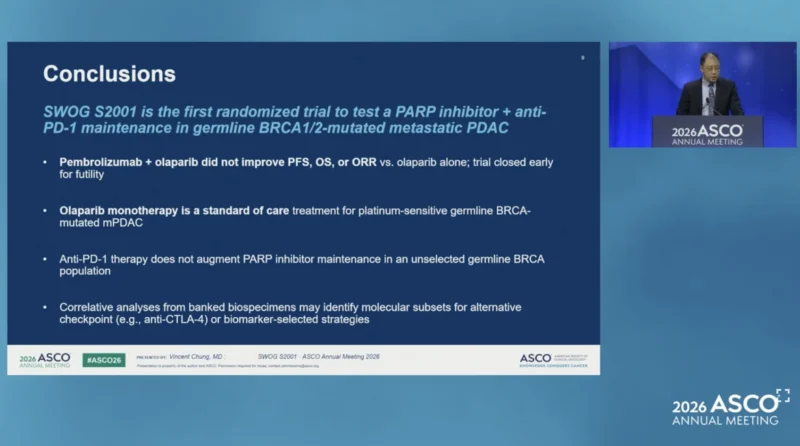
SWOG S2001 was the first randomized trial to test PARP inhibitor plus anti-PD-1 maintenance therapy in germline BRCA1/2-mutated metastatic pancreatic ductal adenocarcinoma. Pembrolizumab plus olaparib did not improve progression-free survival, overall survival, or overall response rate compared with olaparib alone, and the trial closed early for futility.
Olaparib monotherapy remains a standard maintenance option in platinum-sensitive germline BRCA-mutated metastatic pancreatic cancer. Planned correlative analyses using banked biospecimens will evaluate molecular subsets and potential biomarker-selected strategies.
The full abstract is available on the official ASCO website.

You can also read about ATTRACTION-6 Trial at ASCO 2026 on OncoDaily.