At the 2026 ASCO Annual Meeting, Do-Youn Oh, MD, PhD, from Seoul National University College of Medicine, presented results from ATTRACTION-6 Trial, a randomized phase 3 trial evaluating nivolumab plus ipilimumab combined with chemotherapy as first-line treatment for HER2-negative unresectable advanced or recurrent gastric/gastroesophageal junction cancer.
Anti-PD-1 antibodies combined with chemotherapy are an established first-line option for HER2-negative gastric/gastroesophageal junction cancer, with overall survival benefit demonstrated particularly in PD-L1-positive patients. ATTRACTION-6 evaluated whether adding dual checkpoint blockade with Nivolumab and low-dose ipilimumab to chemotherapy could improve outcomes compared with chemotherapy alone in an Asian patient population.

Read more about Immunotherapy Success Rate for Gastric Cancer on OncoDaily.
Study Design
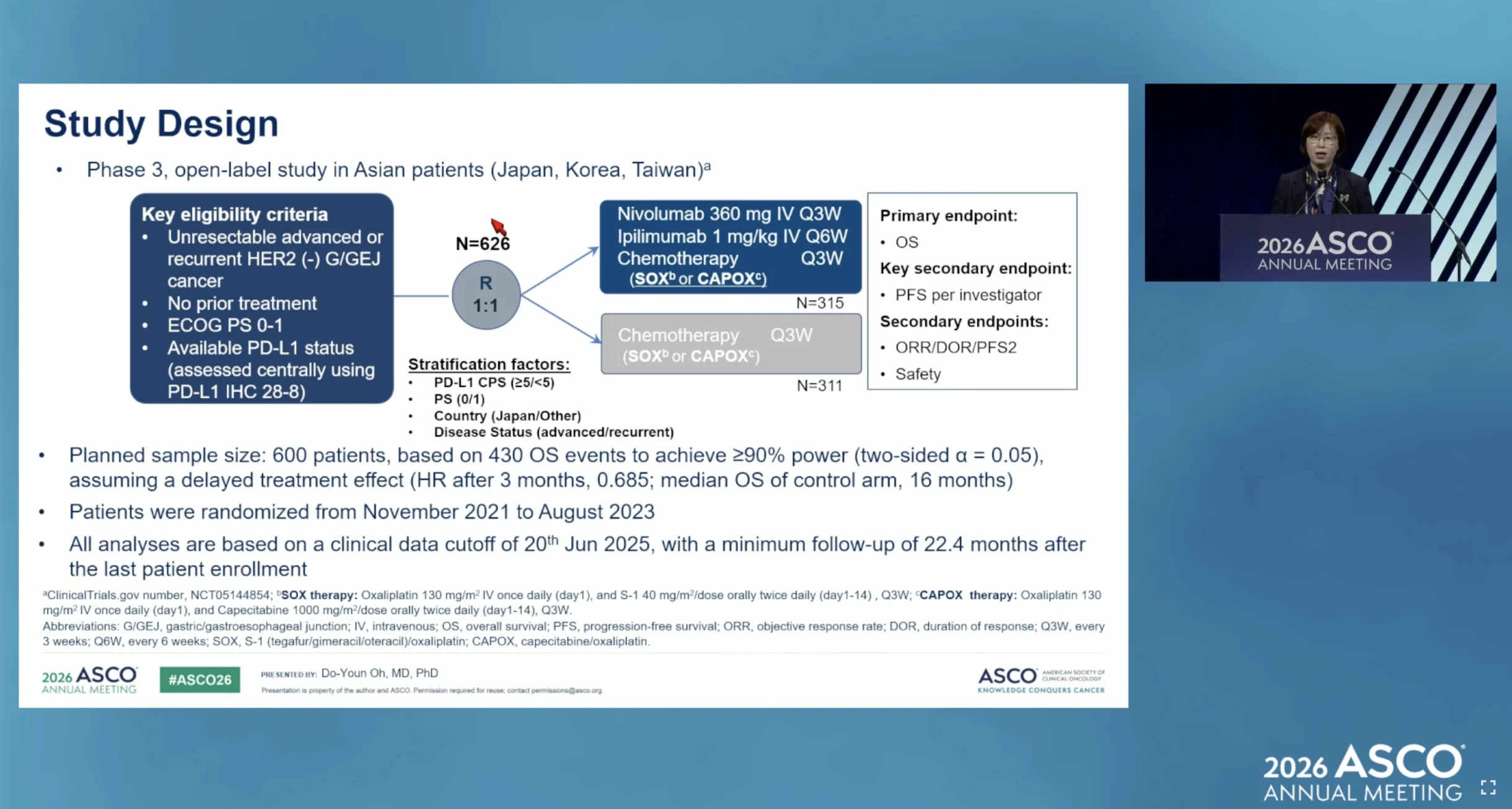
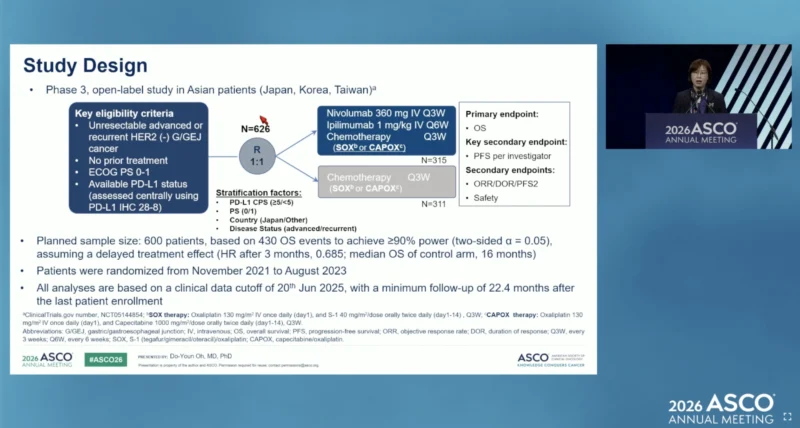
ATTRACTION-6 was a randomized, open-label phase 3 trial conducted in Japan, Korea, and Taiwan. Previously untreated patients with HER2-negative unresectable advanced or recurrent gastric/gastroesophageal junction cancer were randomized 1:1 to receive nivolumab plus ipilimumab with chemotherapy or chemotherapy alone.
In the experimental arm, patients received nivolumab 360 mg every 3 weeks and ipilimumab 1 mg/kg every 6 weeks in addition to chemotherapy. Chemotherapy consisted of S-1 plus oxaliplatin or capecitabine plus oxaliplatin. Randomization was stratified by PD-L1 status, ECOG performance status, country, and disease status.
The primary endpoint was overall survival. Key secondary endpoint was progression-free survival assessed by site investigator. Secondary endpoints included objective response rate, duration of response, PFS2, and safety.
Results
Between November 2021 and August 2023, 626 patients were randomized. A total of 315 patients were assigned to nivolumab plus ipilimumab with chemotherapy, and 311 patients were assigned to chemotherapy alone.
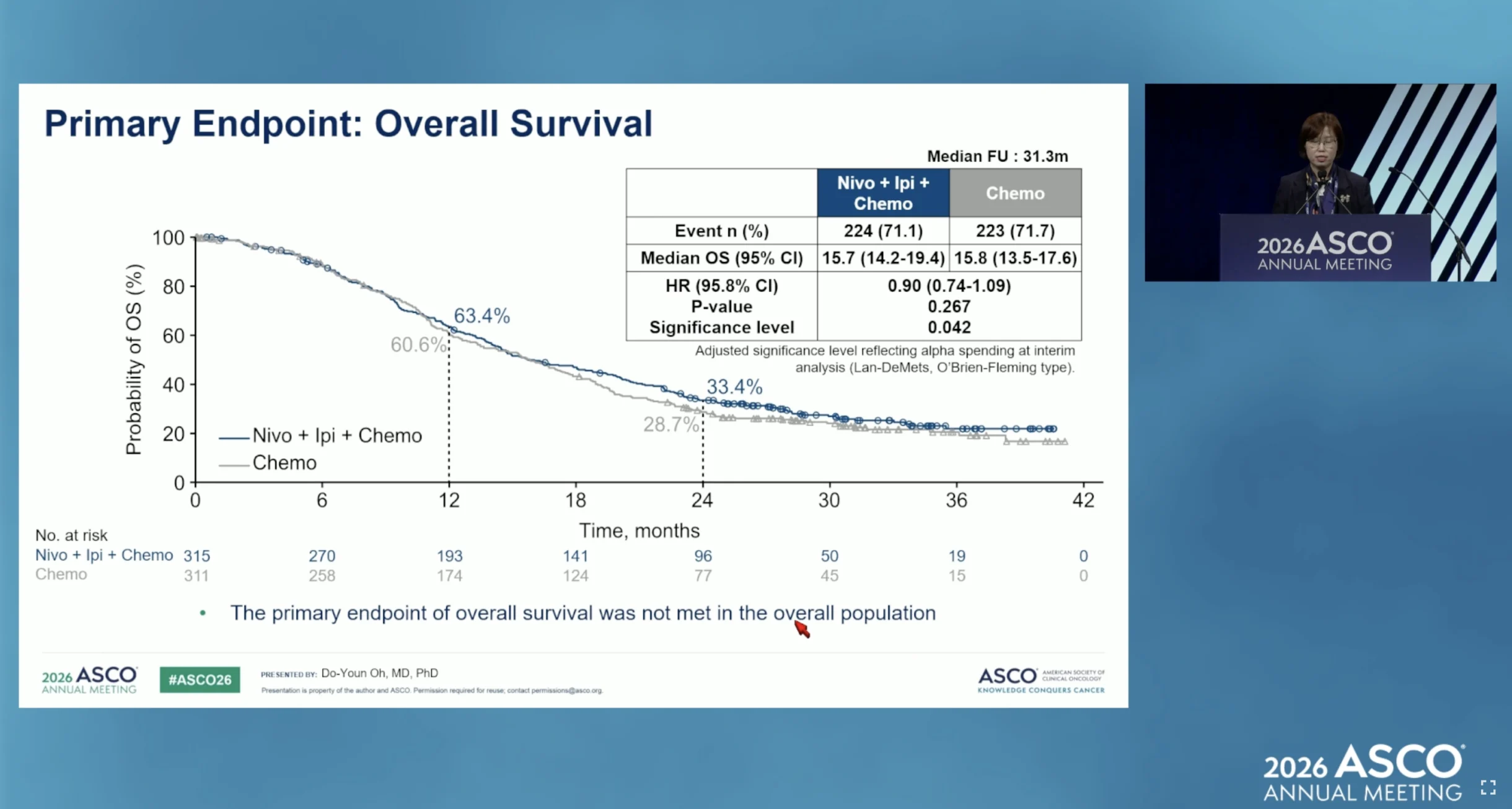
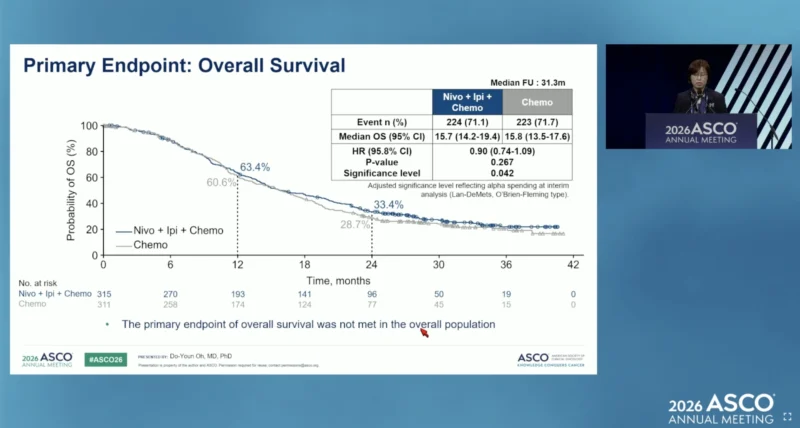
At a median follow-up of 31.3 months, the primary endpoint of overall survival was not met. Median overall survival was 15.7 months with nivolumab plus ipilimumab and chemotherapy compared with 15.8 months with chemotherapy alone. The HR was 0.90, with a p-value of 0.267.
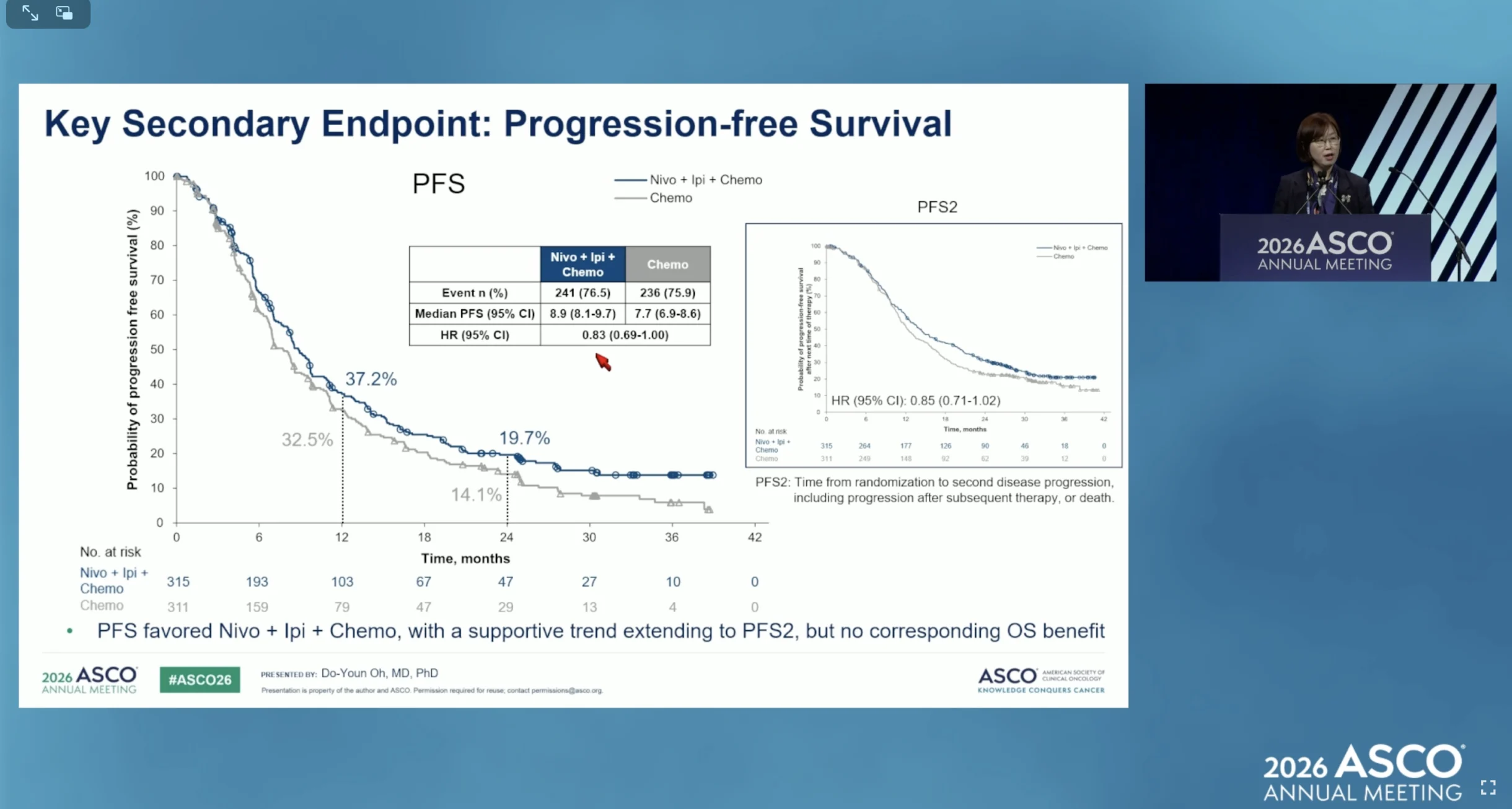
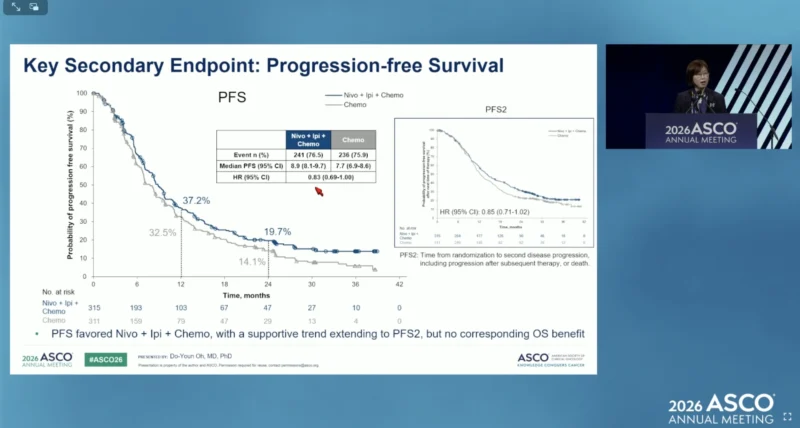
Median progression-free survival was 8.9 months versus 7.7 months, respectively, with an HR of 0.83. PFS2 showed a supportive trend, with an HR of 0.85.
Among patients with at least one measurable lesion at baseline, objective response rate was 57.9% with nivolumab plus ipilimumab and chemotherapy compared with 38.5% with chemotherapy alone. Median duration of response was 10.6 months versus 9.0 months, respectively.
Safety
In the safety population, grade 3–5 adverse events occurred in 80.0% of patients in the nivolumab plus ipilimumab and chemotherapy arm and 62.4% in the chemotherapy arm. Grade 3–5 treatment-related adverse events occurred in 64.8% and 42.9%, respectively.
Treatment-related deaths occurred in 0.3% versus 0%. The treatment-related death in the nivolumab plus ipilimumab and chemotherapy arm was gastroenteritis. No unexpected safety signals were identified, but toxicity was higher with the combination regimen.
Conclusion
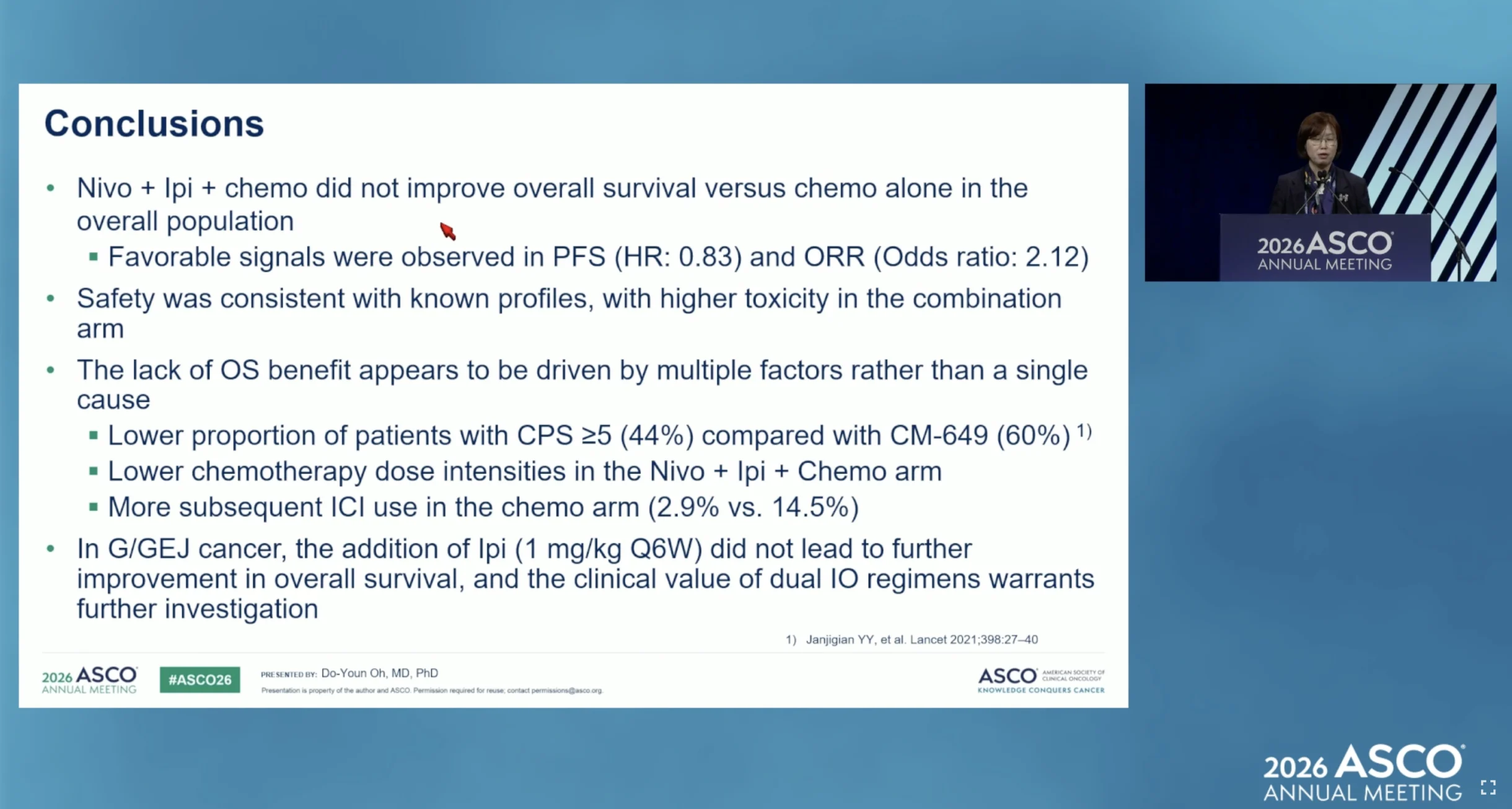
In ATTRACTION-6, nivolumab plus ipilimumab combined with chemotherapy did not improve overall survival compared with chemotherapy alone as first-line treatment for patients with HER2-negative unresectable advanced or recurrent gastric/gastroesophageal junction cancer.
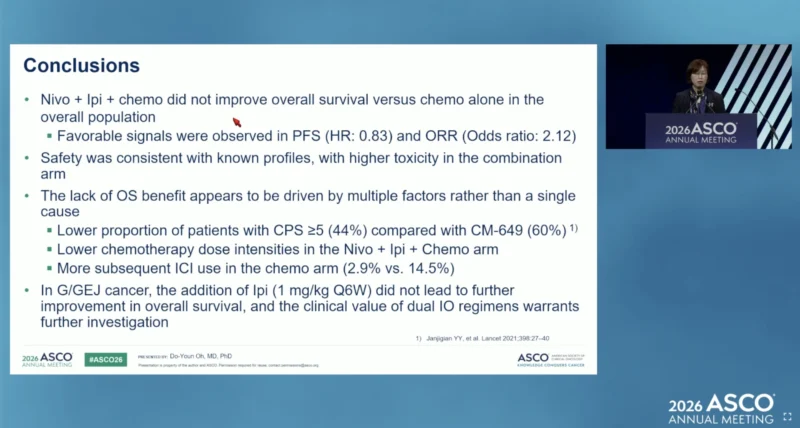
Favorable signals were observed for progression-free survival and objective response rate, but these did not translate into an overall survival benefit. The safety profile was consistent with known profiles, with higher toxicity in the nivolumab plus ipilimumab and chemotherapy arm.
The full abstract is available on the official ASCO website.