At the 2026 ASCO Annual Meeting, Choong-kun Lee, MD, PhD, from Yonsei Cancer Center, Yonsei University College of Medicine, presented results from HERBOT, a multi-institutional phase Ib/II trial evaluating first-line trastuzumab, nivolumab, gemcitabine, and cisplatin in HER2-positive biliary tract cancer.
Several phase 2 trials support HER2 as a promising actionable target in advanced biliary tract cancers. However, the efficacy of adding anti-HER2 therapy to the current first-line standard of care, immune checkpoint inhibitor plus gemcitabine/cisplatin, remains unknown.
HERBOT evaluated this quadruplet combination in treatment-naive patients with locally advanced/unresectable or metastatic HER2-positive biliary tract cancer.
Study Design
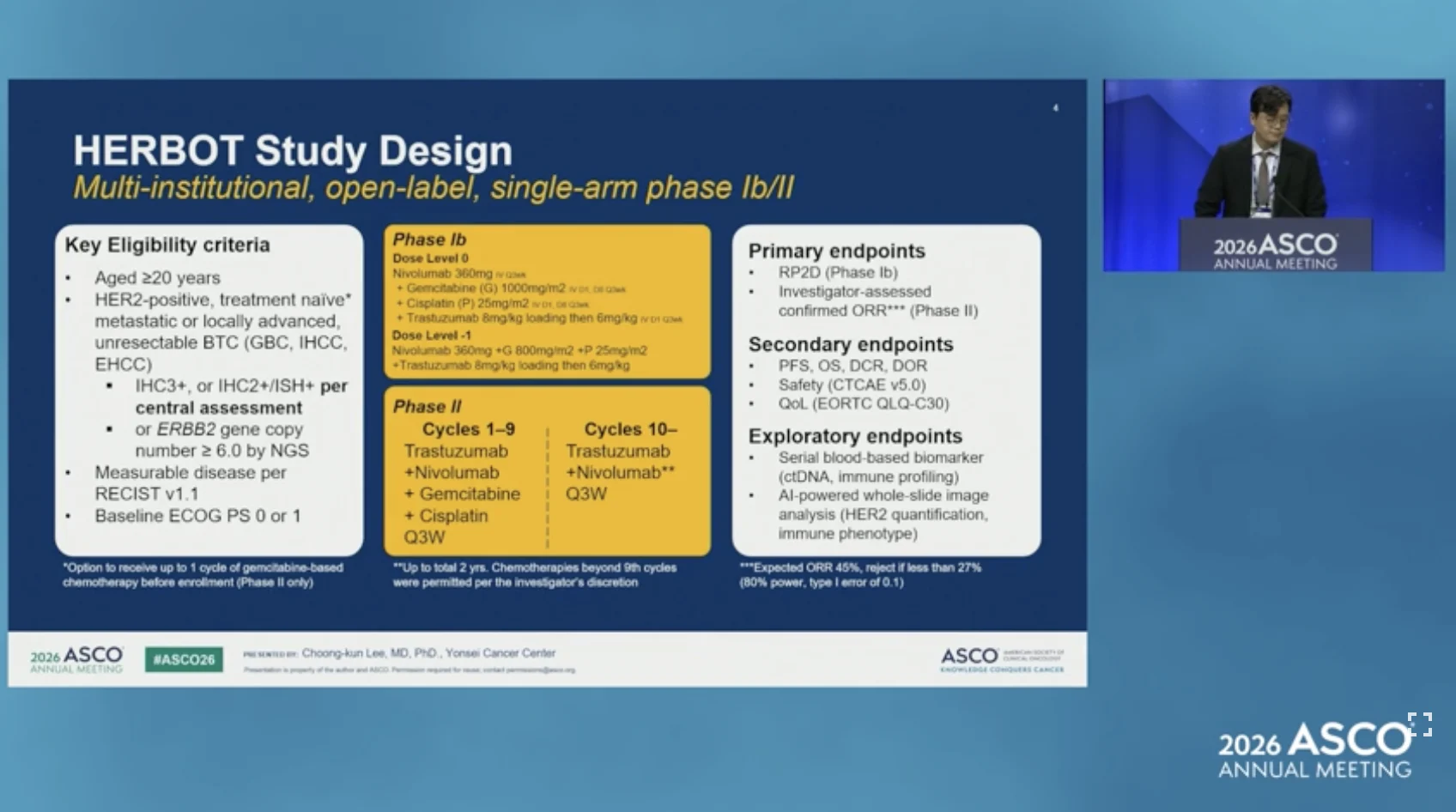
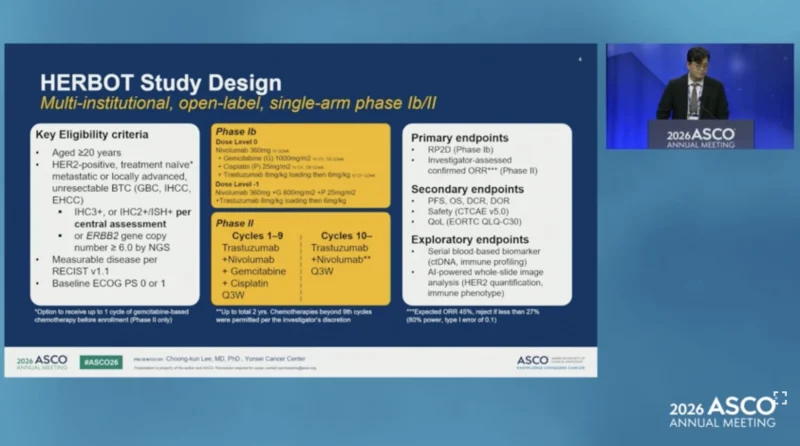
HERBOT was a multi-institutional, open-label, single-arm phase Ib/II study conducted by the Korean Cancer Study Group.
Eligible patients had treatment-naive locally advanced/unresectable or metastatic HER2-positive biliary tract cancer, including gallbladder cancer, intrahepatic cholangiocarcinoma, and extrahepatic cholangiocarcinoma. HER2 positivity was centrally confirmed and defined as HER2 IHC 3+, IHC 2+/ISH+, or ERBB2 gene copy number of at least 6.0 by next-generation sequencing.
Patients had measurable disease by RECIST v1.1 and baseline ECOG performance status 0 or 1. Dose level 0 was established as the recommended phase 2 dose, with no dose-limiting toxicity. The regimen consisted of trastuzumab 6 mg/kg after an 8 mg/kg loading dose on Day 1, nivolumab 360 mg on Day 1, cisplatin 25 mg/m² on Days 1 and 8, and gemcitabine 1000 mg/m² on Days 1 and 8 every 3 weeks.
The primary endpoints were the recommended phase 2 dose in phase Ib and investigator-assessed confirmed objective response rate in phase II. Secondary endpoints included progression-free survival, overall survival, disease control rate, duration of response, safety, and quality of life.
Exploratory biomarker analyses included serial blood-based biomarkers and AI-powered whole-slide image analysis of HER2 quantification and immune phenotype.
Results
A total of 40 patients were included. Twenty-nine patients had gallbladder cancer, 7 had intrahepatic cholangiocarcinoma, and 4 had extrahepatic cholangiocarcinoma. HER2 status was centrally confirmed as IHC 3+ in 25 patients and IHC 2+/ISH+ in 15 patients.
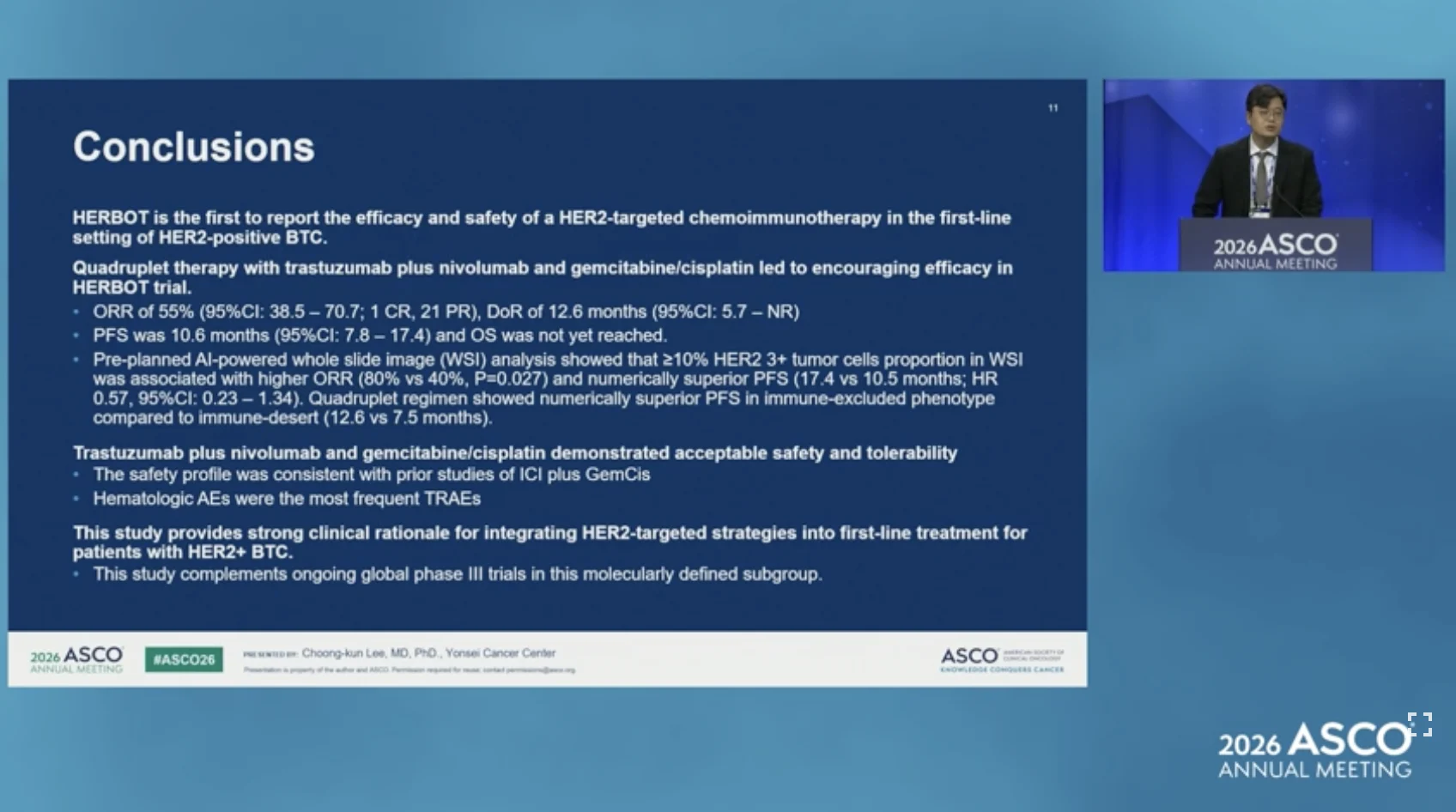
The primary endpoint was met, with an objective response rate of 55% (95% CI: 38.5–70.7). Responses included 1 complete response and 21 partial responses. The disease control rate was 95% (95% CI: 83.5–99.4), and median duration of response was 12.6 months (95% CI: 5.7–not reached).
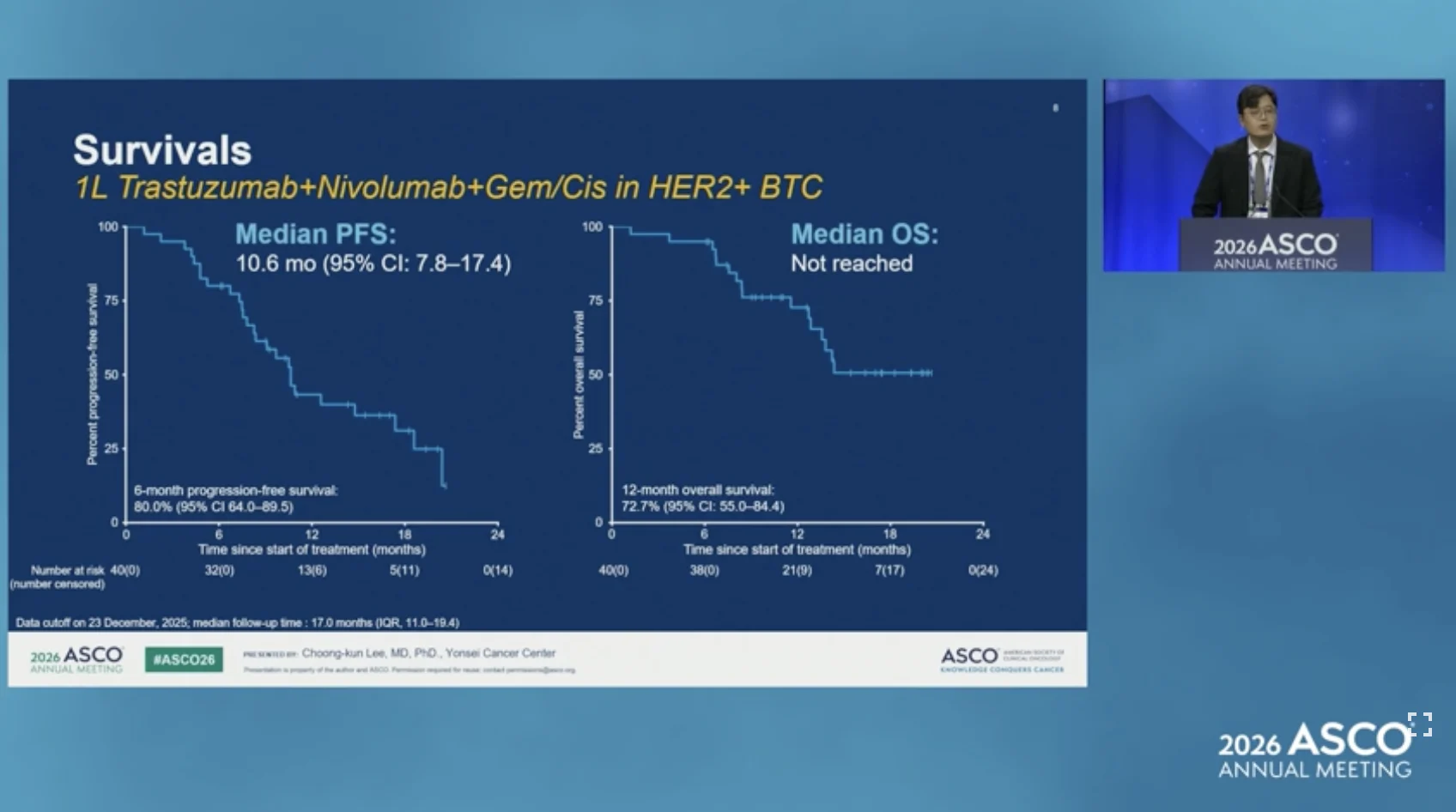
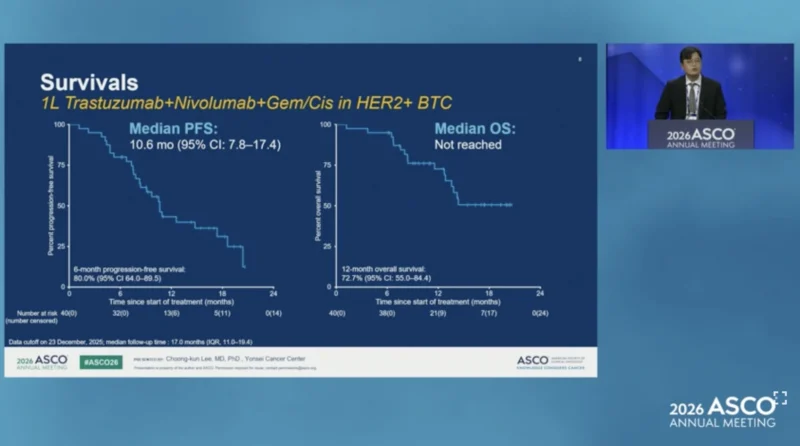
With a median follow-up of 17.0 months, median progression-free survival was 10.6 months (95% CI: 7.8–17.4), while median overall survival had not yet been reached. The 6-month progression-free survival rate was 80.0% (95% CI: 64.0–89.5), and the 12-month overall survival rate was 72.7% (95% CI: 55.0–84.4).
At data cutoff, 12 patients remained on treatment. Two patients underwent conversion surgery with curative intent after tumor shrinkage, at 4.5 and 7.0 months after treatment initiation.
Pre-planned AI-powered whole-slide image analysis showed that a HER2 3+ tumor cell proportion of at least 10% was associated with a higher objective response rate compared with less than 10%: 80% versus 40%. Median progression-free survival was numerically longer in this group: 17.4 versus 10.5 months, with an HR of 0.57 (95% CI: 0.23–1.34).
The quadruplet regimen also showed numerically superior progression-free survival in patients with an immune-excluded phenotype compared with an immune-desert phenotype: 12.6 versus 7.5 months.
Safety
Treatment-related adverse events were reported in most patients, and hematologic adverse events were the most frequent. The most common grade 3 or higher hematologic treatment-related adverse events were decreased neutrophil count, anemia, and decreased platelet count. There were no treatment-related deaths. Two patients discontinued treatment due to adverse events, including drug-unrelated pneumonia and nivolumab-related arthralgia. One patient had trastuzumab-related grade 2 decreased ejection fraction after the 6th cycle.
Conclusion
HERBOT showed that first-line trastuzumab plus nivolumab and gemcitabine/cisplatin led to encouraging antitumor activity and an acceptable safety profile in patients with HER2-positive biliary tract cancer.
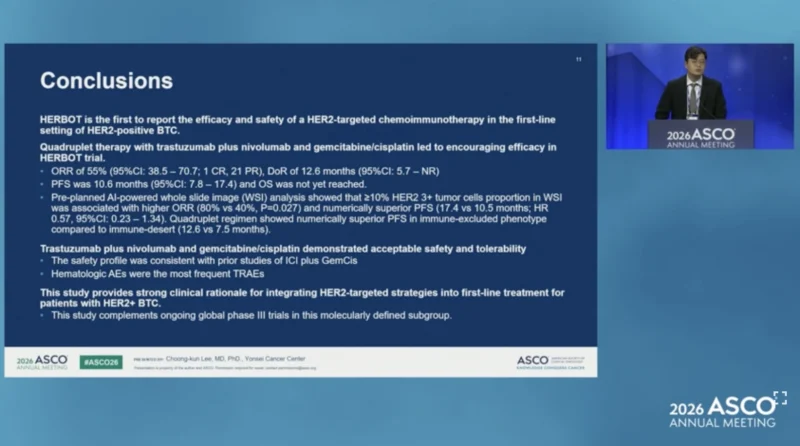
The investigators described HERBOT as the first study to report the efficacy and safety of a HER2-targeted chemoimmunotherapy regimen in the first-line setting for HER2-positive biliary tract cancer. The findings provide clinical rationale for integrating HER2-targeted strategies into first-line treatment and complement ongoing global phase 3 trials in this molecularly defined subgroup.
The full abstract is available on the official ASCO website.
You can also read about SWOG S2001 at ASCO 2026 on OncoDaily.