
ASCO 2026, taking place May 29–June 2 at McCormick Place in Chicago, Illinois, with online access, is expected to deliver practice-relevant updates across a broad range of malignancies. This year’s colorectal cancer program includes studies focused on molecularly selected treatment strategies, ctDNA-guided adjuvant decision-making, targeted therapy combinations, treatment sequencing, liver-directed approaches, immunotherapy combinations, and radiation optimization in colon, rectal, and metastatic colorectal cancer.
This article highlights major colorectal cancer trials and analyses scheduled for presentation at ASCO 2026, including phase II and phase III studies that may inform future treatment strategies, patient selection, and biomarker-guided management across early-stage and metastatic colorectal cancer.
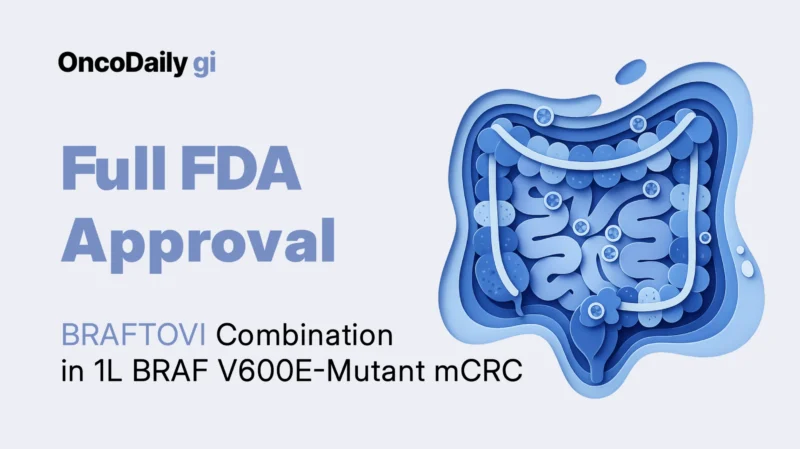
BREAKWATER: Encorafenib Plus Cetuximab Plus FOLFIRI in BRAF V600E-Mutant mCRC
Abstract: LBA3503
Presenter: Scott Kopetz (Houston, United States)
Trial Type: Phase III, Randomized
Session: Oral Abstract Session
ClinicalTrials.gov ID: NCT04607421
BREAKWATER is an open-label, multicenter, randomized phase III study evaluating encorafenib plus cetuximab, with or without chemotherapy, versus standard-of-care therapy in patients with previously untreated BRAF V600E-mutant metastatic colorectal cancer.
The trial includes evaluation of encorafenib plus cetuximab in combination with chemotherapy, including FOLFIRI-containing treatment cohorts. Encorafenib is a BRAF inhibitor, and cetuximab is an anti-EGFR monoclonal antibody. This ASCO 2026 analysis focuses on progression-free and overall survival with first-line encorafenib plus cetuximab plus FOLFIRI in BRAF V600E-mutant metastatic colorectal cancer.
At ASCO 2026, this BREAKWATER analysis may further clarify the role of encorafenib plus cetuximab plus FOLFIRI in the first-line treatment of BRAF V600E-mutant metastatic colorectal cancer.
CIRCULATE: ctDNA-Based Decision for Adjuvant Treatment in Stage II Colon Cancer
Abstract: LBA3500
Presenter: Gunnar Folprecht (Dresden, Germany)
Trial Type: Phase III
Session: Oral Abstract Session
ClinicalTrials.gov ID: NCT04089631
CIRCULATE is an investigator-initiated, multicenter, prospective, randomized, controlled phase III trial evaluating circulating tumor DNA–based decision-making for adjuvant treatment in patients with UICC stage II colon cancer.
The primary aim of the study is to compare disease-free survival in postoperative ctDNA-positive patients receiving capecitabine-based adjuvant chemotherapy versus follow-up. In the randomized phase, ctDNA-positive patients are assigned to chemotherapy or follow-up, while ctDNA-negative patients are assigned to follow-up within the study or routine follow-up outside the trial protocol.
At ASCO 2026, CIRCULATE may provide important data on disease-free survival and time to recurrence with ctDNA-guided adjuvant treatment decisions in stage II colon cancer.
SWOG S2107: Encorafenib and Cetuximab With or Without Nivolumab in Previously Treated MSS, BRAF V600E mCRC
Abstract: 3504
Presenter: Van K. Morris, MD
Trial Type: Phase II, Randomized
Session: Oral Abstract Session
ClinicalTrials.gov ID: NCT05308446
SWOG S2107 is a randomized phase II trial evaluating encorafenib and cetuximab with or without nivolumab in patients with previously treated, microsatellite-stable, BRAF V600E metastatic colorectal cancer.
The study tests whether adding nivolumab to encorafenib and cetuximab improves outcomes compared with encorafenib and cetuximab alone in patients with metastatic or unresectable BRAF-mutant colorectal cancer. The trial includes patients whose disease is microsatellite stable and who have previously received chemotherapy. The study evaluates outcomes including progression-free survival, tumor response, and the safety of adding nivolumab to encorafenib and cetuximab.
At ASCO 2026, SWOG S2107 may clarify whether adding nivolumab to encorafenib and cetuximab improves outcomes for patients with previously treated MSS, BRAF V600E metastatic colorectal cancer.
EPISODE-III (JCOG1503C): Adjuvant Aspirin After Curative Resection in Stage III Colorectal Cancer
Abstract: LBA3508
Presenter: Atsuo Takashima, MD, PhD
Trial Type: Phase III, Randomized, Double-Blind, Placebo-Controlled
Session: Oral Abstract Session
Study ID: jRCTs031180009
EPISODE-III/JCOG1503C is a randomized, double-blind, placebo-controlled phase III trial evaluating adjuvant aspirin in patients with stage III colorectal cancer after curative resection.
The study focuses on whether aspirin, given in the adjuvant setting after surgery, can affect outcomes compared with placebo in patients treated with curative intent. This setting is clinically important because recurrence risk remains a major concern after resection of stage III colorectal cancer.
At ASCO 2026, EPISODE-III may provide important data on the role of adjuvant aspirin after curative resection in stage III colorectal cancer.
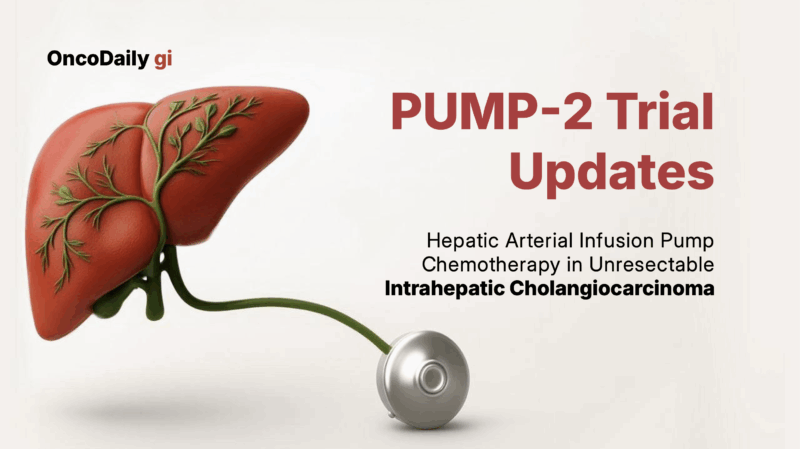
PUMP Trial: Adjuvant Hepatic Arterial Infusion Pump Chemotherapy With Floxuridine in Resectable Colorectal Liver Metastases
Abstract: LBA3506
Presenter: Bas Groot Koerkamp, MD, PhD
Trial Type: Randomized Controlled Trial
Session: Oral Abstract Session
Study ID: 2018-001696-21
The PUMP trial is a randomized controlled trial evaluating adjuvant hepatic arterial infusion pump chemotherapy with floxuridine in patients with resectable colorectal liver metastases and a low clinical risk score.
The study focuses on patients undergoing treatment with curative intent for colorectal liver metastases. It evaluates whether adding liver-directed hepatic arterial infusion pump chemotherapy after resection can improve outcomes in this selected lower-risk population.
At ASCO 2026, the PUMP trial may provide important data on the role of adjuvant hepatic arterial infusion pump chemotherapy with floxuridine after resection of colorectal liver metastases in patients with a low clinical risk score.
mRCAT-III: Node-Sparing Modified Short-Course Radiotherapy Plus CAPOX and Tislelizumab in pMMR/MSS Locally Advanced Rectal Cancer
Abstract: LBA3515
Presenter: Bingjun Bai, MD
Trial Type: Phase III, Multicenter, Randomized, Open-Label
Session: Rapid Oral Abstract Session
ClinicalTrials.gov ID: NCT06507371
mRCAT-III is a multicenter, randomized, open-label phase III trial evaluating node-sparing modified short-course radiotherapy combined with CAPOX and tislelizumab versus conventional short-course preoperative chemoradiotherapy in patients with proficient mismatch repair or microsatellite stable locally advanced rectal cancer.
The trial evaluates a node-sparing modified short-course radiation approach targeting the tumor bed without irradiating surrounding tumor-draining lymph nodes, combined with CAPOX and the PD-1 inhibitor tislelizumab. The registry describes comparison with standard short-course radiation combined with CAPOX in patients with MSS middle and low rectal cancer. The planned enrollment is 170 patients, and the primary endpoint is pathological complete response rate.
At ASCO 2026, mRCAT-III may provide important data on node-sparing radiation combined with chemotherapy and immunotherapy in pMMR/MSS locally advanced rectal cancer.
CodeBreaK 300: ctDNA Clearance With Sotorasib Plus Panitumumab in KRAS G12C-Mutated mCRC
Abstract: 3511
Presenter: Filippo Pietrantonio, MD
Trial Type: Phase III, Randomized, Open-Label
Session: Rapid Oral Abstract Session
ClinicalTrials.gov ID: NCT05198934
CodeBreaK 300 is a phase III study evaluating sotorasib plus panitumumab in patients with KRAS G12C-mutated metastatic colorectal cancer. This ASCO 2026 analysis focuses on circulating tumor DNA clearance as an early indicator of efficacy and prognosis with sotorasib plus panitumumab. ctDNA-based assessment may help characterize early molecular response in this biomarker-defined subgroup of metastatic colorectal cancer.
At ASCO 2026, CodeBreaK 300 may provide further insight into the potential role of ctDNA clearance as an early molecular marker in KRAS G12C-mutated metastatic colorectal cancer.
CRDF-004: Onvansertib Plus Chemotherapy and Bevacizumab in 1L RAS-Mutated mCRC
Abstract: 3510
Presenter: Heinz-Josef Lenz, MD
Trial Type: Phase II, Randomized, Open-Label
Session: Rapid Oral Abstract Session
ClinicalTrials.gov ID: NCT06106308
CRDF-004 is a randomized, open-label phase II trial evaluating onvansertib in combination with standard-of-care chemotherapy and bevacizumab versus standard-of-care therapy alone as first-line treatment for patients with KRAS- or NRAS-mutated metastatic colorectal cancer.
The study assesses two different doses of onvansertib to select the lowest dose that is maximally effective, while also evaluating safety, efficacy, pharmacokinetics, and pharmacodynamics. The trial includes onvansertib combined with FOLFIRI plus bevacizumab or FOLFOX plus bevacizumab, compared with corresponding standard-of-care chemotherapy plus bevacizumab regimens.
At ASCO 2026, CRDF-004 may provide interim data on onvansertib combined with standard chemotherapy and bevacizumab as a first-line strategy for RAS-mutated metastatic colorectal cancer.
Tunlametinib Plus Vemurafenib in Previously Treated BRAF V600E-Mutant mCRC
Abstract: LBA3509
Presenter: Ting Xu, MD
Trial Type: Phase III, Randomized, Open-Label
Session: Rapid Oral Abstract Session
ClinicalTrials.gov ID: NCT06008119
This phase III trial evaluates tunlametinib plus vemurafenib versus investigator’s choice of therapy in patients with previously treated BRAF V600E-mutant metastatic colorectal cancer.
The study is a multicenter, randomized, open-label, three-arm phase III trial. Patients have BRAF V600E-mutant metastatic colorectal cancer whose disease progressed after one or more prior regimens in the metastatic setting. The experimental treatment is tunlametinib plus vemurafenib, while the control treatment consists of investigator-selected doublet chemotherapy with or without bevacizumab or cetuximab.
At ASCO 2026, this study may provide further insight into tunlametinib plus vemurafenib versus investigator’s choice of therapy in previously treated BRAF V600E-mutant metastatic colorectal cancer.
CR-SEQUENCE: Sequencing Panitumumab and Bevacizumab-Based Therapy in Left-Sided RAS Wild-Type mCRC
Abstract: 3512
Presenter: Ramon Salazar, MD, PhD
Trial Type: Phase III
Session: Rapid Oral Abstract Session
Study ID: 2024-510967-41-00
CR-SEQUENCE is a phase III trial evaluating treatment sequencing in patients with previously untreated RAS wild-type, left-sided, unresectable metastatic colorectal cancer.
The study compares two sequencing strategies: FOLFOX plus panitumumab followed by FOLFIRI plus bevacizumab, versus FOLFOX plus bevacizumab followed by FOLFIRI plus panitumumab. This design addresses an important first-line treatment question in left-sided RAS wild-type metastatic colorectal cancer, where both anti-EGFR and anti-VEGF strategies are used across treatment lines.
At ASCO 2026, CR-SEQUENCE may provide important data on sequencing anti-EGFR and anti-VEGF–based therapy in previously untreated left-sided RAS wild-type metastatic colorectal cancer.
Find more information on official ASCO website.

You can also read about Top Phase 3 Gastroesophageal Cancer Trials to Watch at ASCO 2026 on OncoDaily.