
Key takeaways
- Filgrastim and pegfilgrastim are G-CSF drugs that accelerate neutrophil recovery after chemotherapy.
- Filgrastim is short acting and usually given daily, while pegfilgrastim is long acting and generally given once per chemotherapy cycle.
- They are mainly used to prevent febrile neutropenia and related complications.
- G-CSF is not needed with every chemotherapy regimen; use depends on the expected febrile neutropenia risk and individual patient factors.
- Bone pain is common, while symptoms such as left upper abdominal pain, breathing difficulty, severe allergic reactions, or fever during neutropenia require prompt medical assessment.
Filgrastim and pegfilgrastim are granulocyte colony-stimulating factor (G-CSF) drugs used to reduce the duration and clinical consequences of chemotherapy-induced neutropenia. Myelosuppressive chemotherapy can suppress neutrophil production in the bone marrow, producing a predictable decline in the absolute neutrophil count (ANC) and, in some patients, increasing the risk of febrile neutropenia, serious infection, hospitalization, and disruption of the planned chemotherapy schedule.
Both agents act through the G-CSF receptor to accelerate neutrophil production and recovery. Their biological effect is similar, but their pharmacokinetic profiles are substantially different: filgrastim is short acting and requires repeated dosing, whereas pegfilgrastim is pegylated to prolong systemic exposure and is generally administered once per chemotherapy cycle.
Use of G-CSF is determined by the expected febrile neutropenia risk of the chemotherapy regimen together with patient-specific clinical factors. It is therefore a form of risk-adapted supportive care rather than a routine component of every chemotherapy regimen.
What Are Growth Factor Injections After Chemotherapy?
Hematopoietic growth factors are biologically active proteins that regulate the proliferation and differentiation of blood-forming cells. In oncology, the most frequently used agents for prevention of chemotherapy-associated neutropenia are G-CSFs, including filgrastim, pegfilgrastim, and their biosimilars.
Endogenous G-CSF regulates the neutrophil lineage within the bone marrow. Pharmacologic G-CSF reproduces this signal, increasing proliferation and differentiation of neutrophil progenitor cells and accelerating the release of mature neutrophils into the peripheral circulation (NEUPOGEN Prescribing Information, 2026).
This is clinically relevant because cytotoxic chemotherapy can produce a period of profound neutropenia, typically reaching its lowest point the neutrophil nadir several days after treatment. The depth and duration of neutropenia vary considerably according to the chemotherapy regimen, dose intensity, previous treatment, bone marrow reserve, and individual patient characteristics.
G-CSF does not prevent all neutropenia and does not directly treat an infection. Its principal role is to reduce the duration and severity of neutropenia and thereby lower the probability of clinically important neutropenic complications.
Why Are Filgrastim and Pegfilgrastim Given to Cancer Patients?
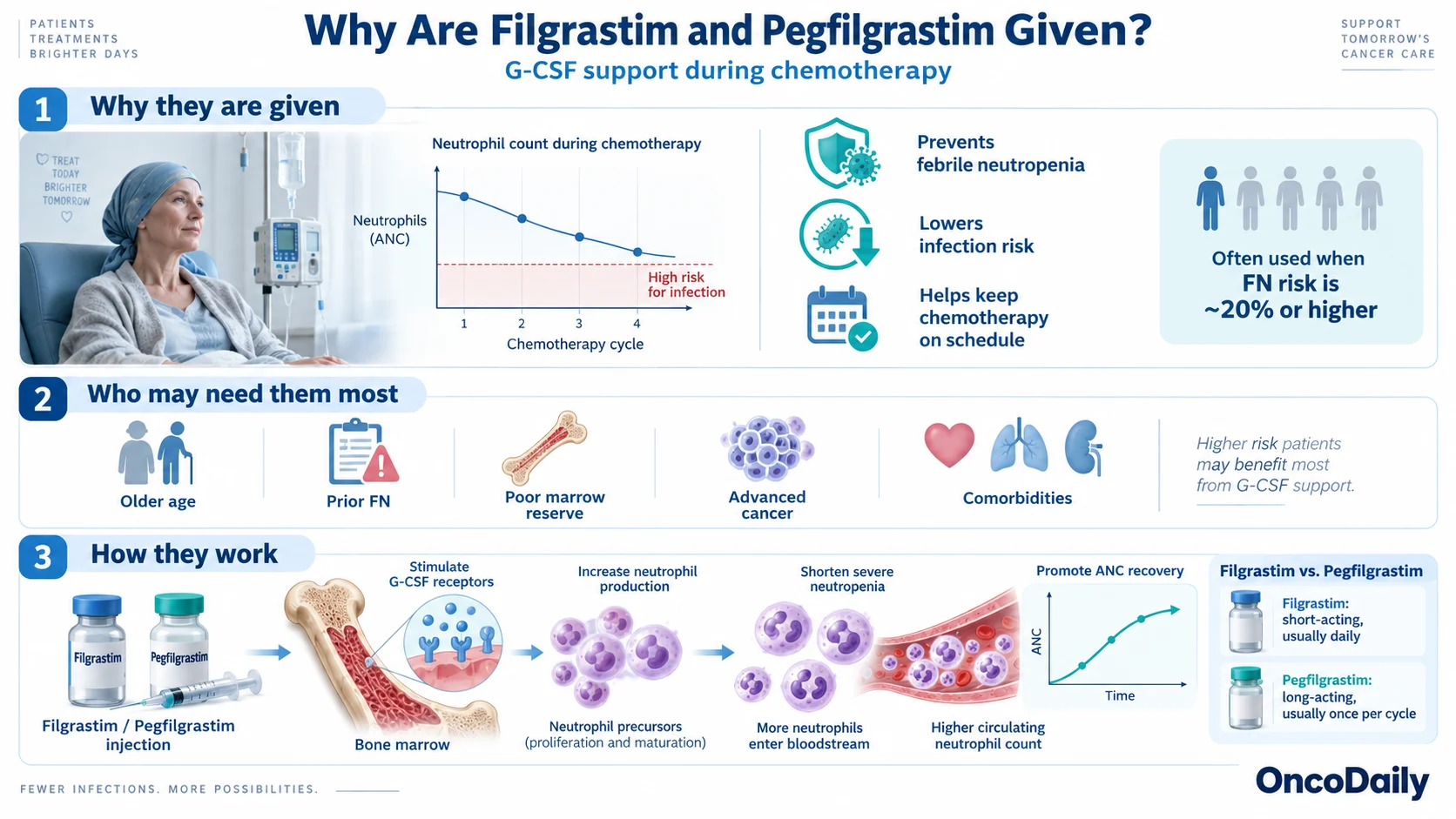
The principal indication for filgrastim or pegfilgrastim during myelosuppressive chemotherapy is prevention of febrile neutropenia (FN).
Febrile neutropenia is an oncologic complication in which fever occurs in the setting of significant neutropenia. Because the inflammatory response may be attenuated when neutrophils are severely depleted, fever can sometimes be the first or only sign of a potentially serious infection.
The 2026 ASCO guideline recommends primary prophylaxis with a G-CSF when the estimated risk of febrile neutropenia from a chemotherapy regimen is approximately 20% or greater, unless an alternative regimen with comparable efficacy and safety that does not require G-CSF is available. For regimens with an FN risk below 20%, prophylaxis may still be appropriate when patient-, disease-, or treatment-related factors substantially increase the overall risk (Gyawali et al., 2026).
Which Patients Have a Higher Risk of Febrile Neutropenia?
Clinical factors associated with greater risk include advanced age or frailty, previous episodes of febrile neutropenia, extensive prior chemotherapy or radiotherapy, poor performance status, advanced cancer, bone marrow involvement, pre-existing neutropenia, impaired nutritional status, active infection, and significant renal, hepatic, cardiovascular, or other comorbid disease (Gyawali et al., 2026).
G-CSF may also be used as secondary prophylaxis after a neutropenic complication has occurred during a previous chemotherapy cycle. This is particularly relevant when maintaining chemotherapy dose intensity is considered important for the treatment objective.
However, preservation of dose intensity should not be interpreted as proof that G-CSF independently improves survival. The 2026 ASCO review found that secondary prophylaxis reduces neutropenic events and can help maintain planned chemotherapy intensity, but evidence that this strategy itself improves disease-free or overall survival is lacking (Gyawali et al., 2026).
How Do Filgrastim and Pegfilgrastim Increase White Blood Cells?
Filgrastim is recombinant human G-CSF. It binds to specific G-CSF receptors on hematopoietic cells and activates signaling pathways involved in proliferation, lineage commitment, differentiation, survival, and functional activation of neutrophil precursors.
The biological effect is highly lineage selective. G-CSF primarily increases production of neutrophils rather than producing a nonspecific increase across all white blood cell populations. For this reason, the clinically relevant laboratory measure is usually the absolute neutrophil count, rather than the total white blood cell count alone.
G-CSF also affects mature neutrophil function. Filgrastim has been shown to enhance processes including phagocytic activity, respiratory burst metabolism, antibody-dependent killing, and expression of selected cell-surface antigens (NEUPOGEN Prescribing Information, 2026).
After chemotherapy, this accelerated granulopoiesis shortens the duration of severe neutropenia and facilitates recovery of the ANC.
Why Does Pegfilgrastim Last Longer Than Filgrastim?
Pegfilgrastim consists of filgrastim covalently linked to polyethylene glycol (PEG). Pegylation increases the molecular size of the drug and substantially prolongs its systemic persistence.
Filgrastim has an elimination half-life of approximately 3.5 hours following intravenous administration and requires repeated dosing during neutrophil recovery. Its pharmacokinetics involve several clearance mechanisms.
Pegfilgrastim has nonlinear pharmacokinetics, with a reported half-life ranging approximately from 15 to 80 hours after subcutaneous administration. Neutrophil receptor binding is an important component of its clearance, meaning clearance increases as the neutrophil compartment recovers (NEULASTA Prescribing Information, 2026).
This creates a useful pharmacologic relationship: pegfilgrastim persists longer when neutrophil counts are low and is cleared more rapidly as neutrophil numbers increase.
What Is the Difference Between Filgrastim and Pegfilgrastim?
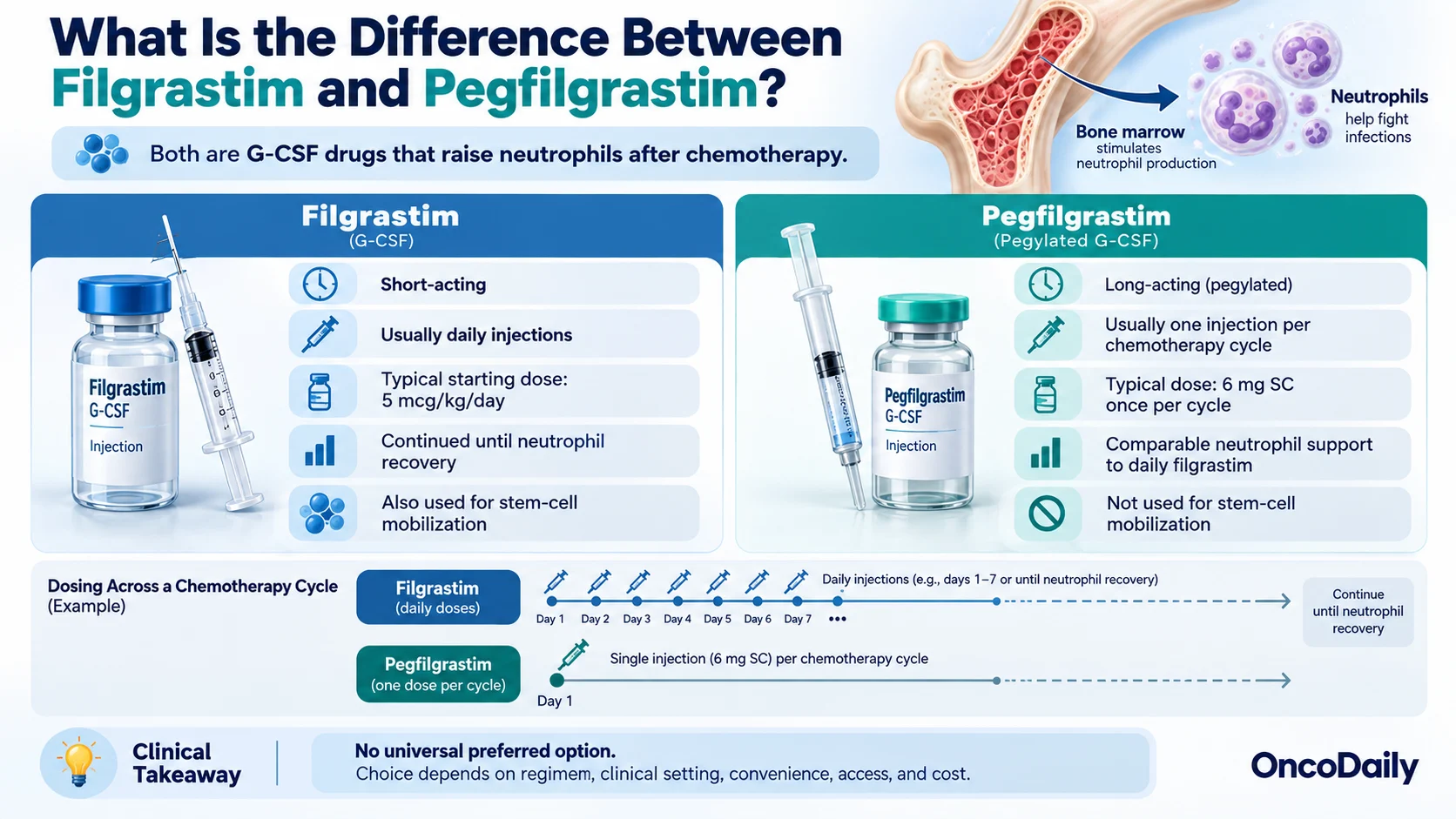
The fundamental difference between filgrastim and pegfilgrastim is not their target but their duration of exposure and dosing strategy.
Filgrastim is a short-acting G-CSF. In patients receiving myelosuppressive chemotherapy, the labeled starting dose is generally 5 mcg/kg/day, with administration continued according to the neutrophil response and clinical setting.
Pegfilgrastim is a long-acting pegylated G-CSF. In adults and pediatric patients weighing at least 45 kg, the labeled chemotherapy-associated dose is generally 6 mg subcutaneously once per chemotherapy cycle (NEUPOGEN Prescribing Information, 2026; NEULASTA Prescribing Information, 2026).
Randomized trials established that a single dose of pegfilgrastim per chemotherapy cycle can provide neutrophil support comparable to repeated daily filgrastim in patients receiving myelosuppressive chemotherapy (Holmes et al., 2002; Green et al., 2003).
Filgrastim also has indications beyond routine FN prophylaxis, including mobilization of peripheral blood progenitor cells for hematopoietic stem-cell collection. Pegfilgrastim is not indicated for peripheral blood progenitor-cell mobilization.
Current ASCO guidance does not identify a universally preferred G-CSF. Selection may depend on treatment regimen, disease setting, patient convenience, access, cost, and health-system factors (Gyawali et al., 2026).
When Should Filgrastim and Pegfilgrastim Be Given After Chemotherapy?
Timing is important because G-CSF stimulates rapidly proliferating myeloid progenitor cells, which may themselves be vulnerable to cytotoxic chemotherapy.
Filgrastim should not be administered during the period 24 hours before through 24 hours after cytotoxic chemotherapy. For chemotherapy-associated neutropenia, treatment is therefore initiated after chemotherapy rather than concurrently.
For pegfilgrastim, current U.S. prescribing information states that it should not be administered between 14 days before and 24 hours after cytotoxic chemotherapy.
These timing restrictions are pharmacologically important and should be incorporated into the chemotherapy treatment plan rather than treated as interchangeable scheduling preferences.

What Are the Side Effects of Filgrastim and Pegfilgrastim?
The adverse-effect profile of G-CSF reflects both stimulation of the myeloid compartment and less common systemic effects.
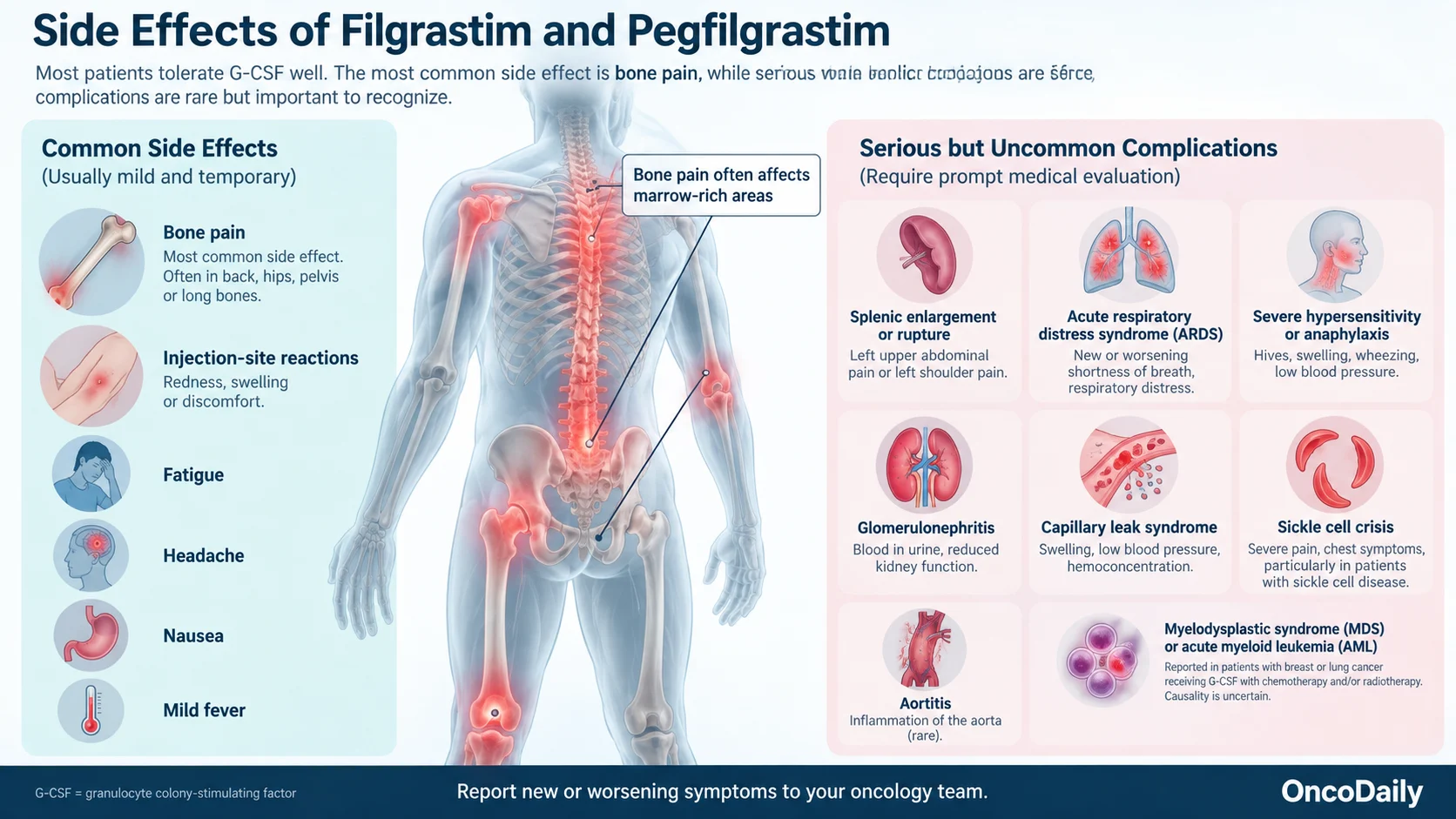
Bone pain is the most characteristic adverse effect, particularly with pegfilgrastim. In placebo-controlled pegfilgrastim studies, bone pain and pain in the extremities were the most common adverse reactions occurring more frequently than with placebo (NEULASTA Prescribing Information, 2026).
Bone pain is generally transient and is thought to reflect increased bone marrow activity together with cytokine- and inflammatory-mediated mechanisms. It is often localized to marrow-rich areas including the pelvis, sternum, vertebrae, and long bones.
Other clinically relevant effects can include leukocytosis, thrombocytopenia, and injection-site reactions, depending on the formulation and treatment setting.
What Serious Complications Can Occur With G-CSF?
Serious adverse reactions are uncommon but clinically important. Both filgrastim and pegfilgrastim carry warnings for splenic enlargement and splenic rupture, acute respiratory distress syndrome (ARDS), serious hypersensitivity reactions including anaphylaxis, sickle cell crisis, glomerulonephritis, capillary leak syndrome, and aortitis.
Postmarketing and clinical data have also led to warnings regarding myelodysplastic syndrome and acute myeloid leukemia in patients with breast or lung cancer receiving G-CSF in conjunction with chemotherapy and/or radiotherapy. This association needs to be interpreted in the context of the underlying malignancy and exposure to cytotoxic therapy rather than as evidence that G-CSF alone causes these disorders (NEUPOGEN Prescribing Information, 2026; NEULASTA Prescribing Information, 2026).
When Should Cancer Patients Contact Their Doctor After a Growth Factor Injection?
Symptoms occurring after filgrastim or pegfilgrastim should be interpreted in the context of the chemotherapy regimen, blood counts, and timing within the treatment cycle.
Left upper abdominal pain or pain referred to the left shoulder warrants prompt evaluation because splenic enlargement and, rarely, splenic rupture have been reported with G-CSF therapy.
New fever associated with pulmonary infiltrates, hypoxemia, or respiratory distress raises concern for ARDS and requires urgent assessment. Facial or oropharyngeal swelling, urticaria, wheezing, hypotension, or other features of anaphylaxis also require immediate medical attention.
Generalized edema, hypotension, hemoconcentration, or hypoalbuminemia may occur with capillary leak syndrome, while hematuria, proteinuria, edema, or impaired renal function may suggest glomerulonephritis.
Patients with sickle cell disease or sickle cell trait require particular caution because severe and occasionally fatal sickle cell crises have been reported following G-CSF administration.
Importantly, fever developing after chemotherapy should never automatically be attributed to filgrastim or pegfilgrastim. A temperature of 38°C (100.4°F) or higher during a period of possible neutropenia requires assessment according to the oncology center’s febrile neutropenia protocol.
FAQ
What is filgrastim used for after chemotherapy?
Filgrastim is used to stimulate neutrophil production and reduce the duration of chemotherapy-induced neutropenia.
What is the difference between filgrastim and pegfilgrastim?
Filgrastim is short acting and usually given daily, while pegfilgrastim is long acting and generally given once per chemotherapy cycle.
When are filgrastim and pegfilgrastim given after chemotherapy?
They are given after chemotherapy rather than at the same time. Filgrastim is generally started at least 24 hours after treatment, while pegfilgrastim should also be given at least 24 hours after chemotherapy.
Does every cancer patient receiving chemotherapy need G-CSF injections?
No. G-CSF is mainly recommended when the risk of febrile neutropenia is high or when patient-specific factors increase the risk of complications.
What is the most common side effect of filgrastim and pegfilgrastim?
Bone pain is one of the most common side effects. Rare but serious complications can also occur, including splenic rupture, severe allergic reactions, ARDS, and capillary leak syndrome.