
Key takeaways
- Chemotherapy delays and dose reductions are often used to keep treatment safe.
- Low blood counts are one of the most common reasons treatment is postponed.
- Kidney, liver, or other treatment-related side effects can also require dose changes.
- A short, medically necessary delay does not automatically mean chemotherapy will be less effective.
- Repeated delays or reductions may affect treatment intensity, so oncology teams balance safety with maintaining the planned treatment.
Chemotherapy delays and dose reductions are common changes that can happen during cancer treatment. Chemotherapy is usually given according to a carefully planned dose and schedule, but the body does not always recover at the same pace after every cycle. Blood counts, side effects, infections, and changes in kidney or liver function can sometimes make it safer to wait or adjust the next dose.
For many patients, a change in the chemotherapy schedule can raise concerns about whether treatment is still working as intended. In most cases, these decisions are made to balance treatment effectiveness with safety and to help patients continue therapy without unnecessary or severe complications.
Why Is Chemotherapy Delayed?
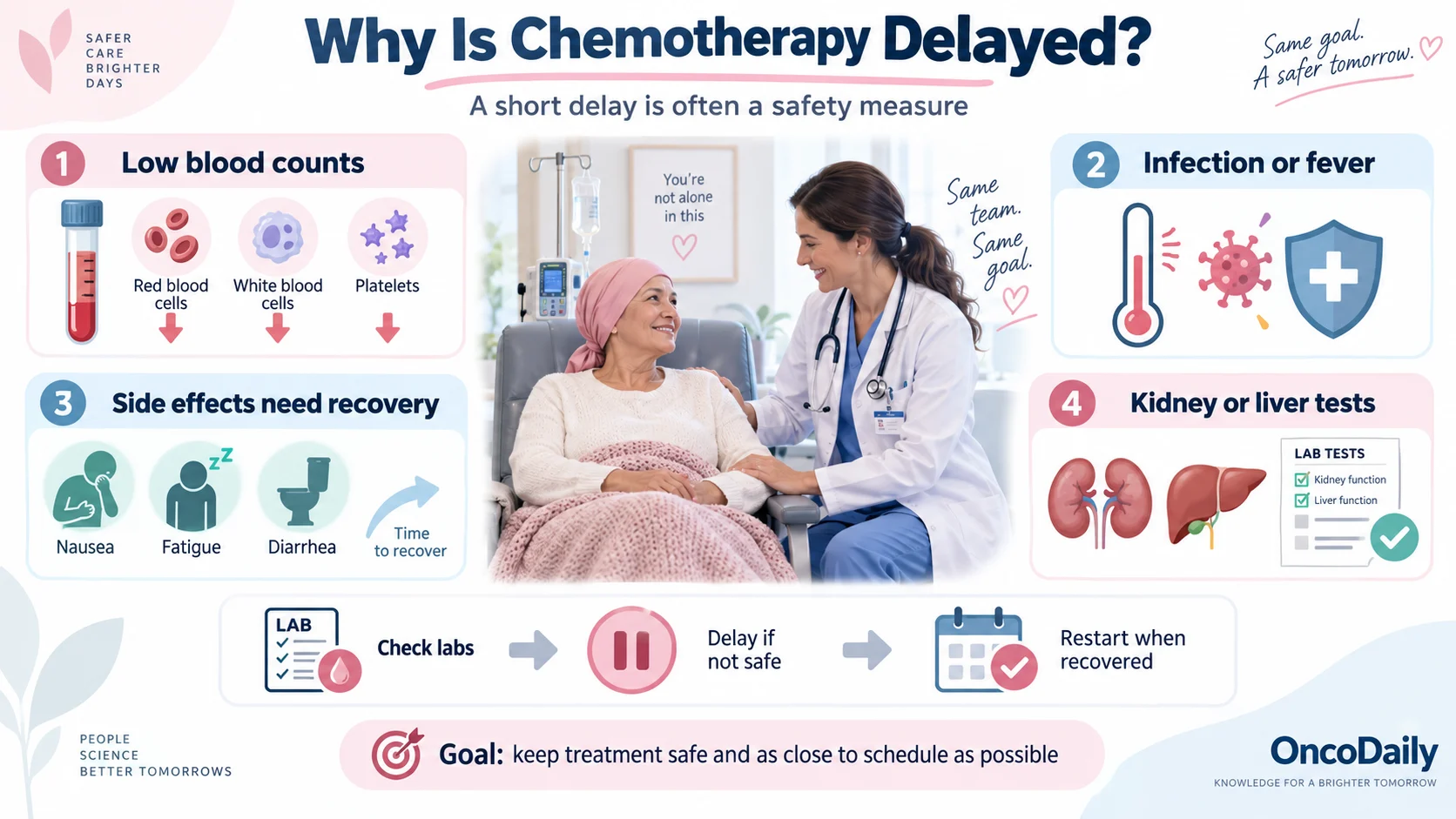
Chemotherapy may be delayed when the body needs more time to recover from the previous treatment cycle. Before each cycle, the oncology team usually checks blood counts and, when appropriate, kidney and liver function to make sure it is safe to continue. A short delay does not necessarily mean that treatment is not working; in many cases, it is simply a safety measure (Cancer Research UK).
One of the most common reasons is low blood counts. Chemotherapy can temporarily reduce white blood cells, platelets, and red blood cells. If neutrophils are too low, the risk of infection may increase, while very low platelets can increase the risk of bleeding. Significant anemia or side effects that have not resolved may also mean the body needs more recovery time.
Treatment can also be postponed because of an active infection or fever, severe nausea or diarrhea, recovery from surgery, or changes in kidney or liver function. Practical issues, such as waiting for test results or treatment availability, may occasionally affect scheduling as well.
Oncology teams aim to keep chemotherapy as close to the planned schedule as safely possible. Repeated or prolonged delays can reduce the amount of chemotherapy delivered over time, but short, medically necessary delays are a routine part of safe cancer care (Denduluri et al., 2015; Nielson et al., 2021).
Why Is a Chemotherapy Dose Reduced?
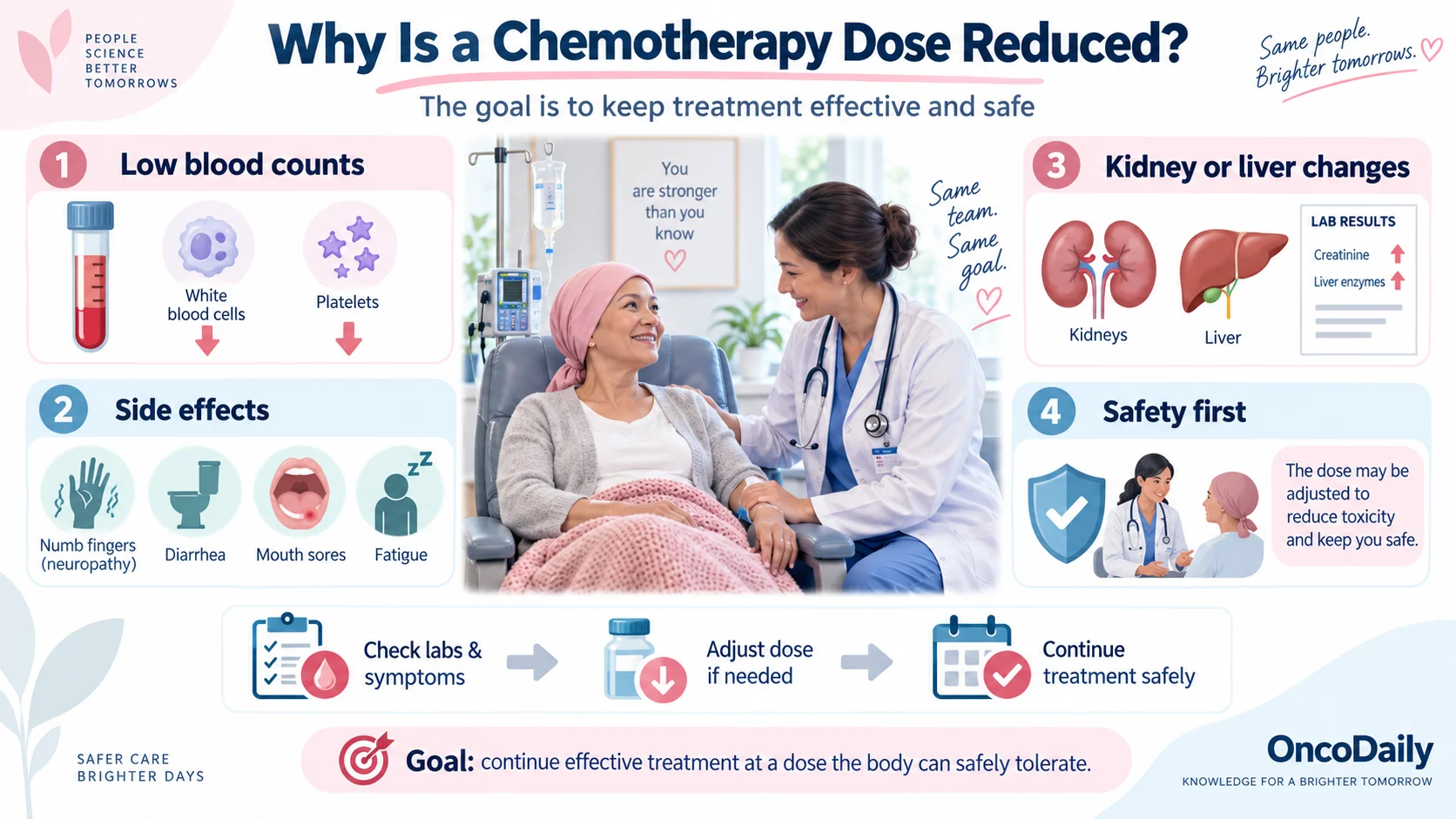
A chemotherapy dose may be reduced when the full planned dose is causing side effects that are too severe or could make continuing treatment unsafe. The goal is to maintain the expected treatment benefit while reducing the risk of serious toxicity.
Common reasons include severe or repeated low blood counts, such as neutropenia or thrombocytopenia. Dose reductions may also be considered when side effects such as peripheral neuropathy, severe diarrhea, mouth sores, or other toxicities continue despite supportive treatment.
Kidney or liver function can also influence chemotherapy dosing because these organs help process and remove many medicines from the body. If their function changes, some chemotherapy drugs may remain in the body longer and increase the risk of side effects. Dose adjustments are therefore based on the specific medicine, laboratory results, treatment protocol, and individual patient.
Although maintaining the planned dose can be important for some treatments, medically necessary dose reductions are a standard part of cancer care. The aim is to continue effective treatment at a dose the patient can tolerate safely.
What Happens If Blood Counts Are Too Low for Chemotherapy?
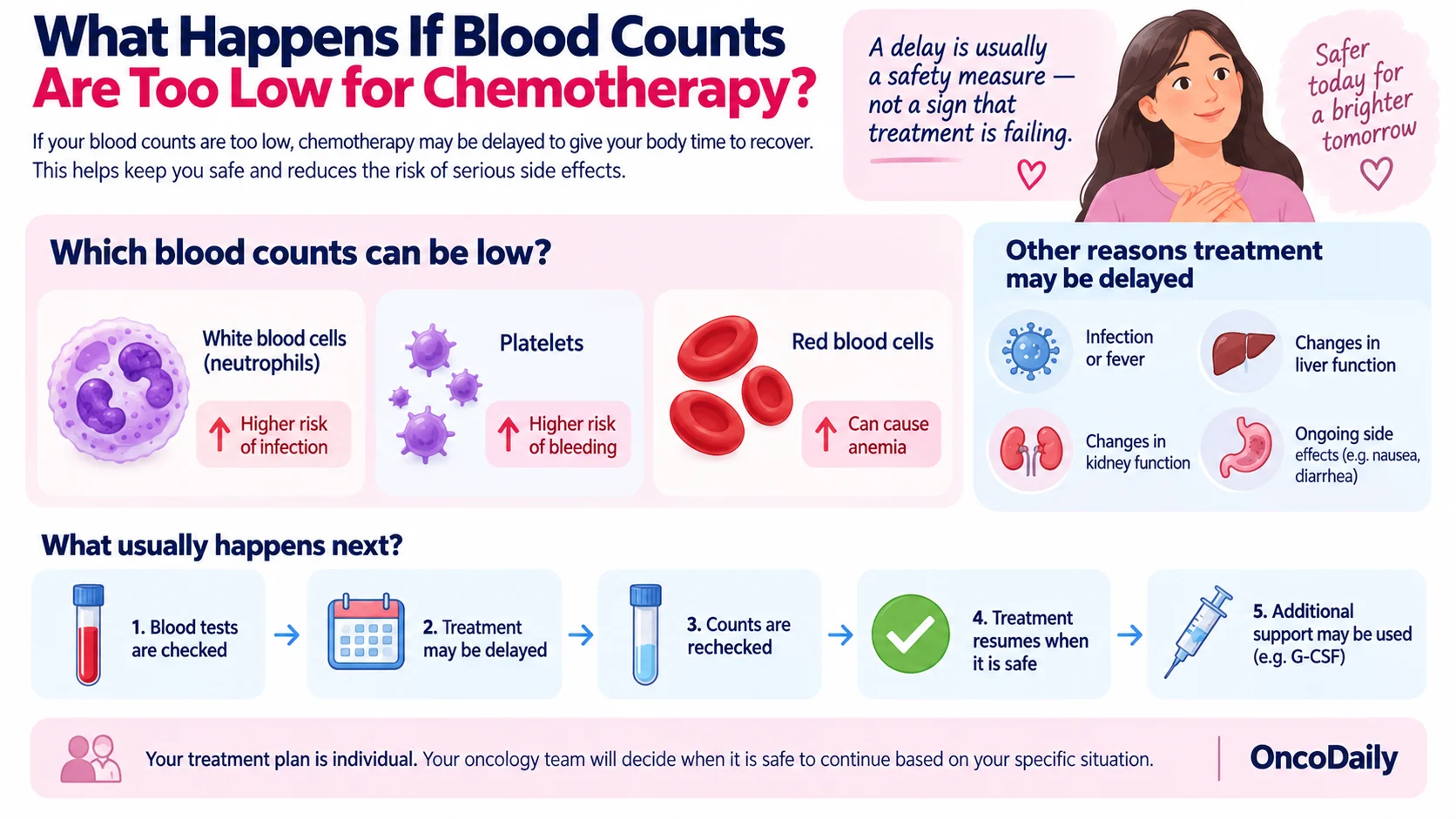
If blood counts are too low on the day chemotherapy is planned, treatment may be delayed to give the bone marrow more time to recover. Chemotherapy can lower white blood cells, platelets, and red blood cells, increasing the risk of infection, bleeding, or worsening anemia.
The oncology team pays particular attention to the absolute neutrophil count (ANC) and platelet count. The blood-count level considered safe for treatment depends on the chemotherapy regimen, cancer type, treatment goal, and individual patient, so there is no single cutoff that applies to everyone.
Blood tests are usually repeated after a short delay. Once the counts recover sufficiently, chemotherapy can often continue. If low counts are severe or repeatedly interfere with treatment, the next cycle may be adjusted.
For patients at sufficient risk of febrile neutropenia, medicines called granulocyte colony-stimulating factors (G-CSFs), such as filgrastim or pegfilgrastim, may be used to reduce the risk of neutropenic complications. The 2026 ASCO guideline recommends preventive G-CSF particularly when the chemotherapy regimen carries an approximately 20% or greater risk of febrile neutropenia, or in selected higher-risk patients receiving lower-risk regimens (Gyawali et al., 2026).
A short delay because of low blood counts is therefore usually a safety measure, allowing the bone marrow to recover before treatment continues.
How Long Can Chemotherapy Be Delayed?
There is no single amount of time that chemotherapy can safely be delayed for every patient. The acceptable delay depends on the cancer type, treatment regimen, treatment goal, reason for the delay, and how quickly the patient recovers.
When blood counts are low or side effects have not fully resolved, chemotherapy may sometimes be postponed for several days or one or more weeks. Blood tests and symptoms are then reassessed, and treatment usually resumes once the oncology team determines that it is safe to continue (Cancer Research UK).
If recovery takes longer or delays happen repeatedly, the treatment plan may need to be reviewed. Options can include adjusting the chemotherapy dose or schedule or, in appropriate patients, using supportive treatments to reduce the risk of further complications.
Doctors try to keep chemotherapy as close to the intended schedule as safely possible because repeated or prolonged delays can reduce relative dose intensity (RDI), meaning that less chemotherapy is delivered over a given period than originally planned. However, a medically necessary short delay is often safer than giving another cycle before the body has adequately recovered.

Does Delaying or Reducing Chemotherapy Affect Treatment Effectiveness?
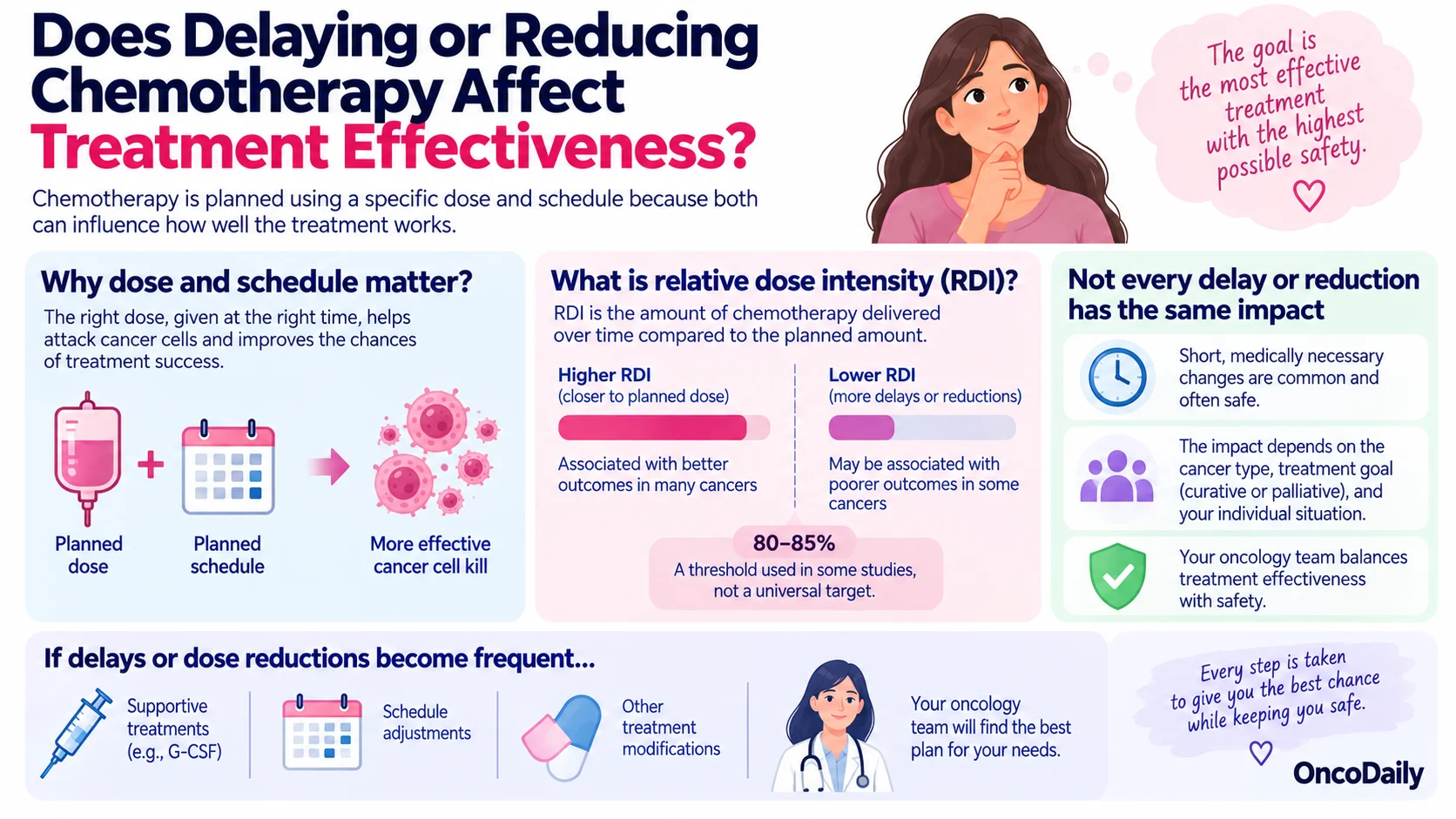
Chemotherapy is planned using a specific dose and schedule because both can influence treatment effectiveness. When doses are repeatedly reduced or treatment is delayed for prolonged periods, relative dose intensity (RDI) can decrease.
Research across several solid tumors has found associations between lower RDI and poorer outcomes with certain chemotherapy regimens. Studies have commonly examined RDI thresholds around 80% to 85%, but these numbers should not be considered universal targets for every patient or chemotherapy regimen. The importance of maintaining dose intensity depends on the cancer type, treatment, disease stage, and whether chemotherapy is being given with curative or palliative intent (Nielson et al., 2021).
This does not mean that every short delay or dose reduction makes chemotherapy less effective. Brief, medically necessary changes are common and may be the safest way to allow blood counts or other side effects to recover.
The oncology team therefore balances two priorities: maintaining the intended treatment benefit and preventing serious toxicity. If delays or dose reductions become frequent, the team may consider supportive treatments, schedule changes, or other adjustments to help maintain treatment intensity when doing so is clinically important (Denduluri et al., 2015; Nielson et al., 2021).
What Should Patients Do If Chemotherapy Is Delayed or the Dose Is Reduced?
If chemotherapy is delayed or the dose is reduced, patients should first understand why the treatment plan has changed. Common reasons include low blood counts, infection, changes in kidney or liver function, or side effects that have not fully resolved. The oncology team can explain when tests will be repeated, what needs to improve before treatment continues, and whether the change is likely to affect future cycles.
Keeping blood-test and follow-up appointments is important because these allow treatment to restart as soon as it is safe. Patients should also report side effects early, since managing symptoms before they become severe may help prevent further treatment interruptions.
Particular attention should be paid to signs of infection when white blood cells are low. A temperature of 38°C (100.4°F) or higher can require urgent assessment in patients with neutropenia, although patients should always follow the specific fever instructions provided by their cancer center. Unusual bleeding, severe vomiting or diarrhea, chest pain, or difficulty breathing should also be reported promptly (American Cancer Society).
A delay or dose reduction does not automatically mean that chemotherapy is failing. These changes are often made to keep treatment safe while allowing the body to recover. Patients can ask whether the change is expected to be temporary, whether supportive treatment is needed, and how the oncology team plans to keep chemotherapy
FAQ
Is it normal for chemotherapy to be delayed?
Yes. Short delays are common and are often used to give the body more time to recover from low blood counts, infection, or other side effects.
Why would my doctor reduce my chemotherapy dose?
A dose may be reduced if side effects are too severe, blood counts remain low, or kidney or liver function changes. The goal is to continue treatment as safely as possible.
Will a chemotherapy delay make my treatment less effective?
A short, medically necessary delay does not automatically reduce treatment effectiveness. Repeated or prolonged delays may matter more, depending on the cancer type and treatment plan.
How long does it usually take blood counts to recover after chemotherapy?
Recovery time varies by drug, dose, and individual patient. Blood tests are usually repeated before the next cycle to confirm that counts have recovered enough for treatment.
Can chemotherapy return to the original dose after a reduction?
Sometimes. If side effects improve and it is considered safe, the oncology team may return to the original dose, although some patients continue on an adjusted dose or schedule.