Key takeaways
- Tanning beds are carcinogenic: UV-emitting tanning devices are classified as Group 1 carcinogens by IARC.
- Melanoma risk is increased: A 2021 meta-analysis found a 27% higher relative risk among indoor tanning users.
- Age and frequency matter: Early and frequent tanning are associated with greater melanoma risk.
- Sunburn is not required for DNA damage: UV radiation can harm skin cells without visible symptoms.
- - Sunless tanning is a safer alternative: Avoiding tanning beds helps reduce unnecessary exposure to carcinogenic radiation.
Tanning beds can increase the risk of skin cancer, including melanoma, by exposing the skin to artificial ultraviolet (UV) radiation. Although indoor tanning is often considered a quick way to achieve a tan without spending time in the sun, the radiation emitted by tanning devices can damage DNA in skin cells and contribute to cancer development.
Research has linked indoor tanning to melanoma, basal cell carcinoma, and squamous cell carcinoma. The risk is particularly concerning for people who begin using tanning beds at a young age or continue using them regularly over several years. Even when tanning does not cause visible sunburn, UV exposure can produce cellular damage that may persist long after the session has ended.
Understanding how tanning beds affect the skin, what scientific studies have found, and whether occasional use is safe can help people make informed decisions about their skin health.
Do Tanning Beds Cause Cancer?
Yes, tanning beds are a known cause of skin cancer because they emit ultraviolet radiation capable of damaging DNA and promoting malignant changes in skin cells. The risk is associated with both the biological effects of UV exposure and the cumulative damage that can develop after repeated tanning sessions.
The International Agency for Research on Cancer (IARC), part of the World Health Organization (WHO), classifies UV-emitting tanning devices as Group 1 carcinogens. This category is reserved for exposures with sufficient evidence of carcinogenicity in humans. Tobacco smoke and asbestos are also included in this category, although classification within the same group does not mean that all these exposures carry an equal level of risk (El Ghissassi et al., 2009).
The evidence is particularly strong for melanoma, a potentially aggressive skin cancer that develops from pigment-producing cells. Indoor tanning is also associated with two more common skin cancers: basal cell carcinoma and squamous cell carcinoma.
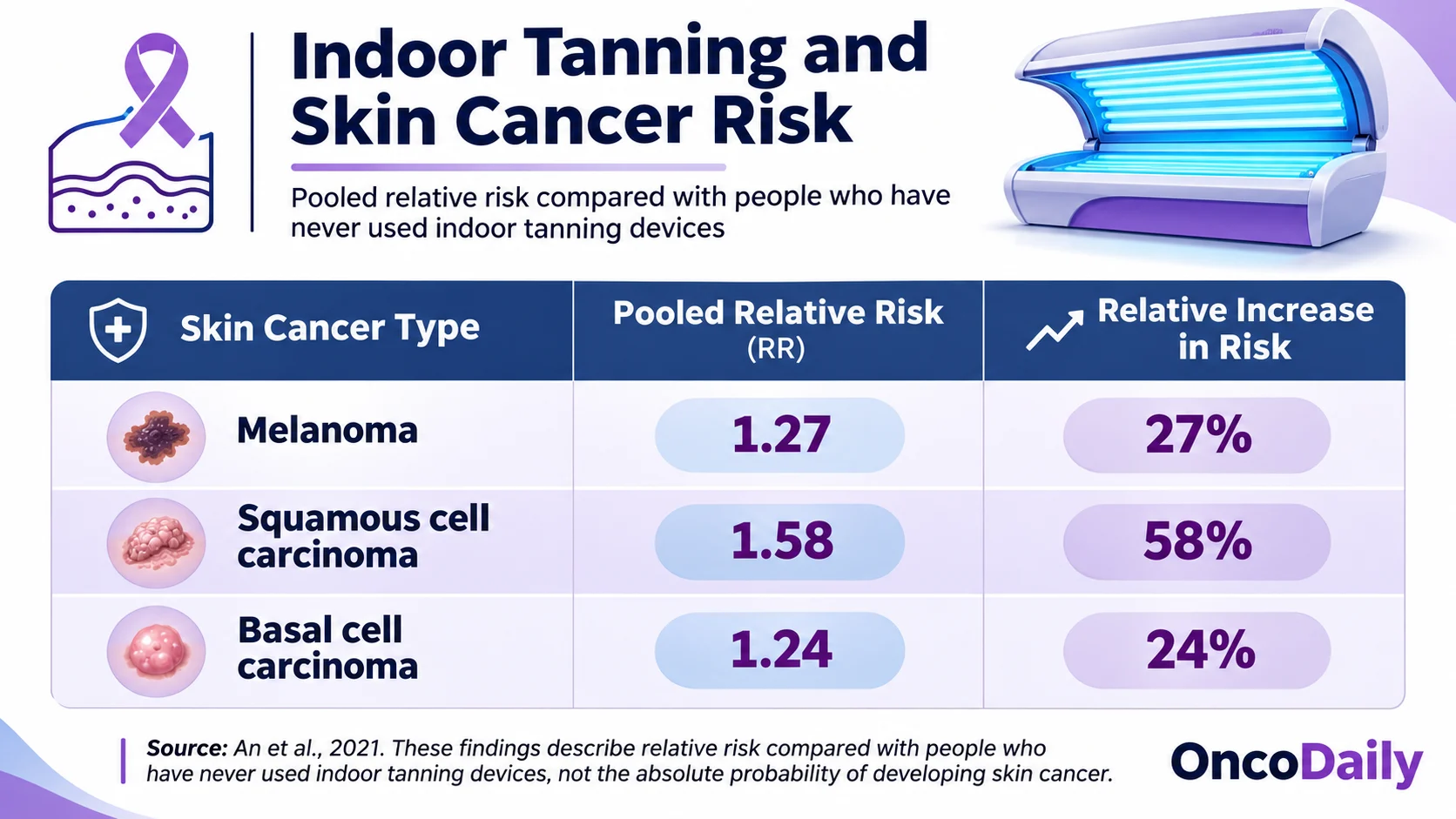
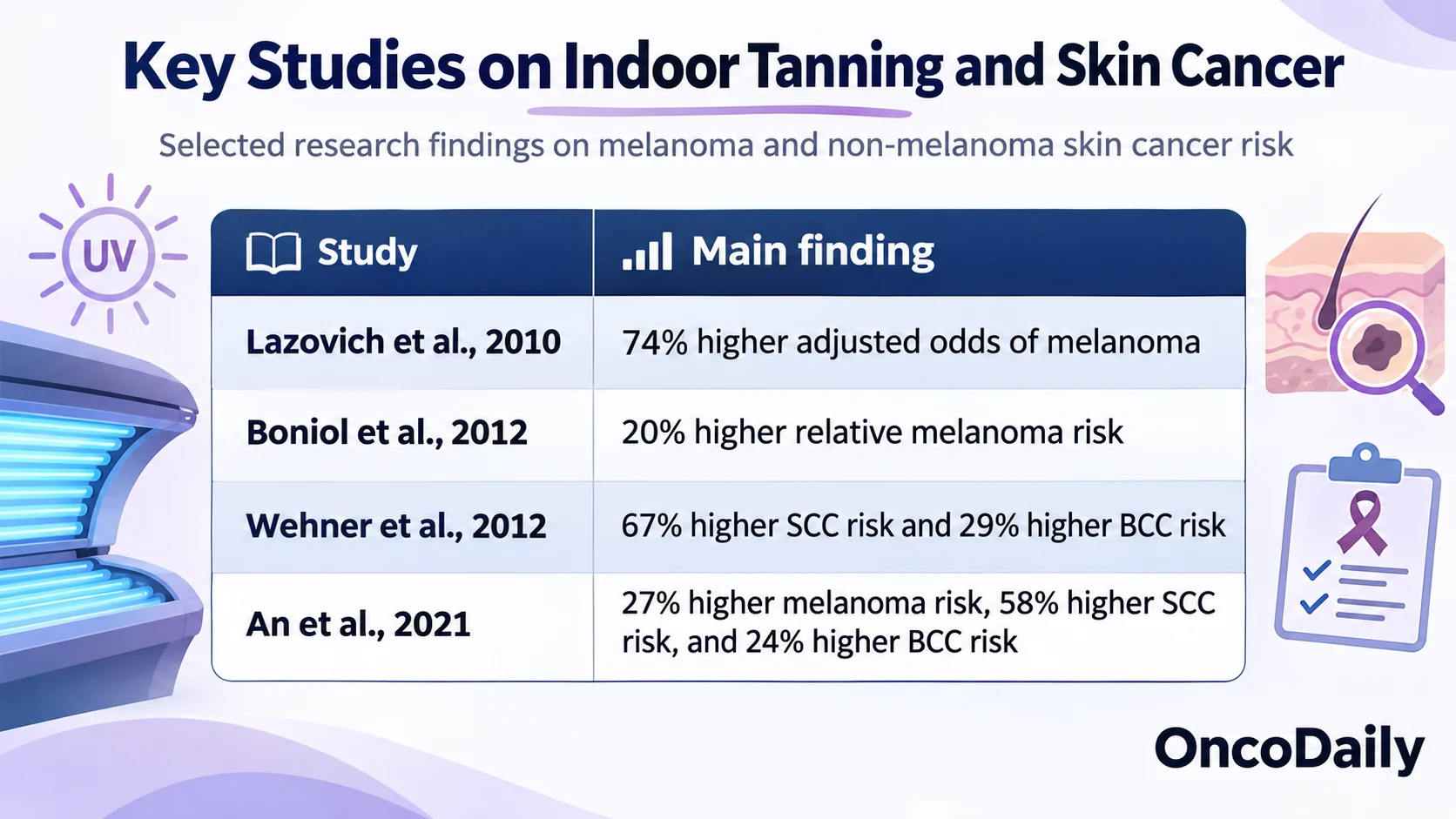
A systematic review and meta-analysis published in Cancers in 2021 evaluated studies involving more than 14,000 melanoma cases and found that people who had used indoor tanning devices had a 27% higher relative risk of melanoma compared with those who had never used them (An et al., 2021).
However, exposure to a carcinogen does not mean that cancer will inevitably develop. Individual risk depends on genetic susceptibility, skin type, previous sunburns, age at first exposure, and total lifetime UV exposure. What makes tanning beds particularly concerning is that they introduce an avoidable source of carcinogenic radiation.
How Do Tanning Beds Damage the Skin and Cause Cancer?
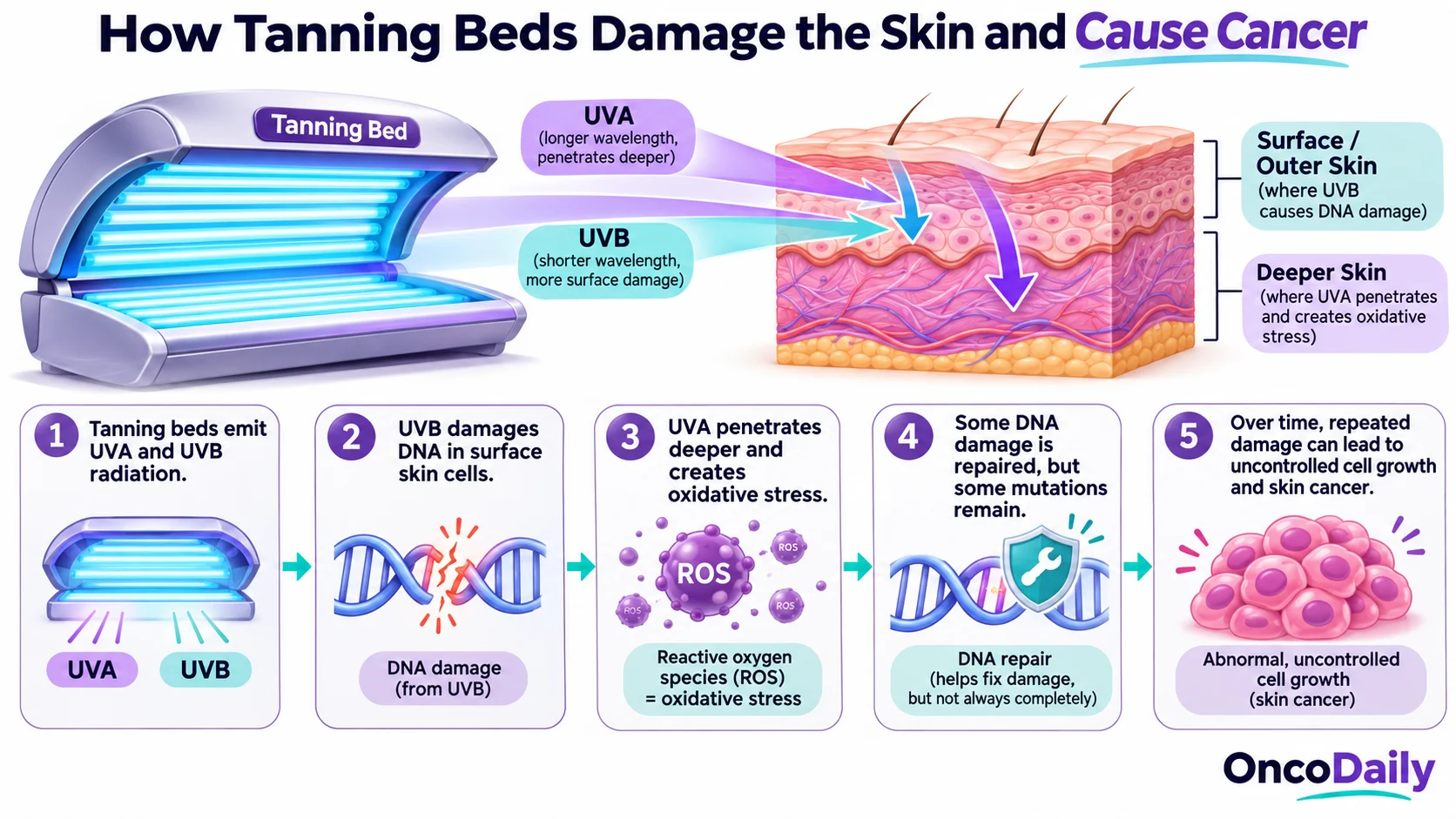
Tanning beds use lamps that emit ultraviolet radiation, primarily UVA and, depending on the device, UVB. These wavelengths affect the skin through different biological mechanisms, but both can contribute to DNA damage and cancer development.
UVB radiation mainly affects the outer layers of the skin and is particularly effective at causing direct DNA damage. It can create abnormal bonds between neighboring DNA bases, producing lesions known as cyclobutane pyrimidine dimers. If these lesions are not repaired correctly before a cell divides, they may become permanent mutations.
UVA radiation penetrates more deeply into the skin. It contributes to oxidative stress by generating reactive oxygen species, which can damage DNA, proteins, and cellular membranes. UVA can also produce direct DNA lesions, meaning that its harmful effects are not limited to oxidative damage (Schulman and Fisher, 2009).
Normally, skin cells contain repair mechanisms that recognize and correct many forms of DNA damage. However, these systems are not always successful. Over time, mutations affecting genes involved in cell growth, DNA repair, and programmed cell death can contribute to uncontrolled cellular proliferation.
This process helps explain why skin cancer can appear years or even decades after exposure. A person may stop using tanning beds long before a UV-related skin cancer becomes clinically detectable.
Why Is a Tan a Sign of Skin Damage?
When skin is exposed to ultraviolet radiation, it activates protective biological responses, including increased melanin production. Melanin is the pigment responsible for skin color and absorbs some ultraviolet radiation.
However, the development of a tan does not mean that the skin has avoided damage. Delayed tanning is associated with cellular responses to UV-induced stress and DNA injury, while immediate darkening can occur through changes in existing pigment.
This is why skin can accumulate UV-related DNA damage even without becoming red or developing a sunburn. People who tan easily are not immune to the carcinogenic effects of ultraviolet radiation (Schulman and Fisher, 2009).
What Types of Skin Cancer Are Linked to Tanning Beds?
Indoor tanning has been associated with three major forms of skin cancer: melanoma, squamous cell carcinoma, and basal cell carcinoma. Although they originate from different cells and have different clinical characteristics, ultraviolet radiation contributes to the development of each.
Melanoma develops from melanocytes, the cells responsible for producing melanin. Although it is less common than basal cell carcinoma, melanoma is particularly concerning because it can invade surrounding tissues and spread to lymph nodes and distant organs. It may develop within an existing mole or appear as a new lesion.
Squamous cell carcinoma (SCC) develops from keratinocytes in the epidermis. It is strongly associated with UV-induced genetic damage and often appears as a scaly patch, firm nodule, or nonhealing sore. Most cases are treatable when diagnosed early, but some tumors can become locally aggressive or metastasize.
Basal cell carcinoma (BCC) is the most common form of skin cancer. It frequently appears as a shiny bump, a persistent pink patch, or a lesion that repeatedly heals and returns. Although distant spread is rare, untreated tumors may grow into surrounding tissues and cause significant damage.
A 2021 meta-analysis found that indoor tanning was associated with increased risks of all three cancers. The strongest pooled association was observed for squamous cell carcinoma, while the estimate for basal cell carcinoma was less precise (An et al., 2021).
How Much Do Tanning Beds Increase Melanoma Risk?
Several large studies have examined the relationship between indoor tanning and melanoma. Although risk estimates vary, the evidence consistently indicates that people who use tanning beds have a higher melanoma risk than those who do not.
A 2012 systematic review and meta-analysis involving 27 observational studies found that people who had ever used tanning devices had approximately a 20% higher relative risk of melanoma. A later meta-analysis published in 2021 reported a 27% increase (Boniol et al., 2012; An et al., 2021).
Age at first exposure is particularly important. The 2021 analysis found that people who first used indoor tanning devices at age 20 or younger had a 47% higher relative risk of melanoma compared with never-users (An et al., 2021).
Frequent exposure is also associated with greater risk. In a population-based study involving 1,167 melanoma cases, Lazovich and colleagues found that indoor tanning was associated with 74% higher adjusted odds of melanoma, with stronger associations among people reporting more sessions, hours, and years of use (Lazovich et al., 2010).
These findings support a dose-response relationship, meaning that greater cumulative exposure is generally associated with greater risk. However, no specific number of tanning sessions has been established as safe.
Can Using a Tanning Bed Just Once Increase Cancer Risk?
A single tanning bed session can cause DNA damage, even when the skin does not become red or painful. However, research cannot reliably determine how much one isolated session increases a person’s lifetime cancer risk.
When UV radiation reaches the skin, it can produce DNA lesions and oxidative damage. Although cellular repair mechanisms correct many of these abnormalities, some mutations may persist, particularly when damaged cells survive and continue dividing (Schulman and Fisher, 2009).
Cancer development generally involves multiple genetic and cellular changes over time rather than one identifiable exposure. Therefore, someone who has used a tanning bed once should not assume that cancer will develop.
Nevertheless, avoiding further artificial UV exposure is advisable because there is no established safe level of cosmetic indoor tanning.
Are Tanning Beds More Dangerous Than Natural Sunlight?
Both tanning beds and natural sunlight expose the skin to carcinogenic UV radiation, but their intensity and wavelength composition can differ considerably.
Natural sunlight contains UVA and UVB radiation, with intensity varying according to geographic location, season, time of day, and atmospheric conditions. Tanning beds deliver artificial UV radiation through lamps designed to produce tanning, and some devices emit UV intensities greater than those encountered during strong midday sunlight (Mogensen and Jemec, 2010).
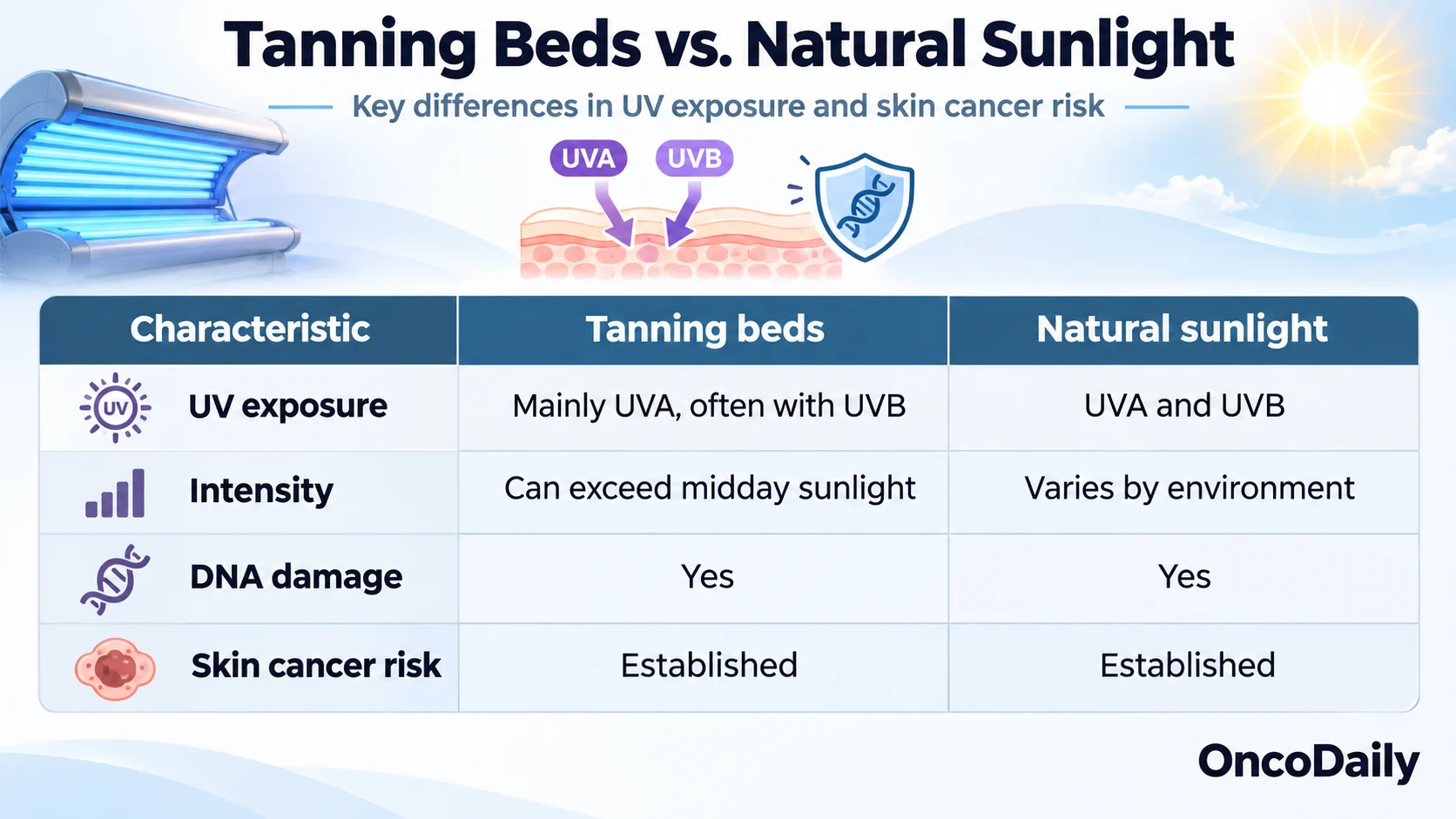
A common misconception is that tanning beds are safer because they produce a tan without causing visible sunburn. However, UVA radiation can damage DNA even when the skin does not become noticeably red.
Similarly, developing a base tan before a holiday provides only limited protection against subsequent UV exposure and cannot replace sunscreen or protective clothing.
Tanning beds should therefore not be considered a safer alternative to sunlight, as they introduce additional UV exposure without providing a necessary medical benefit.
What Does Scientific Research Say About Tanning Beds and Cancer?
The relationship between indoor tanning and skin cancer has been investigated through laboratory experiments, observational studies, and systematic reviews. Together, these findings provide evidence of both UV-induced DNA damage and increased cancer risk among tanning bed users.
A population-based study published in 2010 found that indoor tanning was associated with higher odds of melanoma, with increasing risk among people reporting more frequent and prolonged exposure (Lazovich et al., 2010).
In 2012, Boniol and colleagues analyzed 27 observational studies and reported approximately 20% higher melanoma risk among people who had ever used tanning devices. A later systematic review published in 2021 included 36 melanoma studies and found a 27% increase, alongside elevated risks of squamous cell carcinoma and basal cell carcinoma (Boniol et al., 2012; An et al., 2021).
Although most studies are observational and cannot completely eliminate confounding factors, the consistency of findings, evidence of increasing risk with greater exposure, and established mechanisms of UV-induced DNA damage strongly support a causal relationship.
Based on this evidence, IARC classified UV-emitting tanning devices as carcinogenic to humans in 2009 (El Ghissassi et al., 2009).
Do Tanning Beds Have Any Health Benefits?
Tanning beds are sometimes promoted as a way to increase vitamin D levels, improve mood, or prepare the skin for outdoor sun exposure. However, these proposed benefits do not outweigh the established risks of artificial UV radiation.
Vitamin D plays an important role in bone health and calcium metabolism. Although UVB radiation stimulates vitamin D production in the skin, many commercial tanning devices emit predominantly UVA, making vitamin D production variable and unreliable.
Vitamin D can also be obtained through food, fortified products, and supplements without deliberately exposing the skin to carcinogenic radiation (Schulman and Fisher, 2009).
Some people report feeling more relaxed after tanning sessions, but this does not establish indoor tanning as a safe treatment for depression or seasonal affective disorder.
It is also important to distinguish cosmetic tanning from medically supervised phototherapy. Dermatologists sometimes prescribe controlled ultraviolet treatment for conditions such as psoriasis and vitiligo, using specific wavelengths and monitored doses. Commercial tanning beds do not provide equivalent medical supervision (Schmidt, 2012).
Can Tanning Bed Damage Be Reversed?
Some effects of UV exposure can improve after tanning bed use stops, but not all damage is reversible.
Skin cells possess DNA repair mechanisms that correct many ultraviolet-induced abnormalities. However, mutations that become permanently incorporated into cellular DNA may persist even after exposure ends.
Stopping indoor tanning therefore cannot completely erase previous genetic damage or eliminate future skin cancer risk. Nevertheless, avoiding additional exposure prevents further UV injury from tanning devices (Schulman and Fisher, 2009).
Tanning beds also contribute to photoaging, including wrinkles, uneven pigmentation, reduced skin elasticity, and changes in skin texture. Some visible effects may improve with sun protection and dermatological treatment, but cosmetic improvement does not necessarily reverse underlying DNA damage.
People with a history of frequent indoor tanning should consider discussing their individual risk with a dermatologist, particularly if they have numerous atypical moles or a personal or family history of skin cancer.
What Are the Early Signs of Skin Cancer From Tanning Beds?
Skin cancers associated with UV exposure may develop years after the original exposure. Early signs can resemble ordinary moles or harmless skin changes, making awareness of suspicious lesions important.
Melanoma may appear as a new pigmented lesion or develop within an existing mole. Dermatologists commonly recommend the ABCDE criteria to help identify warning signs.
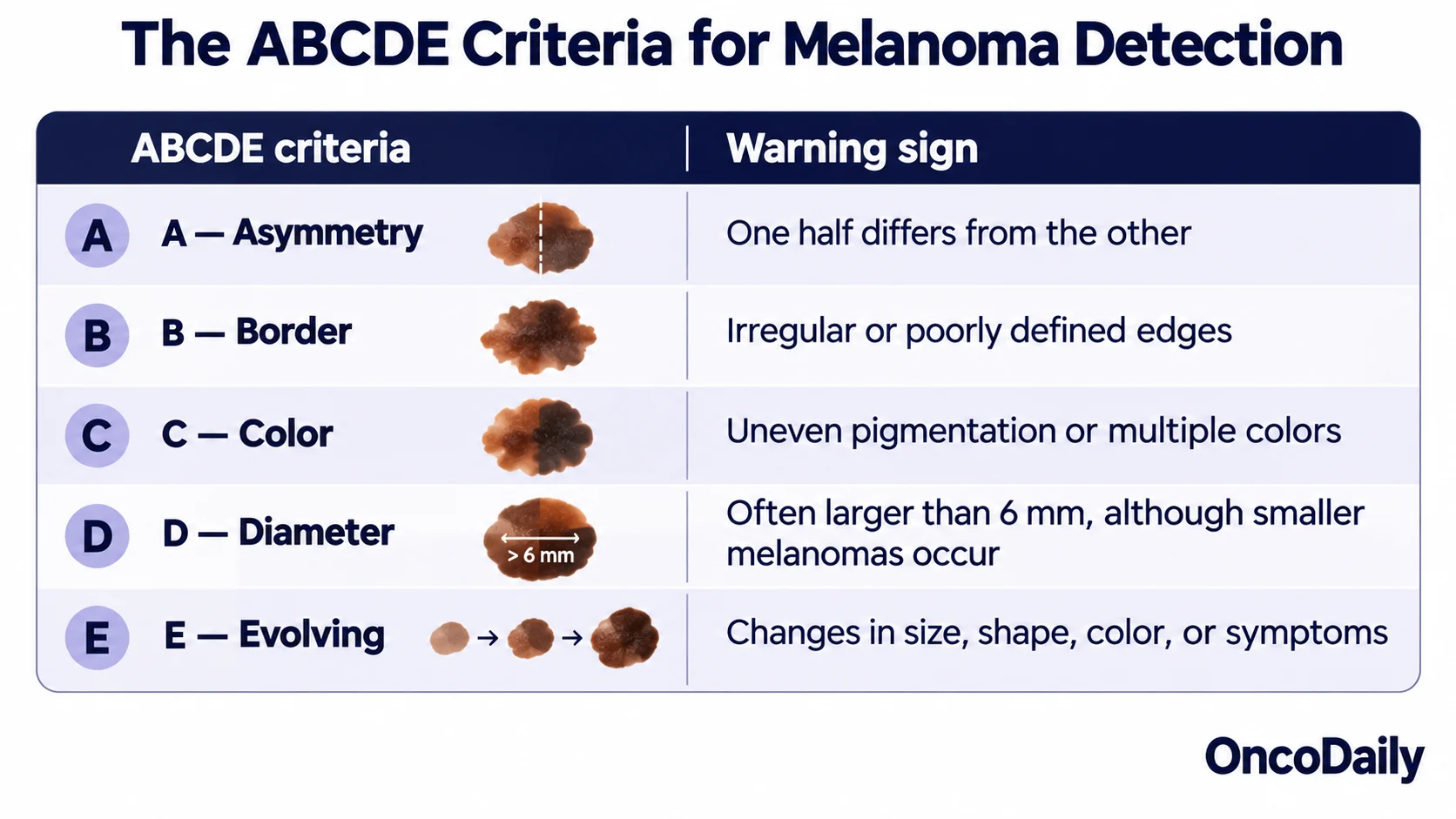
Not all melanomas follow these criteria. Some may be pink or skin-colored, while others appear relatively uniform. A lesion that looks noticeably different from surrounding moles should also be evaluated.
Basal cell carcinoma may appear as a shiny bump or persistent sore, while squamous cell carcinoma often develops as a rough, scaly patch or firm nodule.
Any lesion that changes, bleeds, grows, or fails to heal should be examined by a healthcare professional. Early diagnosis is particularly important for melanoma because treatment outcomes are generally more favorable before the disease spreads.
How Can You Tan Without Increasing Your Skin Cancer Risk?
For people who prefer the appearance of tanned skin, sunless tanning products offer an alternative that does not require ultraviolet radiation.
Most self-tanning lotions, creams, and sprays contain dihydroxyacetone (DHA), which reacts with components of the outermost skin layer to produce temporary darkening. Unlike UV tanning, this process does not depend on DNA-damaging radiation.
Topical sunless tanning products are generally considered safer than tanning beds when used as directed. However, spray-tanning products should not be inhaled or allowed to contact the eyes, lips, or mucous membranes because their safety for these exposures has not been established (FDA).
An artificial tan also does not necessarily protect against sunlight. Unless a product contains sunscreen, it should not replace ordinary sun protection.
Avoiding tanning beds, wearing protective clothing, seeking shade, and using broad-spectrum sunscreen with SPF 30 or higher can help reduce unnecessary UV exposure and its associated skin cancer risks.
FAQ
Can tanning beds cause melanoma?
Yes. Indoor tanning is associated with increased melanoma risk, with a 2021 meta-analysis reporting a 27% higher relative risk among ever-users (An et al., 2021).
Are tanning beds safe if you only use them occasionally?
No safe level of cosmetic indoor tanning has been established. Even occasional UV exposure can damage DNA.
Do tanning beds cause cancer without sunburn?
Yes. UVA and UVB radiation can damage skin cells without producing visible redness or burning.
Are tanning beds safer than natural sunlight?
No. Both expose the skin to carcinogenic UV radiation, and some tanning devices produce greater UV intensities than strong midday sunlight.
Can stopping tanning beds reduce cancer risk?
Stopping prevents additional artificial UV exposure, although it cannot completely reverse previous DNA damage.