Energy drinks have become widely consumed worldwide, particularly among students, athletes, and professionals seeking increased energy and concentration. These beverages contain multiple active ingredients, including caffeine, sugar, taurine, guarana, and herbal compounds. A typical energy drink may provide approximately 80–160 mg of caffeine per 250–500 mL serving and around 50–60 g of sugar per 500 mL can, raising questions about their long-term health effects.
Among the most debated concerns surrounding energy drink consumption is the question: Do Energy Drinks Cause Cancer? Researchers have investigated this topic through multiple pathways, including the biological effects of individual ingredients, metabolic changes, obesity-related mechanisms, and chronic disease risk. Because cancer develops through complex interactions between genetics, aging, lifestyle factors, and environmental exposures, understanding whether energy drinks influence cancer risk requires careful evaluation of human evidence rather than conclusions based only on laboratory studies. This article explores what current research shows about energy drinks, their ingredients, potential health effects, and the difference between scientifically established risks and common misconceptions. (Costantino et al., 2023; Jatho et al., 2024; World Cancer Research Fund Global Cancer Update Programme, 2026)
What Are Energy Drinks Made Of?
Energy drinks are complex beverages containing several active ingredients, with caffeine and sugar being the most important components from a health perspective. The caffeine content varies substantially between products. A typical energy drink can contain approximately 80–160 mg of caffeine per 250–500 mL serving, although some larger or highly concentrated products may contain 200–300 mg or more per can. For comparison, an average 240 mL cup of brewed coffee contains approximately 80–120 mg of caffeine, depending on preparation method.
Many energy drinks also contain high amounts of added sugar. A standard 500 mL energy drink may contain approximately 50–60 g of sugar, equivalent to around 12–15 teaspoons of sugar. Sugar-free versions replace sugar with artificial or low-calorie sweeteners but often maintain high caffeine levels. Other common ingredients include taurine (often around 1,000–2,000 mg per serving), guarana extracts, B vitamins, L-carnitine, and herbal compounds. Although these ingredients may have biological activity, their combined long-term effects remain an area of scientific investigation. Because energy drinks contain multiple active substances, researchers cannot always attribute observed health effects to one individual component. (Costantino et al., 2023; Higgins et al., 2017)
Caffeine and Cancer Research
Caffeine is the primary stimulant responsible for the alertness effects of energy drinks. It works mainly by blocking adenosine receptors in the central nervous system. Regulatory agencies generally consider moderate caffeine consumption safe for healthy adults. The U.S. Food and Drug Administration (FDA) notes that up to approximately 400 mg of caffeine per day is not generally associated with dangerous negative effects in healthy adults.
However, caffeine intake from energy drinks can approach or exceed this amount, especially when individuals consume multiple cans per day or combine energy drinks with coffee, pre-workout supplements, or other caffeinated products. Current evidence does not classify caffeine as a carcinogen. Large epidemiological studies have not demonstrated that caffeine directly causes cancer.
Some studies have investigated possible associations between coffee/caffeine consumption and specific cancer outcomes, but these findings do not mean caffeine-containing energy drinks prevent cancer or should be used as protective beverages. The more established concerns related to excessive caffeine intake involve insomnia, anxiety, palpitations, increased heart rate, and elevated blood pressure. (FDA, 2018; World Cancer Research Fund, 2024; Costantino et al., 2023)
Sugar, Obesity, and the Indirect Cancer Pathway
Sugar content represents one of the most important concerns regarding frequent energy drink consumption. A single 500 mL sugar-containing energy drink may provide approximately 50–60 grams of added sugar, contributing around 200–240 calories from sugar alone. Regular intake of high-calorie beverages can contribute to positive energy balance, weight gain, insulin resistance, and obesity. These metabolic changes are important in oncology because excess body weight is associated with increased risk of several cancers.
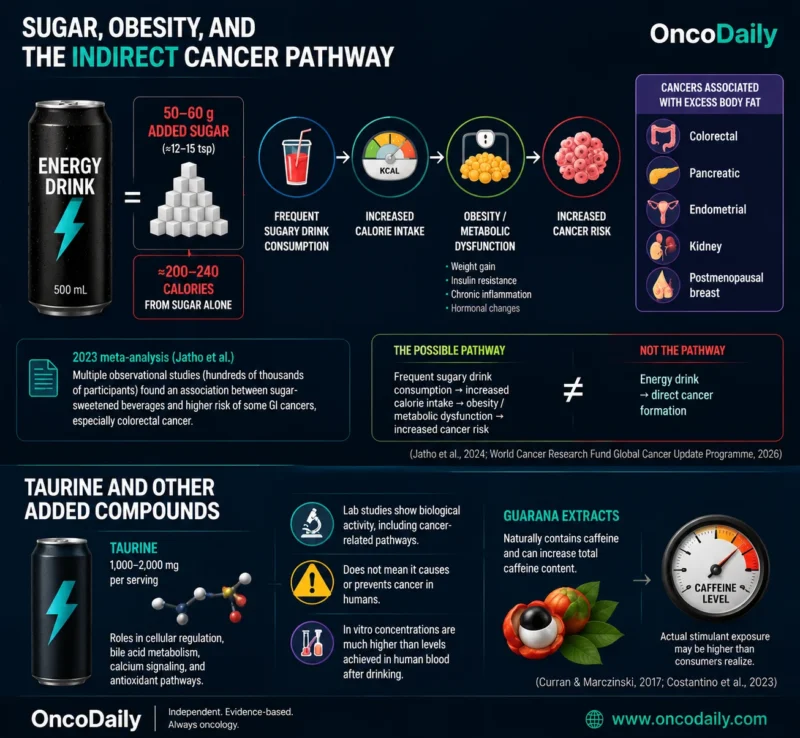
The World Cancer Research Fund (WCRF) has identified strong evidence linking excess body fatness with increased risk of cancers including colorectal, pancreatic, endometrial, kidney, and postmenopausal breast cancer. A 2023 systematic review and meta-analysis by Jatho et al. evaluated the relationship between sugar-sweetened beverages and gastrointestinal cancers. The analysis included multiple observational studies involving hundreds of thousands of participants and found an association between sugar-sweetened beverage consumption and increased risk of some gastrointestinal cancers, particularly colorectal cancer. However, these studies evaluated sugar-sweetened beverages as a broad category and cannot prove that energy drinks directly cause cancer. (Jatho et al., 2024; World Cancer Research Fund Global Cancer Update Programme, 2026)
Taurine and Other Added Compounds
Taurine is commonly added to energy drinks, usually in amounts of approximately 1,000–2,000 mg per serving. It plays roles in cellular regulation, bile acid metabolism, calcium signaling, and antioxidant pathways. Laboratory studies have investigated taurine in multiple biological contexts, including cancer-related pathways. However, the presence of a biologically active compound does not mean that consuming it in an energy drink causes or prevents cancer. Human exposure levels are different from laboratory experiments. In vitro studies often use concentrations that are much higher than what would occur in human blood after drinking a beverage.
Photo: Depositphotos
Similarly, guarana extracts may increase the total caffeine content of an energy drink because guarana naturally contains caffeine. This can make the actual stimulant exposure higher than consumers realize. (Curran & Marczinski, 2017; Costantino et al., 2023)
Cardiovascular Effects: Stronger Evidence Than Cancer Risk
While the cancer question receives significant public attention, cardiovascular effects are among the most consistently reported concerns associated with energy drinks. A 2024 systematic review and meta-analysis by Dantas et al. evaluated randomized clinical trials assessing cardiovascular effects of energy drinks. The analysis found that energy drink consumption significantly increased:
- Systolic blood pressure
- Diastolic blood pressure
- Cardiac output
The researchers analyzed randomized studies involving healthy adults and found measurable short-term cardiovascular changes after consumption. Other studies have reported possible associations with QT interval prolongation, arrhythmias, palpitations, and rare serious cardiovascular events, particularly after high consumption. Risk may be greater when energy drinks are consumed rapidly, combined with alcohol, used during intense physical activity, or consumed by individuals with underlying cardiovascular disease. (Dantas et al., 2024; Costantino et al., 2023)
Energy Drinks and Sleep
Energy drinks are often consumed because of fatigue, but caffeine exposure can interfere with sleep. The effect depends on dose and timing. A drink containing 150–200 mg of caffeine consumed later in the day may significantly affect sleep quality in some individuals. A 2024 systematic review by Ajibo et al. examined energy drink consumption among children and young people. The review included 57 studies and found associations between energy drink use and:
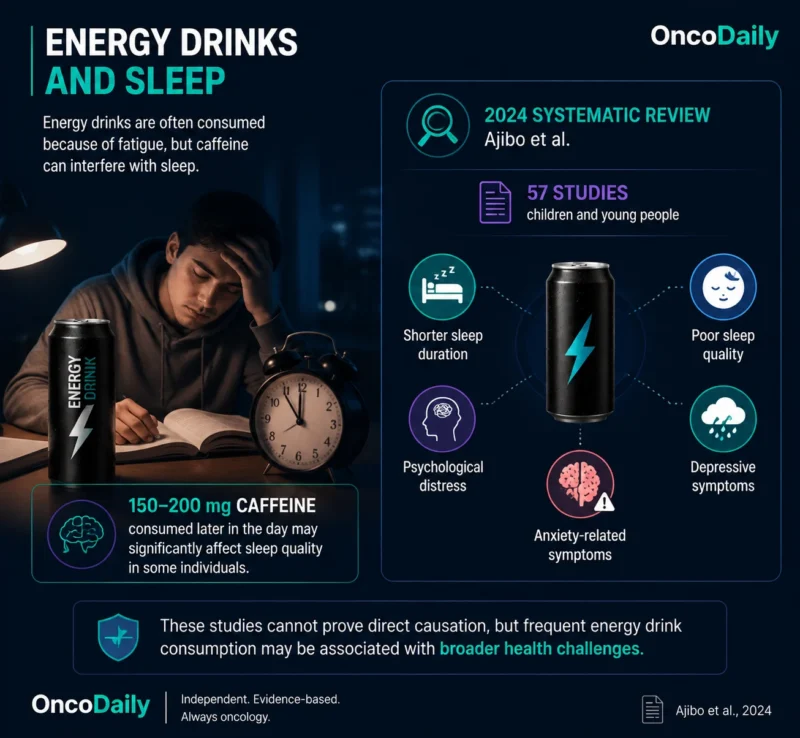
Although these studies cannot prove direct causation, they suggest that frequent energy drink consumption may be associated with broader health challenges. (Ajibo et al., 2024)
Sugar-Free Energy Drinks: Are They a Safer Alternative?
Sugar-free energy drinks have become increasingly popular because they provide caffeine and stimulant effects without the calories and sugar found in traditional products. Replacing sugar can reduce one potential concern: excess calorie intake and weight gain. However, sugar-free energy drinks are not automatically risk-free. Many sugar-free products still contain significant caffeine levels. Some energy shots and concentrated beverages can contain 150–200 mg of caffeine per serving, while larger energy drinks may contain even more depending on the formulation.
Although removing sugar may reduce the risk of obesity-related metabolic effects, caffeine-related concerns remain, including sleep disruption, anxiety, increased heart rate, and blood pressure changes. Artificial sweeteners used in some products continue to be studied, particularly regarding their long-term effects on metabolism and gut health. Current evidence does not demonstrate that approved artificial sweeteners directly cause cancer when consumed within recommended intake levels. The key distinction is that removing sugar changes the metabolic profile of the beverage but does not eliminate the effects of stimulants. (NCCIH, 2024; Costantino et al., 2023; FDA, 2018)
Energy Drinks and Oral Health
Although cancer risk receives significant public attention, oral health represents another established concern associated with frequent energy drink consumption. Many energy drinks combine high sugar content with acidity. A typical energy drink may contain approximately 20–60 g of sugar per serving, depending on the product size and formulation. Acidic beverages can contribute to enamel erosion, while sugar increases the risk of dental caries.
A study evaluating energy drink consumption patterns found that frequent intake of acidic and sugar-containing beverages was associated with increased dental erosion risk. The combination of acidity and sugar creates a particularly unfavorable environment for dental health because it simultaneously damages enamel and promotes bacterial growth. These effects are especially relevant among adolescents and young adults, who represent one of the largest consumer groups of energy drinks. (He et al., 2008; Costantino et al., 2023)
Energy Drinks in Adolescents and Young Adults
Young people represent a population of particular concern because their developing cardiovascular and nervous systems may be more sensitive to stimulant exposure. A 2024 systematic review by Ajibo et al. analyzed 57 studies examining energy drink consumption among children and adolescents. The review identified associations between energy drink use and shorter sleep duration, poor sleep quality, psychological distress, depressive symptoms, panic-related symptoms, and attention-related problems.
The review did not prove that energy drinks directly caused these outcomes, but it highlighted consistent associations that require attention from healthcare professionals and policymakers. Another concern is caffeine exposure. Adolescents may consume energy drinks without recognizing their total caffeine intake, especially when combining multiple products such as coffee, energy drinks, pre-workout supplements, or caffeinated sodas. Because body size and caffeine metabolism vary significantly among young people, the same beverage can produce different effects between individuals. (Ajibo et al., 2024; NCCIH, 2024)
Energy Drinks and Alcohol: A Particularly Concerning Combination
One of the most concerning consumption patterns is combining energy drinks with alcohol. Caffeine can create a sensation of increased alertness, which may make individuals feel less impaired than they actually are. However, caffeine does not reduce alcohol-related impairment in coordination, reaction time, or decision-making. The combination may encourage greater alcohol consumption and increase risky behaviors. The National Center for Complementary and Integrative Health (NCCIH) highlights that people combining caffeinated beverages with alcohol may underestimate their level of intoxication. (NCCIH, 2024; Marczinski & Fillmore, 2006)
Who Should Be More Careful With Energy Drinks?
Although occasional consumption may not cause problems for healthy adults, certain groups should exercise greater caution. Individuals with cardiovascular conditions, including arrhythmias, uncontrolled hypertension, congenital heart disease, or a history of sudden cardiac events, may be more vulnerable to stimulant-related effects. Pregnant individuals are also advised to limit caffeine intake because excessive caffeine exposure has been associated with pregnancy-related risks. Children and adolescents represent another group where caution is recommended because of concerns related to sleep, behavior, cardiovascular effects, and developing physiology. People taking stimulant medications or medications affecting heart rhythm should also discuss caffeine and energy drink consumption with healthcare professionals. (NCCIH, 2024; FDA, 2018)
Common Myths About Energy Drinks and Cancer
“Energy drinks are proven causes of cancer”
This statement is not supported by current scientific evidence. Researchers have not established energy drinks as direct carcinogens, and there is no convincing evidence showing that consuming energy drinks directly causes specific cancers. The more scientifically supported concern involves indirect pathways, particularly through sugar intake, obesity, and metabolic health. (World Cancer Research Fund Global Cancer Update Programme, 2026)
“If an ingredient affects cancer cells in a laboratory, the drink causes cancer”
This is a common misunderstanding. Laboratory studies are important for discovering biological mechanisms, but they do not automatically predict what happens in humans. A compound must demonstrate effects in human studies at realistic exposure levels before scientists can establish clinical significance. (Costantino et al., 2023)
“Sugar-free energy drinks are completely safe”
Removing sugar reduces calorie intake, but sugar-free energy drinks can still contain high caffeine levels and other stimulants.Their effects on sleep, anxiety, cardiovascular function, and individual sensitivity remain important considerations. (NCCIH, 2024)
How Should Energy Drink Research Be Interpreted?
Scientific interpretation requires understanding the difference between association and causation. Many studies examining diet and cancer are observational. These studies can identify patterns but cannot always prove that one factor directly causes disease. For example, people who frequently consume energy drinks may also have other lifestyle factors associated with cancer risk, such as poor diet, inadequate sleep, lower physical activity, or higher alcohol consumption. Researchers therefore evaluate the totality of evidence, including biological mechanisms, population studies, clinical trials, and consistency between findings. At present, the strongest evidence regarding energy drinks relates to cardiovascular, metabolic, and sleep-related effects rather than direct cancer development. (Hill, 1965; Costantino et al., 2023)
Practical Recommendations for Safer Energy Drink Consumption
For most healthy adults, occasional energy drink consumption is unlikely to represent a major cancer risk based on current evidence. However, frequent consumption especially multiple cans per day may contribute to excessive caffeine exposure, high sugar intake, sleep disruption, and metabolic problems.
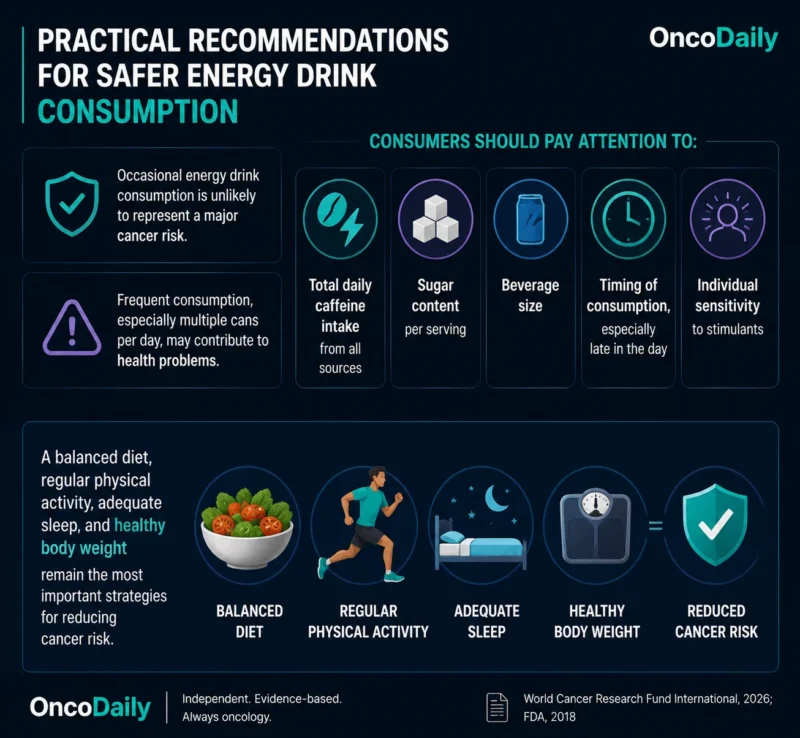
A balanced diet, regular physical activity, adequate sleep, and healthy body weight remain among the most important evidence-based strategies for reducing cancer risk. (World Cancer Research Fund International, 2026; FDA, 2018)
Do Energy Drinks Cause Cancer?
Current scientific evidence does not establish energy drinks as direct causes of cancer. The available research does not show that typical energy drink consumption directly transforms healthy cells into malignant cells. However, frequent consumption particularly of high-sugar products may contribute to health conditions associated with increased cancer risk, including obesity and metabolic dysfunction. The strongest evidence-based concerns surrounding energy drinks involve cardiovascular effects, sleep disruption, anxiety, excessive caffeine intake, dental health, and metabolic consequences.
Energy drinks should therefore be viewed not as proven carcinogens, but as highly formulated stimulant beverages that require moderation and awareness. For cancer prevention, the focus remains on established risk factors: avoiding tobacco, limiting alcohol, maintaining healthy body weight, following a balanced diet, exercising regularly, and participating in recommended cancer screening programs. (Costantino et al., 2023; Dantas et al., 2024; World Cancer Research Fund Global Cancer Update Programme, 2026)
You Can Also Read Does Beer Cause Cancer? The Hidden Risks, Common Myths, and Science Explained by OncoDaily

Written by Aharon Tsaturyan, MD, Editor at OncoDaily Intelligence Unit
FAQ
Do energy drinks cause cancer?
Current scientific evidence has not established energy drinks as direct causes of cancer. Research has mainly focused on possible indirect pathways, including sugar intake, obesity, metabolic dysfunction, and overall lifestyle factors that may influence cancer risk.
Can drinking energy drinks every day increase cancer risk?
Frequent daily consumption of energy drinks may contribute to excessive caffeine intake, high sugar consumption, sleep disruption, and weight gain. These factors may affect long-term health and could indirectly influence cancer risk, but energy drinks have not been proven to directly cause cancer.
How much caffeine is in an energy drink?
The caffeine content varies by product. A typical energy drink may contain approximately 80–160 mg of caffeine per 250–500 mL serving, while some larger or concentrated products may contain 200–300 mg or more per serving.
Are sugar-free energy drinks safer?
Sugar-free energy drinks remove added sugar and reduce calorie intake, but they may still contain high amounts of caffeine and other stimulants. They are not automatically risk-free and may still affect sleep, anxiety, and cardiovascular health.
Does caffeine cause cancer?
Current evidence does not show that caffeine directly causes cancer. However, excessive caffeine intake may contribute to sleep problems, anxiety, increased heart rate, and elevated blood pressure in some individuals.
What are the health risks of energy drinks?
Energy drinks have been associated with cardiovascular effects, sleep disruption, anxiety symptoms, dental problems, and metabolic concerns, especially with frequent or high consumption.
Can energy drinks affect sleep?
Yes. Because of their caffeine content, energy drinks can interfere with sleep, especially when consumed later in the day. A drink containing 150–200 mg of caffeine may significantly affect sleep quality in some people.
Are energy drinks bad for your heart?
Energy drinks may temporarily increase blood pressure, heart rate, and cardiac workload. A 2024 systematic review by Dantas et al. found measurable cardiovascular changes after energy drink consumption in randomized clinical trials.
What ingredients are in energy drinks?
Common ingredients include caffeine, sugar, taurine, guarana extracts, B vitamins, amino acids, and herbal compounds. Their combined effects are still being studied.
Can energy drinks cause obesity?
Energy drinks containing large amounts of sugar can contribute to increased calorie intake and weight gain when consumed frequently. Obesity is an established risk factor for several cancers.
How many energy drinks can you drink safely?
There is no universal number that applies to everyone. Safety depends on caffeine amount, body size, medical conditions, medications, and total daily caffeine intake from all sources.
Who should avoid energy drinks?
People with heart conditions, uncontrolled hypertension, pregnancy, children and adolescents, and individuals sensitive to caffeine should be especially cautious with energy drinks.
Do energy drinks cause leukemia?
There is currently no evidence that energy drinks directly cause leukemia. Claims linking individual ingredients from laboratory studies to leukemia risk do not represent proven effects in humans.
What is taurine in energy drinks?
Taurine is a compound commonly added to energy drinks, usually around 1,000–2,000 mg per serving. Although studied for biological effects, laboratory findings do not prove that taurine-containing beverages cause or prevent cancer.