Beer is often treated as the milder, more familiar face of alcohol. It appears at sporting events, family gatherings, restaurants, and everyday social occasions, which can make it seem less concerning than stronger drinks. Yet one question continues to surface among researchers, healthcare professionals, and the public alike: Does beer cause cancer?
Answering that question requires looking beyond the beverage itself. The relationship between beer and cancer is shaped by how the body processes alcohol, how much is consumed, how often it is consumed, and how exposure accumulates over time. It also involves biological mechanisms that are easy to overlook, including DNA damage, oxidative stress, hormonal changes, inflammation, and differences in how individuals metabolize alcohol.
Photo: Depositphotos
Is beer safer than wine or spirits? Does moderate drinking matter? And are some people more vulnerable than others? The evidence provides clear answers, but they are more nuanced than many popular claims suggest.
Why Does the Question “Does Beer Cause Cancer?” Persist?
Public awareness of the alcohol–cancer relationship remains considerably lower than awareness of many other cancer risk factors.
Alcohol has long been embedded in social events, sport, celebrations, meals, advertising, and popular culture. Public discussion has also frequently focused on the possible cardiovascular effects of moderate drinking rather than on cancer.
As a result, many people continue to hold beverage-specific beliefs. Beer may be viewed as a casual or relatively weak drink, spirits as the more dangerous option, and red wine as potentially protective because it contains compounds such as resveratrol. These assumptions can create two opposing misconceptions. Some people believe that beer has a unique cancer-causing property, while others assume that its lower alcohol concentration makes it essentially harmless. Neither interpretation reflects the scientific consensus.
“About 194 billion liters of beer were consumed worldwide in 2024.”
Beer generally contains less alcohol by volume than spirits, but serving size and drinking pattern determine the actual dose. A large or high-strength beer may contain considerably more ethanol than a person realizes. Several beers consumed during one occasion can produce an alcohol exposure equal to or greater than that from wine or spirits.
The correct question is therefore not simply whether beer causes cancer. It is how much ethanol is being consumed, how frequently it is consumed, and over how many years. (HHS 2024 advisory; IARC evidence summaries on alcohol and cancer; Bagnardi et al.; Jun et al.; Reddy et al.)
Is Alcohol a Carcinogen?
Yes. IARC has classified alcoholic beverages as Group 1 carcinogens for decades. Group 1 describes the strength of the evidence that an exposure can cause cancer; it does not mean that every carcinogen carries the same level of individual risk.
The evidence supports causal associations with cancers of the:
- Oral cavity
- Pharynx
- Larynx
- Esophagus
- Liver
- Colon and rectum
- Female breast
Alcohol was estimated to have caused approximately 741,300 new cancer cases worldwide in 2020, representing about 4.1% of all newly diagnosed cancers that year. Esophageal, liver, and breast cancers accounted for a substantial proportion of this burden.
More recent IARC summaries similarly estimate that alcohol causes approximately 4% of new cancers globally and emphasize that even relatively low consumption contributes to cancer risk. (IARC Monographs on alcohol consumption; IARC 2020 global cancer burden estimates; HHS 2024 advisory; Bagnardi et al.; Jun et al.)
Does Cancer Risk Increase With the Amount of Alcohol Consumed?
For most established alcohol-related cancers, the relationship is dose-dependent: as cumulative consumption rises, risk generally increases.
A 2023 meta-analysis of prospective cohort studies found that light alcohol consumption was significantly associated with higher risks of esophageal, colorectal, and breast cancers. Light-to-moderate consumption was associated with esophageal, colorectal, laryngeal, and breast cancers, while heavier consumption was additionally associated with cancers including those of the stomach, liver, pancreas, and prostate.
The increase in risk is not identical for every cancer. Some cancer sites show measurable associations at relatively low levels of intake, while the steepest increases for others are seen with heavier or prolonged drinking.
“The oldest direct evidence of beer so far comes from Raqefet Cave in Israel, dating to around 11,000–13,000 BCE (about 13,000 years ago).”
This is why statements such as “no safe level for cancer risk” require careful interpretation. They do not mean that every drink produces a large or immediately measurable increase in an individual’s absolute risk. They mean that scientific evidence has not identified a level of alcohol consumption at which cancer risk is completely absent. At the population level, even modest relative increases matter because alcohol consumption and cancers such as breast and colorectal cancer are common. (Jun et al. 2023 meta-analysis on alcohol consumption levels and cancer risk; HHS 2024 advisory; IARC evidence summaries; Bagnardi et al.)
Is Beer Specifically Linked to Colorectal Cancer?
Evidence examining beer specifically has found an association between heavier beer consumption and colorectal cancer. A meta-analysis of observational studies found that heavy beer drinking, defined as at least two drinks per day, was associated with increased colorectal cancer risk. Dose–response modeling estimated that each additional daily beer was associated with approximately a 13% increase in colorectal cancer risk. The association appeared stronger for rectal cancer than for colon cancer in that analysis.
These findings do not establish that beer possesses a unique carcinogenic quality. Heavy beer drinking often contributes substantially to total ethanol exposure, and alcohol itself is an established colorectal carcinogen. Broader evidence also supports a relationship between drinking more than approximately one alcoholic drink per day and colorectal cancer risk. A 2025 analysis of two large prospective cohorts likewise found that total alcohol intake was a critical factor and that associations with colorectal cancer appeared to be driven primarily by beer and liquor rather than wine.
However, beverage-specific findings remain susceptible to differences in diet, socioeconomic status, smoking, drinking patterns, and other sources of residual confounding. The strongest conclusion remains that reducing total alcohol intake is more important than selecting a different alcoholic beverage.
Fedirko et al. meta-analysis on beer and colorectal cancer; WCRF/AICR Continuous Update Project on alcoholic drinks and cancer; large prospective cohort studies on alcohol intake and colorectal cancer (e.g., Butler et al.; cross-cohort analyses).
What Does the Evidence Say About Beer and Lung Cancer?
The evidence linking beer specifically to lung cancer is less clear than the evidence for colorectal, breast, liver, or upper aerodigestive cancers.
Some older studies reported associations between heavy beer or liquor consumption and lung cancer. However, smoking is overwhelmingly the dominant risk factor for lung cancer, and separating alcohol-related risk from smoking behavior is difficult.
People who drink heavily may be more likely to smoke, have different diets, experience occupational exposures, or differ from lighter drinkers in other ways that influence lung cancer risk.
A systematic review of beer, wine, and liquor consumption found that high beer and liquor intake might be associated with increased lung cancer risk, but the authors emphasized the need for better control of confounding. More recent reviews have generally treated alcohol’s association with lung cancer as uncertain or inconsistent. Consequently, lung cancer should not be presented as one of the most firmly established alcohol-caused cancers.
For lung cancer prevention, avoiding smoking and secondhand smoke remains far more important than beverage choice. (Bagnardi et al. meta-analysis on alcohol and site-specific cancers; systematic reviews on beverage type and lung cancer risk (e.g., Abraham et al.); IARC evaluations of alcohol and site-specific cancers; WCRF/AICR reports.)
Is Beer More Dangerous Than Wine or Spirits?
Current evidence does not consistently show that one type of alcoholic beverage is substantially safer for cancer than another when similar quantities of ethanol are consumed. A systematic review comparing low-to-moderate consumption of beer, wine, and spirits concluded that consumption of one beverage type was not consistently associated with better or worse health outcomes than equivalent consumption of another.
Wine contains polyphenols and other compounds with potentially beneficial biological effects. Beer also contains hops-derived polyphenols, carbohydrates, minerals, and fermentation products.
However, these components have not been shown to offset the carcinogenic effects of ethanol in people. Observational studies sometimes report apparently protective associations with wine. These findings may partly reflect differences between wine drinkers and other drinkers, including income, education, diet, healthcare access, physical activity, and smoking patterns. A 2023 meta-analysis found no overall association between wine intake and general cancer incidence, but the evidence varied by cancer site and was limited for several outcomes.
Such findings do not demonstrate that wine prevents cancer or overturn the established carcinogenicity of alcohol. From a cancer-prevention perspective, replacing beer with wine while consuming the same amount of ethanol should not be regarded as a meaningful risk-reduction strategy. (WCRF/AICR reports on alcoholic drinks; systematic reviews comparing beer, wine, and spirits; meta-analyses on wine intake and cancer incidence (e.g., Reddy et al.; Bagnardi et al.)
How Does Alcohol Cause Cancer?
Alcohol contributes to carcinogenesis through several interconnected biological mechanisms. After ethanol is consumed, alcohol dehydrogenase enzymes convert it into acetaldehyde, a highly reactive compound that binds directly to DNA and proteins, forming DNA adducts that interfere with replication, cause incorrect base pairing, and promote mutations. Acetaldehyde exposure has been linked to single- and double-strand DNA breaks, DNA–DNA and DNA–protein cross-links, chromosomal abnormalities, impaired DNA repair, sister chromatid exchanges, and genomic instability.
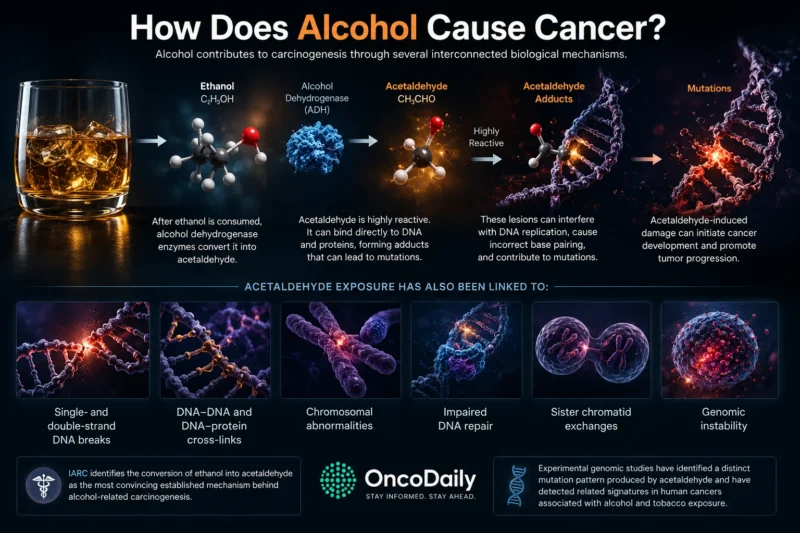
The International Agency for Research on Cancer (IARC) identifies the conversion of ethanol into acetaldehyde as the most convincing established mechanism underlying alcohol-related carcinogenesis, while experimental genomic studies have identified a distinct mutational signature caused by acetaldehyde that has been detected in human cancers associated with both alcohol and tobacco exposure. (IARC Monographs on acetaldehyde and alcohol; mechanistic reviews on alcohol and cancer (e.g., Brooks & Theruvathu; Seitz & Stickel); genomic studies on acetaldehyde-induced mutational signatures.)
Genetic Differences Can Increase Acetaldehyde Exposure
The enzyme aldehyde dehydrogenase 2, or ALDH2, helps convert acetaldehyde into acetate, which is less toxic. Some individuals inherit a reduced-function ALDH2 variant. This variant is particularly common among people of East Asian ancestry and can cause facial flushing, rapid heartbeat, headache, or nausea after drinking. Because acetaldehyde is cleared less efficiently, people with ALDH2 deficiency may experience greater acetaldehyde exposure from the same amount of alcohol. Alcohol consumption in this population is strongly associated with higher risks of esophageal and head and neck cancers.
This genetic evidence supports a causal role for acetaldehyde rather than simply an association produced by lifestyle factors. Facial flushing should not be interpreted as harmless alcohol sensitivity. It may indicate impaired acetaldehyde metabolism and increased biological exposure. (IARC evaluations of genetic susceptibility; epidemiologic studies on ALDH2 deficiency and cancer risk (e.g., Hiyama et al.; Yang et al.); HHS 2024 advisory.)
Alcohol Generates Oxidative Stress
Ethanol metabolism increases the production of reactive oxygen species (ROS), primarily through induction of the enzyme CYP2E1 and mitochondrial dysfunction. These highly reactive molecules can oxidize DNA bases, cause DNA strand breaks, damage cell membranes, impair DNA-repair enzymes, activate inflammatory pathways, and disrupt normal cellular signaling. In addition, oxidative stress promotes lipid peroxidation, generating reactive aldehydes such as malondialdehyde (MDA) and 4-hydroxynonenal (4-HNE), which can form additional DNA adducts, promote mutations, and contribute to cellular dysfunction.
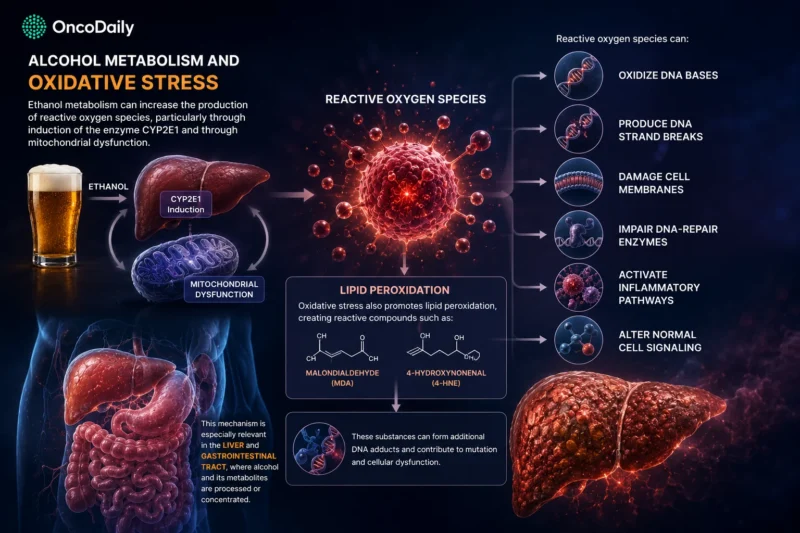
This mechanism is particularly important in the liver and gastrointestinal tract, where alcohol and its metabolites are extensively processed and concentrated, making these tissues especially vulnerable to alcohol-related carcinogenesis. (Mechanistic reviews on alcohol, oxidative stress, and carcinogenesis (e.g., Manzo-Avalos & Saavedra-Molina; Zima et al.); IARC Monographs; HHS 2024 advisory.)
Alcohol Can Alter Estrogen Levels
Alcohol consumption can raise circulating estrogen concentrations by altering estrogen metabolism and influencing aromatase activity.
Greater estrogen exposure can stimulate the proliferation of breast epithelial cells and may promote the development or growth of hormone-sensitive breast tumors.
Photo: Depositphotos
A 2024 systematic review and meta-analysis found that consuming less than one standard drink per day was associated with a small but statistically significant increase in breast cancer risk. Each additional daily drink was associated with further increases in both premenopausal and postmenopausal breast cancer risk.
This helps explain why breast cancer represents a major proportion of alcohol-attributable cancer cases among women. (2024 meta-analysis on alcohol and breast cancer risk (e.g., Chen et al. or similar recent update); IARC evaluations; HHS 2024 advisory.)
Alcohol Can Disrupt Folate Metabolism
Alcohol may interfere with the absorption, metabolism, and availability of folate. Folate is required for DNA synthesis, repair, and methylation. Reduced folate availability may lead to abnormal DNA methylation, uracil misincorporation, chromosome breaks, and impaired cellular repair. The interaction between alcohol and folate status may be particularly relevant to breast and colorectal carcinogenesis. Taking folate supplements should not be viewed as a way to neutralize alcohol-related cancer risk. Alcohol affects carcinogenesis through several pathways, and correcting one pathway does not eliminate the others. (Mechanistic and epidemiologic reviews on alcohol, folate, and cancer (e.g., Choi & Mason; Seitz et al.); IARC Monographs; HHS 2024 advisory.)
Alcohol Can Promote Chronic Liver Injury
Long-term heavy alcohol use can cause fatty liver disease, alcohol-associated hepatitis, fibrosis, and cirrhosis.
Cirrhosis creates repeated cycles of cell injury, death, inflammation, and regeneration. Each cycle of cell division provides opportunities for DNA errors and malignant transformation.
Alcohol-related oxidative stress, acetaldehyde exposure, immune dysregulation, and chronic inflammation can further promote hepatocellular carcinoma.
The risk becomes especially concerning when alcohol use occurs alongside hepatitis B, hepatitis C, obesity, metabolic dysfunction-associated steatotic liver disease, or other causes of chronic liver injury. (IARC evaluations on alcohol and liver cancer; reviews on alcohol-related liver disease and hepatocellular carcinoma (e.g., Gao et al.; Morgan et al.); HHS 2024 advisory.)
Common Myths About Beer and Cancer
Beer is one of the world’s most widely consumed alcoholic beverages, and its popularity has given rise to many misconceptions about its relationship with cancer. Some myths exaggerate beer’s unique dangers, while others falsely suggest that beer is largely harmless. Current scientific evidence provides a much clearer picture: the primary determinant of cancer risk is ethanol exposure, not the specific alcoholic beverage. Understanding these myths can help people make more informed decisions about alcohol consumption.
Myth 1: Beer Is Safer Than Spirits Because It Contains Less Alcohol
Beer usually contains a lower percentage of alcohol than distilled spirits, but this does not necessarily make it safer from a cancer perspective. Cancer risk is driven primarily by the total amount of ethanol consumed, rather than the concentration of alcohol in a particular drink. A typical serving of spirits contains a small volume but a high alcohol concentration, whereas beer is consumed in much larger volumes. Many craft beers contain 7–10% alcohol—or even more—and a large pint may contain two or more standard drinks. As a result, several beers consumed over an evening can expose the body to as much or even more ethanol than multiple servings of spirits.
Once consumed, the body metabolizes ethanol from beer, wine, and spirits in exactly the same way. Regardless of the beverage, ethanol is converted into acetaldehyde, a Group 1 carcinogen that damages DNA and promotes mutations. From the perspective of carcinogenesis, the body does not distinguish whether ethanol originated from beer, wine, or whiskey. (IARC Monographs; U.S. Department of Health and Human Services Alcohol and Cancer Risk Advisory (2025); Bagnardi et al.)
Myth 2: Beer Doesn’t Increase Cancer Risk Because Only Hard Liquor Is Dangerous
Many people associate alcohol-related cancer primarily with strong liquor, assuming that beer is too “light” to have similar effects. Scientific evidence does not support this belief. Beer contains the same ethanol molecule found in every alcoholic beverage. After drinking, ethanol is rapidly converted into acetaldehyde, which forms DNA adducts, interferes with DNA repair, increases oxidative stress, and contributes to chronic inflammation—all key mechanisms involved in cancer development.
Large epidemiological studies consistently show that cancers linked to alcohol—including cancers of the breast, colorectum, liver, oral cavity, pharynx, larynx, and esophagus are associated with total alcohol intake, not simply the type of beverage consumed. Beer therefore contributes to cancer risk in the same biological manner as wine or spirits when comparable amounts of ethanol are consumed. (IARC; World Cancer Research Fund (WCRF); HHS Alcohol and Cancer Risk Advisory (2025).
Myth 3: Moderate Beer Drinking Doesn’t Increase Cancer Risk
Heavy drinking carries the greatest cancer risk, but current evidence indicates that the relationship between alcohol and cancer is continuous rather than threshold-based. In other words, risk generally increases with increasing alcohol consumption, and no completely risk-free level has been established for cancer prevention. Recent meta-analyses have found that even light alcohol consumption is associated with increased risks of several cancers, particularly breast, colorectal, and esophageal cancers. While the absolute increase for an individual drinking occasionally may be relatively small, the effect becomes important at the population level because alcohol consumption is so common.
“The Czech Republic drinks the most beer per person, at about 148.8 liters per capita per year.”
This does not mean that one beer will cause cancer. Rather, every additional exposure contributes incrementally to lifetime risk, and the lowest alcohol-related cancer risk is observed among people who do not drink alcohol. (Jun et al. (2023); HHS Alcohol and Cancer Risk Advisory (2025); IARC.)
Myth 4: Beer Causes Cancer Because of Hops, Malt, or Other Beer Ingredients
Beer contains numerous naturally occurring compounds, including barley, hops, yeast-derived metabolites, vitamins, minerals, and plant polyphenols. Some laboratory studies have even suggested that certain hop-derived compounds possess antioxidant or anti-inflammatory properties. However, current human evidence shows that these components do not offset the carcinogenic effects of ethanol. The overwhelming scientific consensus is that ethanol and its metabolite acetaldehyde are the principal carcinogenic agents in alcoholic beverages.
This explains why beer, wine, and spirits all increase cancer risk despite having very different ingredients. Although beer contains compounds that may have biological activity, they are present in amounts that have not been shown to neutralize alcohol’s carcinogenic mechanisms in humans.
Myth 5: Switching From Beer to Wine Will Lower Cancer Risk
Wine is often perceived as the “healthier” alcoholic beverage because it contains polyphenols such as resveratrol and has sometimes been associated with cardiovascular benefits. However, these observations should not be interpreted as evidence that wine protects against cancer. When studies carefully account for smoking, diet, physical activity, body weight, socioeconomic status, and other lifestyle factors, no consistent evidence shows that wine substantially lowers cancer risk compared with beer when equivalent amounts of ethanol are consumed.
“China is the largest beer market by total volume, with around 40.5 billion liters consumed in 2024—roughly 21% of all beer drunk on Earth.”
People who drink wine often differ from beer drinkers in many ways unrelated to alcohol itself, including dietary habits and healthcare access. These differences may partly explain why some observational studies report more favorable outcomes among wine drinkers.
For cancer prevention, replacing beer with wine without reducing overall alcohol consumption is unlikely to produce a meaningful reduction in cancer risk.(Reddy et al.; Bagnardi et al.; IARC; WCRF/AICR.)
Myth 6: Taking Alcohol-Free Days Eliminates the Risk From Weekend Beer Drinking
Having several alcohol-free days each week is a healthy strategy because it reduces overall alcohol consumption. However, these days do not erase the biological effects of heavy drinking during the weekend. Binge drinking produces high concentrations of ethanol and acetaldehyde within a short period, exposing tissues to intense oxidative stress, inflammation, and DNA damage. Acute intoxication also increases the risk of accidents, alcohol poisoning, liver injury, and cardiovascular complications.

Photo: Depositphotos
Although cumulative alcohol intake remains the most important predictor of long-term cancer risk, repeated episodes of heavy weekend drinking substantially contribute to lifetime ethanol exposure. Therefore, reducing both overall alcohol intake and binge-drinking episodes is the most effective strategy for lowering alcohol-related cancer risk. (HHS Alcohol and Cancer Risk Advisory (2025); IARC evidence summaries; WHO alcohol guidance.)
Does Drinking Pattern Matter?
Total lifetime consumption is the main determinant of alcohol-related cancer risk, but drinking pattern may influence the type and intensity of harm.
Frequent drinking maintains repeated tissue exposure to ethanol and acetaldehyde. Binge drinking creates high peak concentrations over a short period.
Both patterns can contribute to cumulative exposure. Most epidemiological studies estimate average consumption because it is easier to measure over long periods. This means the independent contribution of binge drinking to cancer risk remains less precisely characterized than its relationship with injury, cardiovascular events, alcohol poisoning, and liver damage.
A person who consumes seven drinks during one night is not biologically equivalent in every respect to someone consuming one drink on seven separate days. Nevertheless, neither pattern should be considered risk-free. Reducing both average volume and episodes of heavy consumption is the most practical approach. (HHS 2024 advisory; IARC evaluations; epidemiologic studies on drinking patterns and cancer (e.g., Abraham et al.).
Which Populations May Face Greater Risk From Beer Consumption?
Some people may experience greater alcohol-related cancer risk because of genetic factors, existing health conditions, treatment exposures, or the combined effects of alcohol with other carcinogens. For these higher-risk groups, reducing or avoiding alcohol may be particularly important and should be considered as part of an individualized prevention or treatment plan.
Women and People at Increased Breast Cancer Risk
Even low levels of alcohol consumption are associated with increased breast cancer risk.
People with a strong family history, pathogenic variants such as BRCA1 or BRCA2, previous atypical breast lesions, or other elevated-risk features may wish to discuss alcohol intake with a clinician as part of an individualized risk-reduction plan.
Alcohol is only one component of breast cancer risk, but it is modifiable. (Recent meta-analyses on alcohol and breast cancer (e.g., Chen et al.); HHS 2024 advisory; IARC evaluations.)
People With ALDH2 Deficiency
Individuals who develop facial flushing after alcohol may have reduced ALDH2 activity.
Continuing to drink despite flushing can result in high acetaldehyde exposure and substantially increased risk of esophageal and head and neck cancers.
Reducing intake or avoiding alcohol is especially important for this group. (IARC Monographs; genetic epidemiology studies on ALDH2 (e.g., Yang et al.; Hiyama et al.); HHS 2024 advisory.)
People With Chronic Liver Disease
Patients with chronic hepatitis B or C, cirrhosis, alcohol-associated liver disease, or other significant liver conditions are generally advised to avoid alcohol.
Alcohol may accelerate fibrosis, worsen hepatic inflammation, and increase the risk of hepatocellular carcinoma.
People Who Smoke
The combination of tobacco and alcohol is especially hazardous for cancers of the mouth, throat, larynx, and esophagus.
For people who smoke and drink, addressing both exposures offers greater cancer-prevention benefit than focusing on only one. (IARC Monographs on alcohol and tobacco; HHS 2024 advisory; Bagnardi et al.)
Cancer Survivors and People Receiving Treatment
Alcohol recommendations during or after cancer treatment vary according to cancer type, liver function, medication use, nutrition, mucosal symptoms, and risk of recurrence or second cancers. Alcohol may interact with sedatives, pain medicines, anticoagulants, some anticancer drugs, and other treatments. It may also worsen dehydration, neuropathy, mouth sores, sleep disturbance, or liver injury. Patients receiving treatment should ask their oncology team whether alcohol is appropriate rather than relying solely on general population guidance.
What Can Readers Do to Reduce Alcohol-Related Cancer Risk?
The most effective strategy is to reduce total ethanol exposure. Practical approaches include:
- Choosing alcohol-free drinks more often
- Setting a lower weekly limit
- Recording intake rather than estimating from memory
- Adding several alcohol-free days each week
- Avoiding binge-drinking episodes
- Selecting smaller servings
- Choosing lower-alcohol beer
- Checking the alcohol percentage of craft beers
- Avoiding automatic refills
- Alternating alcoholic drinks with water
- Removing alcohol from routine evening habits
- Seeking professional support when reducing intake is difficult
- Switching from beer to wine or spirits without reducing ethanol intake is unlikely to provide meaningful cancer protection.
A “standard drink” is also easy to underestimate. Alcohol content varies greatly by beer strength, container size, wine pour, and cocktail preparation. A single large craft beer may equal two or more standard drinks.
For people who do not currently drink, health agencies do not recommend beginning alcohol consumption for possible health benefits.
When Should Someone Speak With a Clinician?
A medical discussion may be particularly useful for:
- Women with elevated breast cancer risk
- People with chronic liver disease
- Individuals with hepatitis B or C
- People with a previous alcohol-related cancer
- Survivors concerned about recurrence or second cancers
- People who smoke and drink regularly
- Individuals who flush after drinking
- Those taking medications that interact with alcohol
- Anyone who finds it difficult to reduce consumption
- People who experience withdrawal symptoms
- Possible withdrawal symptoms include tremor, sweating, nausea, agitation, insomnia, rapid heartbeat, hallucinations, or seizures.
- People who may be physically dependent on alcohol should not abruptly stop without medical advice because severe withdrawal can be dangerous.
How Should Alcohol-Cancer Risk Be Communicated?
Cancer risk should be communicated without exaggeration, stigma, or false reassurance.
Saying that alcohol causes cancer does not mean that every person who drinks will develop cancer. Cancer arises through interactions between age, genetics, environment, behavior, immune function, and chance. Similarly, saying that the increase from low-level drinking may be modest for an individual does not make the public-health burden insignificant. A relative risk increase of several percentage points may translate into many additional cancer cases when the exposure and disease are both common.
The most useful communication principles are:
- Risk generally increases with consumption
- Less alcohol means less alcohol-related cancer risk
- No beverage type has been shown to eliminate that risk
- Absolute risk varies between individuals
- Alcohol reduction is one of several cancer-prevention strategies
- People should not be blamed for developing cancer
Alcohol use should be discussed alongside smoking cessation, vaccination, healthy weight, physical activity, sun protection, screening, occupational safety, and other evidence-based prevention measures.
What Are the Limitations of the Evidence?
Much of the epidemiological evidence comes from observational cohort and case-control studies rather than randomized trials. Randomly assigning people to drink alcohol for decades to determine whether they develop cancer would be unethical and impractical. Researchers must therefore rely on reported consumption and long-term follow-up.
This creates several limitations.
- Self-Reported Alcohol Intake: People may underreport how much they drink because they forget, feel embarrassed, or misjudge serving sizes. Alcohol consumption may also change over time, while some studies measure intake only once.
- The “Former Drinker” Problem: Some studies have historically grouped lifelong abstainers together with former drinkers. Former drinkers may have stopped because of illness or previous heavy alcohol use, which can make current drinkers appear healthier by comparison.
- Residual Confounding: Beer, wine, and spirit drinkers may differ in smoking habits, diet, income, education, physical activity, occupation, and access to healthcare. Statistical adjustment can reduce these differences but cannot eliminate them completely.
- Inconsistent Drinking Definitions: The terms “light,” “moderate,” and “heavy” drinking are not defined in the same way across studies or countries. Standard-drink sizes also vary internationally, making direct comparisons more difficult.
- Beverage-Specific Evidence Is Less Reliable: Total alcohol exposure is usually measured more consistently than intake of a specific beverage such as beer.
This is why the evidence linking alcohol overall to cancer is stronger than claims that beer, wine, or spirits are uniquely harmful or protective. Despite these limitations, the combined epidemiological, mechanistic, toxicological, and genetic evidence provides a strong basis for concluding that alcoholic beverages can cause cancer. (WCRF/AICR methodological reports; IARC evaluations; HHS Alcohol and Cancer Risk Advisory; systematic reviews on alcohol and cancer epidemiology, including Bagnardi et al. and Jun et al.)
You Can Also Read Does Microwaved Food Cause Cancer: Separating Myths from Scientific Facts by OncoDaily

Written by Aharon Tsaturyan, MD, Editor at OncoDaily Intelligence Unit
FAQ
Does beer cause cancer?
Yes. Beer contains ethanol, a known human carcinogen that the body converts into acetaldehyde, another cancer-causing substance. Beer consumption can therefore contribute to the risk of several cancers, although drinking beer does not mean that a person will necessarily develop cancer.
What types of cancer are linked to drinking beer?
Because beer contains alcohol, it can contribute to cancers of the mouth, pharynx, larynx, esophagus, liver, colon, rectum, and female breast. The relationship is generally stronger as alcohol consumption increases.
Can one beer a day increase cancer risk?
Even relatively low levels of alcohol consumption may increase the risk of certain cancers, particularly breast, colorectal, and esophageal cancers. The increase for an individual may be small, but no completely risk-free level of alcohol consumption has been established for cancer prevention.
Is beer more likely to cause cancer than wine or liquor?
Current evidence does not consistently show that beer is uniquely more carcinogenic than wine or spirits when equivalent amounts of ethanol are consumed. The total amount of alcohol consumed over time is generally more important than the beverage type.
How does beer increase cancer risk?
Ethanol in beer is converted into acetaldehyde, which can damage DNA and interfere with DNA repair. Alcohol can also generate oxidative stress, increase estrogen levels, impair folate metabolism, promote inflammation, and contribute to chronic liver injury.
Is moderate beer drinking safe?
Moderate drinking carries less risk than heavy drinking, but lower risk does not mean zero risk. For cancer prevention, consuming less alcohol is generally safer than consuming more, and not drinking produces the lowest alcohol-related cancer risk.
Does alcohol-free beer cause cancer?
Alcohol-free and non-alcoholic beers usually contain little or no alcohol, so they are expected to carry substantially less alcohol-related cancer risk than standard beer. However, some products may contain small amounts of alcohol, so people who need to avoid alcohol completely should check the label carefully.
Can beer increase breast cancer risk?
Yes. Alcohol can raise estrogen levels and contribute to biological changes involved in breast cancer development. Even low levels of alcohol consumption have been associated with a small increase in breast cancer risk.
Can beer cause colorectal or liver cancer?
Alcohol consumption is causally associated with both colorectal and liver cancer. Heavy or prolonged beer consumption may substantially increase total ethanol exposure and can also contribute to liver inflammation, fibrosis, cirrhosis, and hepatocellular carcinoma.
Does cancer risk decrease after stopping drinking beer?
Reducing or stopping alcohol consumption can lower future alcohol-related cancer risk, although the amount of risk reduction and the time required vary by cancer type and previous drinking history. Stopping also provides additional benefits for liver health, blood pressure, sleep, and overall well-being.