
Key takeaways
- Chemotherapy-induced diarrhea (CID) occurs when certain chemotherapy drugs affect the intestinal lining and disrupt normal water absorption, secretion, and bowel movement.
- Fluoropyrimidines and irinotecan are among the chemotherapy drugs most strongly associated with clinically significant diarrhea.
- The risk of CID varies between patients and can be influenced by the chemotherapy dose and schedule, previous gastrointestinal toxicity, and genetic factors such as DPYD and UGT1A1 variants.
- CID can range from mild to severe. Persistent or severe diarrhea can lead to dehydration, electrolyte abnormalities, nutritional problems, treatment delays, or dose modifications.
- Early recognition and management are important. Patients should report frequent or worsening diarrhea, especially when accompanied by fever, dizziness, abdominal pain, bleeding, or difficulty maintaining hydration.
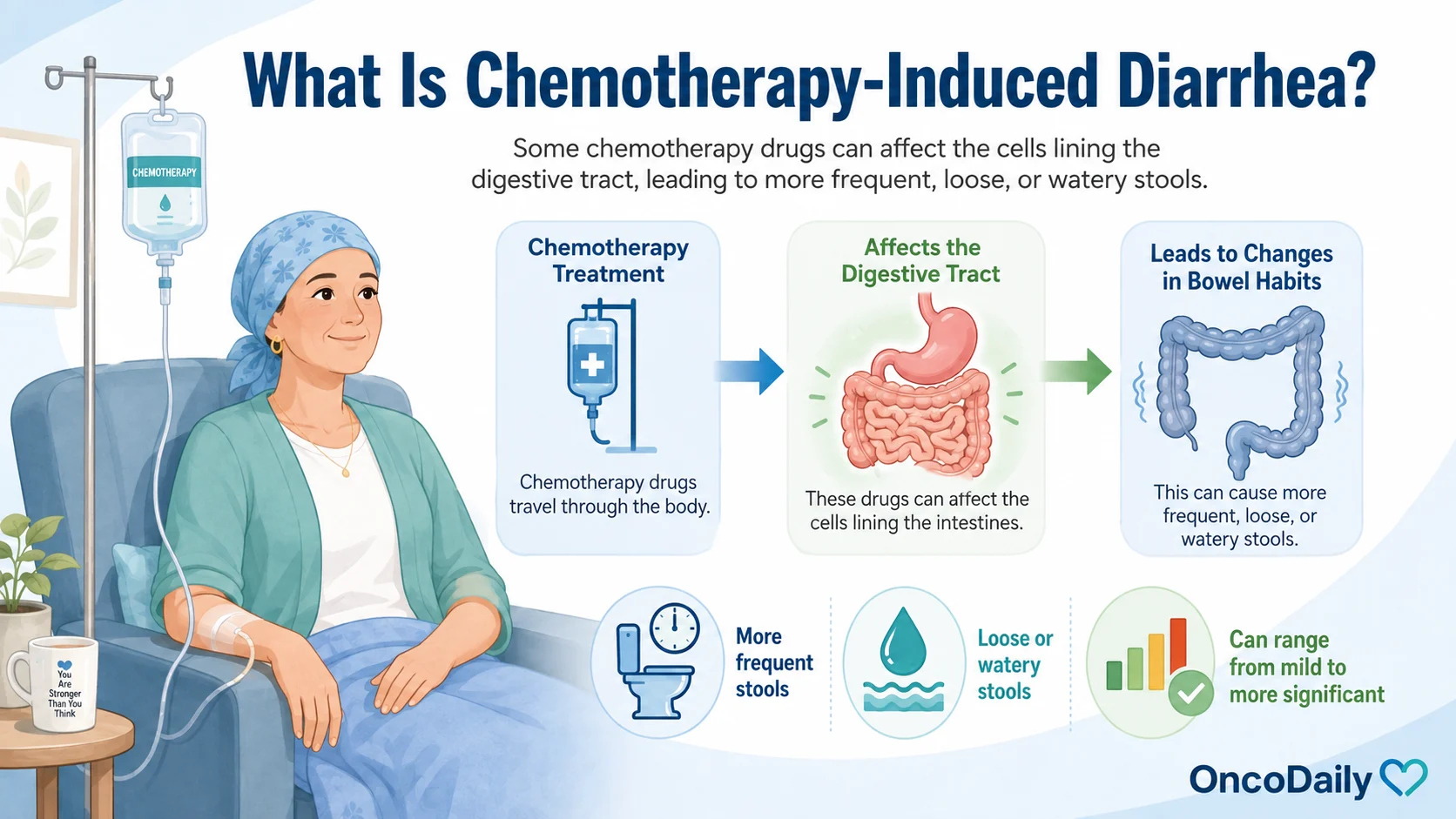
Chemotherapy-induced diarrhea (CID) is a gastrointestinal side effect that can occur during treatment with certain anticancer drugs. It happens when chemotherapy affects the rapidly dividing cells that line the digestive tract, particularly the small and large intestine. This can temporarily disturb the intestine’s normal ability to absorb water and nutrients and regulate the movement of stool.
As a result, a person may have bowel movements that are more frequent, loose, or watery compared with their usual pattern. The severity can vary considerably, depending on the chemotherapy drug, dose, treatment schedule, and individual patient factors. Some people experience only mild symptoms, while others can develop more significant diarrhea.
Chemotherapy-induced diarrhea is important to recognize because persistent symptoms can affect hydration, nutrition, daily activities, and overall well-being during cancer treatment.
How Does Chemotherapy Cause Diarrhea?
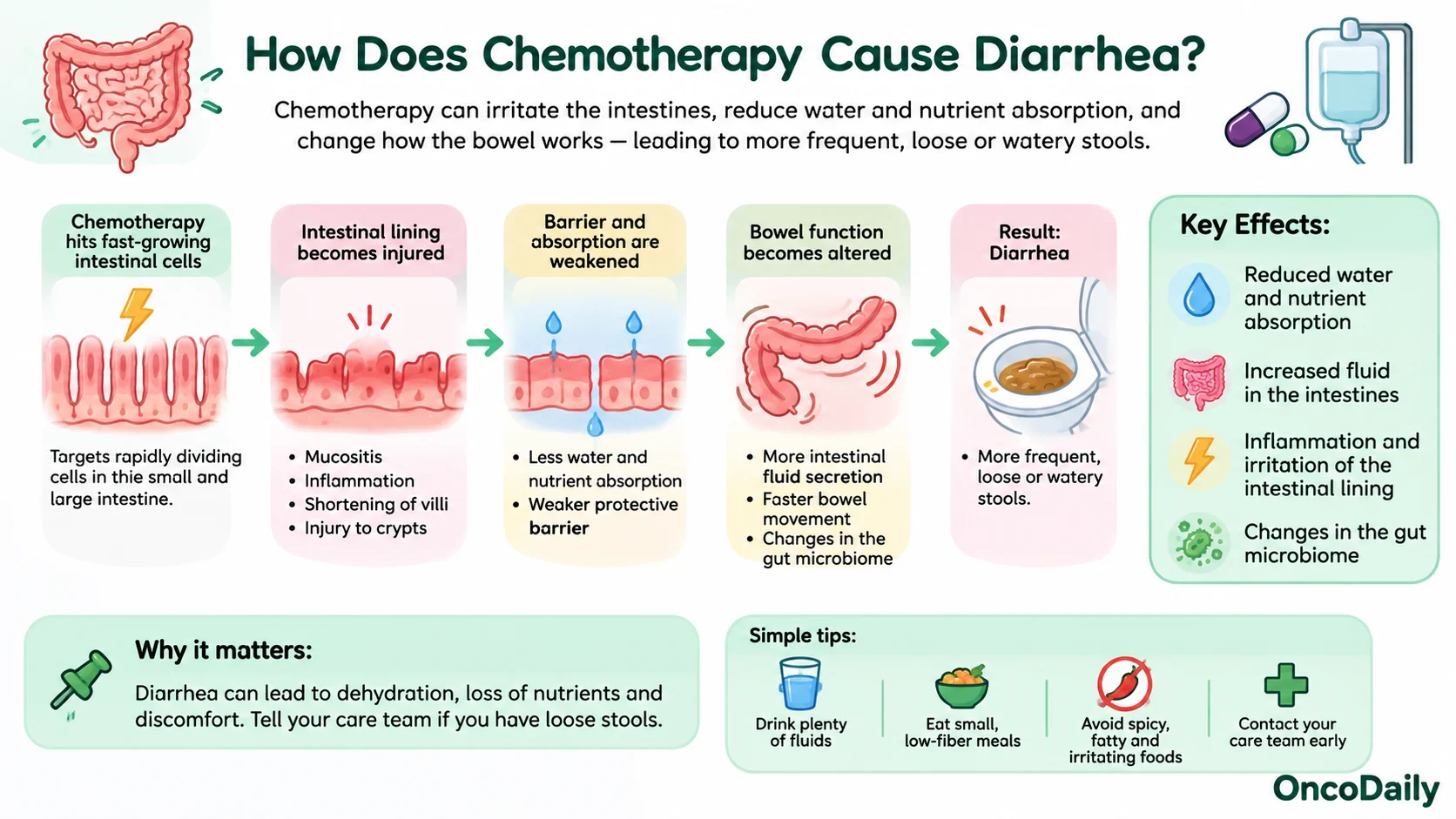
The development of chemotherapy-induced diarrhea involves several changes within the intestine. Chemotherapy can damage the rapidly renewing cells of the intestinal lining, causing mucositis, inflammation, shortening of the intestinal villi, and injury to the crypts. These changes reduce the surface available for absorbing water and electrolytes and can weaken the protective intestinal barrier.
Chemotherapy can also disturb the balance between fluid absorption and secretion in the bowel. When less fluid is absorbed and more remains within the intestine, stools become looser and more frequent. Changes in intestinal movement, inflammation, the enteric nervous system, and the gut microbiome can further contribute to diarrhea (McQuade et al., 2016; Akbarali et al., 2022).
Some drugs have additional mechanisms. Irinotecan, for example, can cause an early form of diarrhea related to its cholinergic effects and a delayed form associated with intestinal exposure to its active metabolite, SN-38. Intestinal bacteria can also influence SN-38 metabolism, which may contribute to mucosal injury and inflammation. Overall, CID is therefore not caused by one single process, but by a combination of mucosal damage, inflammation, altered secretion and absorption, changes in intestinal movement, and disruption of the gut environment (McQuade et al., 2016).
Which Chemotherapy Drugs Are Most Likely to Cause Diarrhea?
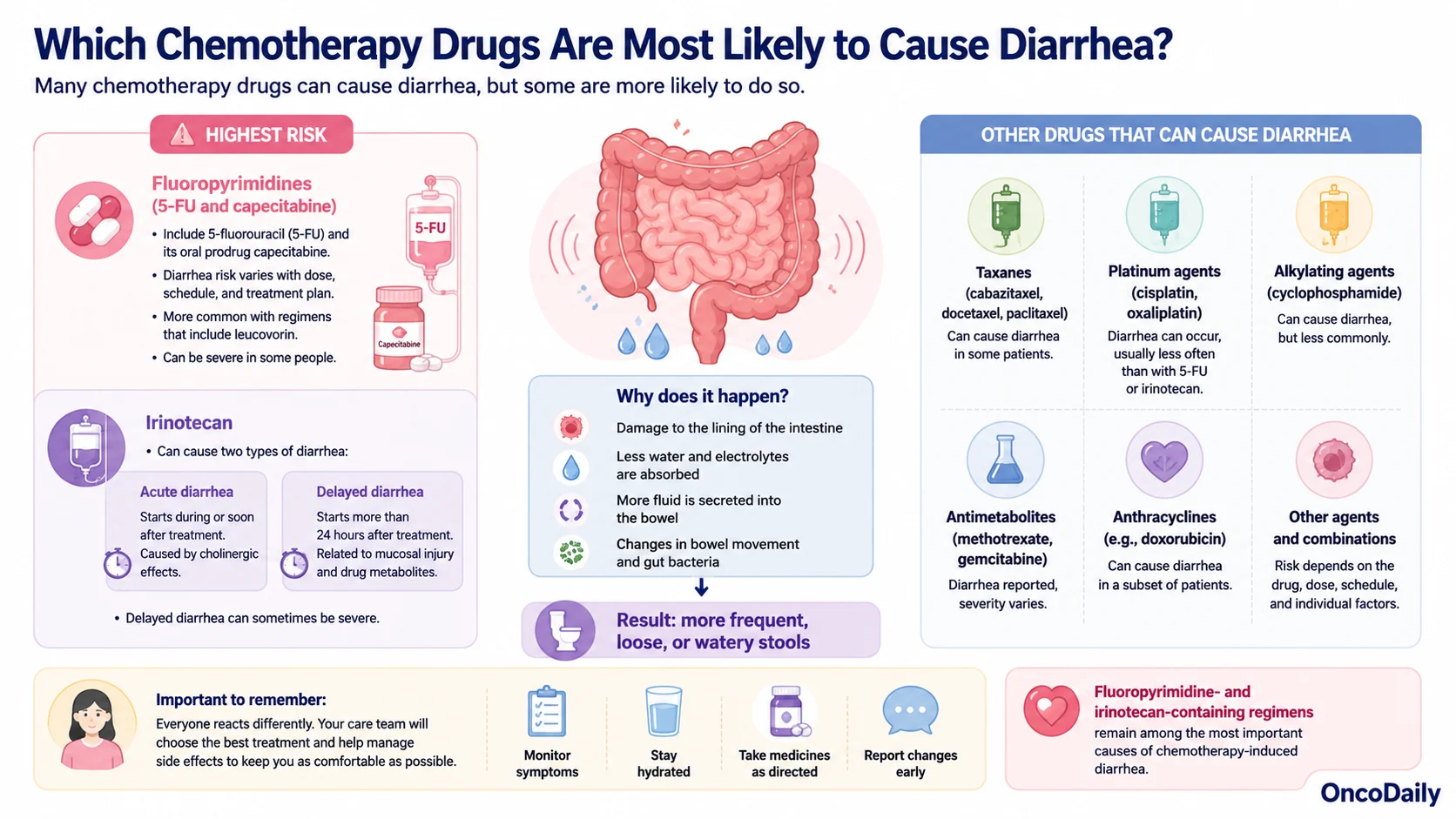
Many chemotherapy drugs can cause diarrhea, but the risk is particularly important with fluoropyrimidines and irinotecan. Fluoropyrimidines include 5-fluorouracil (5-FU) and its oral prodrug capecitabine. Diarrhea with 5-FU can vary according to the dose and treatment schedule and is more frequent with some regimens containing leucovorin. Capecitabine is also well recognized for causing diarrhea, which can occasionally become severe (Bossi et al., 2018).
Irinotecan is another major cause of chemotherapy-induced diarrhea. It can produce acute diarrhea, which develops during or soon after treatment because of its cholinergic effects, as well as delayed diarrhea, which generally begins more than 24 hours after treatment and is related to intestinal exposure to irinotecan metabolites and mucosal injury. Delayed diarrhea can sometimes become severe (Bossi et al., 2018).
Diarrhea has also been reported with other cytotoxic drugs, including cabazitaxel, docetaxel, paclitaxel, cisplatin, oxaliplatin, cyclophosphamide, methotrexate, gemcitabine, and anthracyclines, although its frequency and severity vary considerably between drugs and treatment regimens. Overall, fluoropyrimidine- and irinotecan-containing regimens remain among the most clinically important causes of CID (Bossi et al., 2018; McQuade et al., 2016).
Who Is at Higher Risk of Chemotherapy-Induced Diarrhea?
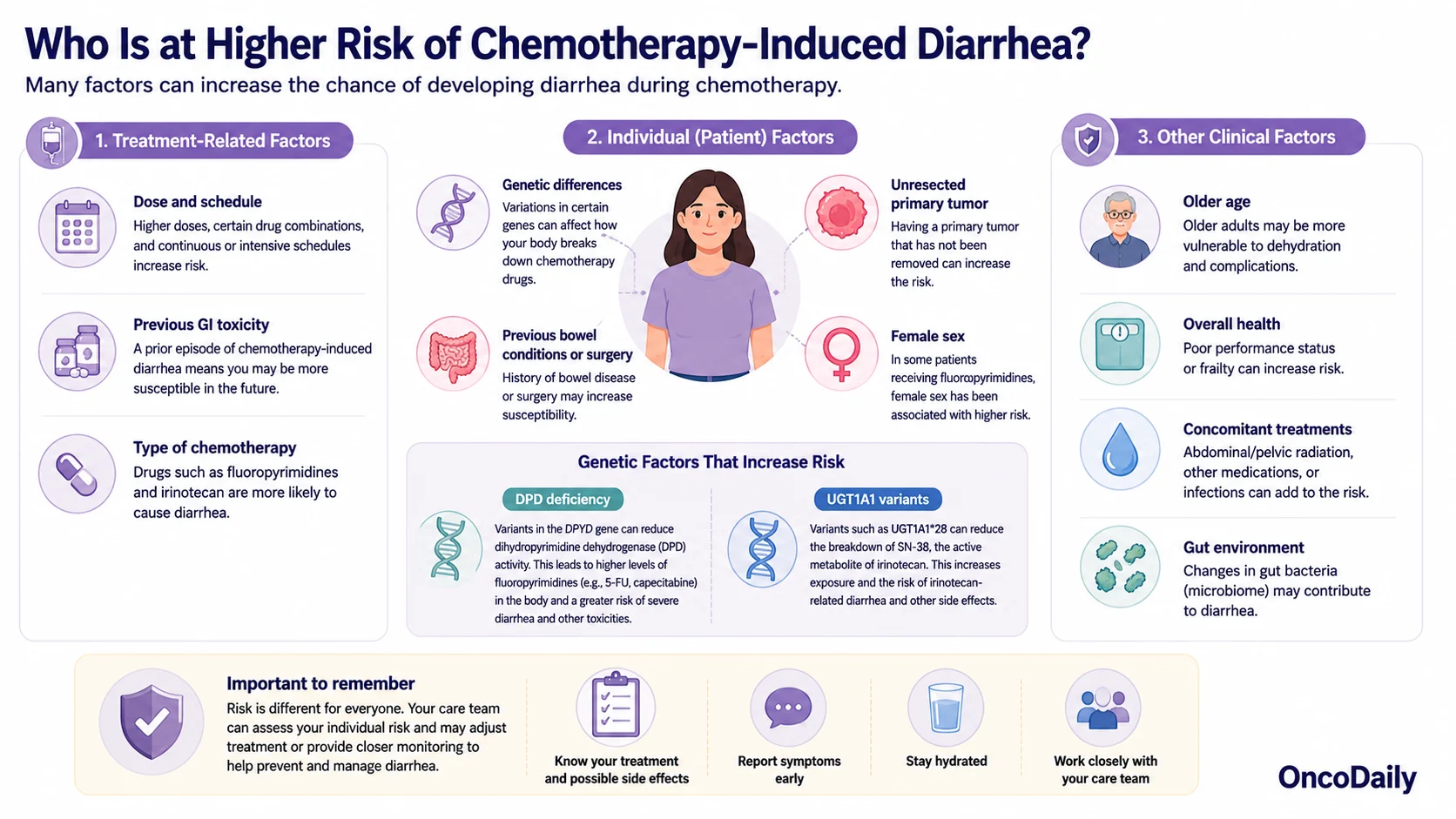
The likelihood of developing chemotherapy-induced diarrhea is not the same for every patient. Risk is influenced by the dose and schedule of treatment, previous gastrointestinal toxicity, individual differences in drug metabolism, and other clinical factors. A previous episode of chemotherapy-induced diarrhea can indicate greater susceptibility during subsequent treatment (Bossi et al., 2018).
Genetic differences can also influence risk. Reduced activity of dihydropyrimidine dehydrogenase (DPD), usually related to variants in the DPYD gene, can result in unusually high exposure to fluoropyrimidines and increase the risk of severe toxicity, including diarrhea. Similarly, certain variants of UGT1A1, particularly UGT1A128, can reduce the metabolism of the active irinotecan metabolite SN-38 and increase the risk of irinotecan-related toxicity. ESMO also identifies factors such as an unresected primary tumor and, in some fluoropyrimidine-treated populations, female sex as associated with a greater risk of diarrhea (Bossi et al., 2018).
How Severe Can Chemotherapy-Induced Diarrhea Be?
Chemotherapy-induced diarrhea can range from a relatively mild change in bowel habits to a serious complication. The National Cancer Institute Common Terminology Criteria for Adverse Events (CTCAE) is commonly used to describe its severity. In the current CTCAE v6.0, grade 1 represents a change in stool consistency or frequency. Grade 2includes an increase of 4–6 stools per day above baseline, while grade 3 includes an increase of 7 or more stools per day above baseline, the need for hospitalization or intravenous intervention, or substantial interference with daily self-care. Grade 4 describes life-threatening diarrhea requiring urgent intervention, while grade 5 represents death related to the adverse event (National Cancer Institute, 2025).
Severe or persistent CID can lead to dehydration, electrolyte abnormalities, nutritional problems, fatigue, and impaired kidney function. It can also interfere with cancer treatment by requiring dose reductions, treatment delays, or, in some cases, discontinuation of chemotherapy. For this reason, the clinical importance of CID extends beyond bowel symptoms alone and can affect both quality of life and the delivery of anticancer treatment (Arnold et al., 2005; McQuade et al., 2016).
You can also read Chemotherapy-Induced Nausea and Vomiting: Prevention, Treatment, and Practical Tips on OncoDaily.
How Is Chemotherapy-Induced Diarrhea Prevented and Managed?
Managing chemotherapy-induced diarrhea begins with early recognition. Patients should be told to monitor changes in their usual bowel habits and contact their cancer care team if diarrhea develops or becomes persistent. Maintaining adequate fluid intake is particularly important because frequent watery stools can quickly lead to dehydration and electrolyte loss.
For mild, uncomplicated diarrhea, management usually includes oral fluids, dietary adjustments, and an antidiarrheal medicine such as loperamide. The exact dose and schedule should follow the oncology team’s instructions and may differ depending on the chemotherapy regimen. Foods that are easier to digest may be preferred temporarily, while foods and drinks that can worsen diarrhea such as fatty or spicy foods, alcohol, caffeine, and sometimes lactose may need to be limited.
Patients whose diarrhea does not improve despite initial treatment require further assessment. Octreotide can be considered when diarrhea is persistent or does not respond adequately to loperamide. Severe diarrhea, or diarrhea accompanied by fever, dehydration, significant abdominal pain, vomiting, blood in the stool, or neutropenia, may require hospital assessment, intravenous fluids and electrolyte replacement, and investigation for infection or other causes (Andreyev et al., 2014; Bossi et al., 2018).
Chemotherapy may sometimes need to be temporarily delayed or the dose adjusted until symptoms improve. The overall goal is to control diarrhea early, prevent dehydration and other complications, and allow cancer treatment to continue as safely as possible (Andreyev et al., 2014).
You can also read Eating During Chemotherapy: What to Eat and What to Avoid on OncoDaily.

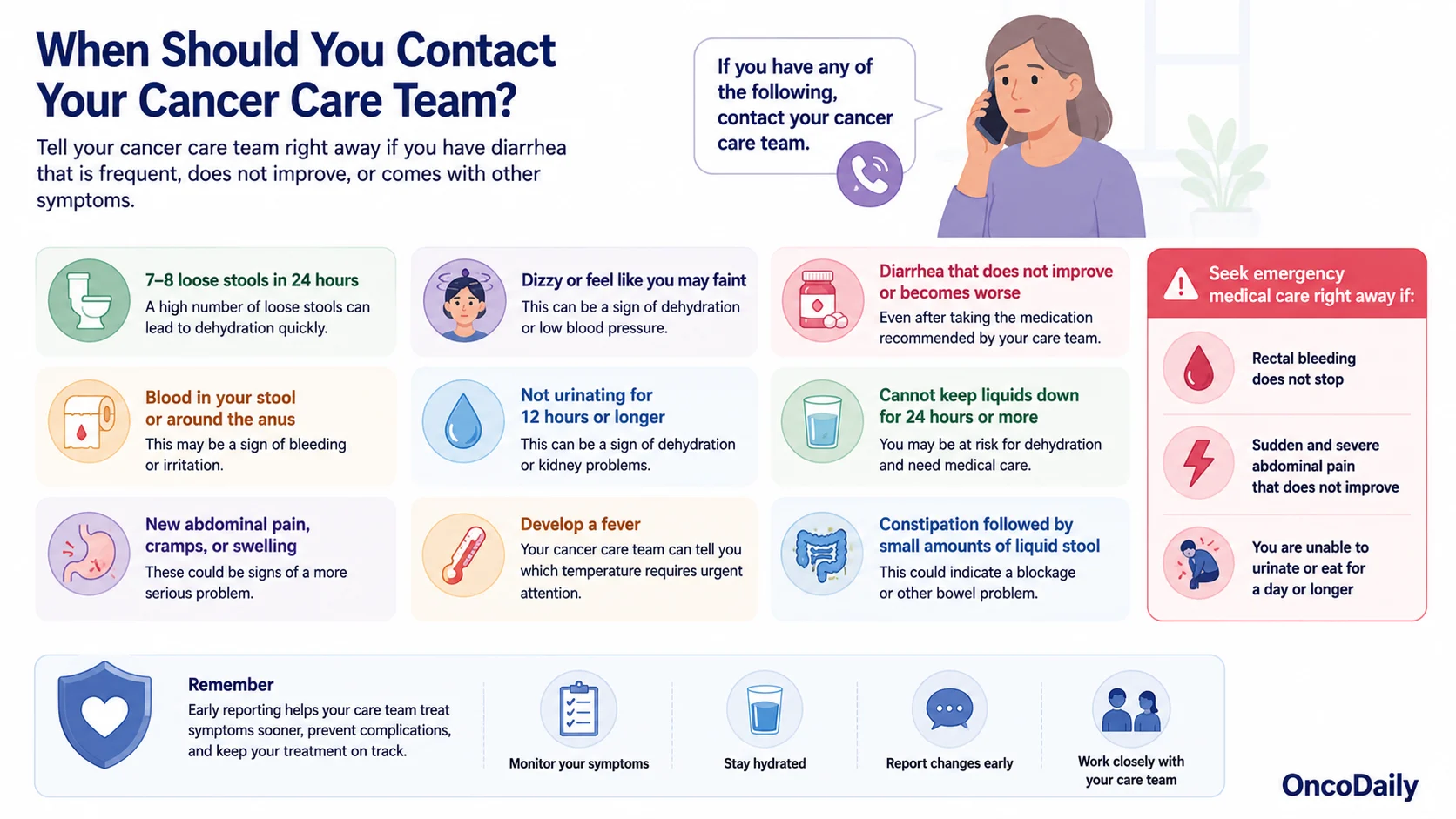
When Should You Contact Your Cancer Care Team?
Diarrhea during chemotherapy should be reported to your cancer care team if it becomes frequent, does not improve, or is accompanied by symptoms that could suggest dehydration or another complication.
Contact your cancer care team if you:
- Have 7–8 loose stools within 24 hours
- Feel dizzy or as though you may faint
- Have diarrhea that does not improve or becomes worse despite taking the medication recommended by your healthcare team
- Notice blood in your stool or around the anus
- Have not urinated for 12 hours or longer
- Cannot keep liquids down for 24 hours or more
- Develop new abdominal pain, cramps, or swelling
- Develop a fever; your cancer care team can tell you which temperature requires urgent attention
- Have been constipated for several days and then begin passing small amounts of liquid stool
Seek emergency medical care if rectal bleeding does not stop, you develop sudden and severe abdominal pain that does not improve, or you are unable to urinate or eat for a day or longer (American Cancer Society, 2026).
Written by Marine Marachlian, MD
FAQ
What is chemotherapy-induced diarrhea?
Chemotherapy-induced diarrhea is a side effect of certain chemotherapy drugs that causes stools to become more frequent, loose, or watery compared with a person's usual bowel pattern.
Why does chemotherapy cause diarrhea?
Chemotherapy can damage the rapidly renewing cells lining the intestine. This can cause inflammation, reduce water and electrolyte absorption, increase fluid in the bowel, and alter normal intestinal movement.
Which chemotherapy drugs are most likely to cause diarrhea?
The risk is particularly important with 5-fluorouracil (5-FU), capecitabine, and irinotecan. Other chemotherapy drugs can also cause diarrhea, although the frequency and severity vary.
Can irinotecan cause different types of diarrhea?
Yes. Irinotecan can cause acute diarrhea during or shortly after treatment because of its cholinergic effects and delayed diarrhea, usually occurring more than 24 hours later, related to intestinal exposure to its metabolites.
Who is at higher risk of chemotherapy-induced diarrhea?
Risk can be influenced by the chemotherapy regimen, dose and schedule, previous episodes of diarrhea, gastrointestinal health, and individual differences in how chemotherapy is metabolized.
Can genetics affect the risk of chemotherapy-induced diarrhea?
Yes. Reduced DPD activity, often related to DPYD variants, can increase fluoropyrimidine toxicity. Certain UGT1A1 variants can also increase the risk of irinotecan-related toxicity.
How severe can chemotherapy-induced diarrhea become?
CID can range from a mild change in bowel habits to severe diarrhea requiring medical treatment or hospitalization. Severe cases can cause dehydration, electrolyte disturbances, nutritional problems, and kidney complications.
How is chemotherapy-induced diarrhea managed?
Management depends on severity and may include fluids, dietary adjustments, antidiarrheal medicines such as loperamide, and closer medical monitoring. Persistent or severe cases may require intravenous fluids, octreotide, investigation for other causes, or temporary changes to chemotherapy.
Should I change my diet if I develop diarrhea during chemotherapy?
Temporary dietary changes may help. Patients are often advised to maintain adequate fluid intake and choose foods that are easier to digest while limiting foods and drinks that worsen symptoms. Specific recommendations should be discussed with the cancer care team.
When should I contact my cancer care team?
Contact your cancer care team if diarrhea becomes frequent or persistent, does not improve with recommended medication, or occurs with fever, dizziness, blood in the stool, significant abdominal pain or swelling, reduced urination, or difficulty keeping liquids down.