Key takeaways
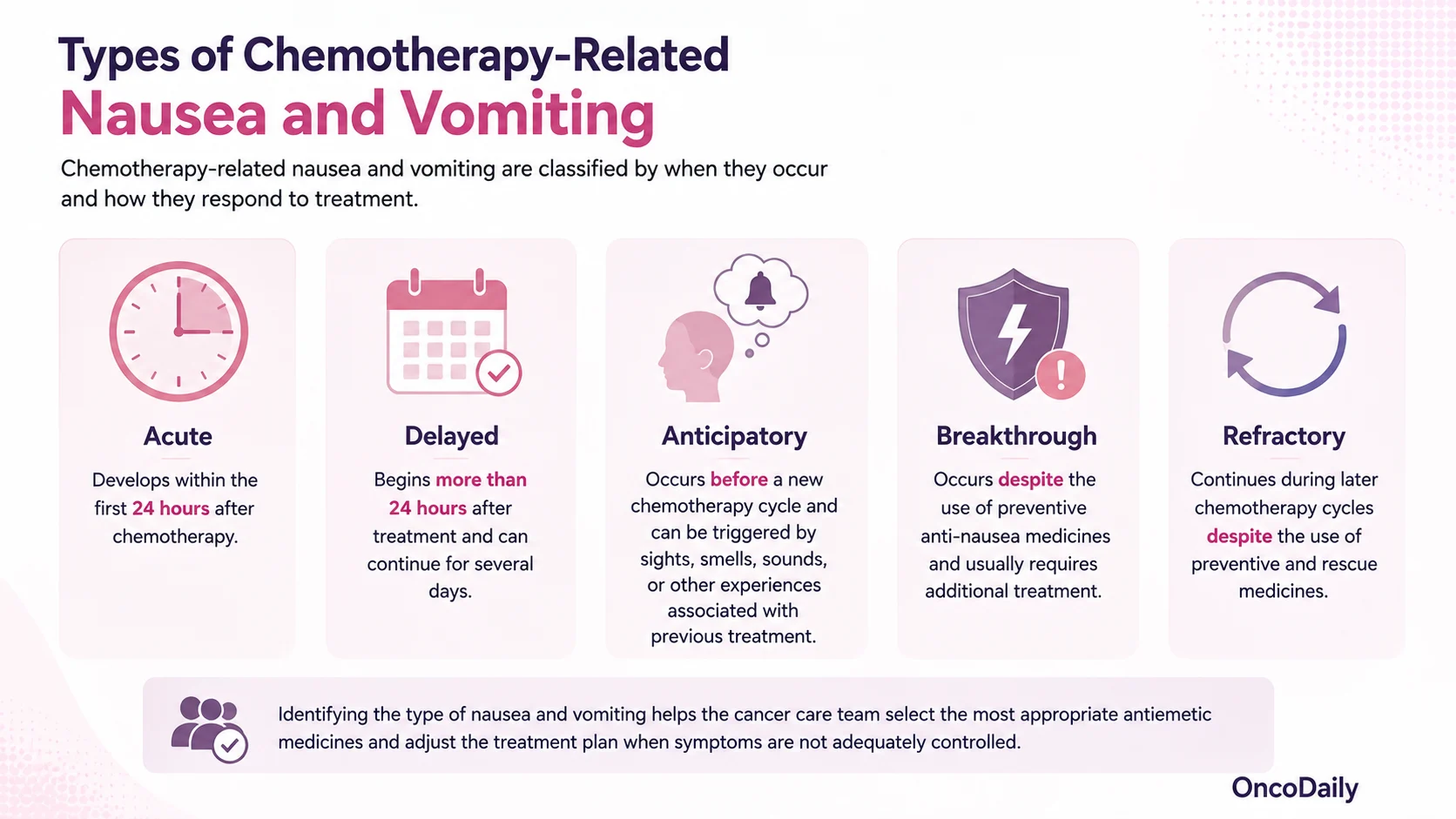
- Chemotherapy-related nausea and vomiting can occur within hours of treatment or develop several days later.
- Anti-nausea medicines work best when taken before symptoms begin and continued exactly as prescribed.
- Small, frequent meals and bland, cool, or mild foods may be easier to tolerate than large or strongly scented meals.
- Frequent small sips of fluid can help prevent dehydration, especially when eating or drinking is difficult.
- Contact the cancer care team if symptoms are not controlled, fluids cannot be kept down, dehydration develops, or fever or other serious warning signs appear.
Nausea and vomiting are among the most familiar side effects of chemotherapy, but they are not experienced in the same way by every patient. Some people develop symptoms within hours of treatment, while others feel unwell one or more days later. The risk depends on the chemotherapy medicines used, the dose and treatment schedule, and individual factors such as age, previous motion sickness, pregnancy-related nausea, or symptoms during earlier treatment cycles.
Today, chemotherapy-related nausea and vomiting can often be prevented or reduced with carefully planned anti-nausea medicines. These medicines usually work best when taken before symptoms begin and continued as prescribed after treatment. Practical measures, including choosing easy-to-tolerate foods, drinking fluids in small amounts, avoiding strong smells, and using relaxation techniques, can provide additional support.
This article explains why chemotherapy causes nausea and vomiting, the different types that can occur, which patients may be at greater risk, how symptoms are prevented and treated, what foods and drinks may be easier to tolerate, and when it is important to contact the cancer care team.
Why Does Chemotherapy Cause Nausea and Vomiting?
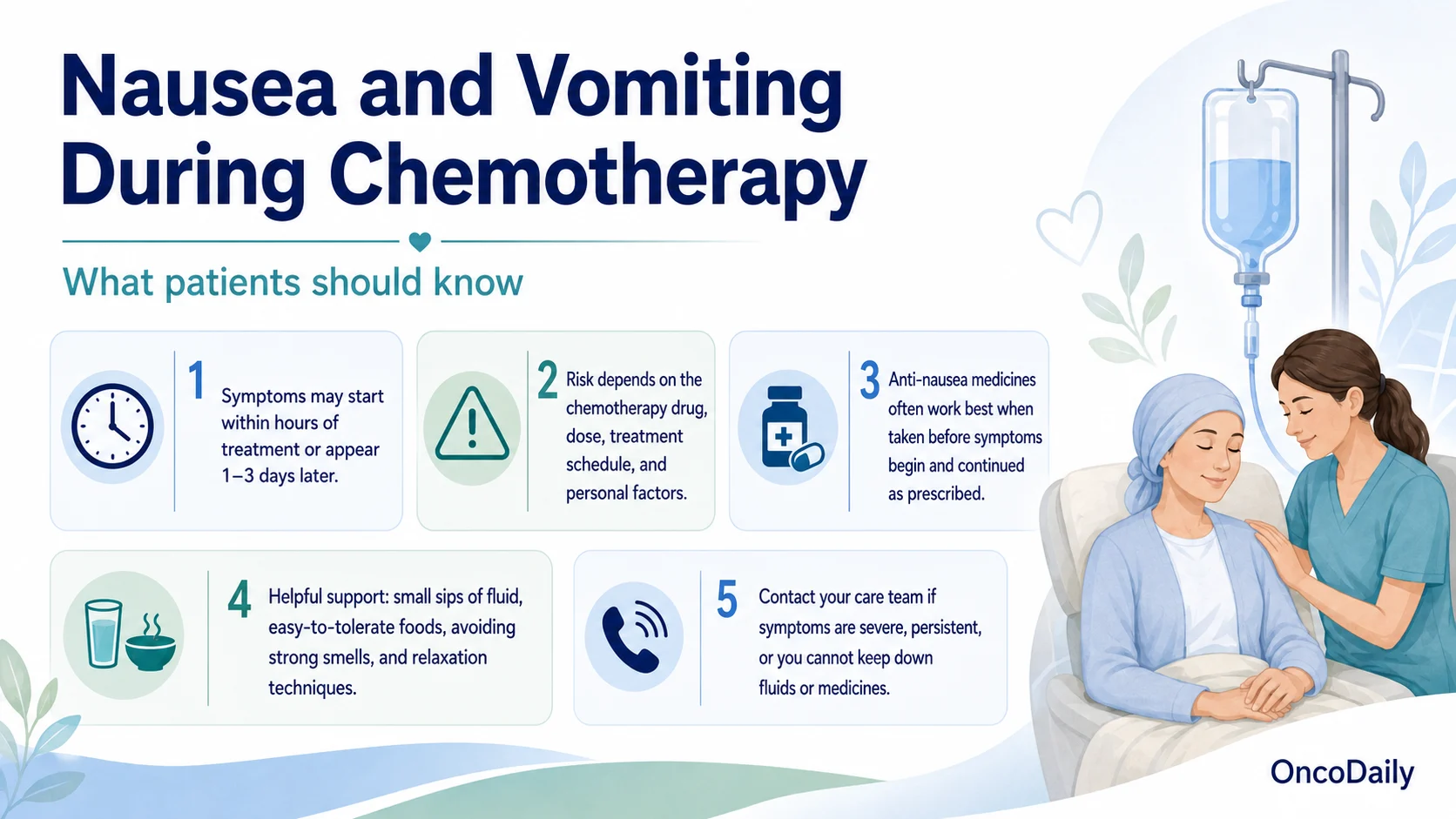
Chemotherapy can cause nausea and vomiting by activating communication pathways between the digestive system and the brain. Certain chemotherapy drugs stimulate cells in the lining of the stomach and intestines to release serotonin and other chemical messengers. These substances activate nearby nerves, which send signals to the vomiting center in the brain. Substance P and other neurotransmitters also play an important role, particularly in symptoms that develop later after treatment.
The likelihood and severity of nausea and vomiting depend on the chemotherapy drug, dose, treatment schedule, and route of administration. Individual factors also influence risk, including a history of motion sickness, pregnancy-related nausea, or nausea and vomiting during previous chemotherapy cycles. Symptoms can begin within the first 24 hours after treatment or appear later and continue for several days (Rao and Faso, 2012).
What Are the Different Types of Chemotherapy-Related Nausea and Vomiting?
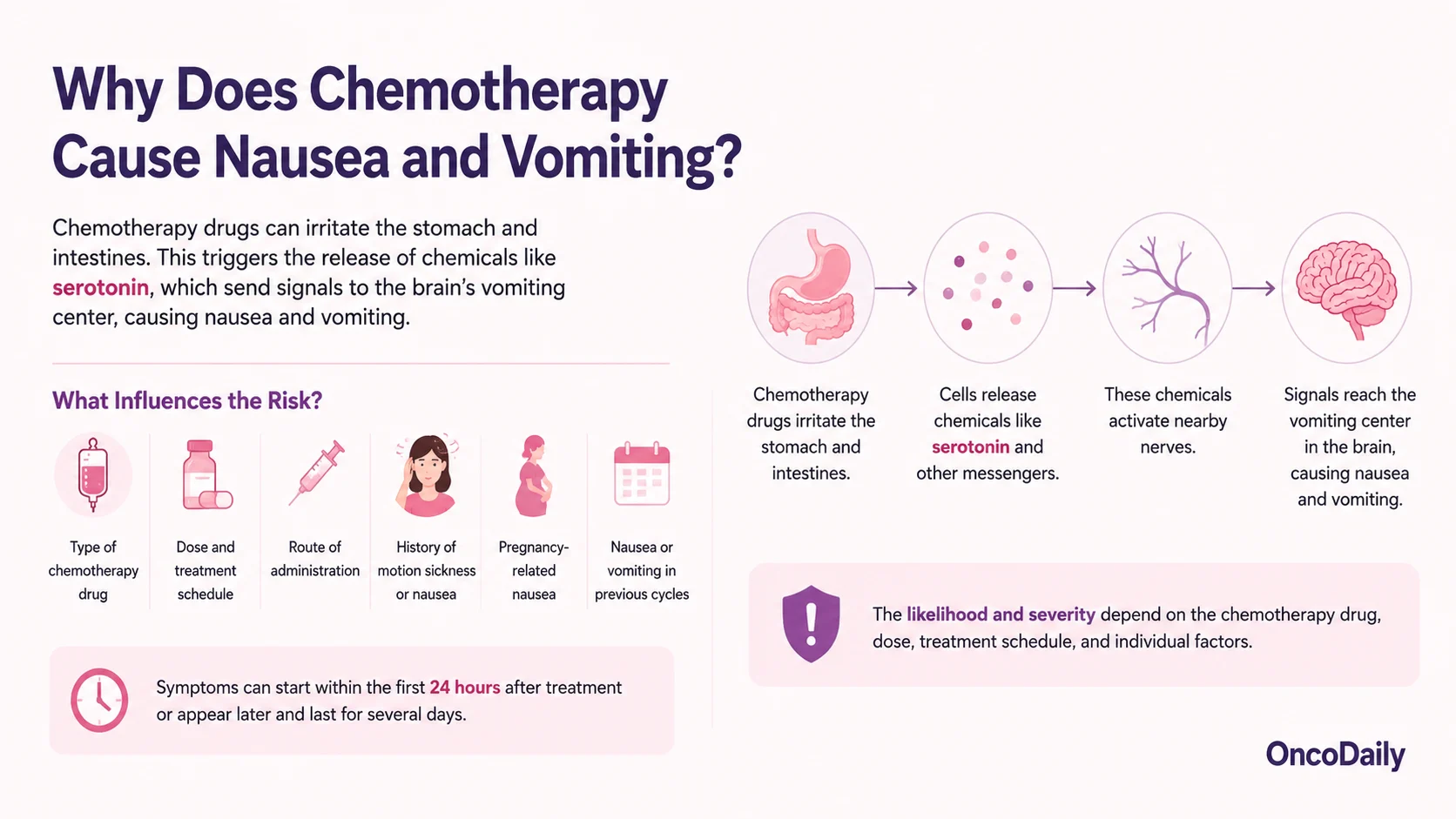
Chemotherapy-related nausea and vomiting are commonly classified according to when they occur and how they respond to treatment. Acute nausea and vomiting develop within the first 24 hours after chemotherapy, while delayed nausea and vomiting begin more than 24 hours after treatment and can continue for several days. Anticipatory nausea and vomiting occur before a new chemotherapy cycle and can be triggered by sights, smells, sounds, or other experiences associated with previous treatment.
Breakthrough nausea and vomiting occur despite the use of preventive anti-nausea medicines and usually require additional treatment. Refractory nausea and vomiting continue during later chemotherapy cycles despite the use of preventive and rescue medicines. Identifying the type of nausea and vomiting helps the cancer care team select the most appropriate antiemetic medicines and adjust the treatment plan when symptoms are not adequately controlled (PDQ Supportive and Palliative Care Editorial Board, 2025).
How Can Nausea and Vomiting Be Prevented?
The most effective way to manage chemotherapy-related nausea and vomiting is to prevent symptoms before they begin. Anti-nausea medicines are usually given before chemotherapy and may need to be continued for several days afterward, as delayed symptoms can develop more than 24 hours after treatment.
The preventive plan is tailored to the likelihood that the chemotherapy regimen will cause nausea and vomiting, as well as the patient’s individual risk factors. Depending on the treatment, it may include a combination of serotonin 5-HT3 receptor antagonists, NK1 receptor antagonists, corticosteroids, and sometimes olanzapine. Patients should take these medicines exactly as prescribed rather than waiting until nausea becomes severe. Relaxation techniques and other supportive measures can also be used alongside medication, particularly for patients who experience anxiety or anticipatory nausea before treatment (Majem et al., 2022).
Which Medicines Are Used to Control Chemotherapy-Induced Nausea and Vomiting?
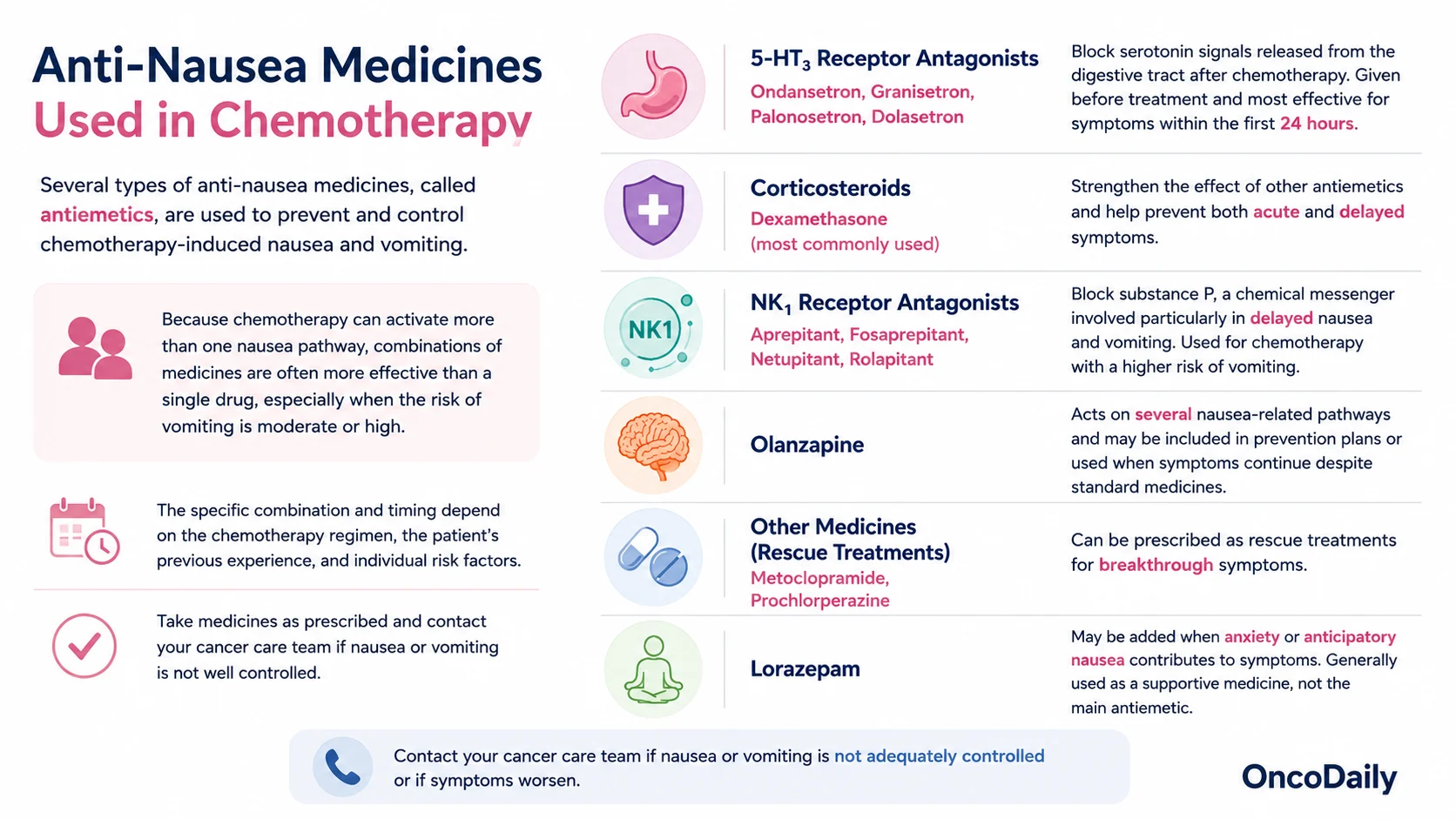
Several types of anti-nausea medicines, known as antiemetics, are used to prevent and control chemotherapy-induced nausea and vomiting. Because chemotherapy can activate more than one nausea pathway, combinations of medicines are often more effective than a single drug, particularly with treatments that have a moderate or high risk of causing vomiting.
5-HT3 receptor antagonists, including ondansetron, granisetron, palonosetron, and dolasetron, block serotonin signals released from the digestive tract after chemotherapy. They are commonly given before treatment and are particularly effective against symptoms that develop within the first 24 hours.
Corticosteroids, most commonly dexamethasone, strengthen the effect of other antiemetics and help prevent both acute and delayed symptoms. For chemotherapy with a higher risk of vomiting, an NK1 receptor antagonist such as aprepitant, fosaprepitant, netupitant, or rolapitant may also be included. These medicines block substance P, a chemical messenger involved particularly in delayed nausea and vomiting.
Olanzapine acts on several nausea-related pathways and may be included in preventive regimens or used when symptoms continue despite standard medicines. Other drugs, including metoclopramide and prochlorperazine, can be prescribed as rescue treatments for breakthrough symptoms. Lorazepam may be added when anxiety or anticipatory nausea contributes to symptoms, but it is generally used as a supportive medicine rather than as the main antiemetic.
The specific combination and timing depend on the chemotherapy regimen, the patient’s previous experience, and individual risk factors. Patients should take their medicines according to the prescribed schedule and contact their cancer care team if nausea or vomiting is not adequately controlled (PDQ Supportive and Palliative Care Editorial Board, 2017).
What Foods and Drinks May Be Easier to Tolerate?
When nausea makes eating difficult, bland, soft, and easy-to-digest foods may be more comfortable for the stomach. Options can include crackers, pretzels, toast, white rice, plain pasta, peeled potatoes, bananas, applesauce, yogurt, gelatin, broth, and mild soups. Cold or room-temperature foods, such as yogurt, pudding, popsicles, or chilled fruit, can also be easier to tolerate because they often produce less smell than hot meals.
Eating five or six small meals throughout the day may feel more manageable than eating three large meals. Fluids such as water, broth, tea, clear juice, ginger tea, or ginger ale can be sipped slowly between meals to help prevent dehydration. Greasy, fried, spicy, very sweet, or strongly scented foods are best avoided when they make nausea worse. Food tolerance varies from person to person, so patients can focus on the foods and drinks they can manage while continuing to take their prescribed anti-nausea medicines (National Cancer Institute, 2025).
What Can Patients Do at Home to Feel Better?
Simple home-care measures can support prescribed anti-nausea medicines and make eating and drinking more manageable. Patients may feel better when they eat small, frequent meals instead of large portions and choose bland foods such as crackers, toast, cooked cereal, clear soups, or other mild options. Taking frequent small sips of water or clear fluids throughout the day can also help prevent dehydration when drinking a full glass feels difficult.
Fried, spicy, very sweet, or strongly scented foods can worsen nausea and are best avoided when they trigger symptoms. Some patients find ginger tea, real ginger, peppermint candy, or peppermint gum helpful. Distraction, deep breathing, guided imagery, and other relaxation techniques may be particularly useful when anxiety or previous treatment experiences cause nausea before chemotherapy.
After vomiting, patients can rinse their mouth with water and rest before gradually restarting fluids. Home strategies work best alongside—not instead of—anti-nausea medicines, which should be taken exactly as prescribed. The cancer care team should be informed if symptoms continue despite treatment or make it difficult to keep down fluids or medicines (Ignite Healthwise, LLC Staff, 2026).
You can also read Preparing Your Home for Chemotherapy: Safety and Comfort Tips on OncoDaily.

When Should You Contact Your Cancer Care Team?
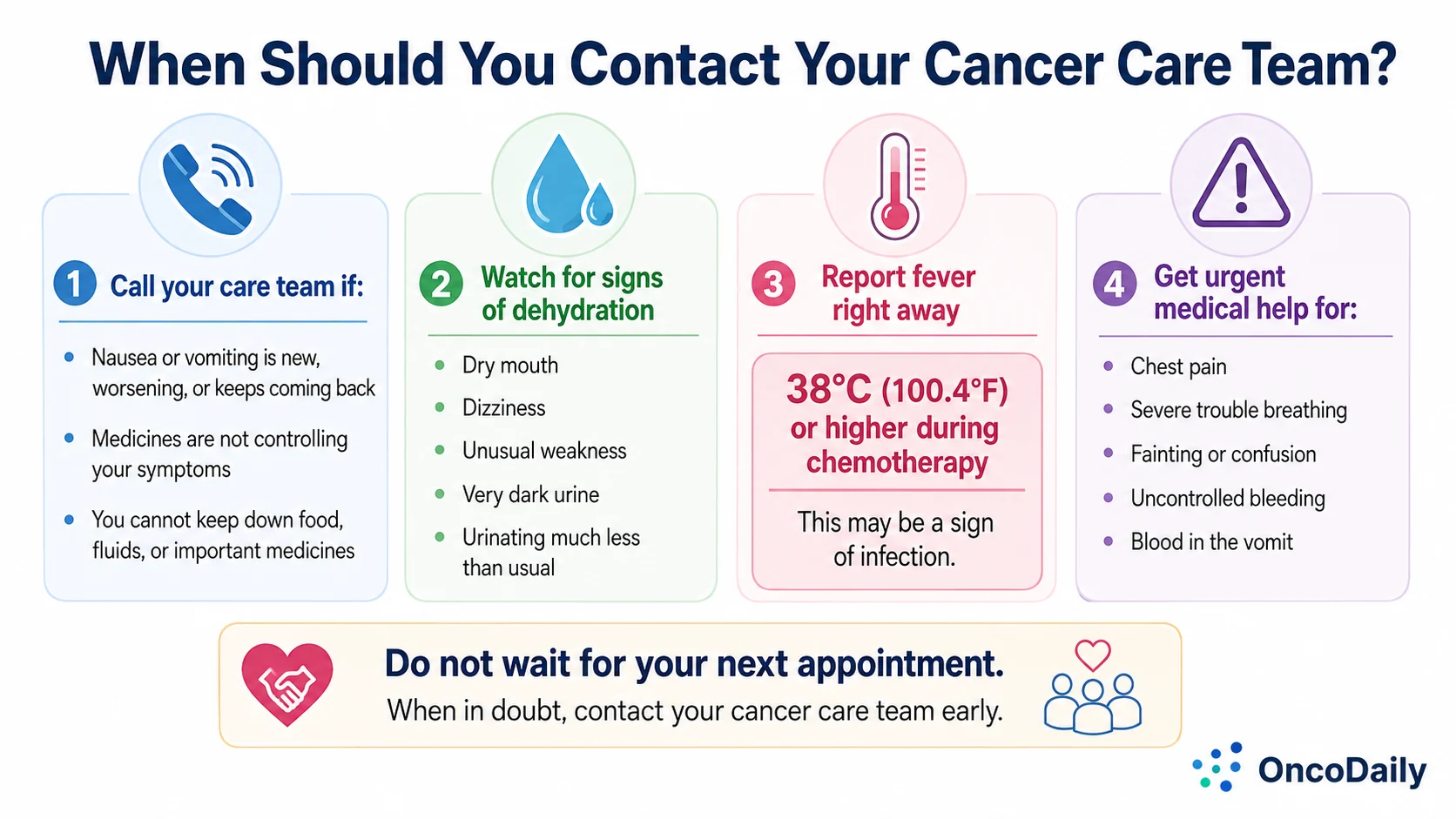
Contact your cancer care team if nausea or vomiting is new, worsening, repeatedly returns, or is not controlled by the medicines you were prescribed. You should also call if vomiting prevents you from keeping down food, fluids, or essential medicines, as this can quickly lead to dehydration and may require changes to your treatment plan.
Possible signs of dehydration include a dry mouth, dizziness, unusual weakness, very dark urine, or urinating much less than usual. A temperature of 38°C (100.4°F) or higher during chemotherapy should be reported immediately according to your cancer center’s instructions, because it may indicate an infection.
Seek urgent medical attention for chest pain, severe difficulty breathing, fainting, confusion, uncontrolled bleeding, or blood in the vomit. Patients should not wait for their next appointment to report concerning symptoms. When uncertain, contacting the cancer care team early is safer than allowing symptoms to become more severe (UNC Health, 2022).
Written by Marine Marachlian, MD
FAQ
Does everyone receiving chemotherapy experience nausea and vomiting?
No. The risk depends on the chemotherapy drug, dose, treatment schedule, and individual factors. Some people experience little or no nausea, while others need several medicines to keep symptoms controlled.
When can nausea and vomiting begin after chemotherapy?
Symptoms can begin within the first few hours after treatment, but they may also appear more than 24 hours later. Delayed nausea and vomiting can continue for several days after chemotherapy.
Can nausea occur without vomiting?
Yes. Some patients feel persistently sick or lose their appetite without actually vomiting. Nausea alone should still be reported if it affects eating, drinking, sleep, or daily activities.
Should I wait until I feel sick before taking anti-nausea medicine?
Usually not. Anti-nausea medicines often work best when taken before symptoms begin and according to the schedule provided by the cancer care team. Do not skip doses because you feel well at that moment.
What should I do if my anti-nausea medicine is not working?
Contact your cancer care team. Additional medicines, different combinations, or changes in timing may be needed. Do not take extra doses unless your healthcare team has instructed you to do so.
What foods are best when I feel nauseated?
Bland, mild, and easy-to-digest foods may be easier to tolerate. Examples include crackers, toast, rice, plain pasta, potatoes, bananas, applesauce, yogurt, broth, and mild soups. Cold or room-temperature foods may also be easier because they have less smell.
Is it better to eat small meals during chemotherapy?
Yes. Eating small amounts every few hours may be easier than eating three large meals. An empty stomach can sometimes make nausea worse, but patients should avoid forcing themselves to eat large portions.
What should I drink if I am vomiting?
Take frequent small sips of water, broth, clear juice, oral rehydration solution, or another fluid recommended by your care team. Ice chips or popsicles may be easier to tolerate. Drinking large amounts quickly can sometimes trigger more vomiting.
Can ginger or peppermint help?
Ginger or peppermint may reduce mild nausea for some people, but the evidence and individual response vary. They should be used as supportive measures and not as replacements for prescribed anti-nausea medicines. Ask your care team before using concentrated supplements.
When should nausea or vomiting be treated as urgent?
Contact your cancer care team promptly if you cannot keep down fluids, food, or essential medicines; are vomiting repeatedly; have very dark urine or urinate much less than usual; feel dizzy, weak, or confused; or have a temperature of 38°C (100.4°F) or higher. Seek urgent medical care for blood in the vomit, chest pain, fainting, severe breathing difficulty, or other rapidly worsening symptoms.