
Key takeaways
- Prepare the most-used areas first. Keep the home clean, uncluttered, well lit, and easy to navigate.
- Create a comfortable recovery space. Keep medicines, fluids, snacks, a thermometer, and emergency contacts within easy reach.
- Reduce infection risks. Practise regular handwashing, safe food preparation, and avoid close contact with people who are unwell.
- Plan for urgent symptoms. Know when to call the oncology team, especially for fever, dehydration, worsening weakness, or signs of infection.
- Arrange practical support early. Help with meals, transport, cleaning, childcare, shopping, or prescriptions can reduce stress and conserve energy.
Preparing your home before chemotherapy begins can make treatment days safer, more comfortable, and less stressful. Chemotherapy may cause side effects such as fatigue, nausea, mouth soreness, appetite changes, or weakness. Some treatments may also temporarily lower the number of infection-fighting white blood cells. A clean, organized, and easily accessible home can therefore help reduce infection risks, prevent falls, conserve energy, and make everyday activities easier.
Your home does not need to be completely sterile. The aim is to create a calm and practical environment where you can rest, manage possible side effects, and quickly reach important items such as medicines, water, a thermometer, emergency contact numbers, and treatment information. Simple preparation can help you feel more supported and in control throughout chemotherapy.
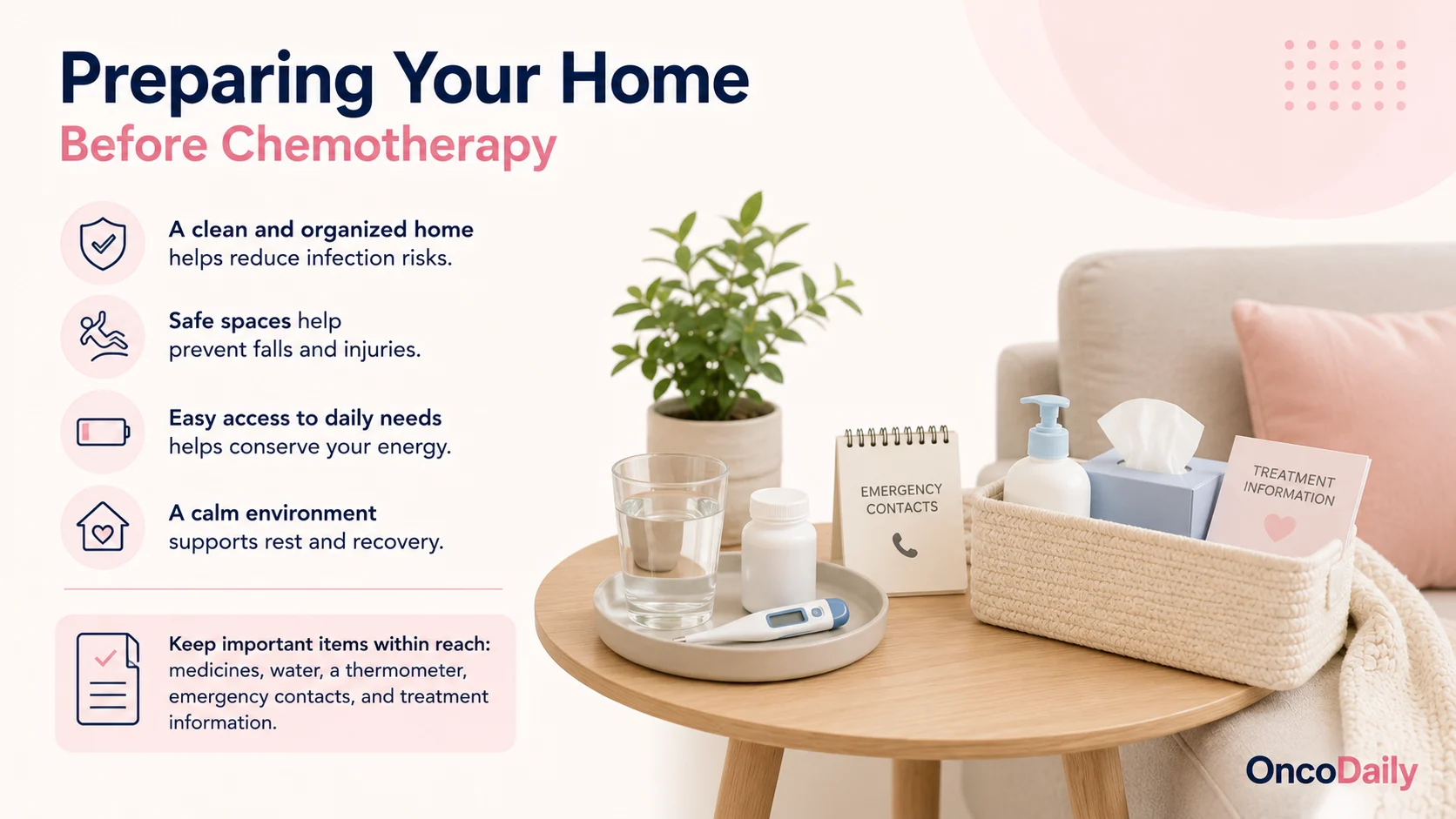
Why Home Preparation Matters
Chemotherapy affects everyone differently. Some people can continue many of their usual activities, while others may need extra rest and support, especially during the first few days after treatment.
Before treatment begins, consider making the home easier and safer to navigate. Keep frequently used items within reach, remove unnecessary clutter, prepare simple meals, and arrange help with cleaning, shopping, or childcare when possible.
Because some chemotherapy medicines temporarily lower infection-fighting white blood cells, encourage everyone in the household to wash their hands regularly and keep kitchens, bathrooms, and frequently touched surfaces clean. Follow food-safety precautions and contact the oncology team promptly if signs of infection develop.
Preparing the home cannot prevent every side effect, but it can reduce avoidable stress, support safety, and allow more energy to be directed towards rest and recovery (American Cancer Society, 2024).
You can also read Comprehensive Chemotherapy Safety Guidelines: Protecting Patients, Staff, and Caregivers by OncoDaily.
Start With a Clean, Organized Space
Before treatment begins, focus on cleaning the areas you use most often rather than trying to clean the entire home. Wipe down frequently touched surfaces such as door and refrigerator handles, kitchen counters, phones, keyboards, remote controls, toilet handles, faucets, bedside tables, and light switches.
Regular household cleaning is usually enough. Strong disinfectants and excessive cleaning are not normally needed unless your healthcare team gives specific instructions.
Keep useful supplies, including soap, tissues, hand sanitiser, paper towels, rubbish bags, and cleaning products, in easy-to-reach places. On days when fatigue is more severe, ask a family member or friend to help with cleaning if possible.
It is also helpful to reduce clutter before treatment starts. Clear walkways, secure electrical cords, remove loose rugs, and place commonly used items within easy reach. These simple changes can reduce the risk of falls and make everyday activities less tiring.
Create a Comfortable Recovery Area
Set up a quiet, comfortable place where you can rest after treatment. This could be a bedroom, a reclining chair in the living room, or any calm space close to a bathroom.
Keep essential items within easy reach, such as water or another recommended drink, prescribed medicines, a thermometer, tissues, a small wastebasket, lip balm, moisturiser, a phone and charger, and a few light snacks. Books, music, headphones, or a tablet can also help make recovery time more comfortable.
Use soft bedding, extra pillows, and a small table for added convenience. If lying flat feels uncomfortable, try supporting yourself with pillows or resting in a reclining chair.
Keep the area peaceful, uncluttered, and free from unnecessary noise. A simple and organised rest space can make recovery days feel easier and more manageable.

Prepare the Bathroom and Kitchen
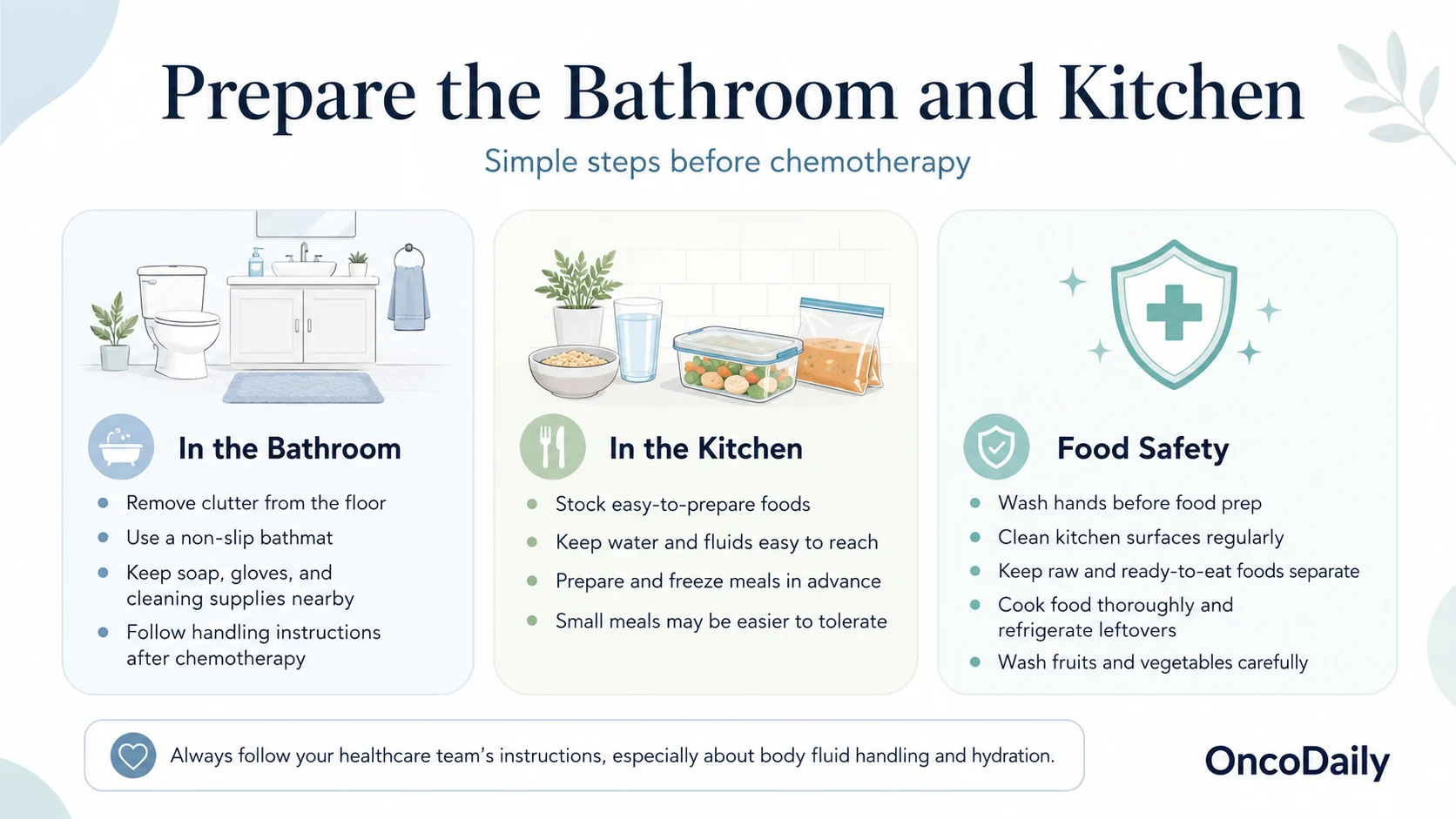
Before chemotherapy begins, a few simple changes in the bathroom and kitchen can make daily routines safer and easier. Preparing these spaces in advance may help reduce physical effort, lower the risk of falls, and make meals and cleaning more manageable during treatment.
In the Bathroom
Fatigue, weakness, or dizziness can increase the risk of slipping or falling. Remove unnecessary items from the floor and use a secure, non-slip bathmat. Grab bars, a shower chair, or a raised toilet seat may also be helpful if the patient feels weak or unsteady.
Keep hand soap, toilet paper, disposable gloves, and cleaning supplies within easy reach. The treatment centre may provide specific instructions for handling urine, stool, or vomit after chemotherapy. This may include closing the toilet lid before flushing, flushing twice, wearing gloves when cleaning body fluids, and washing contaminated clothing or bedding separately.
These precautions can vary depending on the chemotherapy medicines used, so always follow the advice of the healthcare team.
In the Kitchen
Before treatment begins, stock the kitchen with simple foods that require little preparation and are generally easy to tolerate. Helpful options may include soups, broths, rice, pasta, potatoes, yogurt, toast, crackers, bananas, applesauce, eggs, frozen meals, and oral rehydration drinks when recommended.
Preparing and freezing a few meals in advance can reduce effort on treatment days. Divide food into small portions, as frequent meals and snacks may be easier to manage than large meals when nausea, appetite loss, taste changes, or mouth soreness occur.
Keep water and other suitable drinks visible and within easy reach as a reminder to sip regularly. People with heart, kidney, swelling, or fluid-balance problems should follow the hydration advice provided by their healthcare team.
You can also read Eating During Chemotherapy: What to Eat and What to Avoid on OncoDaily.

Practice Good Food Safety
Food safety becomes especially important when white blood cell levels are low. Wash your hands before preparing or eating food, clean kitchen surfaces regularly, and keep raw meat, poultry, seafood, and eggs separate from ready-to-eat foods.
Cook food thoroughly, refrigerate leftovers promptly, avoid spoiled or improperly stored food, and wash fruits and vegetables carefully before eating them.
Highly restrictive neutropenic diets are not necessary for every patient. Food precautions should be based on the treatment plan, blood counts, overall health, and advice from the oncology team.
Reduce Exposure to Infection
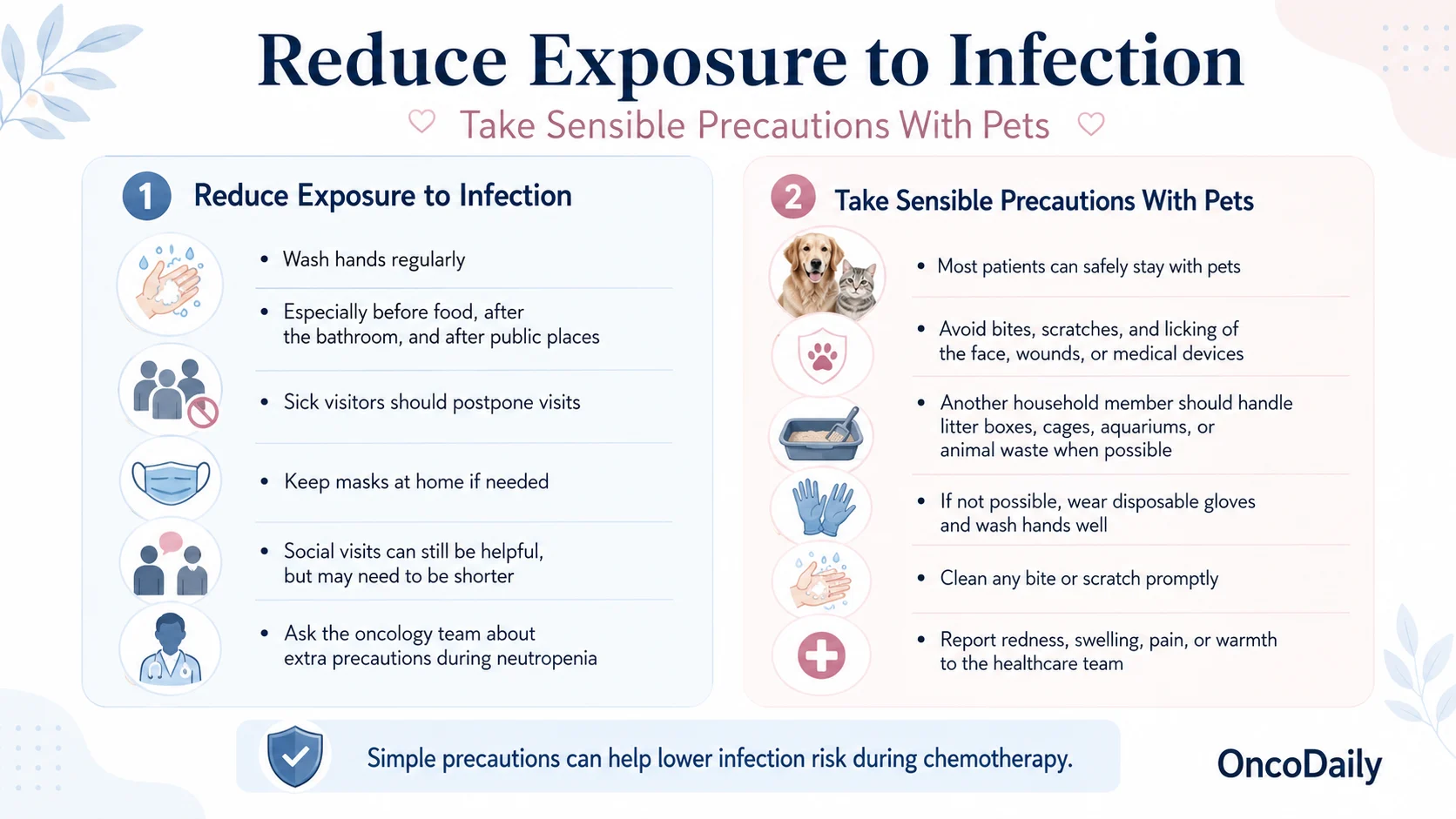
Everyone in the household should wash their hands regularly, especially before preparing food, after using the bathroom, and after returning home from public places.
Friends or relatives who have a fever, cough, stomach illness, or another contagious infection should postpone their visit. Keeping a few face masks at home may be useful when the patient must attend appointments or be around someone with respiratory symptoms.
Visitors do not always need to be avoided completely. Social contact can be emotionally valuable, but visits may need to be shorter or limited when the patient is tired or when blood counts are low.
Ask the oncology team whether any additional precautions are necessary during periods of neutropenia.
Take Sensible Precautions With Pets
Most patients can continue living safely with their pets during chemotherapy. However, precautions may be needed if the immune system is significantly weakened.
The patient should avoid bites, scratches, and allowing pets to lick the face, wounds, or medical devices. Whenever possible, another household member should clean litter boxes, cages, aquariums, or animal waste.
When this is not possible, disposable gloves should be worn and hands should be washed thoroughly afterward. Any bite or scratch should be cleaned promptly and reported to the healthcare team if it becomes red, swollen, painful, or warm.
Keep a Thermometer and Emergency Information Nearby
A fever during chemotherapy can be a sign of a serious infection, particularly when white blood cell levels are low. Keep a working thermometer in an accessible place and ask the healthcare team which temperature requires an urgent call.
Many oncology centres advise contacting the treatment team immediately for a temperature of 38°C or higher, but patients should always follow the exact threshold provided by their own clinic.
Keep the oncology clinic’s daytime and after-hours telephone numbers, a current medication list, known allergies, the chemotherapy schedule, emergency contact details, and instructions for urgent symptoms together in an easy-to-find place.
Do not take paracetamol, acetaminophen, ibuprofen, or another fever-reducing medicine before speaking with the oncology team, as this may temporarily lower the temperature and hide an important sign of infection (Centers for Disease Control and Prevention, 2024; National Cancer Institute, 2020).
Reduce the Risk of Cuts and Falls
During chemotherapy, even a small injury may need extra attention, especially when blood counts are low. Make the home safer by removing loose rugs and obstacles, keeping hallways and stairs well lit, and wearing supportive shoes or non-slip slippers.
Take care when using knives, scissors, hot appliances, or other sharp objects. An electric shaver may be safer than a razor, and gloves can help protect the hands during gardening or household cleaning. If dizziness is a problem, stand up slowly and use support when needed.
Report any wound that does not heal or becomes increasingly red, painful, swollen, or warm.
Arrange Practical Support in Advance
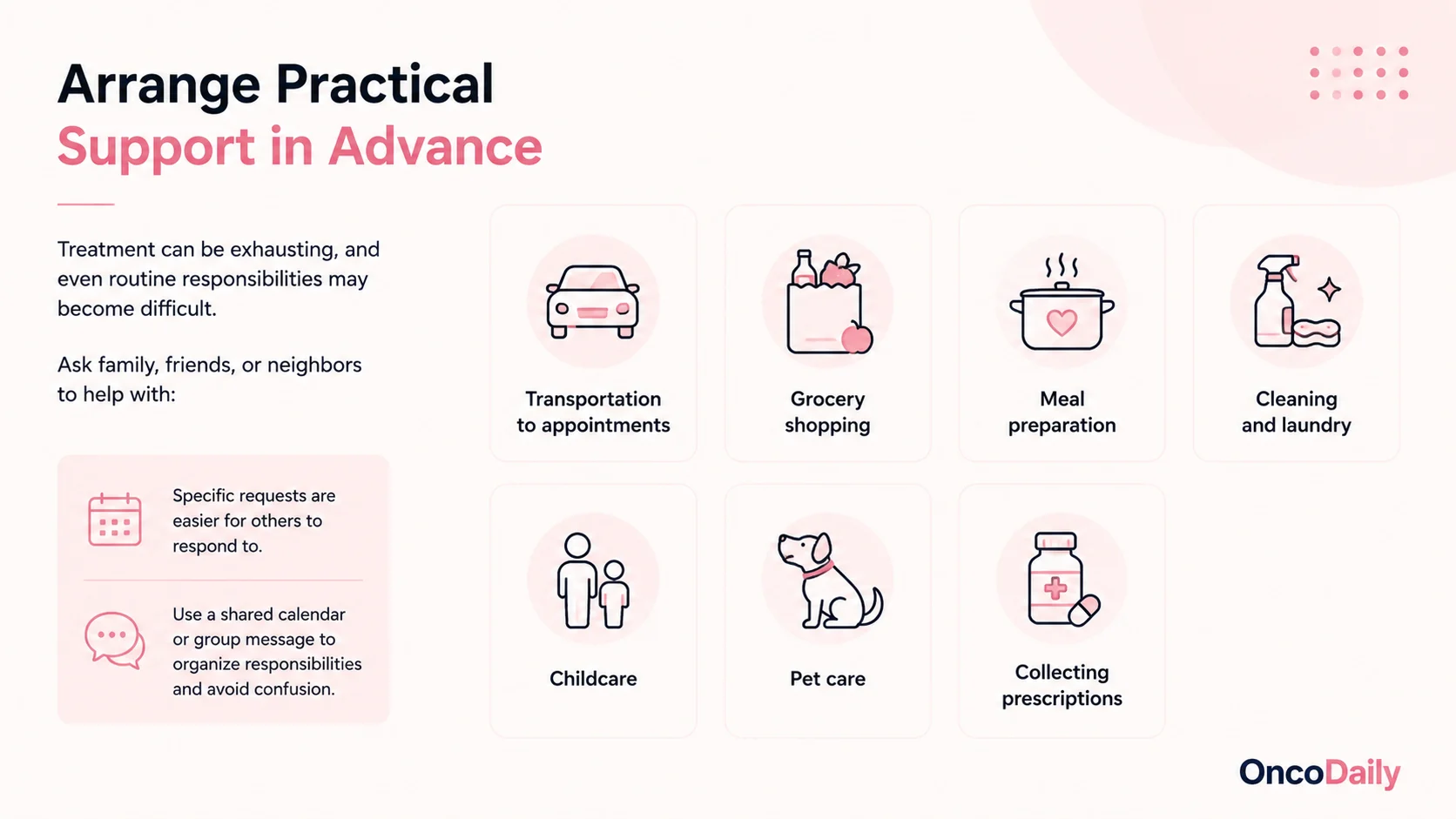
Preparing for chemotherapy also means arranging practical support. Treatment can be tiring, and everyday responsibilities such as travelling to appointments, shopping, cooking, cleaning, laundry, childcare, pet care, or collecting prescriptions may become more difficult.
Before treatment begins, speak with family members, friends, or neighbours about the specific tasks they may be able to help with. Clear requests are often easier to respond to than a general request for support.
A shared calendar or group message can help organise responsibilities, coordinate appointments, and prevent confusion. Having a reliable support plan in place can reduce stress and allow more time and energy for rest and recovery.
Preparing the Home Without Becoming Overwhelmed
There is no need to transform the entire home before chemotherapy. Focus first on the areas that will have the greatest impact: a comfortable place to rest, a safe bathroom, simple food, essential supplies, and easy access to medical contacts.
Home preparation is ultimately about reducing effort and creating a sense of stability. A clean and organized environment, practical support, and a clear plan for managing symptoms can make treatment days feel less overwhelming.
Every treatment plan is different, so ask the oncology team whether there are specific precautions related to the chemotherapy medicines being given. Their instructions should always take priority over general advice.
Written by Marine Marachlian, MD
FAQ
Do I need to deep-clean my home before chemotherapy?
No. Regular cleaning of frequently touched surfaces is usually enough. Your home does not need to be sterile.
What should I keep near my resting area during chemotherapy?
Keep water, medicines, a thermometer, tissues, snacks, your phone, and emergency contact numbers nearby.
How can I make the bathroom safer during chemotherapy?
Use a non-slip mat, remove clutter, and consider grab bars or a shower chair if you feel weak or dizzy.
Should I flush the toilet twice after chemotherapy?
Some treatment centers recommend this for a short time. Follow the instructions provided by your oncology team.
What foods should I keep at home during chemotherapy?
Choose simple foods such as soup, rice, yogurt, toast, eggs, bananas, crackers, and prepared meals.
Are there foods I should avoid during chemotherapy?
Avoid spoiled, expired, undercooked, or poorly stored foods. Ask your healthcare team about any additional restrictions.
Can family and friends visit during chemotherapy?
Yes, but anyone who is sick should postpone their visit. Visitors should wash their hands regularly.
Can I keep my pets at home during my chemotherapy?
Usually, yes. Avoid scratches, bites, face licking, and direct contact with animal waste.
Which supplies should I prepare during chemotherapy?
A thermometer, prescribed medicines, a soft toothbrush, lip balm, moisturizer, gloves, and cleaning supplies may be useful.
When should I contact the oncology team?
Call for fever, severe vomiting or diarrhea, breathing problems, unusual bleeding, confusion, or worsening weakness.