Key takeaways
- COVID-19 vaccines have not been demonstrated to cause cancer, accelerate tumor growth, or increase recurrence risk.
- The 2025 South Korean study reported associations with several cancer types, but its findings do not establish causation and require careful interpretation.
- “Turbo cancer” is not a recognized medical diagnosis, and reported cases of rapidly progressing cancer after vaccination do not establish a vaccine-related disease.
- COVID-19 vaccination can temporarily enlarge lymph nodes, sometimes affecting breast imaging or cancer surveillance without indicating malignancy.
- Vaccination remains an important consideration for cancer patients, while emerging research into possible benefits during immunotherapy requires further clinical validation.
COVID-19 vaccines and cancer risk have become an important topic of discussion, particularly among people diagnosed with cancer or undergoing treatment. Questions about whether vaccination can cause cancer, accelerate tumor growth, or increase recurrence have intensified following reports of cancer diagnoses after vaccination and several controversial studies.
Current scientific evidence does not establish that COVID-19 vaccines cause cancer, increase recurrence, or make existing tumors more aggressive. The U.S. National Cancer Institute (NCI) states that there is no evidence linking COVID-19 vaccination to cancer development or progression. Researchers nevertheless continue to examine long-term outcomes and potential effects on tumor biology (National Cancer Institute, 2023; Kuperwasser, 2026).
Understanding these findings requires distinguishing established clinical evidence from preliminary observations and recognizing that an association does not necessarily demonstrate causation.
Does the COVID Vaccine Cause Cancer?
There is currently no established scientific evidence that COVID-19 vaccines cause cancer, trigger recurrence, or accelerate tumor growth (National Cancer Institute, 2023).
Cancer develops through complex biological processes involving genetic alterations, disrupted cellular growth, and changes in immune surveillance. These processes often take years, although some aggressive malignancies progress more rapidly.
COVID-19 vaccines stimulate the immune system to recognize SARS-CoV-2. This response may temporarily cause inflammation, fatigue, fever, or enlarged lymph nodes, but these reactions do not demonstrate malignant transformation.
Because cancer is common worldwide and billions of vaccine doses have been administered, some diagnoses will inevitably occur shortly after vaccination. A cancer diagnosis following vaccination does not establish that the vaccine caused it.
A 2026 review by Kuperwasser and El-Deiry examined published reports of cancer diagnoses and progression following vaccination or infection. Although the authors identified observations warranting investigation, the available evidence did not demonstrate a causal relationship between COVID-19 vaccination and human cancer development (Kuperwasser, 2026).
What Do Studies Say About COVID Vaccines and Cancer Risk?
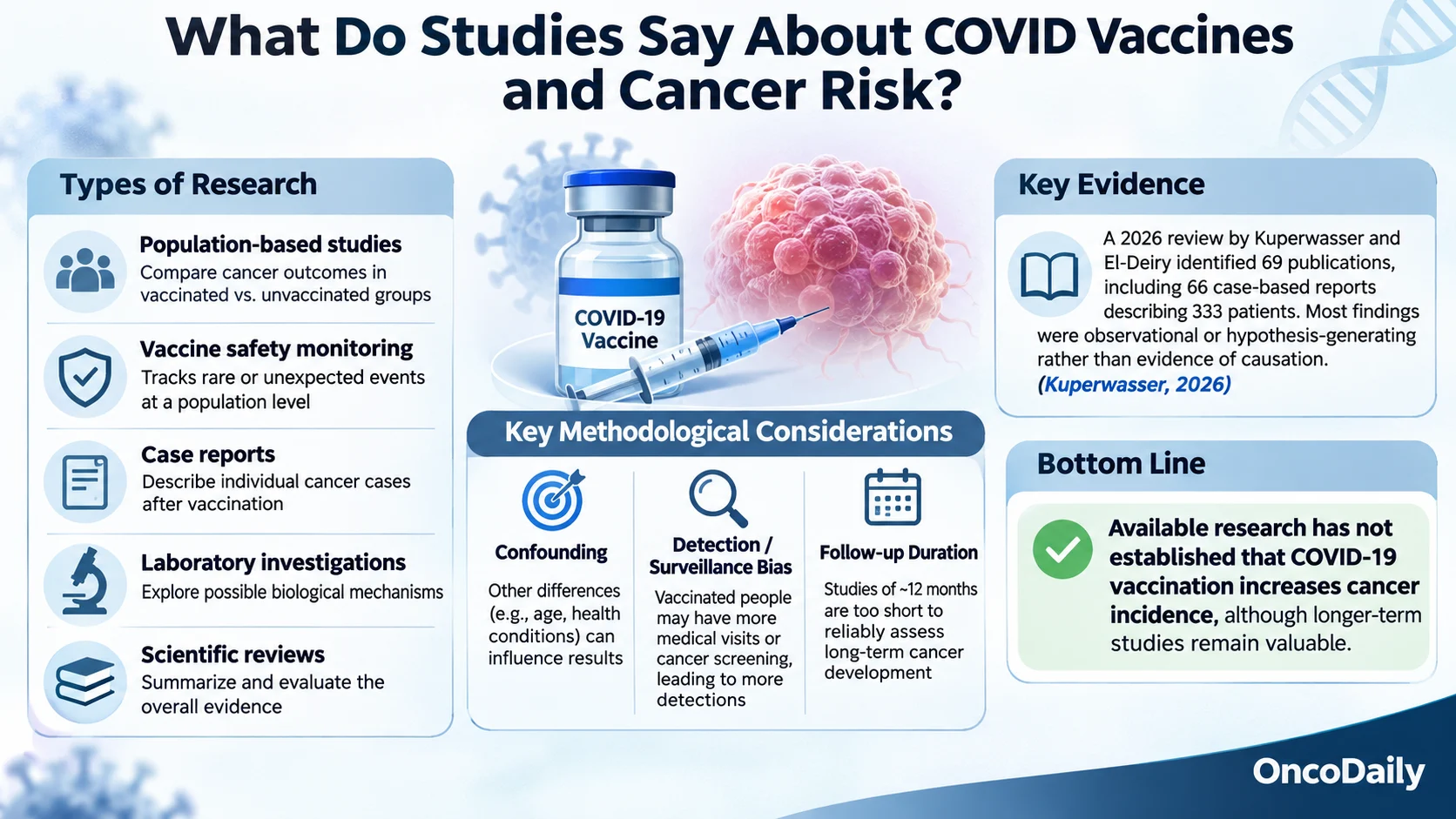
Research includes population-based studies, vaccine safety monitoring, case reports, laboratory investigations, and scientific reviews. These sources provide different levels of evidence.
Large epidemiological studies allow researchers to compare cancer outcomes between vaccinated and unvaccinated populations while accounting for factors such as age, medical history, and previous infections.
However, observational studies remain vulnerable to confounding. Vaccinated individuals may receive more frequent medical examinations or cancer screening, increasing the likelihood that an existing malignancy will be detected. This is known as detection bias or surveillance bias.
Follow-up duration is equally important. Because many solid tumors develop over years, studies lasting approximately 12 months cannot reliably determine whether vaccination affects long-term cancer development.
In a 2026 review, Kuperwasser and El-Deiry identified 69 publications, including 66 case-based publications describing 333 patients. Most findings were observational or hypothesis-generating rather than evidence of causation (Kuperwasser, 2026).
Overall, available research has not established that COVID-19 vaccination increases cancer incidence, although longer-term studies remain valuable.
What Did the 2025 South Korean Cancer Study Find?
A 2025 retrospective cohort study published in Biomarker Research analyzed health records from 8,407,849 people in South Korea between 2021 and 2023.
Using national insurance data, researchers compared cancer diagnoses among vaccinated and unvaccinated individuals and reported associations with six cancer types during approximately one year of follow-up (Kim, 2025).
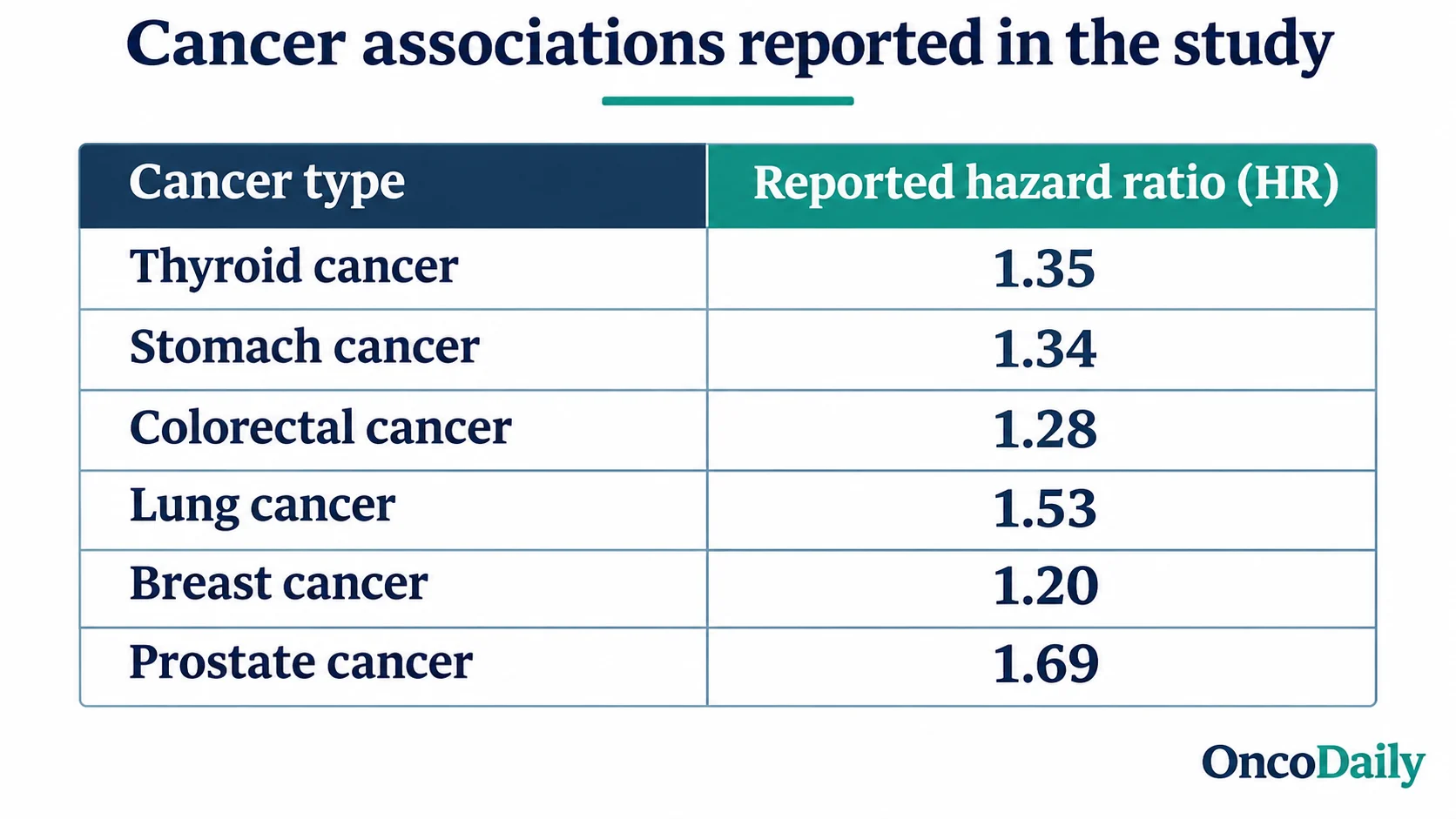
A hazard ratio above 1 represents a higher estimated hazard in the study comparison. For example, an HR of 1.35 indicates a 35% higher estimated hazard, not a 35% probability of developing cancer.
These findings represent statistical associations, not evidence that vaccination caused the cancers (Kim, 2025).
Why Were the Findings Controversial?
Despite its large population, the study had important limitations.
Many solid tumors develop years before diagnosis, making the one-year observation period insufficient to determine whether vaccination contributed to cancer initiation.
Differences in screening frequency, healthcare utilization, smoking history, and other potentially unmeasured factors may also have influenced the results. Additional concerns included different follow-up starting points between groups and the possibility of chance findings from multiple statistical comparisons.
On October 22, 2025, the journal added an editorial notice stating that concerns about the article had been raised and would be investigated.
Although the study warrants further evaluation, it does not establish that COVID-19 vaccination increases cancer risk (Kim, 2025).
What Is “Turbo Cancer,” and Can COVID Vaccines Cause It?
“Turbo cancer” is not a recognized medical diagnosis or formally defined cancer subtype. The expression is commonly used online to describe cancers that appear to develop, spread, or recur unusually quickly, sometimes in connection with vaccination claims.
Rapid cancer progression is not a new phenomenon. Acute leukemias, aggressive lymphomas, small-cell lung cancer, and certain high-grade tumors can progress quickly because of their biological characteristics.
Cancer growth depends on genetic alterations, cellular proliferation, immune escape, and the tumor microenvironment. Some malignancies also remain undetected until advanced stages, creating the impression that they developed suddenly.
A 2026 review documented reports of aggressive cancer behavior following vaccination or infection. However, these observations did not establish that vaccination caused the progression (Kuperwasser, 2026).
There is currently no established evidence that COVID-19 vaccination creates a distinct category of rapidly developing cancers.
Have Cancer Cases Been Reported After COVID Vaccination?
Cancer diagnoses following COVID-19 vaccination have appeared in medical case reports, including leukemia, lymphoma, melanoma, sarcoma, and other solid tumors.
Such reports can identify unusual clinical observations but cannot determine whether vaccination increases population-level cancer risk.
Kuperwasser and El-Deiry reviewed reports involving 333 patients with cancer-related observations following vaccination or infection. The authors examined potential immune and inflammatory mechanisms but could not establish causation (Kuperwasser, 2026).
Publication bias is another limitation: unusual cases are more likely to be reported than routine clinical outcomes, potentially creating a misleading impression of frequency.
What Did the 2026 Leukemia Case Report Find?
A February 2026 Oncotarget case report described a 38-year-old woman diagnosed with B-cell acute lymphoblastic leukemia/lymphoblastic lymphoma (ALL/LBL) after Pfizer-BioNTech vaccination.
The patient developed symptoms after her second dose in July 2021 and received a diagnosis in December 2021.
Importantly, leukopenia and neutropenia had already been documented in April 2021, before vaccination, with a white blood cell count of approximately 2,450 cells/µL and an absolute neutrophil count of 650 cells/µL.
These abnormalities were not diagnostic of leukemia but complicate conclusions about when the underlying disease process began.
The authors also reviewed other hematological malignancies reported after vaccination. However, the case could not establish whether vaccination contributed to leukemia development or whether the timing was coincidental (Gentilini, 2026).
Can mRNA Vaccines Change DNA or Affect Tumor Growth?
Under their established biological mechanism, mRNA COVID-19 vaccines do not alter human genomic DNA.
Pfizer-BioNTech and Moderna vaccines contain messenger RNA encoding the SARS-CoV-2 spike protein. Cells use these instructions to produce the antigen, which stimulates an immune response.
This process occurs in the cytoplasm, outside the nucleus containing most genomic DNA. Vaccine mRNA does not possess the molecular machinery needed to integrate into human DNA and is eventually degraded (National Cancer Institute, 2023).
Could Vaccine-Related Inflammation Influence Cancer Biology?
Inflammation and immune signaling can influence cancer behavior. Depending on the biological context, immune activity may help eliminate malignant cells or contribute to conditions supporting tumor growth.
Researchers have explored theoretical interactions involving interferons, inflammatory cytokines, PD-L1, and tumor-suppressor proteins such as p53.
For example, Valdes Angues proposed a theoretical multi-hit mechanism involving immune and inflammatory changes. However, this hypothesis-generating publication did not demonstrate that COVID-19 vaccines cause malignant transformation in humans (Valdes Angues, 2023).
Laboratory findings cannot automatically be applied to vaccinated individuals because experimental concentrations, exposure conditions, and biological environments may differ substantially.
A biologically plausible mechanism is not equivalent to demonstrated clinical causation. Available evidence does not establish vaccine-induced carcinogenesis (Kuperwasser, 2026).
COVID Vaccines and Breast Cancer: What Should Patients Know?
There is no established evidence that COVID-19 vaccination causes breast cancer or increases recurrence risk. However, vaccination can temporarily enlarge lymph nodes, particularly in the armpit on the injection side.
This reaction, known as axillary lymphadenopathy, reflects immune activation and may appear on mammography, ultrasound, MRI, or PET/CT.
Because breast cancer can also involve axillary lymph nodes, vaccine-related changes may occasionally resemble findings that require investigation for malignancy.
The National Cancer Institute advises patients to inform their healthcare team about recent vaccination, including which arm received the injection (National Cancer Institute, 2023).
Can Vaccination Affect Mammogram Results?
Yes. Temporary lymph-node enlargement following vaccination may be detected during breast imaging and occasionally require additional evaluation.
Most isolated vaccine-associated changes are benign and resolve over time, although some persist for several weeks or longer.
However, recent vaccination should not automatically be assumed to explain every suspicious lymph node.
Routine breast cancer screening should not be unnecessarily delayed because of vaccination. Patients should inform their radiology team about recent doses and follow recommended screening schedules.
For individuals with previous breast surgery or lymph-node dissection, clinicians may recommend vaccination in the opposite arm or another appropriate injection site (National Cancer Institute, 2023).
Do COVID Vaccines Increase Colon, Prostate, or Lung Cancer Risk?
Claims involving colorectal, prostate, lung, thyroid, and other cancers have gained attention following observational studies, particularly the 2025 South Korean cohort.
Although the study reported higher estimated cancer hazards in vaccinated individuals, it did not establish causation.
Colorectal cancer is associated with factors including age, inherited predisposition, family history, smoking, obesity, and lifestyle. Prostate cancer risk is influenced by age and genetic susceptibility, while tobacco exposure remains the leading preventable cause of lung cancer.
These established risk factors must be considered when comparing vaccinated and unvaccinated populations.
Furthermore, many solid tumors develop over years, making cancer diagnoses shortly after vaccination insufficient to demonstrate that vaccination initiated the malignancy.
The Korean findings require longer follow-up and independent confirmation before any causal conclusions can be drawn (Kim, 2025; Kuperwasser, 2026).
Patients should continue recommended cancer screening and prevention measures based on their individual risk factors.
Can COVID Vaccines Make Existing Cancer Worse?
Current evidence does not establish that COVID-19 vaccination accelerates existing cancer, increases recurrence, or makes cancer treatment less effective (National Cancer Institute, 2023).
Cancer progression is evaluated through imaging, tumor measurements, pathological findings, laboratory markers, and clinical symptoms.
Vaccination can temporarily cause lymph-node enlargement or increased metabolic activity on PET scans. These immune-related changes may occasionally resemble cancer progression, especially in patients undergoing surveillance for lymphoma, melanoma, or breast cancer.
However, reactive lymph nodes do not necessarily represent malignant disease.
Published reports describing cancer progression after vaccination cannot independently determine whether vaccination was responsible. Establishing such a relationship would require appropriately controlled studies accounting for tumor type, stage, molecular characteristics, and treatment history (Kuperwasser, 2026).
New or persistent symptoms should still be evaluated by an oncology team, regardless of vaccination history.
Can COVID Vaccines Improve Cancer Immunotherapy Outcomes?
A study published in Nature in October 2025 reported an association between COVID-19 mRNA vaccination and improved survival among patients receiving immune checkpoint inhibitors for non-small cell lung cancer (NSCLC) or melanoma.
Researchers compared patients vaccinated within approximately 100 days of immunotherapy initiation with those who did not receive an mRNA vaccine during that period.
Among patients with NSCLC, median overall survival was 37.3 months in the vaccinated group versus 20.6 months in the comparison group, with an adjusted hazard ratio for death of 0.51 (Grippin, 2025).
Similar favorable survival associations were observed in melanoma.
How Might Vaccination Influence Immunotherapy?
Immune checkpoint inhibitors target pathways such as PD-1/PD-L1 that can prevent immune cells from attacking cancer.
Researchers proposed that mRNA vaccination may stimulate type I interferon signaling, antigen presentation, and tumor-reactive T cells.
Experimental findings also suggested increased PD-L1 expression following vaccine-induced immune activation, potentially influencing sensitivity to checkpoint inhibitors (Grippin, 2025).
However, the clinical results were observational and may be affected by differences between patient groups.
The study does not demonstrate that COVID-19 vaccines independently treat cancer or should be administered specifically to improve immunotherapy.
Prospective clinical trials are needed to determine whether the observed associations reflect a genuine treatment-related benefit.
Are COVID Vaccines Safe for Cancer Patients During Treatment?
COVID-19 vaccination is generally considered safe for many people with cancer, including those receiving active treatment. However, the immune response and optimal schedule may differ according to cancer type, treatment, and immune status.
Patients with hematological malignancies, advanced cancer, or treatment-related immunosuppression may face an increased risk of severe COVID-19.
The American Cancer Society notes that COVID-19 vaccines do not contain live SARS-CoV-2 and can be administered to immunocompromised patients, although some may develop weaker protection (American Cancer Society, n.d.).
Vaccination During Chemotherapy and Immunotherapy
Vaccination is generally possible during chemotherapy, although treatment-related immunosuppression may reduce vaccine effectiveness.
When feasible, vaccination may be scheduled before highly immunosuppressive treatment begins. However, chemotherapy does not automatically require vaccination to be postponed.
Patients receiving immune checkpoint inhibitors can also generally be vaccinated, and current evidence does not demonstrate reduced treatment effectiveness (National Cancer Institute, 2023).
Those receiving B-cell-depleting treatments, such as rituximab, may require additional timing considerations because antibody responses can be significantly impaired.
Vaccination After Stem Cell Transplantation or CAR T-Cell Therapy
Hematopoietic stem cell transplantation (HCT) and CAR T-cell therapy can substantially reduce existing immune protection, making revaccination necessary.
According to CDC guidance, revaccination generally begins at least three months after HCT or CAR T-cell therapy, with the subsequent schedule determined by immune status and current recommendations (CDC, 2026).
Vaccination decisions should be individualized by the oncology or transplant team.
FAQ
Can the Pfizer COVID vaccine cause cancer?
Current scientific evidence does not establish that the Pfizer-BioNTech COVID-19 vaccine causes cancer, cancer recurrence, or accelerated tumor growth. Reports of cancer diagnoses after vaccination do not demonstrate causation (National Cancer Institute, 2023).
Is “turbo cancer” caused by COVID vaccination?
There is no established evidence that COVID-19 vaccination causes a distinct form of rapidly progressing cancer. “Turbo cancer” is not a recognized medical diagnosis, and aggressive cancers can develop or progress rapidly for reasons unrelated to vaccination (Kuperwasser, 2026).
Can COVID vaccines increase breast cancer risk?
No causal increase in breast cancer risk has been established. Vaccination can temporarily enlarge axillary lymph nodes, which may be visible on mammograms or other imaging examinations (National Cancer Institute, 2023).
Do COVID vaccines increase colon or prostate cancer risk?
A 2025 South Korean observational study reported associations involving colorectal and prostate cancer, but methodological limitations prevent these results from establishing causation. Longer-term, independently replicated research is needed (Kim, 2025).
Can COVID vaccines cause cancer to return?
Current evidence does not establish that COVID-19 vaccination increases cancer recurrence risk. The National Cancer Institute reports no evidence that vaccination causes recurrence or progression (National Cancer Institute, 2023).
Can COVID vaccination affect mammogram results?
Yes. Temporary swelling of lymph nodes, particularly in the armpit on the vaccinated side, may appear on mammography or ultrasound. Patients should tell their radiology team about recent vaccination and should not automatically postpone screening (National Cancer Institute, 2023).
Should cancer patients receive COVID-19 vaccines?
Vaccination is recommended for many cancer patients, particularly those at increased risk of severe infection. The appropriate vaccine schedule depends on treatment, immune status, vaccination history, and current clinical guidance (CDC, 2026).
Can COVID vaccines improve cancer immunotherapy?
A 2025 Nature study found that vaccination near the initiation of immune checkpoint inhibitors was associated with improved survival in patients with NSCLC and melanoma. However, prospective trials are needed before vaccination can be recommended specifically to enhance cancer treatment (Grippin, 2025).