Key takeaways
- Chemotherapy helps control mesothelioma, relieve symptoms, and prolong survival, but rarely cures the disease.
- Pemetrexed with cisplatin or carboplatin is the most established chemotherapy combination.
- Immunotherapy and chemo-immunotherapy have expanded first-line treatment options for advanced pleural mesothelioma.
- Treatment differs by location: Pleural mesothelioma commonly requires systemic therapy, while selected peritoneal cases may benefit from surgery and HIPEC.
- Side effects and treatment response vary, making regular monitoring and individualized care essential.
Chemotherapy for mesothelioma remains an important treatment option, particularly for patients with advanced disease or tumors that cannot be removed through surgery. It uses anticancer drugs to slow tumor growth, relieve symptoms, and improve survival. Although chemotherapy alone rarely cures mesothelioma, newer approaches combining chemotherapy with immunotherapy have expanded treatment options for patients.
Treatment depends on whether mesothelioma develops in the lining of the lungs (pleural mesothelioma) or the abdomen (peritoneal mesothelioma), as well as the cancer’s stage, histological subtype, and the patient’s overall health. Understanding the available chemotherapy drugs, treatment success rates, possible side effects, and newer treatment combinations can help patients make informed decisions about their care.
How Is Chemotherapy Used for Mesothelioma?
Chemotherapy remains an important treatment for mesothelioma, particularly when the cancer cannot be completely removed through surgery. It uses anticancer drugs to slow tumor growth, relieve symptoms, and extend survival. However, chemotherapy alone is rarely curative (Vogelzang et al., 2003).
In pleural mesothelioma, chemotherapy may be used for advanced or unresectable disease, sometimes alongside immunotherapy. It may also be given before or after surgery in selected patients. In peritoneal mesothelioma, systemic chemotherapy is generally considered when surgery is not feasible, while eligible patients may undergo cytoreductive surgery combined with heated intraperitoneal chemotherapy (HIPEC).
Treatment decisions depend on the cancer’s location, stage, histological subtype, previous treatment, and the patient’s overall health.
What Chemotherapy Drugs Are Used for Mesothelioma?
The most commonly used chemotherapy combination for mesothelioma is pemetrexed (Alimta) with cisplatin or carboplatin. These medications interfere with cancer cell growth through different mechanisms, helping control disease progression (Vogelzang et al., 2003).
Pemetrexed is an antifolate drug that disrupts DNA synthesis and prevents cancer cells from multiplying. It is usually combined with a platinum-based drug and administered intravenously every three weeks.
Cisplatin damages cancer cell DNA and is the traditional platinum partner for pemetrexed. However, it can cause kidney toxicity, hearing problems, nausea, and peripheral neuropathy. Carboplatin is often used when cisplatin is unsuitable, particularly in patients with reduced kidney function or existing hearing impairment, although it can cause greater bone marrow suppression.
Gemcitabine and vinorelbine are additional chemotherapy options, generally considered after disease progression or when other treatments are unsuitable. Their activity in previously treated mesothelioma is modest, but they may provide disease control in selected patients (Zauderer et al., 2014).

What Is the Best First-Line Treatment for Mesothelioma?
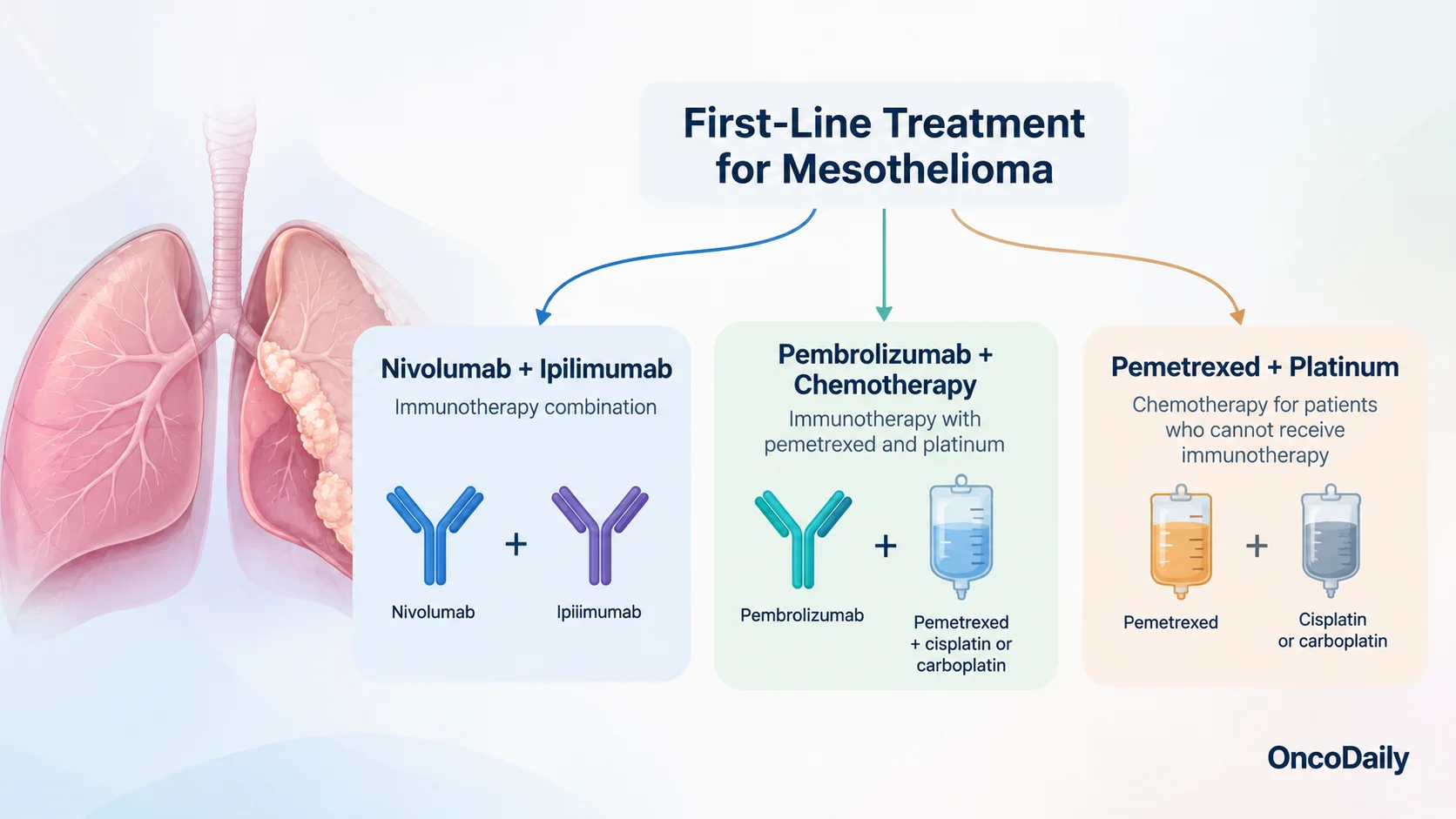
First-line treatment for malignant pleural mesothelioma depends largely on tumor histology, disease extent, and the patient’s overall condition. For advanced or unresectable disease, immunotherapy alone or combined with chemotherapy has become an important treatment strategy.
Nivolumab plus ipilimumab is a chemotherapy-free immunotherapy combination that improved overall survival compared with chemotherapy in the CheckMate 743 trial. Its benefit was particularly pronounced in non-epithelioid mesothelioma, including sarcomatoid and biphasic subtypes, which generally respond less favorably to conventional chemotherapy (Baas et al., 2021).
Pembrolizumab combined with pemetrexed and platinum-based chemotherapy is another first-line option, approved by the FDA in September 2024 for unresectable advanced or metastatic pleural mesothelioma. This approach combines chemotherapy with immune checkpoint inhibition and may be considered when tumor shrinkage is an important treatment priority (U.S. Food and Drug Administration, 2024).
Pemetrexed with cisplatin or carboplatin remains appropriate for patients who cannot receive immunotherapy. Patients with epithelioid mesothelioma may be candidates for several treatment approaches, while immunotherapy-based regimens are often favored for non-epithelioid disease.
How Effective Is Chemotherapy for Mesothelioma?
Chemotherapy can shrink mesothelioma tumors and prolong survival, although responses vary considerably between patients.
In a landmark phase III trial, pemetrexed plus cisplatin achieved a tumor response rate of 41.3%, compared with 16.7% for cisplatin alone. Median overall survival increased from 9.3 to 12.1 months, establishing the combination as an important treatment for malignant pleural mesothelioma (Vogelzang et al., 2003).
Newer treatments have improved outcomes further. In CheckMate 743, nivolumab plus ipilimumab achieved a median overall survival of 18.1 months, compared with 14.1 months for chemotherapy. The survival advantage was particularly evident in patients with non-epithelioid tumors (Baas et al., 2021).
Prognosis also depends on histology. Epithelioid mesothelioma generally has a more favorable outlook, whereas sarcomatoid and biphasic tumors tend to be more aggressive.
Although treatment can produce meaningful responses, chemotherapy rarely eliminates mesothelioma permanently. Survival figures represent outcomes in clinical trials and cannot predict an individual patient’s prognosis.

How Is Mesothelioma Chemotherapy Given?
Mesothelioma chemotherapy is usually administered intravenously (IV) in 21-day cycles, allowing time for recovery between treatments.
Pemetrexed is typically infused over approximately 10 minutes, followed by cisplatin or carboplatin. Patients commonly receive four to six cycles, depending on the prescribed regimen, treatment response, and tolerance. Cisplatin also requires intravenous hydration to reduce kidney toxicity (U.S. Food and Drug Administration, 2024).
Patients receiving pemetrexed require folic acid and vitamin B12 supplementation to reduce side effects, particularly low blood counts and gastrointestinal toxicity. Corticosteroids may also be prescribed to prevent skin reactions.
Before each cycle, doctors assess blood counts, kidney and liver function, and treatment-related symptoms. Periodic imaging helps evaluate tumor response. Doses may be delayed or adjusted if significant toxicity develops.
Chemotherapy for Pleural and Peritoneal Mesothelioma
Although chemotherapy is used for both forms of mesothelioma, treatment approaches differ.
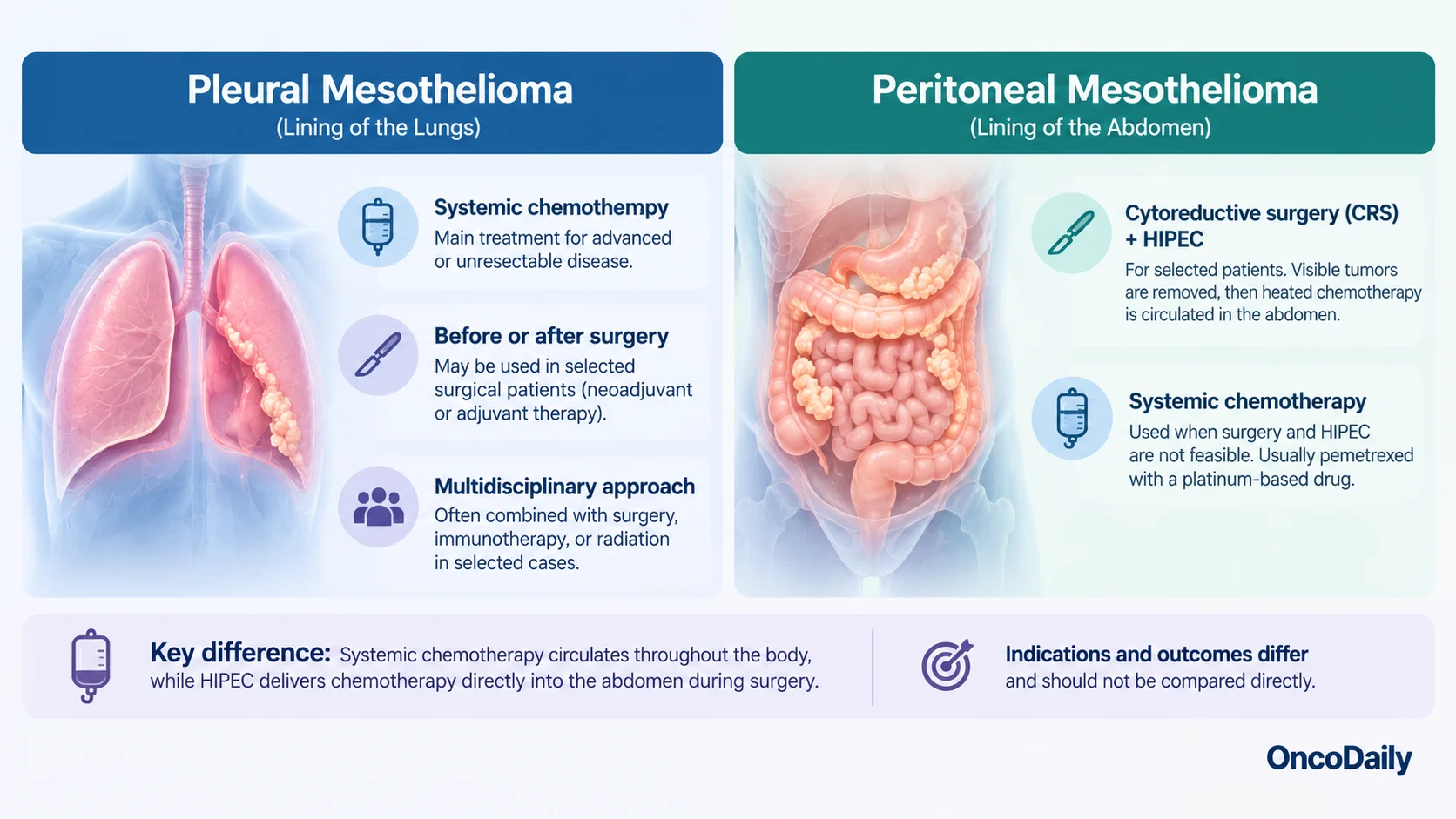
In pleural mesothelioma, systemic chemotherapy is commonly used for advanced or unresectable disease. For carefully selected surgical patients, chemotherapy may be given before surgery (neoadjuvant treatment) or afterward (adjuvant treatment) as part of a multidisciplinary approach.
In peritoneal mesothelioma, selected patients may undergo cytoreductive surgery (CRS) followed by hyperthermic intraperitoneal chemotherapy (HIPEC). Surgeons remove visible tumors before heated chemotherapy is circulated through the abdominal cavity to target remaining microscopic disease. This approach can provide prolonged disease control, particularly in patients with epithelioid tumors that can be completely removed (National Comprehensive Cancer Network, 2023).
When surgery and HIPEC are unsuitable, systemic treatment with pemetrexed and a platinum-based drug may be considered.
The key distinction is that systemic chemotherapy circulates throughout the body, while HIPEC delivers chemotherapy directly into the abdomen during surgery. Their indications and outcomes differ and should not be compared directly.
What Happens When Mesothelioma Chemotherapy Stops Working?
When mesothelioma progresses after chemotherapy, treatment depends on previous medications, tumor characteristics, and the patient’s overall health. There is no single second-line regimen suitable for everyone.
Gemcitabine or vinorelbine may be considered after pemetrexed-platinum chemotherapy. Both have demonstrated activity in previously treated mesothelioma, although response rates are modest. Retreatment with pemetrexed may also be appropriate for selected patients who experienced prolonged disease control after initial therapy (Zauderer et al., 2014).
For patients who have not previously received immunotherapy, immune checkpoint inhibitors may offer another option. In the phase III CONFIRM trial, nivolumab improved median overall survival to 10.2 months, compared with 6.9 months with placebo in previously treated malignant mesothelioma (Fennell et al., 2021).
Patients with stage 4 disease are generally treated with systemic therapies rather than surgery intended to cure the cancer. Supportive and palliative care can help manage pain, breathlessness, fatigue, and fluid accumulation alongside active treatment.
Clinical trials are particularly important when standard therapies are no longer effective, providing opportunities to investigate newer treatment approaches.
What Are the Side Effects of Mesothelioma Chemotherapy?
Chemotherapy for mesothelioma can cause fatigue, nausea, vomiting, reduced appetite, mouth sores, and low blood cell counts. Side effects vary depending on the drugs used and the patient’s overall health (U.S. Food and Drug Administration, 2023).
Bone marrow suppression is a significant concern. Low white blood cell counts increase infection risk, anemia may cause weakness and breathlessness, and reduced platelets can lead to bruising or bleeding.
Cisplatin may also damage the kidneys, hearing, and peripheral nerves, causing hearing changes, ringing in the ears, or numbness and tingling in the hands and feet. Some patients experience temporary difficulties with memory or concentration, commonly described as chemo brain.
Most side effects can be managed through supportive medications, monitoring, or dose adjustments. However, patients should seek urgent medical attention for:
- Fever of 38°C (100.4°F) or higher
- Severe breathlessness or chest pain
- Persistent vomiting, diarrhea, or dehydration
- Unusual bleeding or extensive bruising
- Markedly reduced urination or sudden neurological symptoms
Early recognition of complications is important for preventing serious toxicity and maintaining treatment safety.
FAQ
What is the most effective chemotherapy for mesothelioma?
Pemetrexed (Alimta) combined with cisplatin or carboplatin is the most established chemotherapy regimen. Immunotherapy may also be used alone or with chemotherapy.
How many chemotherapy cycles are given for mesothelioma?
Patients commonly receive four to six cycles, usually every three weeks. The exact number depends on treatment response and tolerance.
Can chemotherapy cure mesothelioma?
Chemotherapy alone rarely cures mesothelioma. It is primarily used to shrink tumors, slow disease progression, relieve symptoms, and extend survival.
How long can someone live with mesothelioma after chemotherapy?
Survival varies considerably. In a landmark clinical trial, pemetrexed plus cisplatin achieved a median overall survival of 12.1 months, although modern treatments may provide longer survival.
What are the most common side effects of mesothelioma chemotherapy?
Common side effects include fatigue, nausea, vomiting, mouth sores, and low blood cell counts. Cisplatin may also cause kidney damage, hearing changes, or nerve problems.