Cancer can disappear from scans, blood tests, and physical examination and still leave an important question behind: is it truly gone?
For many patients, treatment ends with no detectable signs of disease. Yet in some cases, cancer returns months or even years later. Why this happens is one of the most complex questions in oncology.
Recurrence is not simply a matter of a tumor growing back. It reflects the remarkable ability of some cancer cells to survive, adapt, remain hidden, and change over time. Researchers are now uncovering the biology behind these processes, offering a clearer picture of why relapse happens and how it may one day be predicted or even prevented.
What Is Cancer Recurrence and Why Does It Happen?
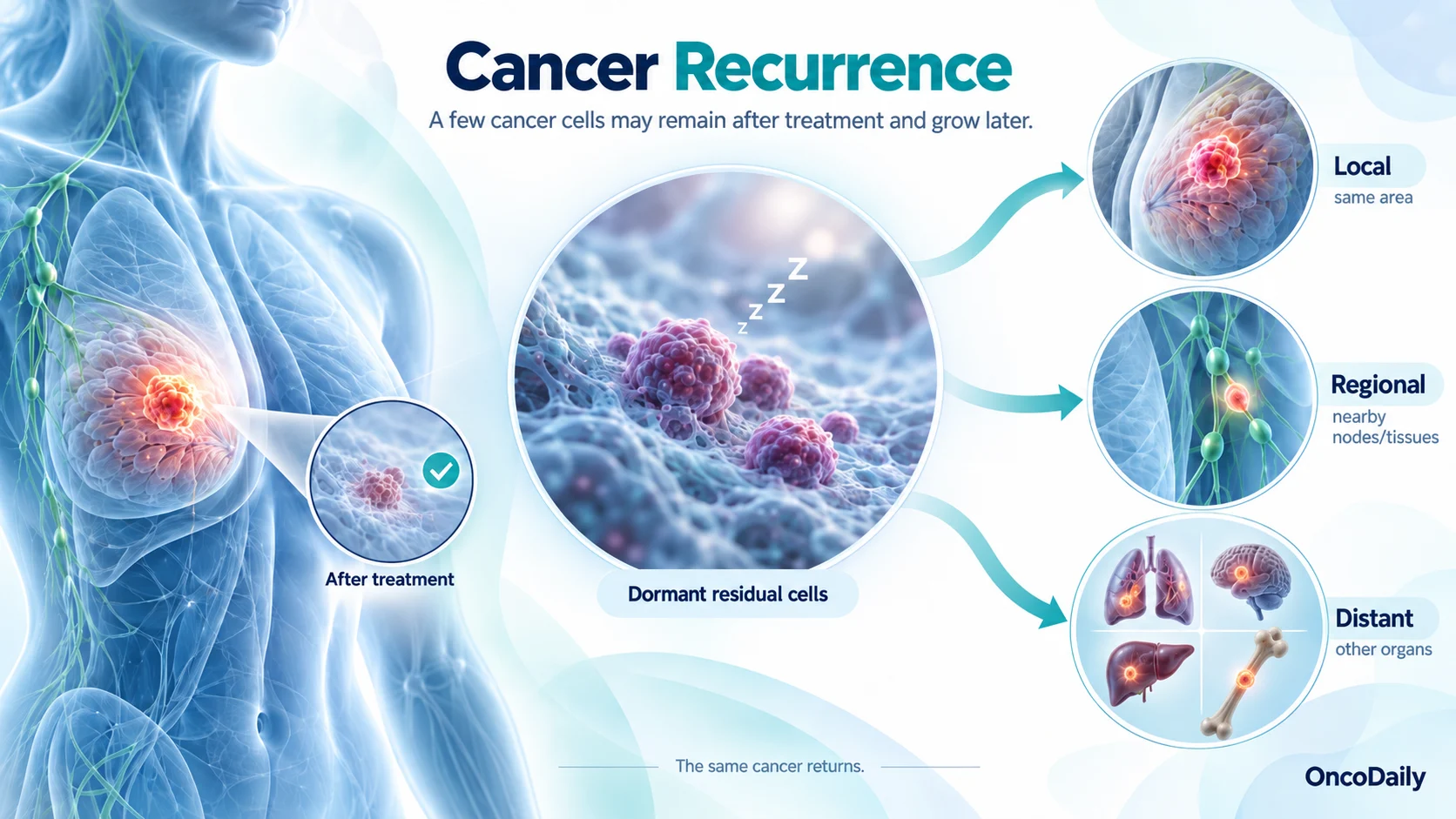
Cancer recurrence means that the same cancer comes back after treatment, following a period when there were no detectable signs of disease.
This can be difficult to understand when treatment appeared to work. But recurrence does not necessarily mean that treatment failed. Sometimes, a very small number of cancer cells remain in the body after treatment. These cells may be too few to detect on scans or other routine tests and can remain unnoticed for months or even years.
Cancer may return in the same area as the original tumor, which is called a local recurrence. It may appear in nearby lymph nodes or tissues, known as a regional recurrence, or return in another part of the body as a distant or metastatic recurrence.
Several biological processes can contribute to recurrence. Some cancer cells may be naturally resistant to treatment, while others can adapt and survive. Some may remain dormant for long periods, and microscopic cancer cells may also have spread beyond the original tumor before treatment began.
The likelihood of recurrence varies widely depending on the cancer type, stage, grade, molecular features, response to treatment, and other individual factors.
Importantly, recurrence is different from a second primary cancer. A recurrence is the return of the original cancer, while a second primary cancer is a new and separate malignancy. (American Cancer Society 2025; Barjij I, Meliani M 2025).
How Do Cancer Cells Survive Treatment?
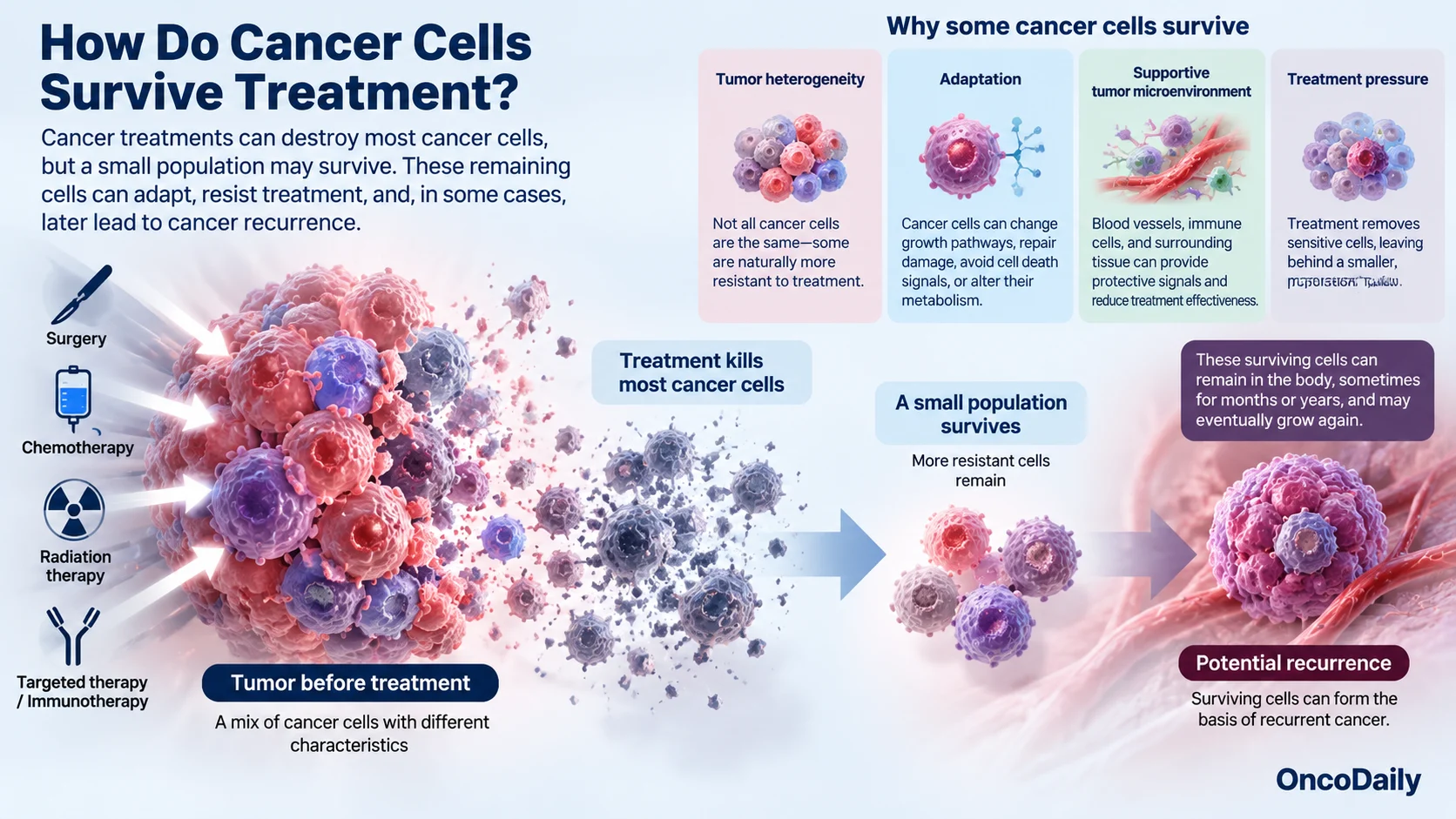
Cancer treatments can destroy large numbers of cancer cells, yet occasionally a small population survives.
One reason is that a tumor is not made up of identical cells. Some cancer cells may be highly sensitive to treatment, while others already have features that make them harder to kill. Treatment can therefore remove the sensitive cells while leaving behind a smaller resistant population.
Cancer cells can also adapt under treatment pressure. They may change the pathways they use to grow, repair treatment-related damage more effectively, avoid signals that normally trigger cell death, or alter their metabolism to survive stressful conditions.
The area surrounding the tumor can help as well. Blood vessels, immune cells, connective tissue, and other parts of the tumor microenvironment can sometimes provide signals that protect cancer cells or reduce how effectively treatment reaches them.
These surviving cells can form the foundation of residual disease and, in some cases, eventually allow the cancer to grow again. (Cheng X et al. 2026; Hu J et al. 2026; Li J et al. 2025).
What Is Cancer Dormancy and How Can It Lead to Relapse?
Some cancer cells survive by doing something unusual: they become quiet.
Cancer dormancy describes a state in which cancer cells remain alive but stop dividing, or grow so slowly that they remain clinically undetectable
Dormancy can involve individual cancer cells or tiny groups of cells. In some cases, the immune system helps keep them under control. In others, limited blood supply or signals from the surrounding tissue prevent them from expanding.
Dormant cells are particularly difficult to eliminate because many cancer treatments work best against actively dividing cells.
At some point, however, conditions can change. Inflammation, changes in immune control, new blood-vessel formation, or altered signals from nearby tissues may allow dormant cells to become active again.
This is one possible explanation for late recurrence, when cancer returns years after apparently successful treatment. Researchers are now investigating whether dormant cells can be eliminated before they reactivate or kept permanently dormant so they never cause disease again. (Liang Y et al. 2026; Hu J et al. 2026).

How Do Genetic Changes and Tumor Evolution Drive Cancer Recurrence?
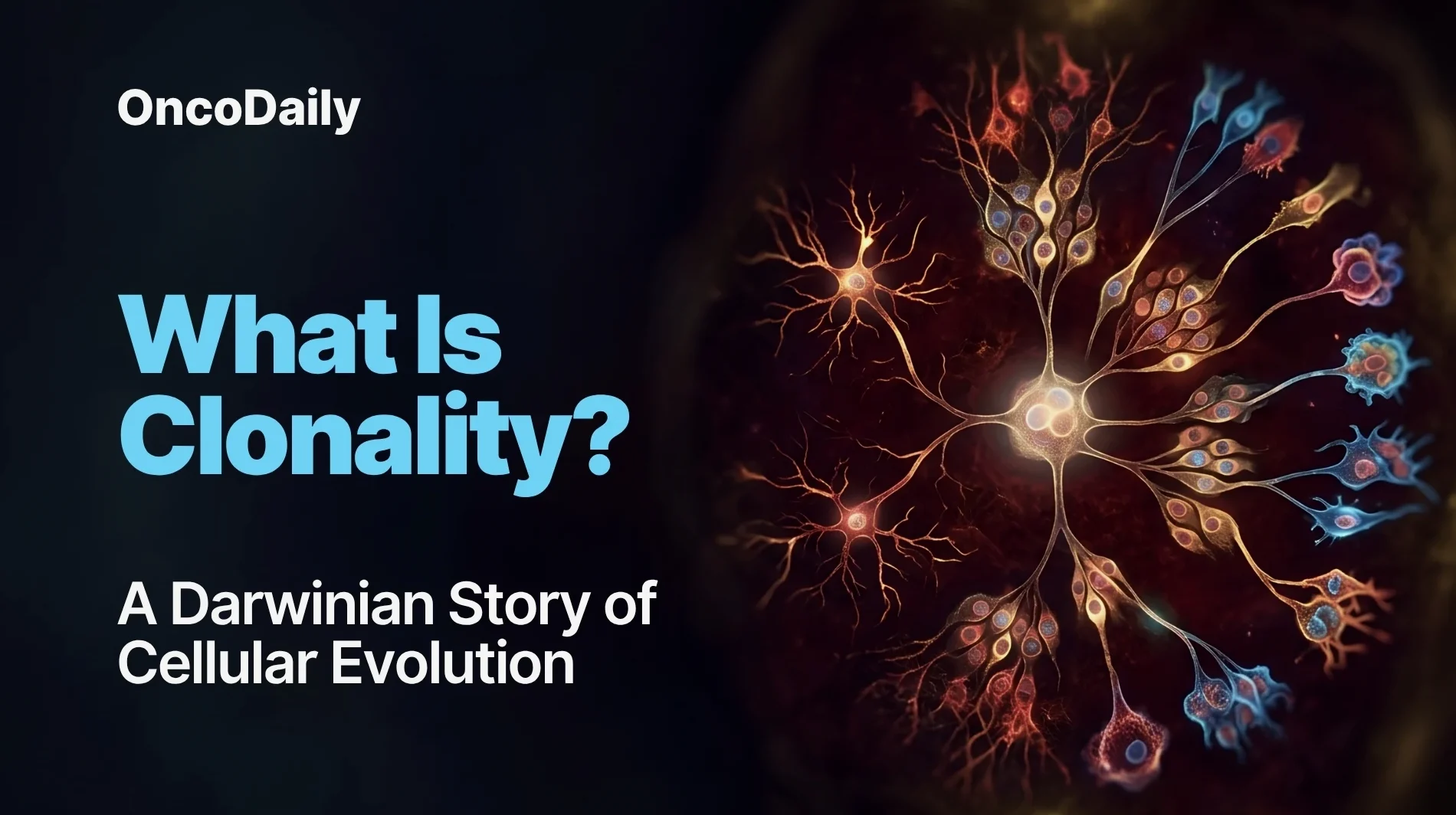
Cancer is not biologically static. It continues to evolve over time, particularly under the pressure created by treatment.
Even within one tumor, different groups of cancer cells may carry different genetic and biological features. When treatment begins, the most sensitive cells may disappear while cells with resistance-related features survive. Those surviving cells can then become a larger part of the remaining cancer.
This process is known as clonal evolution.
The surviving cells may also acquire new mutations, activate alternative growth pathways, or undergo epigenetic changesthat alter how genes are switched on and off without changing the DNA sequence itself.
As a result, a cancer that returns may not be biologically identical to the tumor that was originally diagnosed. Its molecular profile may have changed, which can help explain why a treatment that worked the first time may not work as well after recurrence.
This is also why doctors may sometimes recommend testing the cancer again after relapse. A repeat biopsy or liquid biopsy may reveal new molecular changes that influence the next treatment decision. (Fu YC et al. 2025; Nussinov R et al. 2025; Cheng X et al. 2026).
Which Factors Increase the Risk of Cancer Coming Back?
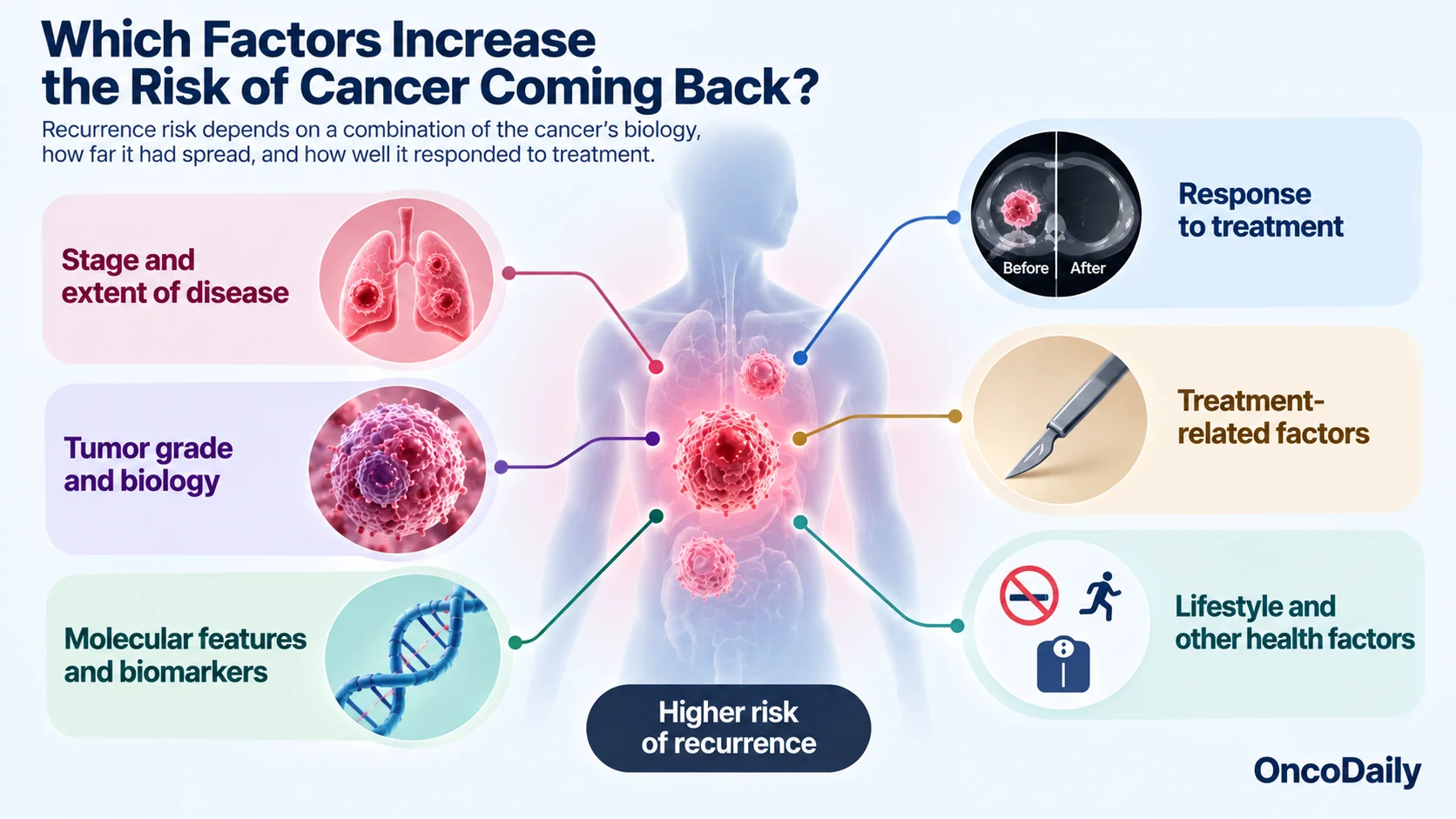
There is no single factor that determines whether cancer will return. Recurrence risk usually reflects a combination of the cancer’s biology, how far it had spread, and how well it responded to treatment.
Stage is one of the most important factors. In many cancers, larger tumors or cancers that have reached nearby lymph nodes or other tissues carry a higher risk of recurrence.
Tumor grade and biological behavior also matter. Faster-growing or more aggressive cancers may have a greater chance of returning, while molecular features and biomarkers can provide additional information about risk.
Treatment-related factors are important too. Complete tumor removal, clear surgical margins, appropriate lymph node assessment, and recommended treatments after surgery can all help reduce recurrence risk when indicated.
How well a tumor responds to treatment can also provide useful information. In some cancers, having little or no residual tumor after treatment is associated with a lower risk of relapse.
Other factors, including smoking, body weight, immune function, other medical conditions, and adherence to long-term treatments, may influence recurrence risk in certain cancers.
Because every cancer behaves differently, doctors consider these factors together rather than relying on any single feature to predict what will happen. (American Cancer Society 2025; National Cancer Institute 2025; Baxter NN et al. 2022).
Can Cancer Recurrence Be Predicted or Prevented?
Cancer recurrence cannot yet be predicted with complete certainty, and no strategy can prevent every relapse. However, doctors are becoming better at identifying who is at higher risk and finding ways to reduce that risk.
Traditionally, recurrence risk has been estimated using factors such as stage, tumor grade, lymph node involvement, surgical margins, and molecular subtype. Newer molecular tools are beginning to add another layer of information.
One of the most promising is circulating tumor DNA (ctDNA). Tiny fragments of DNA released by cancer cells can sometimes be detected in the blood after treatment, even when imaging shows no evidence of disease. This can provide evidence of molecular residual disease (MRD) and is associated with a higher risk of recurrence in several cancers.
In some studies, ctDNA has detected signs of molecular relapse before recurrence becomes visible on conventional imaging. However, an important question remains: knowing that residual disease is present does not yet mean that doctors know exactly how treatment should be changed in every cancer type.
Reducing recurrence risk therefore still relies heavily on established treatment. Depending on the cancer, this may include surgery followed by chemotherapy, radiation, endocrine therapy, targeted therapy, or immunotherapy designed to eliminate microscopic disease.
Regular follow-up remains important, while staying physically active, avoiding smoking, maintaining a healthy weight, and following recommended long-term treatments may also help lower recurrence risk in some cancers.
MRD-guided treatment is now an important area of research. In the future, ctDNA may help identify patients who need additional treatment while allowing some lower-risk patients to safely avoid unnecessary therapy. (Kim J et al. 2026; American Cancer Society 2025; National Cancer Institute 2025).

FAQ
Can cancer come back after successful treatment?
Yes. Even when no cancer is detectable after treatment, a small number of cancer cells may sometimes remain and later grow again.
How long after treatment can cancer recur?
Recurrence can happen within months or many years, depending on the cancer type, stage, biology, and treatment response.
Does cancer recurrence mean treatment failed?
Not necessarily. Treatment may have controlled or eliminated all detectable disease while microscopic cancer cells remained hidden.
Can blood tests detect cancer recurrence early?
In some cancers, tests such as circulating tumor DNA (ctDNA) may detect signs of residual disease before recurrence appears on imaging, but their use is still evolving.
Can cancer recurrence be prevented?
Not all recurrences can be prevented, but appropriate treatment, regular follow-up, and certain healthy lifestyle choices may help reduce risk in some cancers.