





Sparkling drinks vary substantially in their chemical composition. Plain sparkling mineral water has not been shown to cause cancer, while concerns surrounding some soft drinks relate mainly to added sugar, artificial sweeteners, colorants, preservatives, acidity, and possible contaminants,not carbonation itself. The question of whether sparkling drinks can cause cancer cannot be answered by looking at carbonation alone. A bottle of plain mineral water and a can of cola may both contain dissolved carbon dioxide, but their remaining ingredients are very different.
Plain sparkling water may contain naturally occurring calcium, magnesium, bicarbonate, sodium, potassium, and sulfate. Soft drinks may additionally contain added sugar, high-fructose corn syrup, artificial sweeteners, phosphoric or citric acid, preservatives, caramel coloring, caffeine, and flavoring agents.
Photo: Depositphotos
Scientists have investigated many aspects of sparkling drinks, from naturally occurring minerals and carbonation to added sugars, artificial sweeteners, preservatives, colorants, packaging materials, and manufacturing processes. Each of these components has been studied differently, and not all carry the same health implications. (Stoots et al., 2021; Feng et al., 2023; FDA, “Carbonated Soft Drinks: What You Should Know.”)
What Is Carbonation?
Carbonation is created by dissolving carbon dioxide gas in water under pressure. Some mineral waters become naturally carbonated underground, while others have carbon dioxide added during manufacturing. When carbon dioxide dissolves in water, a small proportion reacts with water molecules to form carbonic acid:
CO₂ + H₂O ⇌ H₂CO₃
Carbonic acid is a weak and unstable acid. It contributes to the sharp, slightly acidic taste of sparkling water but readily converts back into carbon dioxide and water. After a sparkling drink is consumed, much of the carbon dioxide is released through belching. A smaller proportion may be absorbed from the gastrointestinal tract and eliminated through normal respiration. Carbonation has not been established as a carcinogenic exposure. Studies reporting associations between some beverages and cancer generally examine sugar, sweeteners, metabolic effects, or specific additives rather than dissolved carbon dioxide itself.
What Minerals Are Found in Sparkling Water?
Sparkling mineral water is not a chemically uniform product. Its mineral composition depends on the geological source, treatment process, and manufacturer. A study of 126 sparkling-water brands from 10 European countries found wide variation in calcium, magnesium, sodium, potassium, bicarbonate, and sulfate concentrations. Sodium and sulfate showed particularly large differences, while calcium levels in some products reached more than 500 mg/L. This means that two products both labeled “sparkling mineral water” can have very different nutritional and physiological effects. Stoots et al., 2021.
What Is Calcium Doing in Sparkling Water?
Calcium enters mineral water as it moves through calcium-containing rocks and underground deposits. The amount can range from negligible to nutritionally meaningful. Calcium dissolved in mineral water can be absorbed from the gastrointestinal tract and may contribute to daily calcium intake. However, the amount varies considerably by brand, so sparkling water should not automatically be treated as a major calcium source. There is no evidence that the calcium naturally found in regulated mineral water causes cancer. In some nutritional contexts, calcium intake has instead been investigated for possible protective associations, particularly in colorectal health, although cancer risk cannot be reduced to one mineral alone. (Stoots et al., 2021; Stoots et al., 2021, European still-water comparison.)
What Is Magnesium Doing in Sparkling Water?
Magnesium is an essential mineral involved in hundreds of enzymatic reactions. It contributes to:
- Energy metabolism
- Muscle and nerve function
- Glucose regulation
- Protein production
- DNA synthesis and repair
- Electrolyte balance
Some mineral waters contain meaningful quantities of magnesium, while others contain very little. The label should therefore be checked before describing a particular product as magnesium-rich. Magnesium naturally present in drinking water has not been shown to cause cancer. Its clinical significance is generally nutritional rather than carcinogenic. People with advanced kidney failure may need individualized advice about mineral intake because reduced kidney function can interfere with electrolyte elimination. That is a renal-management issue, not evidence that magnesium causes cancer. (Stoots et al., 2021.)
What Is Bicarbonate in Mineral Water?
Bicarbonate is a negatively charged ion that acts as part of the body’s acid–base buffering system. It is present naturally in many mineral waters, sometimes at relatively high concentrations. Bicarbonate-rich water may influence:
- Urinary pH
- Gastric acidity
- Mineral excretion
- Kidney-stone chemistry
- Acid–base balance after meals
Bicarbonate should not be confused with carbonation. Carbonation refers primarily to dissolved carbon dioxide, while bicarbonate is a mineral ion present in the water. There is no evidence that bicarbonate in ordinary mineral water causes cancer. Its main clinical relevance relates to digestion, urinary chemistry, and kidney-stone risk in selected individuals. (Stoots et al., 2021.)
Is Sodium in Sparkling Water Harmful?
The sodium content of sparkling water can vary from almost negligible to relatively high. In the European comparison of 126 brands, sodium concentrations varied substantially across products and countries. For most healthy people, sodium from mineral water represents only a small proportion of total daily sodium intake compared with processed foods. However, people with certain medical conditions may need to check the label carefully. This may include people with:
- Heart failure
- Severe hypertension
- Advanced kidney disease
- Fluid retention
- Medically prescribed sodium restriction
Sodium in mineral water is not considered carcinogenic. Its relevance concerns blood pressure, fluid balance, and cardiovascular or renal health.
What Are Sulfate and Potassium?
Sulfate is naturally present in some mineral waters. At ordinary concentrations, it is not considered carcinogenic. At high concentrations, sulfate-rich water may have a laxative effect or cause abdominal discomfort in susceptible individuals. Potassium is usually present at low concentrations in bottled water. It is essential for normal nerve, muscle, and cardiac function. For most people, the potassium content of sparkling water is not clinically important. However, patients with advanced kidney disease or hyperkalemia may need to review the mineral content of specialty waters and electrolyte drinks. Neither sulfate nor potassium in normal mineral-water concentrations has been shown to cause cancer.
Can Minerals in Sparkling Water Become Harmful?
Minerals are not inherently beneficial or harmful; their effects depend on the amount consumed, an individual’s health, and their overall diet. For example, sparkling water with a high sodium content may not be suitable for people who need to limit sodium or fluid intake, while potassium-containing products may require caution in individuals with severe kidney disease. The mineral composition of some waters can also influence urinary chemistry in people prone to recurrent kidney stones, and consuming large amounts of minerals from multiple dietary sources may not be appropriate for certain medical conditions.
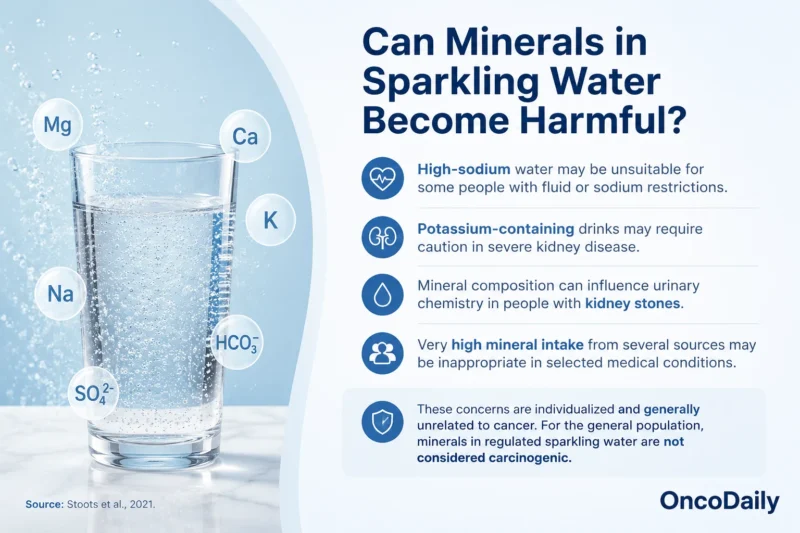
These considerations are specific to individual health needs and are generally unrelated to cancer. For the general population, the minerals naturally present in commercially regulated sparkling water are not considered carcinogenic.
Source: Stoots et al., 2021.
Why Is Plain Sparkling Water Different From Soda?
Plain sparkling water typically contains only water, dissolved carbon dioxide, and naturally occurring minerals. In contrast, regular soft drinks are more complex formulations that may contain added sugar or high-fructose corn syrup, phosphoric or citric acid, caramel coloring or other colorants, caffeine, flavoring agents, and preservatives. Diet soft drinks often replace sugar with low- or no-calorie sweeteners such as aspartame, acesulfame potassium, sucralose, or saccharin. Because these beverages differ substantially in their ingredients and nutritional composition, findings from studies of regular or diet soda should not automatically be applied to plain sparkling water.
Why Are Sugar-Sweetened Sparkling Drinks a Concern?
Sugar is not classified as a carcinogen, and eating sugar does not selectively “feed” cancer in the simplistic way often claimed online. Both healthy and malignant cells use glucose. The concern with sugar-sweetened beverages is mainly their effect on energy intake and metabolism. Sugars in liquid form can be consumed rapidly and may produce less fullness than solid foods. Frequent intake may contribute to:
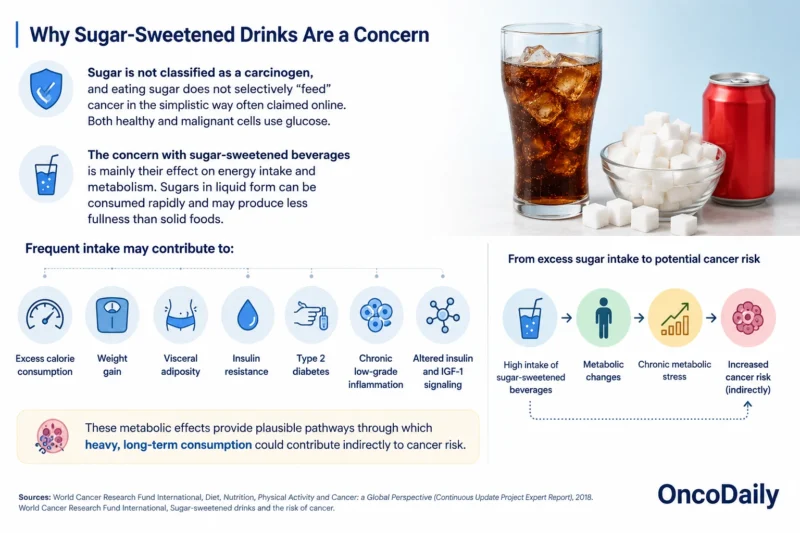
A 2023 meta-analysis of 17 studies involving 557,391 participants found that higher sugar-sweetened beverage intake was associated with a pooled 17% increase in colorectal cancer incidence. The analysis did not establish a statistically clear association with colorectal cancer mortality. Because the included evidence was observational, it demonstrates an association rather than proving direct causation. (Feng et al., 2023; McCullough et al., 2022.)
What About High-Fructose Corn Syrup?
High-fructose corn syrup contains glucose and fructose in proportions broadly comparable with table sugar, depending on the formulation. Fructose is metabolized largely in the liver. High intake can contribute to:
- Hepatic fat production
- Elevated triglycerides
- Insulin resistance
- Metabolic dysfunction
- Nonalcoholic fatty liver disease in susceptible individuals
Current evidence does not establish that high-fructose corn syrup is uniquely carcinogenic compared with a similar quantity of sucrose. The main issue is excessive intake of rapidly absorbed added sugars, regardless of whether the ingredient list includes high-fructose corn syrup, sucrose, cane sugar, glucose-fructose syrup, or another added sugar. (Feng et al., 2023; Pérez-Cornago et al., 2022.)
Do Artificial Sweeteners Cause Cancer?
Artificial sweeteners are among the most controversial ingredients in diet sparkling drinks. Common examples include:
- Aspartame
- Acesulfame potassium
- Sucralose
- Saccharin
- Neotame
- Cyclamate, where permitted
A 2022 analysis from the NutriNet-Santé cohort reported a modest association between higher artificial-sweetener intake and overall cancer incidence. Associations were observed particularly for aspartame and acesulfame potassium. However, this was an observational study. Such studies can be affected by residual confounding, measurement errors, underlying health differences, and reverse causation.
A 2025 umbrella meta-analysis incorporating 10 meta-analyses and 35 datasets found no statistically significant association between artificial-sweetener intake and overall cancer risk. The pooled relative risk was 0.99. The authors emphasized that results combining all artificial sweeteners should not automatically be applied to each individual compound. The evidence therefore remains complex. Current studies do not establish that diet sparkling drinks cause cancer, but the long-term effects of individual sweeteners and specific exposure levels continue to be investigated.(Debras et al., 2022; Abu-Zaid et al., 2025.)
What Did IARC Conclude About Aspartame?
In 2023, the International Agency for Research on Cancer classified aspartame as possibly carcinogenic to humans, or Group 2B. This classification was based on limited evidence in humans, limited evidence in experimental animals, and limited mechanistic evidence. The classification identifies a possible hazard. It does not mean that ordinary exposure at any dose has been proven to cause cancer. At the same time, the Joint FAO/WHO Expert Committee on Food Additives retained its acceptable daily intake of 40 mg per kilogram of body weight per day.
Hazard and risk are not the same. A hazard classification asks whether a substance might be capable of causing cancer under some circumstances. Risk assessment considers the quantity consumed and the level of actual exposure.
You Can Also Read Do Artificial Sweeteners Cause Cancer? Myths and Facts by OncoDaily 
What Acids Are Added to Sparkling Drinks?
Sparkling drinks may contain several acids, including:
- Carbonic acid
- Citric acid
- Phosphoric acid
- Malic acid
- Tartaric acid
- Ascorbic acid
Manufacturers use these acids to create tartness, balance sweetness, maintain flavor, control pH, or support preservation. These compounds have different chemical properties and should not be treated as one substance. None of the commonly used beverage acids has been shown to make the entire body acidic or directly cause cancer at normal permitted food-use concentrations. Their clearest documented health effect concerns dental enamel.
Does Citric Acid Cause Cancer?
Citric acid occurs naturally in citrus fruits and plays a central role in normal human metabolism through the citric acid cycle. It is frequently added to flavored sparkling water and soft drinks to provide tartness and control acidity. Citric acid is not established as a carcinogen. However, repeated exposure to acidic beverages may soften dental enamel and contribute to erosion, particularly when drinks are slowly sipped throughout the day. This is a local dental effect, not evidence of systemic cancer formation. (Inchingolo et al., 2023.)
Is Phosphoric Acid Dangerous?
Phosphoric acid is commonly used in cola beverages. It produces a sharp taste and lowers the drink’s pH. Phosphoric acid is not classified as a human carcinogen at the concentrations permitted in beverages. Concerns instead relate to:
- Dental enamel erosion
- High habitual cola intake
- Possible displacement of calcium-rich beverages
- Broader dietary quality
The presence of phosphoric acid does not mean that a beverage directly causes cancer. However, frequent soft-drink consumption may be part of a dietary pattern associated with obesity and metabolic disease.
Can the Acidity of Sparkling Drinks Make the Body Acidic?
An acidic drink does not significantly acidify the blood or the entire body because blood pH is tightly regulated by the lungs, kidneys, bicarbonate system, and protein and phosphate buffers. The stomach is already naturally acidic, and after food or beverages are absorbed, their acids and bases are processed through normal metabolic and renal pathways. The acidity of sparkling drinks is therefore mainly relevant to dental enamel erosion, reflux symptoms, oral sensitivity, and gastrointestinal discomfort rather than systemic acidity. Current evidence does not show that acidic sparkling drinks create a generalized acidic environment in the body that causes cancer.
Do Carbonated Drinks Damage Teeth?
Carbonated soft drinks can contribute to dental erosion, particularly when they contain added citric, phosphoric, or other acids. A 2023 systematic review found that the pH of many commercially available carbonated drinks was below the critical level for enamel demineralization. Repeated exposure may weaken the enamel surface, increase roughness, and raise susceptibility to further dental damage. The degree of erosion depends on:
- Beverage pH
- Titratable acidity
- Calcium and phosphate content
- Frequency of consumption
- Length of contact with the teeth
- Saliva production
- Oral-hygiene practices
Plain sparkling water is generally less erosive than cola or citrus-flavored soft drinks, although flavored acidic sparkling waters may still affect enamel. Dental erosion should not be confused with oral cancer. They are separate conditions. (Inchingolo et al., 2023.)
What Is Caramel Coloring?
Caramel coloring is produced by heating carbohydrates under controlled conditions. It is used to provide the dark brown color found in many cola beverages. մDifferent manufacturing processes produce different classes of caramel coloring. Some processes that use ammonium compounds can generate small quantities of 4-methylimidazole, known as 4-MEI, as a manufacturing by-product. 4-MEI has caused tumors in experimental animals at sufficiently high exposure levels. California’s Office of Environmental Health Hazard Assessment lists it as a chemical known to cause cancer under Proposition 65 and has established a no-significant-risk level of 29 micrograms per day.
However, animal hazard findings do not automatically mean that ordinary consumption of every caramel-colored drink causes cancer. Risk depends on the concentration, dose, consumption frequency, and duration of exposure. The concern applies to specific caramel-colored products, not to plain sparkling water. (California OEHHA, “4-Methylimidazole.”)
What Are Sodium Benzoate and Potassium Benzoate?
Sodium benzoate and potassium benzoate are preservatives used to limit the growth of bacteria, yeast, and mold in acidic drinks. Benzoates themselves are not established as human carcinogens at permitted food-use levels. However, under certain conditions, benzoate salts can react with ascorbic acid or erythorbic acid and form small amounts of benzene. Factors that may promote benzene formation include:
- Heat
- Ultraviolet light
- Prolonged storage
- Certain metal ions
- The simultaneous presence of benzoates and vitamin C
- Benzene is a recognized human carcinogen, particularly in relation to leukemia after substantial chronic exposure.
FDA testing of almost 200 beverages between 2005 and 2007 found 10 products with benzene levels above 5 parts per billion. Those products were subsequently reformulated or discontinued. FDA reported that reformulated products had benzene levels below 1.5 parts per billion when detectable. FDA has stated that benzene levels found in beverages to date do not represent a safety concern for consumers, while continuing to monitor the issue. (FDA, “Questions and Answers on the Occurrence of Benzene in Soft Drinks”; FDA, “Carbonated Soft Drinks: What You Should Know.”)
Is Potassium Sorbate Carcinogenic?
Potassium sorbate is used to inhibit mold and yeast growth in beverages and other foods. Some laboratory studies have examined whether sorbates can produce oxidative stress or genetic damage under specific experimental conditions. However, laboratory experiments may use concentrations and environments that do not reflect normal human exposure. There is currently no convincing human evidence that potassium sorbate in regulated beverage concentrations causes cancer. As with other additives, safety depends on purity, permitted concentration, exposure level, and manufacturing controls.
Do Flavorings in Sparkling Drinks Cause Cancer?
The terms “natural flavors” and “artificial flavors” may refer to many different compounds used in small quantities, and neither label identifies a single specific chemical. A product described as containing natural flavor is not automatically safer, while the presence of artificial flavor does not mean that the beverage is carcinogenic. Food-safety evaluations consider the chemical identity of each substance, the expected level of exposure, how it is metabolized, toxicological findings, and the amount permitted for use. There is no scientific basis for claiming that all beverage flavorings cause cancer; any concern must be assessed using evidence specific to the individual compound and the level of exposure.
Can Sparkling Water Contain Heavy Metals?
Water can contain trace amounts of naturally occurring or environmental contaminants, depending on its source and treatment. Potential contaminants may include:
- Arsenic
- Lead
- Cadmium
- Mercury
- Other trace metals
Some heavy metals are carcinogenic or toxic at sufficient exposure levels. However, their presence is not an inherent feature of carbonation. Commercial drinking water is subject to regulatory standards and testing. Any risk would depend on the specific contaminant, its concentration, the duration of exposure, and compliance with water-quality limits. It would therefore be inaccurate to claim that sparkling water generally causes cancer because contamination can occasionally occur in a particular source or product. (FDA bottled-water standards; WHO drinking-water quality guidance.)
What About PFAS?
Per- and polyfluoroalkyl substances, or PFAS, are persistent environmental chemicals that can enter drinking-water sources. Some PFAS have been associated with increased risks of certain cancers and other health effects at sufficient levels of long-term exposure. However, PFAS are contaminants rather than ingredients intentionally added to sparkling water. The concentration can vary according to:
- Geographic location
- Water source
- Industrial contamination
- Treatment methods
- Regulatory monitoring
The correct response is source-specific testing and regulation, not a general claim that carbonation causes cancer.
Are Microplastics in Bottled Water a Cancer Risk?
Microplastic particles have been detected in bottled and tap water. Potential sources include packaging, bottle caps, manufacturing, and the wider environment. Researchers are studying whether chronic microplastic exposure may contribute to inflammation, oxidative stress, endocrine effects, or tissue injury. However, current human evidence has not established that consuming bottled sparkling water causes cancer through microplastic exposure.
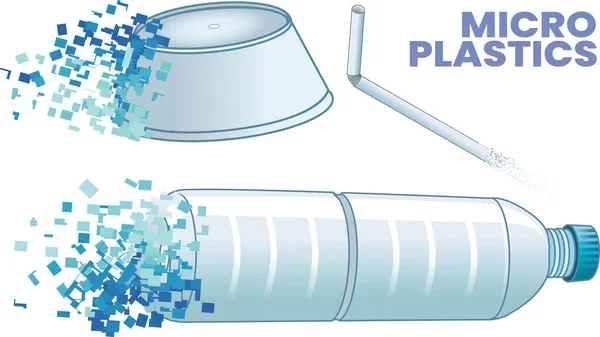
Photo: Depositphotos
Detection of a substance does not by itself establish clinical harm. Risk assessment requires information about:
- Particle size
- Chemical composition
- Concentration
- Absorption
- Tissue distribution
- Duration of exposure
The long-term health significance of microplastics remains an active area of research.
Does Plastic Packaging Release Harmful Chemicals?
Plastic bottles can release very small amounts of chemicals or microscopic particles, particularly when exposed to heat, direct sunlight, physical damage, or prolonged storage. The extent of this migration depends on factors such as the type of plastic, storage temperature and duration, beverage acidity, manufacturing quality, and whether single-use bottles are repeatedly reused. Current evidence does not show that the normal use of regulated plastic beverage bottles causes cancer. However, as a practical precaution, beverages should not be stored for extended periods in excessive heat or direct sunlight, and single-use plastic bottles should not be reused beyond their intended purpose.
Glass bottles may reduce direct contact between the beverage and the plastic container, although bottle caps and internal liners may still contain polymeric materials.
Is Caffeine in Sparkling Drinks Carcinogenic?
Caffeine is found in many colas, energy drinks, and flavored carbonated beverages. It acts primarily as a central nervous system stimulant and may cause:
- Insomnia
- Anxiety
- Palpitations
- Tremor
- Increased blood pressure
- Gastrointestinal discomfort
Caffeine is not established as a cause of cancer at ordinary dietary exposure levels. The main concern with caffeinated sparkling beverages is excessive caffeine intake, sleep disruption, cardiovascular symptoms, and the combination of caffeine with high sugar levels.
How Should Consumers Read the Ingredient Label?
The label is often more informative than whether the beverage is carbonated. Consumers should check the following:
Added Sugars
Look at the grams of added sugar per serving and the number of servings in the bottle. Some large bottles contain two or more labeled servings.
Artificial or Non-Sugar Sweeteners
Ingredients may include aspartame, acesulfame potassium, sucralose, saccharin, steviol glycosides, monk-fruit extract, or sugar alcohols.
Acids
Citric, phosphoric, malic, or tartaric acid may increase dental erosive potential.
Sodium
Sodium content may matter for people with kidney disease, heart failure, severe hypertension, or prescribed sodium restrictions.
Preservatives
Common preservatives include sodium benzoate, potassium benzoate, and potassium sorbate.
Colorants
Cola-type beverages may contain caramel coloring, which can contain variable amounts of process by-products such as 4-MEI.
Caffeine
Caffeine may be relevant for children, pregnant individuals, people with arrhythmias, or those sensitive to stimulants.
(FDA, “Types of Food Ingredients”; FDA, “Carbonated Soft Drinks: What You Should Know.”)
Which Sparkling Drink Is the Best Everyday Choice?
For most people, the simplest everyday option is plain, unsweetened sparkling water containing only:
- Water
- Carbon dioxide
- Naturally occurring minerals
A product with a small amount of natural flavoring is not automatically unsafe. However, beverages containing substantial added sugar are better treated as occasional drinks rather than primary sources of hydration. Diet drinks may reduce sugar and calorie intake when they replace regular soda, but their long-term health effects remain under investigation. Plain water and unsweetened sparkling water remain the least chemically complex choices. People with advanced kidney disease, heart failure, severe hypertension, recurrent kidney stones, or electrolyte abnormalities may need to check sodium, potassium, calcium, and bicarbonate levels more carefully.
You Can Also Read Does Beer Cause Cancer? The Hidden Risks, Common Myths, and Science Explained by OncoDaily
Written by Aharon Tsaturyan, MD, Editor at OncoDaily Intelligence Unit
FAQ
Can sparkling water cause cancer?
Current evidence does not show that plain sparkling water causes cancer. The main concerns studied by researchers involve added sugar, artificial sweeteners, certain additives, and contaminants rather than carbonation itself.
Does carbonation increase cancer risk?
No. Carbonation is created by dissolving carbon dioxide in water, and there is no evidence that the bubbles themselves increase the risk of cancer.
Is sparkling water healthier than soda?
Generally, yes. Plain sparkling water usually contains only water, carbon dioxide, and naturally occurring minerals, whereas regular soda often contains added sugar, acids, colorants, preservatives, caffeine, and flavorings.
Can artificial sweeteners in diet soda cause cancer?
Research remains mixed. Some observational studies have reported associations between certain artificial sweeteners and cancer, while larger reviews have found no significant overall increase in cancer risk. More research is needed.
Does sugar feed cancer?
Cancer cells use glucose for energy, but so do healthy cells. Sugar itself is not classified as a carcinogen. The concern is that excessive sugar intake can contribute to obesity, insulin resistance, and chronic inflammation, all of which are linked to a higher risk of several cancers.
Are the minerals in sparkling water harmful?
For most people, no. Minerals such as calcium, magnesium, bicarbonate, sodium, and potassium are not considered carcinogenic. However, people with kidney disease, heart failure, or sodium restrictions may need to choose products carefully.
Can sparkling water make your body acidic?
No. The body's blood pH is tightly regulated by the lungs, kidneys, and buffering systems. Drinking sparkling water does not create a harmful acidic environment that causes cancer.
Do plastic bottles release cancer-causing chemicals?
Plastic bottles can release very small amounts of chemicals or microscopic particles under certain conditions, such as prolonged heat exposure. However, current evidence does not show that normal use of regulated plastic beverage bottles causes cancer.
Does caramel coloring in soda cause cancer?
Some caramel colorings can contain small amounts of 4-methylimidazole (4-MEI), a manufacturing by-product that has caused cancer in laboratory animals at high doses. Whether it poses a meaningful risk to humans depends on the level of exposure, and regulatory agencies continue to monitor its presence in foods and beverages.
What is the healthiest sparkling drink?
The healthiest choice is plain, unsweetened sparkling water containing only water, carbon dioxide, and naturally occurring minerals. Choosing beverages without added sugar is one of the simplest ways to support long-term health.