
Breast oncology continues to move in several directions at once: more precise risk assessment, deeper biomarker integration, more careful toxicity surveillance, and stronger attention to how clinical trials are interpreted. The latest OncoDaily Breast Top 10 Breast Cancer News for April 19–26, 2026, captures this shift across real-world evidence, randomized data, translational science, guideline-oriented reviews, and clinical trial literacy.
The selected studies are not connected by one drug or one disease subtype. Instead, they reflect a broader pattern in breast cancer care: treatment decisions are becoming less dependent on single clinical features and more dependent on biology, context, toxicity risk, and long-term outcomes.
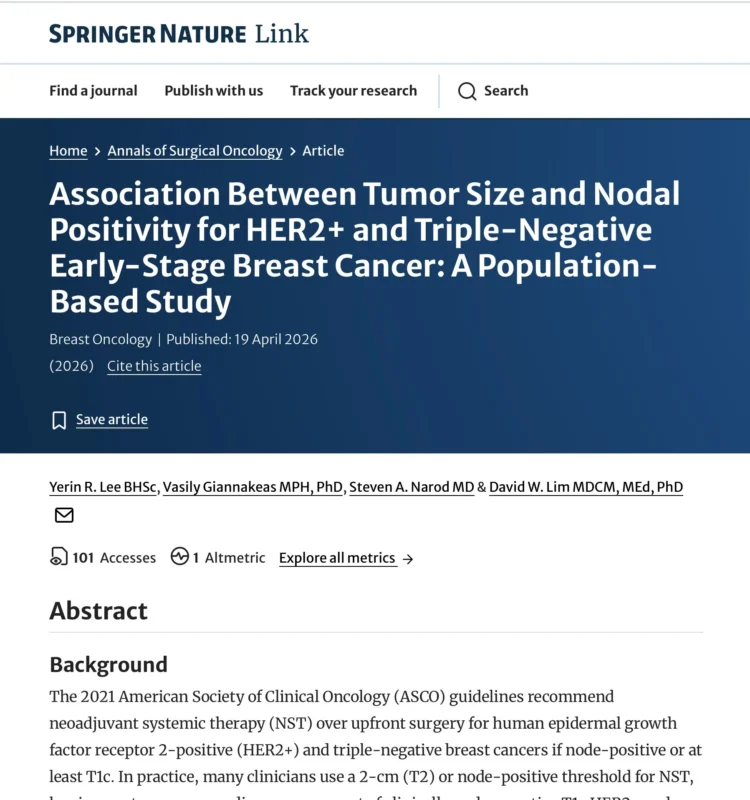
Tumor Size Alone May Underestimate Nodal Risk
The first highlighted study focuses on nodal positivity in HER2-positive and triple-negative breast cancer. In an Ontario population-based cohort of 11,007 T1–T2 cases, tumor size alone appeared insufficient to estimate occult nodal risk. The carousel notes that T1c HER2−/HER2+ tumors had 32% nodal positivity, reinforcing that biologic subtype can meaningfully alter axillary risk even when tumor size appears limited.
This finding is clinically important because axillary assessment and neoadjuvant therapy decisions are often influenced by tumor size. In HER2-positive and TNBC tumors, size may underestimate biologic aggressiveness. The take-home message is clear: clinicians should not rely on tumor size alone when evaluating nodal risk, especially in younger patients and those with HR-negative/HER2-positive disease.
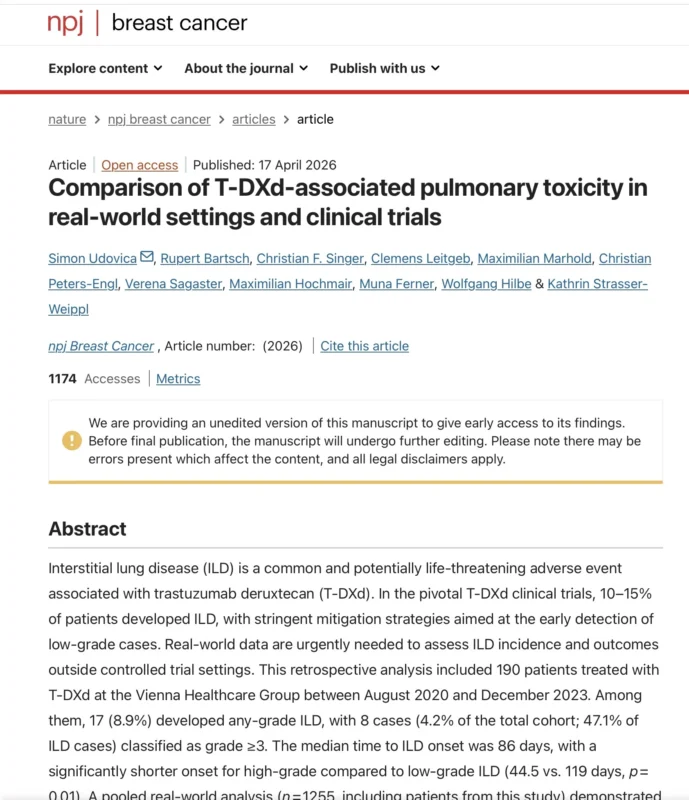
T-DXd ILD Looks More Severe In Real-World Practice
The second story is a safety signal around trastuzumab deruxtecan (T-DXd)-associated interstitial lung disease. The article summarizes a Viennese cohort of 190 patients and pooled real-world analysis of 1,255 patients, reporting that high-grade ILD occurred in 2.9% of real-world cases compared with 1.4% in phase III trials.
The key point is not that T-DXd’s ILD incidence is completely different outside trials, but that severity may be higher in routine practice. This matters because T-DXd is now widely used across HER2-positive, HER2-low, and evolving HER2-ultralow treatment settings. Real-world populations include older patients, comorbidities, prior lung disease, and less standardized monitoring than controlled trials. The carousel’s conclusion is practical: routine CT monitoring should become a clinical standard for patients receiving T-DXd.
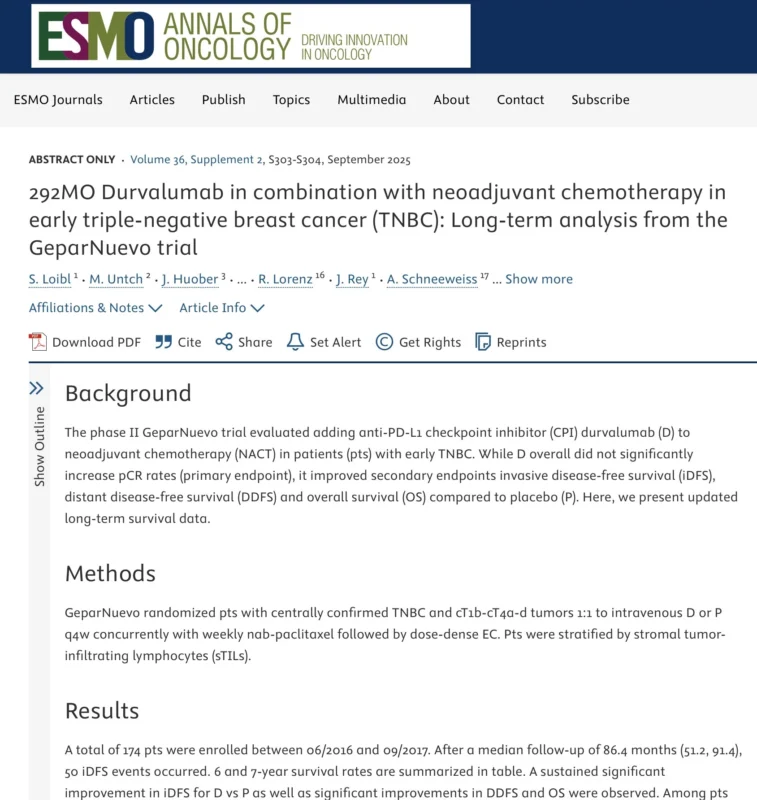
GeparNuevo Shows Long-Term Durvalumab Benefit In TNBC
The third highlighted item is the GeparNuevo randomized phase 2 trial, now with 86.4 months of follow-up in early triple-negative breast cancer. The carousel reports an overall survival hazard ratio of 0.33, an invasive disease-free survival hazard ratio of 0.56, and a distant disease-free survival hazard ratio of 0.41.
These long-term data are notable because they suggest that neoadjuvant durvalumab may provide survival benefit beyond its effect on pathological complete response. This is important in TNBC, where early recurrence risk remains high and long-term outcomes are central to clinical decision-making.
The carousel also notes an intriguing biomarker signal: high residual-disease stromal tumor-infiltrating lymphocytes above 10% predicted a 7-year iDFS of 92.3%. This suggests that immune contexture after neoadjuvant therapy may help refine prognosis even in patients with residual disease.
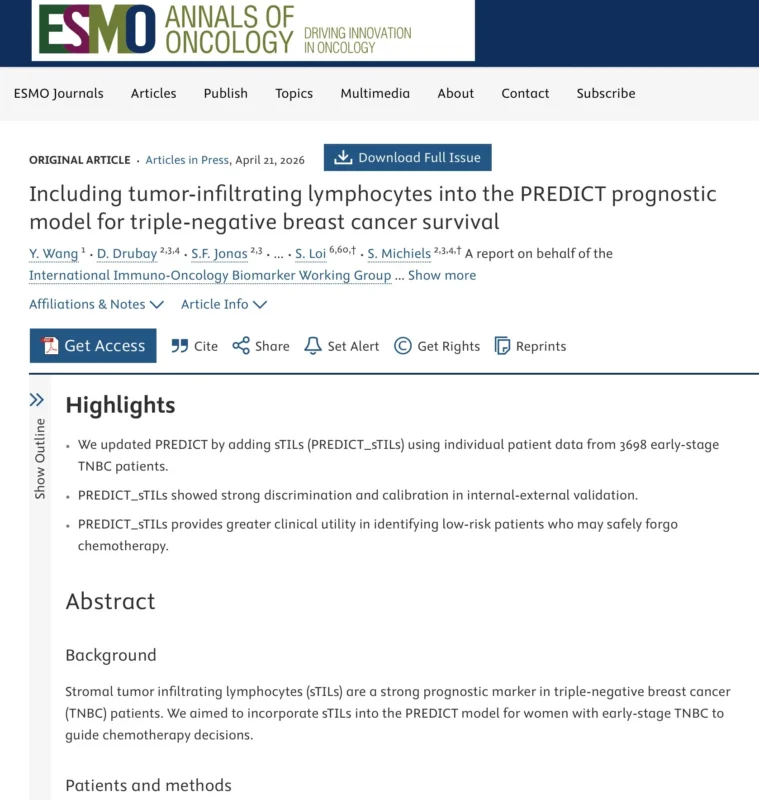
sTILs May Improve TNBC Prognostic Modeling
The fourth item turns to prognostic modeling in early TNBC. The PREDICT_sTILs individual patient data analysis included 3,698 patients with early TNBC and evaluated whether adding stromal tumor-infiltrating lymphocytes to the PREDICT model could improve prognostic accuracy.
According to the carousel, the model achieved an AUC of approximately 0.74 and improved clinical utility. The implication is clinically meaningful: sTILs may help identify chemotherapy-naïve patients with TNBC who are truly low risk.
This is part of a larger movement in early breast cancer toward integrating immune biomarkers into decision-making. TNBC has traditionally been treated aggressively because of recurrence risk and limited endocrine-targeted options. Better prognostic tools may eventually support more individualized treatment intensity.
Lobular Breast Cancer Is Not Simply Luminal Breast Cancer
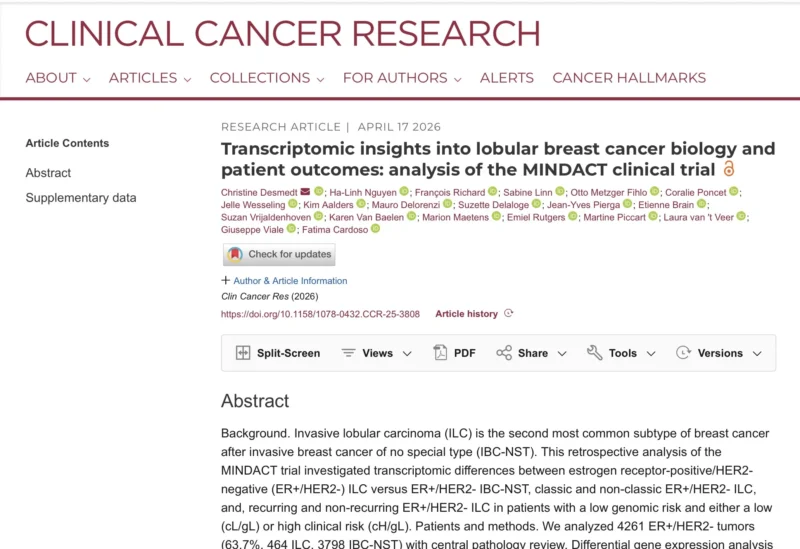
The fifth story highlights transcriptomic findings in invasive lobular carcinoma from the MINDACT analysis, comparing 464 ILC cases with 3,798 invasive breast cancers of no special type. The carousel notes enrichment of PI3K/Akt and MYC pathways in low-risk ILC.
The main clinical message is that invasive lobular carcinoma should not be treated as merely luminal breast cancer with different histology. ILC has distinct biology, different relapse patterns, and known challenges around chemotherapy sensitivity and late recurrence. These transcriptomic findings strengthen the case for ILC-specific risk tools and trial designs.
cycTregs May Drive Immune Escape From DCIS To Invasive Disease
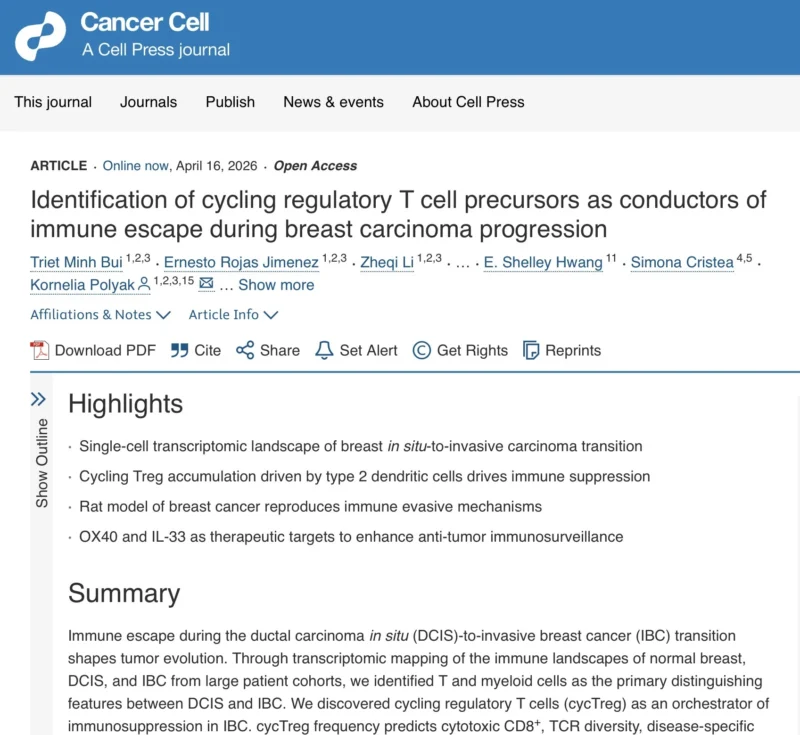
The sixth highlighted paper moves into translational science. Using single-cell and spatial transcriptomics, researchers examined the transition from ductal carcinoma in situ to invasive breast cancer. The carousel identifies cycling regulatory T cells, or cycTregs, as a potential immune escape driver, noting that they are absent in normal tissue but expand markedly in invasive breast cancer.
This is a mechanistically important finding because progression from DCIS to invasive disease remains difficult to predict. If cycTregs are reproducibly shown to orchestrate immune escape during this transition, they may become both a measurable marker of progression biology and a potential therapeutic vulnerability.
Stage I TNBC Requires A More Personalized Approach
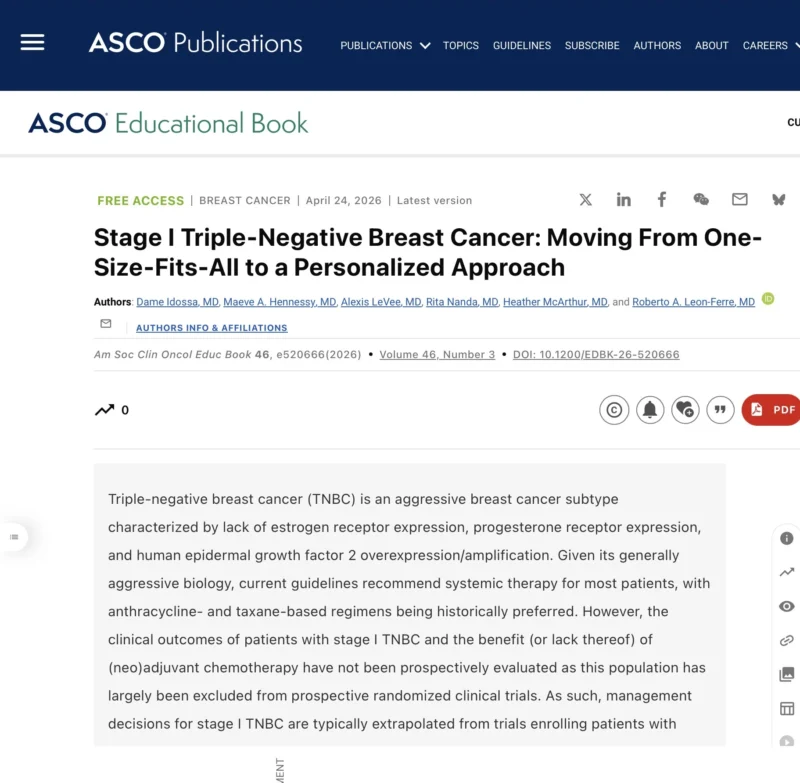
The seventh item is an ASCO Educational Book review focused on stage I TNBC. The carousel highlights that T1mic and T1a tumors had 5-year breast cancer-specific survival of 99% and 98% with locoregional therapy alone.
This challenges the tendency to treat all TNBC as uniformly high risk. Stage I TNBC includes a wide clinical spectrum, and overtreatment is a real concern in very small tumors. The review emphasizes that tumor size, TILs, ctDNA, and molecular subtype should all contribute to risk assessment.
This does not mean systemic therapy should be avoided broadly in stage I TNBC. Rather, it supports a more nuanced approach: balancing recurrence risk against toxicity, patient preference, and the probability of absolute treatment benefit.
CDK4/6 Inhibitors Enter Their Second Decade
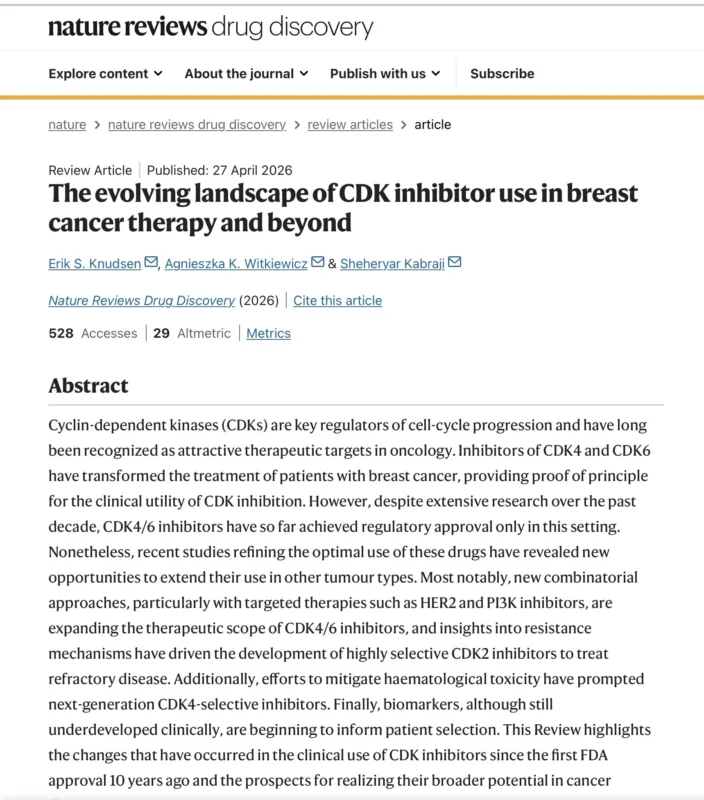
The eighth highlighted article is a Nature Reviews Drug Discovery review looking back at 10 years of CDK4/6 inhibitor development. The carousel frames the key question as: what comes after palbociclib?
CDK4/6 inhibitors reshaped HR+/HER2− breast cancer treatment, but resistance remains nearly universal in metastatic disease. The next decade will likely focus on CDK2 inhibitors, selective CDK4 agents, and rational sequencing beyond first-generation CDK4/6 inhibition.
This theme is especially relevant now because post-CDK4/6 therapy is becoming more complex, with oral SERDs, AKT inhibitors, PI3K inhibitors, antibody-drug conjugates, and chemotherapy all competing for position in later lines.
ADC Linker Stability Is More Complicated Than It Looks
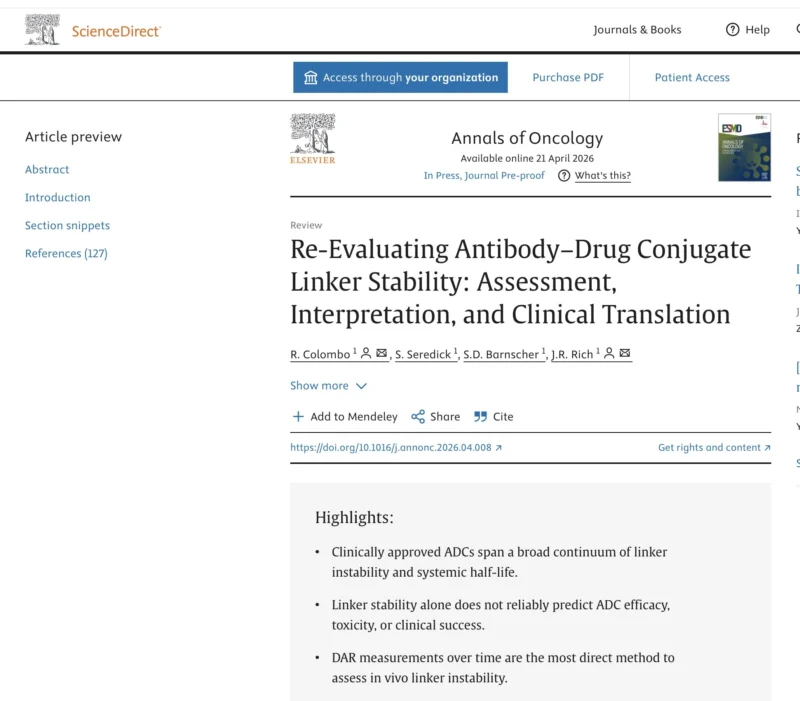
The ninth item is an Annals of Oncology review on ADC linker stability. The carousel’s central message is direct: more stable does not automatically mean better.
ADC activity depends on the entire system: antibody, target expression, internalization, linker, payload, drug-to-antibody ratio, bystander effect, pharmacokinetics, and resistance biology. The review highlights drug-to-antibody ratio over time as the best in vivo marker of linker instability.
This is highly relevant in breast oncology, where ADCs are now central across HER2-positive, HER2-low, HR-positive, and triple-negative disease. As more ADCs enter clinical practice, understanding linker behavior and therapeutic index will become increasingly important for both efficacy and safety.
Trial Literacy Is Now A Core Oncology Skill
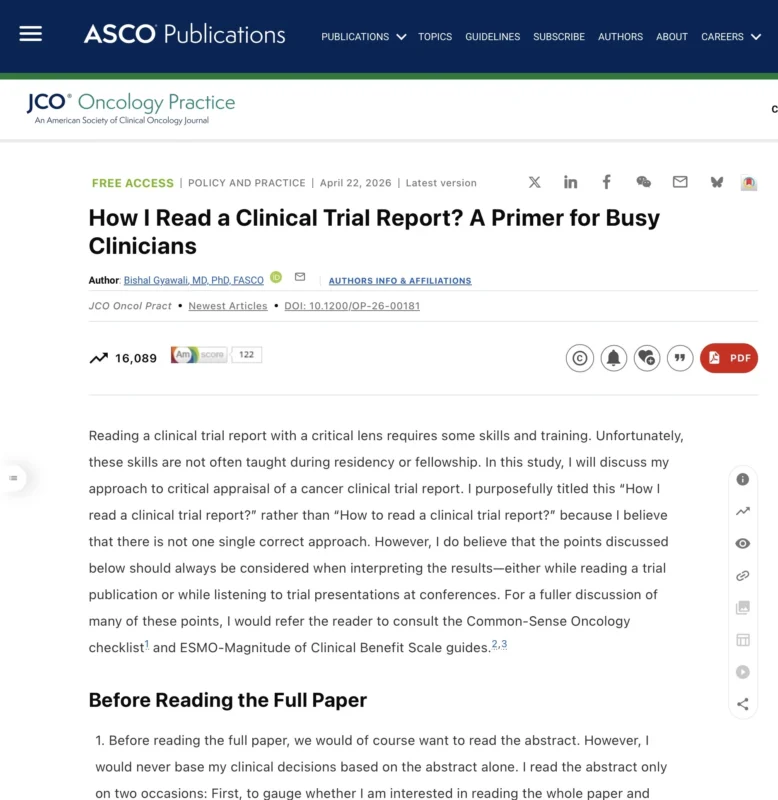
The final bonus item is a JCO Oncology Practice primer on how to read a clinical trial report. The carousel’s key question is one every clinician should ask: Is the control arm a real-world standard of care?
This point is essential. A statistically positive trial is not always clinically meaningful. Before changing practice, clinicians need to evaluate whether the population is generalizable, whether the control arm is ethical and relevant, whether endpoints are meaningful, whether toxicity is acceptable, and whether the magnitude of benefit matters to patients.
In an era of accelerated approvals, biomarker-selected trials, noninferiority designs, and complex ADC or immunotherapy combinations, critical appraisal is not optional. It is part of good oncology care.
What This Week’s Breast Cancer News Tells Us
Taken together, the 10 selected stories show how breast oncology is becoming more precise but also more demanding. HER2-positive and TNBC tumors require risk assessment beyond size. T-DXd requires real-world toxicity vigilance. Long-term TNBC immunotherapy data continue to mature. sTILs, transcriptomics, and spatial immune profiling are moving closer to clinical relevance. Stage I TNBC needs individualized treatment intensity. CDK4/6 inhibitor resistance and ADC design are shaping the next decade. And trial literacy remains the foundation for interpreting all of it.
The broader message is that modern breast cancer care is no longer defined only by new drugs. It is defined by better selection, better monitoring, better biomarkers, and better judgment.