Immune checkpoint inhibitors have transformed cancer treatment, but their benefits remain uneven. Some tumours respond poorly from the outset, others develop resistance, and greater immune activation can also bring greater toxicity.
These limitations are driving researchers to rethink what an immune checkpoint inhibitor can do.
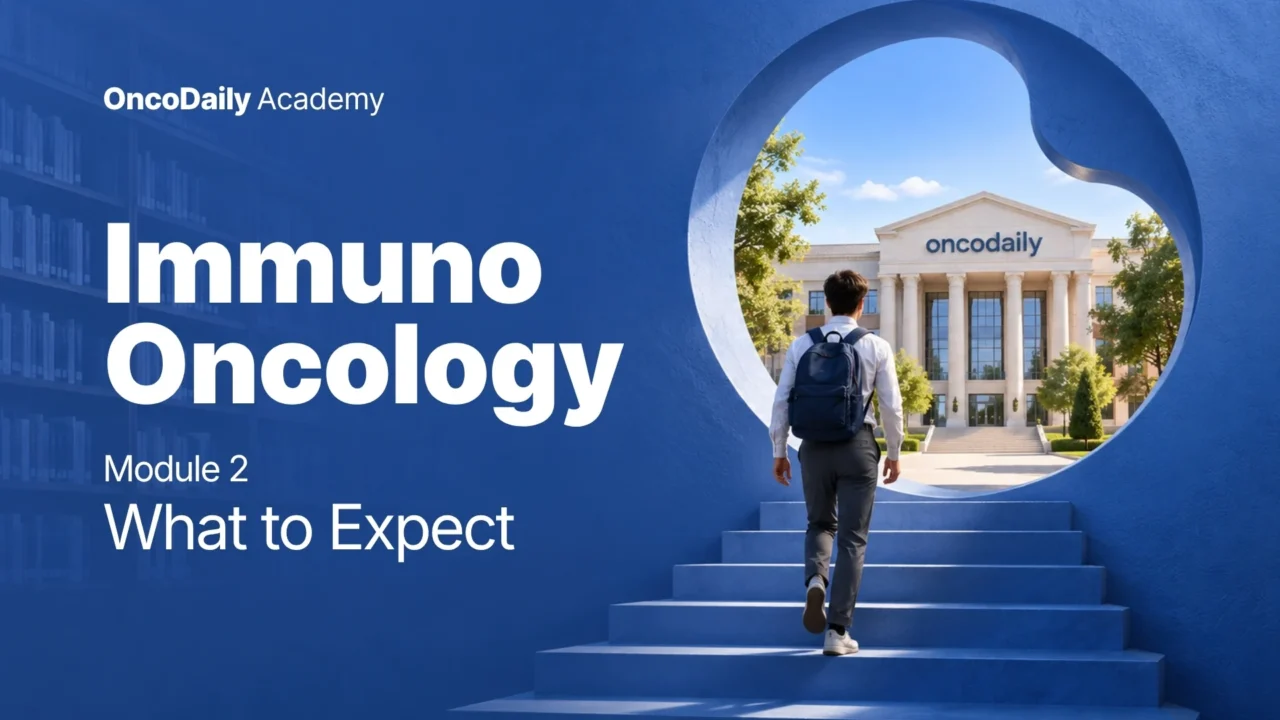
Module 2 of OncoDaily Academy’s six-part programme on immune checkpoint inhibitors looks beyond first-generation approaches and explores how the next generation of ICIs is being designed to extend the reach of cancer immunotherapy.
Looking beyond first-generation checkpoint inhibition
Building on Module 1, which introduced cold tumours, resistance and unmet need, Module 2 moves to the strategies being investigated to address some of those challenges.
Learners will explore how researchers are expanding the checkpoint landscape beyond familiar targets such as PD-(L)1 and CTLA-4, and why identifying another immune pathway does not necessarily mean that blocking it will translate into better outcomes.
The module introduces several areas of active development, from additional checkpoint targets to increasingly sophisticated antibody designs. Some approaches have already reached clinical practice, while others remain investigational or have produced mixed results in clinical trials.
How are Next-Generation ICIs Being Redesigned?
Module 2 examines different ways in which checkpoint inhibitors can be modified to influence immune activity.
Learners will be introduced to bispecific and multispecific antibodies, which can bring different therapeutic activities together within a single molecule, as well as approaches that modify an antibody’s Fc region to influence what happens after it binds its target.
The module also explores an emerging question in immunotherapy development: can checkpoint inhibition be directed more selectively towards the tumour microenvironment while limiting unwanted immune activity elsewhere?
Through clinical examples, learners will consider how these different strategies are being developed — and why promising biology still needs to be tested carefully against clinical evidence.
What to Expect from Module 2
By the end of the module, learners should have a clearer understanding of the main strategies being explored to move checkpoint inhibition beyond first-generation approaches.
The module will help clinicians consider how different designs may influence T-cell activity, other immune cells and the tumour microenvironment, and how these approaches relate to the mechanisms of cold and resistant tumours discussed in Module 1.
Importantly, the course also asks learners to distinguish between what is already supported by clinical evidence and what remains biologically plausible but investigational.
Case-based questions at the end of the module give participants an opportunity to apply this thinking to resistance, antibody design and clinical trial interpretation.
The Next Step in the Programme
Module 2 moves the six-part programme from understanding why current ICIs do not work for every patient to exploring how checkpoint inhibition might be redesigned to address some of those limitations.
Rather than providing a single answer, the module introduces the different directions the field is taking — and the questions clinicians should ask when evaluating the next generation of immunotherapies.
About OncoDaily Academy
The immuno-oncology programme is the first educational initiative from OncoDaily Academy, a global platform created to connect clinicians with accessible, clinically relevant and expert-led learning across the evolving landscape of cancer care.
The Academy is developed by OncoDaily in collaboration with The Learning Lab, a digital education spin-out of Guy’s and St Thomas’ NHS Foundation Trust, working with Guy’s Cancer Academy.
The aim is to make specialist oncology education more accessible while helping clinicians navigate a field in which new biomarkers, therapies and treatment combinations are continuously reshaping clinical practice.
This programme is independent medical education. Agenus has provided non-promotional funding and support. Editorial control of all educational content remains with the clinical and educational team.
It is intended for clinicians across the cancer workforce, including oncologists, trainees and nurses. The programme is free to access online. Participants receive a free certificate of completion from Guy’s Cancer Academy after each individual module, as well as an additional certificate after completing the full six-part programme.
Explore Module 1 of OncoDaily Academy’s six-part programme on immune checkpoint inhibitors.