Immune checkpoint inhibitors have reshaped the treatment of advanced cancer. For a subset of patients, they deliver disease control measured in years, often persisting long after treatment has ended.
For many others, that benefit never arrives. Some tumours show little response from the outset. Others respond, then progress. In several common cancers, first-generation checkpoint inhibitors have had limited impact.
Explaining that gap has become one of the defining questions in oncology. It shapes how trial data are interpreted, how treatment options are discussed in multidisciplinary teams, and how the next generation of immunotherapies is being designed.
It is also the starting point for OncoDaily Academy’s first programme.
Language that needs more precision
Terms such as “cold tumour”, “ICI resistance” and “non-responder” are now part of everyday clinical conversation. They are frequently used as though they mean the same thing. They do not, and the difference has real consequences for how patients are assessed and which questions are asked next.
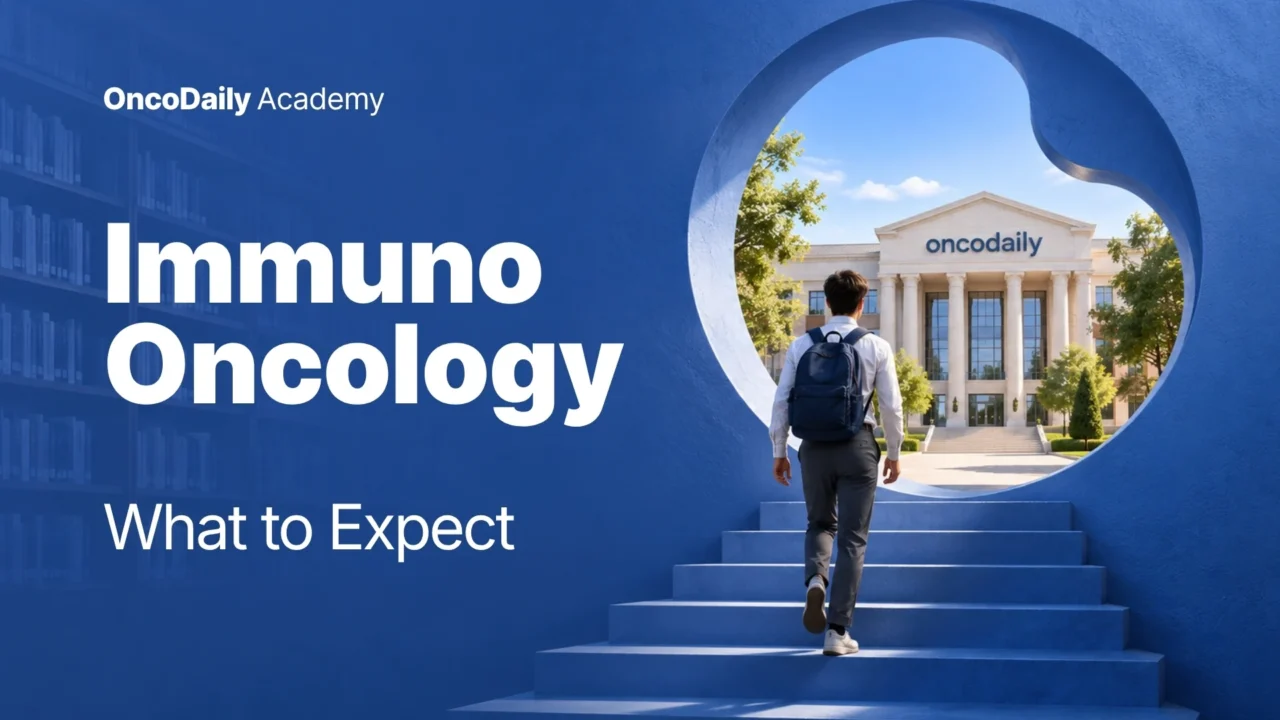
Immuno-oncology: a snapshot of progress, limitations and unmet need sets out a clearer framework. In around an hour, Module 1 examines what durable benefit looks like, what lies behind the limits of current treatment, and where the greatest unmet need remains.
The module introduces the role of immune checkpoint inhibitors in the wider cancer treatment landscape before moving to the biological reasons why treatment does not work equally well for all patients.
A key focus is the concept of the immunologically “cold” tumour. Learners explore the difference between immune-desert and immune-excluded phenotypes and how these states differ from ICI-resistant disease.
That distinction matters. A tumour with little pre-existing immune activity presents a different challenge from one that initially responds to checkpoint inhibition and later progresses. Understanding that difference helps clinicians interpret why new combinations and next-generation immunotherapies are being developed and what biological problem they are trying to overcome.
What clinicians will learn
By the end of Module 1, learners should be able to explain the clinical importance of immune checkpoint inhibitors and their potential for durable disease control.
They should also be able to define immunologically cold tumours, distinguish immune-desert from immune-excluded phenotypes, differentiate cold tumours from ICI-resistant disease, recognise key settings of unmet need, and address common misconceptions around checkpoint inhibitor therapy.
The emphasis is not only on terminology. The module is designed to give clinicians a practical framework for interpreting new evidence and thinking more clearly about why individual patients may or may not benefit from immunotherapy.
It closes with a case-based activity that asks learners to apply these concepts to clinical questions.
A foundation for what comes next
Module 1 is the first of six. The programme builds from the fundamentals of tumour immunology to the emerging strategies that aim to extend the benefit of immunotherapy to more patients.
The course is designed around application to practice, linking complex scientific concepts to clinical cases and patient perspectives.
About OncoDaily Academy
The immuno-oncology programme is the first educational initiative from OncoDaily Academy, a global platform created to connect clinicians with accessible, clinically relevant and expert-led learning across the evolving landscape of cancer care.
The Academy is developed by OncoDaily in collaboration with The Learning Lab, a digital education spin-out of Guy’s and St Thomas’ NHS Foundation Trust, working with Guy’s Cancer Academy.
The aim is to make specialist oncology education more accessible while helping clinicians navigate a field in which new biomarkers, therapies and treatment combinations are continuously reshaping clinical practice.
This programme is independent medical education. Agenus has provided non-promotional funding and support. Editorial control of all educational content remains with the clinical and educational team.
It is intended for clinicians across the cancer workforce, including oncologists, trainees and nurses. The programme is free to access online, and participants who complete it receive a free certificate of completion from Guy’s Cancer Academy.
Stay tuned to OncoDaily for further details about upcoming programmes, educational opportunities and registration information.