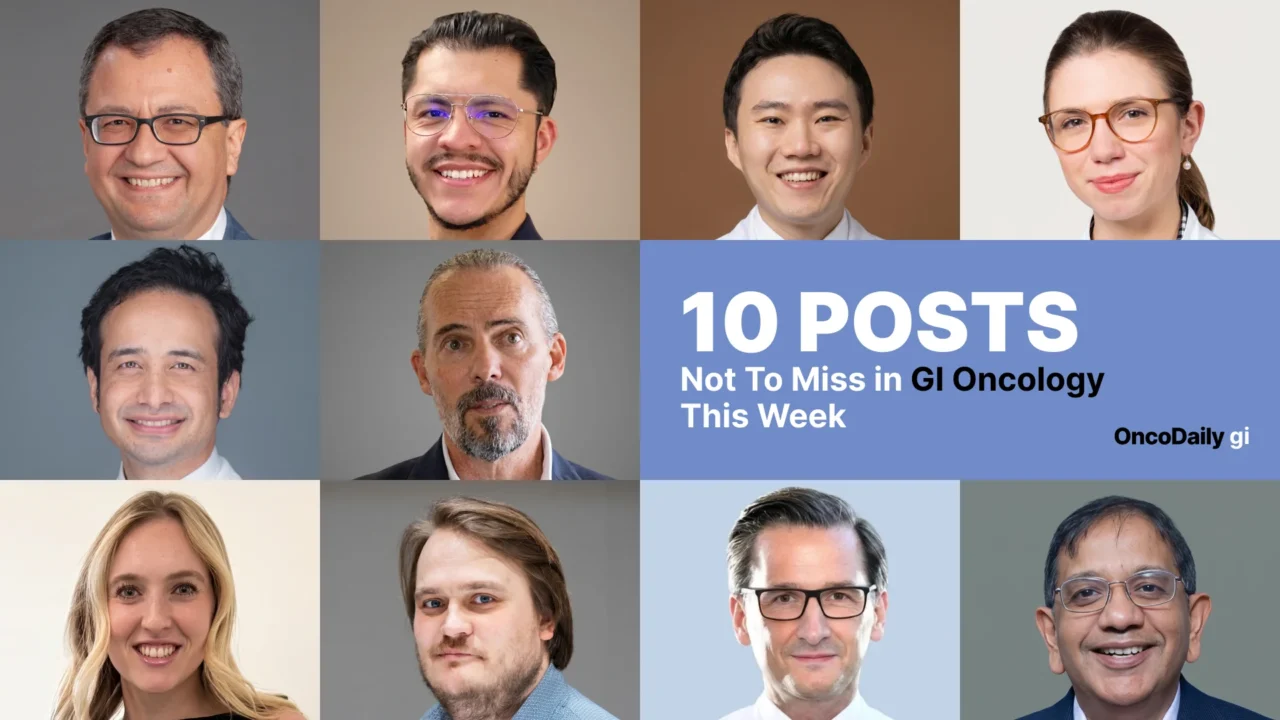
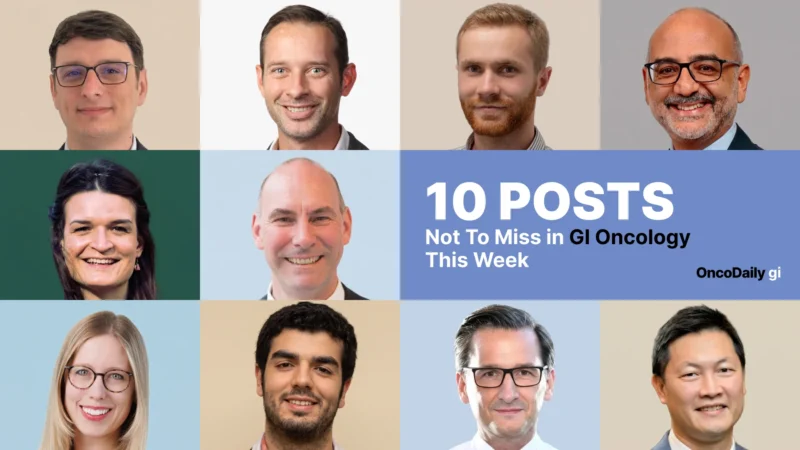
The second week of May, from May 11 to May 17, featured important updates across GI oncology, with 10 posts highlighting new research, expert perspectives, and clinical discussions in pancreatic, colorectal, hepatocellular, biliary tract, and esophagogastric junction cancers.
This week’s selection includes work on PDAC tumor biology, ATM deficiency, cancer-associated fibroblasts, SBRT with mFOLFIRINOX, BRAF subclasses in colorectal cancer, AI-based tumor bud segmentation, colorectal cancer screening, long-term outcomes with colonoscopy screening, immunotherapy benefit and cure modeling in HCC, post-transplant rejection risk after immune-related adverse events, and multi-omic profiling in biliary tract cancers.
Together, these posts reflect the breadth of current GI oncology research, from translational biology and biomarker development to clinical trial interpretation, screening strategies, computational pathology, and precision oncology.
Nelson Dusetti — INSERM Research Director at CRCM and Paoli-Calmettes Institute; Co-founder of Predicting Med | France
“Very pleased to have contributed to this collaborative study!!
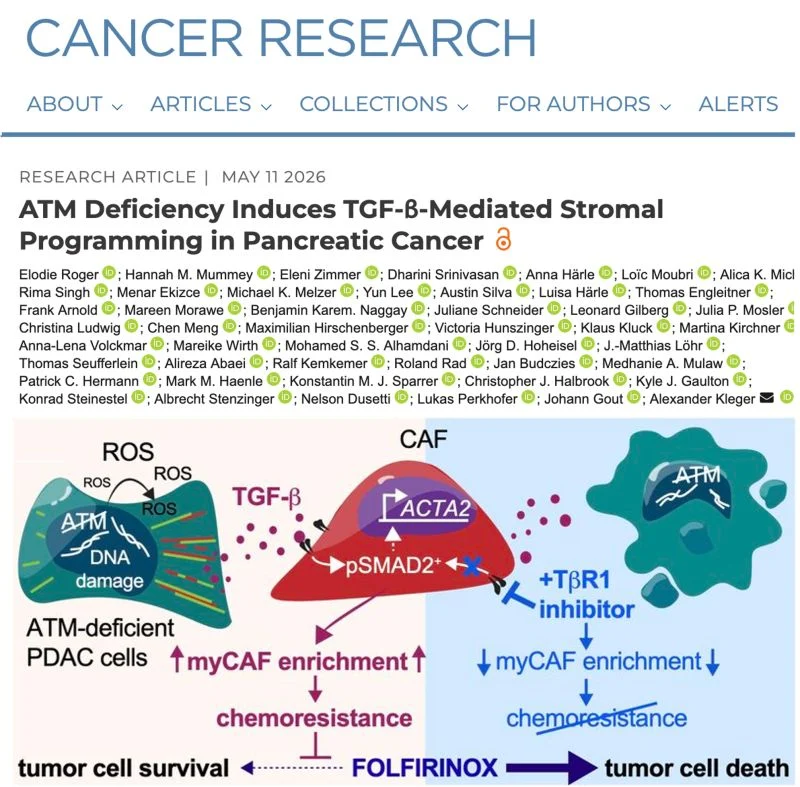
ATM deficiency in pancreatic cancer cells does not only alter tumor-intrinsic biology, but also profoundly reprograms the surrounding stroma through TGF-β signaling, promoting a myofibroblastic CAF state associated with increased tumor aggressiveness and chemoresistance.
This is an important concept for the field because it reinforces the idea that, in PDAC, tumor genetics and the microenvironment cannot be studied independently. Tumor cell alterations directly influence stromal organization, plasticity, and potentially therapeutic response.
Blocking TGF-β selectively sensitizes ATM-deficient tumors to chemotherapy in preclinical models including patient-derived organoids. No benefit in ATM-proficient tumors. That selectivity is the whole point, and supports the rationale for biomarker-driven patient selection in future therapeutic strategies for the 17–25% of PDAC patients carrying ATM mutations.
I am very happy that the CRCM – Centre de Recherche en Cancérologie de Marseille and the Institut Paoli-Calmettes teams could contribute to this study through our translational pancreatic cancer models, expertise in patient-derived systems and precision medicine approaches.
This work is the result of a beautiful and productive collaboration with Prof. Alexander Kleger and Dr. Johann GOUT at Ulm University Hospital. I am grateful for the trust and intellectual generosity they bring to our joint work. Science is always better when it is done together.
What makes this collaboration particularly strong is the complementarity between teams: mechanistic biology, tumor-stroma interactions, organoids, patient-derived models, functional analyses, and multiomic approaches. These integrated efforts are essential if we want to better understand PDAC heterogeneity and identify clinically actionable vulnerabilities.
Congratulations to all authors and collaborators involved in this impressive collective work. Special mention to Loïc Moubri from our team at CRCM!”
Ibrahim Halil Sahin — GI Medical Oncologist, Colorectal Cancer, Precision Medicine and Immunotherapy; Associate Professor of Medicine at the University of Michigan | United States
“Had intended to share this exciting research article we recently published Nature NPJ Precision Oncology and its intriguing findings earlier, but did not have the chance until now. I would like to thank all the collaborators and colleagues and of course our patients who contributed this work.
Here are several key and novel observations from our recently published study:
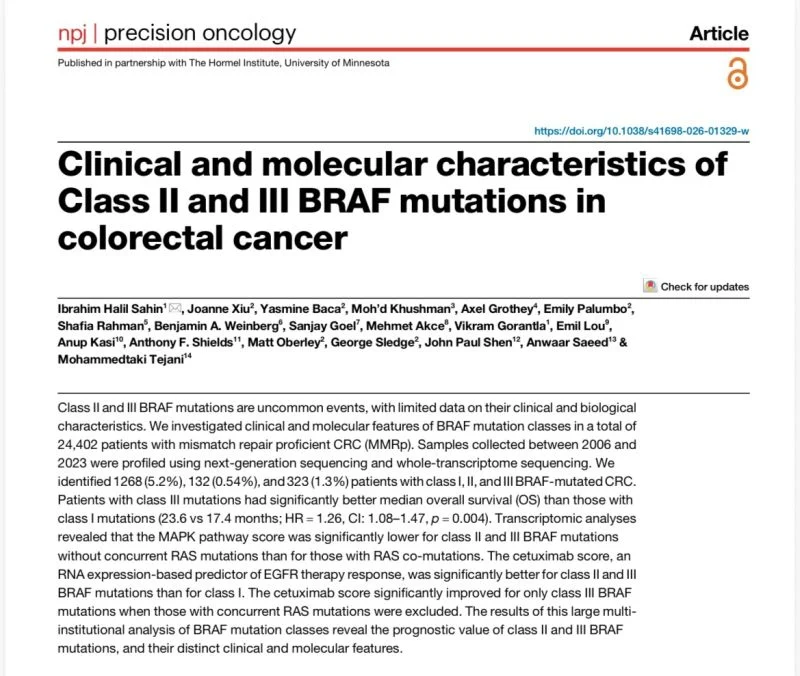
- Class II and III BRAF mutations represent highly distinct molecular subgroups compared with BRAF V600E (Class I) colorectal cancers and can frequently co-occur with KRAS/NRAS mutations.
- Importantly, these co-occurrences seen in class II and III BRAF mutations are not random. Our transcriptomic analyses demonstrated that concurrent RAS mutations markedly increase MAPK pathway activity and are associated with significantly inferior outcomes, particularly among patients with Class III BRAF mutations.
- Our RNA-based transcriptomic analyses also suggested improved anti-EGFR responsiveness in Class II and III BRAF-mutated tumors, this was even more obvious after excluding concurrent RAS mutations particularly in class III BRAF mutants once again showing these are not random events.
- We also identified several intriguing findings regarding Class I BRAF mutations. Interestingly, BRAF V600E mutations were substantially less common among Black patients, and lung metastasis samples were notably less enriched for BRAF V600E alterations — observations that may partly explain the relatively better prognosis seen in patients with lung metastases.
- As the largest study to date evaluating BRAF subclasses in colorectal cancer (including more than 24,000 cases), our findings also provide important insights into the conflicting literature regarding BRAF V600E incidence among younger patients. While a recent Australian study suggested increased rates among young adults, we observed significantly lower rates of BRAF V600E mutations in patients younger than 50 years compared with those older than 50 years (3.2% vs 5.6%).
- Our study further confirmed the prognostic significance of Class II and III BRAF mutations, consistent with prior institutional cohort studies.
- A special thanks to CARIS team and Joanne Xiu PhD and Yasmine Baca MS, PhD candidate, MB(ASCP)CM for their work and bioinformatics analyses !
Several additional interesting clinical and molecular findings are detailed in the full publication”
Jean-Charles Nault — Professor of Hepatology at AP-HP, Assistance Publique–Hôpitaux de Paris | France
“Our new study is out in Clinical Cancer Research!
With Claudia Campani, the Paris Liver Cancer Group and our national and international collaborators, we explored long-term survival and cure in patients with advanced hepatocellular carcinoma (HCC) treated with immunotherapy, using innovative mixture cure models applied to both phase 3 randomized trials and real-world data.
Key findings:
Analysis of phase 3 trials and a large real-world cohort of 1,581 patients treated with atezolizumab–bevacizumab
10–15% of patients achieve long-term survival under immune checkpoint inhibitor combinations
7–9% of patients may reach a statistical cure
Radiological response strongly associated with higher probability of long-term survival and cure
Beyond 3 years, mortality risk approaches that of underlying cirrhosis rather than cancer progressionThese results highlight the importance of cure modeling to better capture the durable benefit of immunotherapy and emphasize the need for biomarkers and optimized liver disease management.”
Changhoon Yoo — Medical Oncologist and Associate Professor at Asan Medical Center | South Korea
“New publication from our group — the SABER trial is now out in Annals of Surgical Oncology!
We report the first prospective randomized evaluation of SBRT combined with first-line mFOLFIRINOX in locally advanced unresectable pancreatic cancer.
Key findings:
• 1-year PFS: 66.7% (mFOLFIRINOX + SBRT) vs. 45.1% (mFOLFIRINOX alone)
• Median PFS: 14.0 vs. 11.7 months (HR 0.66); Median OS: 28.9 vs. 28.1 months
• 1-year cumulative local progression: 11.1% vs. 39.1%
• Comparable safety profiles; no excess GI toxicity with SBRT
• Conversion surgery achieved in 22.2% vs. 36.8%The trial closed early due to slow accrual (37/92 planned patients), so efficacy results are hypothesis-generating. But the local control signal is real and clinically meaningful.
The take-home: upfront SBRT with mFOLFIRINOX is feasible and safe, and may benefit patients at high risk of local complications — duodenal/biliary obstruction, tumor-related pain. Patient selection is key.
Proud of this work with my outstanding multidisciplinary colleagues at Asan Medical Center. Appreciation to the participating patients and caregivers.”
Arndt Vogel — Senior Consultant and Professor of Gastrointestinal Oncology at Hannover Medical School | Germany
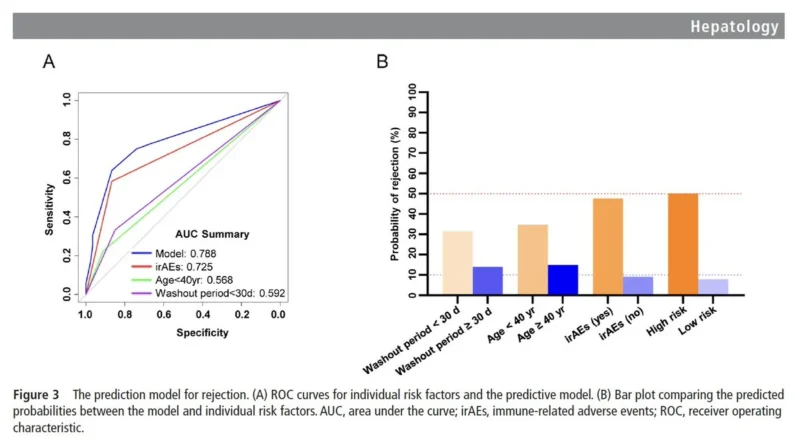
“Immune-related adverse events are a potent predictor
of post-transplant rejection in HCC: a multicentre retrospective cohort study
GutIdentifying irAEs could serve as a potential biomarker may enhance patient selection and risk stratification before LT”
Kylie Belanger — PhD Candidate, Translational GI Oncology Researcher focused on Pancreatic Cancer | United States
“I’m excited to share my first, first-author publication in AACR Journals!
This project gave me a well-rounded perspective on what it truly takes to move a research project across the finish line: from experimental design and troubleshooting to collaboration, scientific communication, and publication.
We explored how cancer-associated fibroblasts (CAFs) shape pancreatic cancer biology and contribute to tumor heterogeneity. Some of the broader translational implications of this work include:
→ Demonstrating that CAFs can drive tumor cells toward a more aggressive basal-like subtype associated with therapy resistance and poorer clinical outcomes
→ Developing a patient-matched organoid and CAF model system that preserves patient-specific biology and enables clinically relevant therapeutic testingI’m grateful to have contributed to the evolving landscape of pancreatic cancer research and look forward to continuing to grow as a scientist and communicator. Thank you Dr. Liz Jaffee and Dr. Jackie Zimmerman for making this possible!”
Anirban Maitra — Scientific Director of Sheikh Ahmed Center for Pancreatic Cancer Research and Professor of Pathology and Translational Molecular Pathology at The University of Texas MD Anderson Cancer Center | United States
“NordICC study in The Lancet
Long-term effects of colonoscopy screening on ColorectalCancer incidence and mortality: a multi-country, population-based randomized controlled trial
Colonoscopy improves cancer detection but NO effect on long term mortality!”
Paula Hoffmeister-Wittmann — NCT Clinician Scientist Fellow and Resident Doctor for RadioOncology | Germany
“Excited to share that our latest work has just been published in ESMO Open!
In this study, we performed deep molecular profiling of BiliaryTractCancers using comprehensive genomic and transcriptomic analyses. Our findings uncovered novel biological mechanisms and ultra-rare actionable alterations, highlighting how multi-omic precision oncology approaches can identify new therapeutic opportunities and provide clinical benefit even in heavily pretreated patients.
A huge thank you to all co-authors, collaborators, and especially the patients, whose participation and trust made this research possible.”
Metin Gurcan — Senior Associate Dean for Artificial Intelligence at Wake Forest University School of Medicine | United States
“How can AI help pathologists identify some of the smallest—but clinically meaningful—signals in colorectal cancer?
I am pleased to share a new publication from our team, led by Wake Forest Center for Artificial Intelligence Research (CAIR) visiting researcher Mesut Seker, PhD, titled “Improving colorectal tumor bud segmentation with deformable multi-scale transformers,” published in Biomedical Signal Processing and Control.
Tumor budding is an important histopathological marker in colorectal cancer, but accurately segmenting these small and irregular cellular structures in routine H&E-stained images remains challenging. In this study, Mesut and our collaborators developed a SegFormer-based pipeline enhanced with deformable multi-scale decoder innovations to improve tumor bud segmentation, particularly at the instance level.
This work reflects our continued efforts at CAIR at Wake Forest University School of Medicine to advance AI methods that can support computational pathology and improve the analysis of complex medical images.
The article is available through Elsevier’s Share Link with free access until June 30, 2026:
Congratulations to Dr. Mesut Şeker and the full author team on this important contribution.”
Fernando Alarid-Escudero — Assistant Professor in the Department of Health Policy, Stanford University School of Medicine | United States
“Excited to share our new paper, led by Claudia Seguin, now published in the Journal of Medical Screening!
“Cost-effectiveness of fecal immunochemical testing for colorectal cancer in Mexico City: A microsimulation modeling study”
Colorectal cancer (CRC) incidence in Mexico has nearly doubled over the past three decades, yet no national screening program exists. This work asks: what would an evidence-based FIT screening program look like for Mexico City — and would it be worth it?
Using SimCRC, a validated microsimulation model of CRC in the US adapted to reflect Mexico City’s epidemiology, we evaluated 90 FIT screening strategies varying by start age, end age, screening interval, and hemoglobin threshold for colonoscopy referral.
Key finding: Biennial FIT screening from ages 50–70, with a colonoscopy referral threshold of 10 μg Hb/g feces, is cost-effective at Mexico’s willingness-to-pay threshold — potentially reducing CRC cases by 15% and CRC deaths by 22%.
This work was supported in part by the Rosenkranz Prize from the Freeman Spogli Institute for International Studies and Stanford Health Policy, awarded to support innovative research to improve health in low- and middle-income countries. It has been an honor to pursue this line of work in Mexico as part of that recognition.
This was truly a team effort spanning institutions in Mexico and the US. Huge thanks to my co-senior author Amy (Bird) Knudsen and to all co-authors: Andrea Luviano, Karen Kuntz, Martin Lajous, Monica Isabel Meneses Medina, Fidel David Huitzil Meléndez, Maria Del Carmen Manzano-Robleda, Jose Maria Remes Troche, Dr Juan Antonio Villanueva Herrero, Susana Lozano Esparza, Anna Lietz, and Andrew Eckel.
We hope this provides a rigorous starting point for policymakers in Mexico City as they consider designing a CRC screening program.”
Find out 10 Must-Read Posts in GI Oncology from the first week of May on OncoDaily.